


Mao is a great leader and a good reader. According to incomplete figures from party history experts, he has studied over 90,000 books in his lifetime. He's a farmer's son with only a degree in middle school. Why did he jump into china and the world? He has not been in a military school for one day. How can he command the three armies and command the thousands and thousands and thousands of times more powerful than himself? If mao's life is a hero's hymn, then hard reading echoes his great wisdom throughout his life。
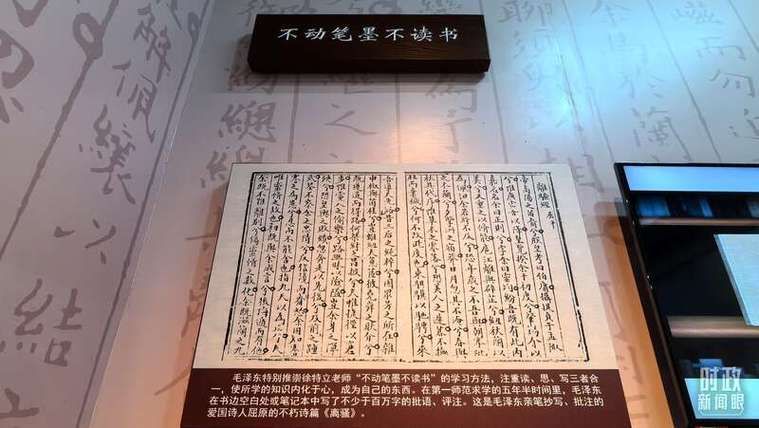
Hard reading. Mao zedong sees reading as the first life from adolescence to old age. He had a famous phrase: “the meal can go without eating, the sleep can go without sleep, the books cannot go without reading.” the books he had read throughout his life covered a wide range of subjects, ranging from philosophical, political, economic, historical, literary and military. Mao zedong has a lot of reading stories. While he was studying in changsha, he was a frequent visitor to the hunan library, first at 5 a. M. Every morning, every day and every month, with rain and snow. Mao zedong, while working at the northern library, sneaked into the library at night until late night. Life was very difficult during the long march, and he was accompanied by a box of books. He was ill, on horseback, on horseback, and lenin's state and revolution was read on horseback. He has books on his bed and table that can be read at any time. More deeply, mao zedong was still studying until his death。
Coincidentally read. Mao zedong's aims are clear: “reform society, transform china”. He does not study for a diploma, nor for points, but for the achievement of his vision. When he was young, he had a strong focus on learning and was extremely committed to the social sciences that were most helpful in his “reforming society and transforming china”. In terms of reading methods, mao combines reading in general and reading in particular. Some books are read with a sense of meaning, while others are studied in depth to find out the truth. Revolutions such as the communist manifesto, the capitalism, the lenin select, have been read repeatedly, in some cases more than a dozen, dozens of times. My country's four classics, which he began reading at the age of 13, continued to study until late, spanning 70 years. His reading of classical novels was not just about reading stories, learning literature, but focused on the political, economic, military, cultural and strategic, tactical and planning of wars in feudal societies. The books read in mao zedong leave a mark of deep thought, and his books and notes, in addition to the circles, dots, crossroads and bars, are innumerable. If he reads the west traveler, he realizes that the monks will prevail over the eighty-first trial, and that they will be able to prevail if they seek unity and unity in their differences。
Good use of books. Mao tactfully applied the knowledge and wisdom gained from the book to his writings, speeches and even to the practice of war, not only adding to his writings and speeches, but also creating a miracle in the history of war. For example, the victory of the red army in several counter-attacks during the time of inokayama was inextricably linked to the classics of mao zedong, who had read the sun tzu law " triang " . He admires liang and cao cao, and learns from them. Mao wrote “strategic issues of the chinese revolution” and, by means of six major battles, such as the war of dissecting officials, the war of the red wall, and the war of the mausoleum, the logic of “back-effects” was taken to the bottom of the line. In anticipation of the duel with chiang kai-shek, he studied the german military theorist krausewitz's famous theory of war, and then organized a reading group, a chapter of which was discussed in reading, from which he learned nutrition and wisdom。
Mao zedong is good at organicizing reading “books with words” and reading “books without words”. He has been involved in organizing the work of members of the new people's institute to study in the arts. He himself could leave the law behind, but he had taken a decision that he could not do. In his view, it would be “more advantageous” for him to stay in the country and study china's national circumstances. Later, his choice proved to be correct. It is precisely because of his in-depth knowledge of china’s national situation that he has been able to combine the lessons learned from marxist fundamentals well with china’s actual success, thus exploring the path to a chinese-style revolution。
In conclusion, the success of mao zedong is many, and schooling is one of the important reasons. His reading arts and methods are a precious spiritual asset left to us. (la pla)









