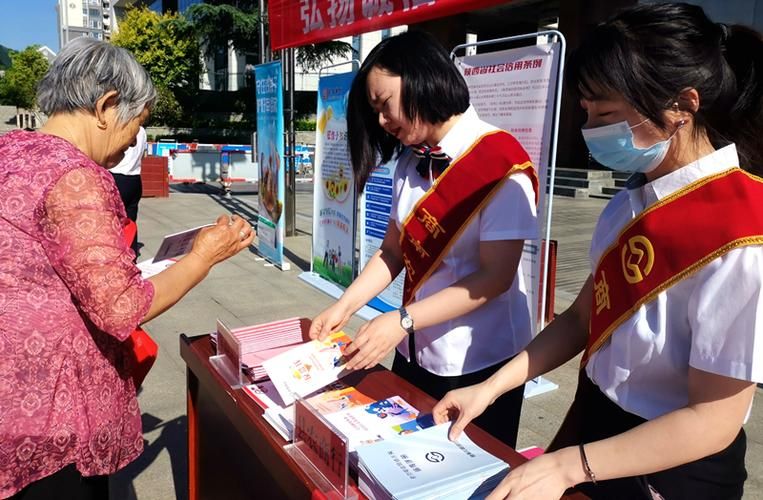
During the evening of the weekend, several vehicles were parked at the entrance to the district, and many of them were surrounded by insurance staff while off duty. You can talk and you can feel a change。
A few years ago, when most of the owners renewed their insurance, they made a one-time combination of risk insurance, vehicle loss and loss insurance, and few were insured on their own. Over the past two years, however, the number of owners who have only paid for them, and who do not buy them, has slowly increased。
The first reaction of many people to this phenomenon is that the owners are too confident that they can drive too hard, they can't do anything. The traffic police, in their community- and road-based traffic safety campaigns, have repeatedly mentioned that the number of drivers who now choose to buy only high-risk cars is becoming more numerous, and that behind them are multiple realities that work together, and that it is not what one imagines to risk the road simply with a sense of luck。
Until now, many of the car owners' perceptions of vehicle insurance have remained in the traditional impression that the default commercial risk is an essential configuration for driving, or risking their savings without buying commercial risk。
However, as a result of changes in the social environment for motor vehicles, the policy on vehicle insurance has been constantly adjusted, and the pattern of car usage and the pattern of vehicles among the carowners has not been the same. An increasing number of drivers are beginning to settle their debts quietly, re-evaluate their vehicle risk configuration in the light of their actual usage, and voluntarily choose to retain only high risk exposure。
First, the basic concept is clear and easy to understand. The compulsory liability insurance for motor vehicle accidents is the type of insurance that national laws impose on motor vehicle roads。
Without effective risk-taking, vehicles are unable to complete their annual inspection, travelling on the road is detected by the traffic police and is subject to appropriate penalties, and in the event of a traffic accident, it is not possible to initiate risk-taking for payment。
For example, insurance against motor vehicle loss, third-party liability and liability of persons on board are commercial vehicle insurance and are governed by the principle of voluntary insurance, as the owner may decide to buy or not to。
The choice of the owner of the vehicle to be insured was due to the fact that the scene had changed considerably compared to the past。
There is now a steady increase in private vehicle holdings in cities, and many families have limited opportunities to drive on a daily basis, although motor vehicles are registered. Some families buy cars, mainly for home use during the holidays, and for most of the rest of the time, cars are parked in small spaces, which are difficult to drive several times a month and travel less than 2,000 kilometres throughout the year. The short duration of vehicle travel reduces the probability of natural traffic accidents。
There is also a segment of old vehicles over 10 years old, which have low residual value of their own used vehicles and are mostly valued at thousands of dollars. In the event of a unilateral accident in an old car of this type, the price of repair often exceeds the value of the vehicle itself。
Even if the vehicle was purchased, the insurance company would have a high probability of treating the presumed total loss after the loss, and the final award would not be high. For this type of owner, the annual purchase of a combination of loss and loss of a vehicle with a high risk of triple-risk, and the cost of the investment compared with the value of the vehicle itself, the ratio of value for money appears low。
We can look at a very realistic case. An ordinary car of 12 years old has a residual value of approximately $7,000. Following the landing of the comprehensive vehicle insurance reform in 2020, the rules for the pricing of vehicle insurance were readjusted and the cost of insurance coverage for old vehicles was not significantly reduced. If full vehicle loss and loss were added to the $2 million premium, the annual premium on the full commercial insurance package would be close to $1800。
After a comprehensive assessment by the owner of the vehicle, which travelled less than 2,000 kilometres a year, most of the time was parked in the parking space, it was concluded that daily driving was as cautious as possible and that it was not cost-effective to spend $1,800 a year on commercial insurance. There is a floating mechanism for making strong insurance premiums, which can be reduced from year to year for many consecutive years, at a minimum of $665 per year. For the owners of such low-frequency, old-fashioned vehicles, retaining the mandatory risk of purchase and renouncing commercial risk is a trade-off between cost and risk and is not blind。
There is also a proportion of the owners who have stable economic conditions and are able to afford substantial compensation. They are aware that the maximum amount is paid, and that in the event of a more serious traffic accident, the amount of the maximum amount is not sufficient, the amount of compensation beyond the limit will have to be borne by the individual. Instead of being unaware of the risks, such drivers, after assessing their own circumstances, are able to absorb the corresponding economic losses and take the initiative to take the risk themselves。
As an example of the rules governing payment, the two vehicles collided and we were responsible for the accident, resulting in injuries to the other party. Current limits for the payment of liability: death, disability, death and disability, $18,000 for medical expenses and $2,000 for property losses. If the accident causes serious injury or death to the other party, the costs of medical care, disability compensation, accident work, nursing, etc. Are added together, the death and disability limit of $180,000 is easily exceeded. Compensation in excess of the maximum amount of risk is to be borne in full by the owner of the vehicle personally。
The choice of those who buy only the high-risk portion of the vehicle is mostly clear on the compensation rules and predicts that they can afford potential compensation and voluntarily abandon commercial risk。
It is important to distinguish between clear risks, active risk-taking, and a complete lack of insurance, as well as the assumption that all losses can be covered by risk-taking. The traffic police, among the owners of the vehicles that are exposed to the publicity on the road, have chosen to insure only those who are vulnerable, and most of them are able to state precisely the amount paid and understand the role of commercial risk insurance。
Of course, there is also a small number of drivers, and there are cognitive errors in the coverage of the risk insurance, which is only bought and sold. They mistakenly believe that any loss of risk is compensable, which is also the focus of the traffic police's repeated reminders. The protection against danger is provided to the injured party in the event of an accident and only for the personal injury and damage to property of the other party. The cost of repairing their own vehicles, medical expenses incurred in connection with injuries to their own vehicles, and no compensation is paid for any of the costs incurred。
A number of new drivers are unaware of this rule, and there are unilateral accidents, such as car crashes into roadside fences, walls, damage to vehicles that are only discovered when they are not in charge of repairing their own vehicles, and all repairs are at their own expense. The aim of the traffic police is not to force all persons to buy commercial insurance, but to allow every owner to read the rules of insurance before making policy decisions, to make choices clearly and clearly, and not to make decisions that are subsequently regretted by information-awareness deviations。
Many readers wonder why the traffic police have been promoting this reminder in recent years, given that commercial insurance has been voluntarily purchased. The central reason is not to prohibit the owner from paying only for the risk, but rather to caution against underestimating the risk of traffic accidents. The availability of traffic accidents is not entirely dependent on individual driving techniques. Even when cars are usually carefully driven, there are pedestrians, non-motorized vehicles and other vehicles on the road, and various uncertainties may arise at any time。
In the event of an ordinary human collision, the subsequent costs of compensation could easily exceed the limit of $180,000 for risk insurance. Once the amount of compensation exceeds the maximum amount of liability, the full liability is borne by the perpetrator. This substantial compensation is likely to impose a heavy financial burden on ordinary families。
We do not need to label the owner's insurance options simply, and we cannot directly assume that it is irresponsible to buy more than a good risk. Each car owner has a different view of his/her vehicle, his/her value, and his/her individual financial affordability, and his/her insurance schemes are not necessarily suitable for himself/herself。
In the case of low-frequency, low-removable old scooter vehicles, daily driving practices are prudent, mostly in the vicinity of the sub-regions at low speed, and the personal funds are sufficient to cover substantial compensation. In this context, insurance is only compulsory and is an autonomous option within the limits of the law。
However, if daily commuters drive 10,000 kilometres a year, often on main urban roads and highways, vehicles worth hundreds of thousands or more. It would be inappropriate to buy more than just risk。
There is a higher probability of traffic-intensive road-block accidents, and there is considerable economic pressure in the event of accidents on both sides, whether injuries to the other party or damage to their own vehicles, exceeding the level of exposure. This type of owner gives priority to recommending a combination of full third-party liability insurance, with adequate budgets, and additional vehicle loss and loss insurance, with relatively manageable premiums to shift the risk of large accidents。
There is also a category of drivers who often carry family and friends and whose liability insurance needs to be considered. In the event that an accident results in injury to a passenger in the vehicle, the cost of treatment will have to be borne by the owner of the vehicle, which is also an easy-to-neglect detail for many owners。
A lot of car owners are concerned that the mere purchase of insurance will affect the annual vehicle inspection? It is clear when the policy is to land: the electronicization of motor vehicle inspection markings has been introduced since 2020 and national online verification of the exchange of risk information has been achieved. As long as the risk-taking period is in effect, the annual inspection operation can be performed normally, regardless of whether the owner has purchased the commercial insurance, and commercial vehicle insurance and vehicle annual inspection are not linked。
Another point of concern is that it is not traffic-related offences to buy and sell. The law only makes it compulsory for motor vehicles to be insured against risk, and commercial vehicle insurance is voluntary. As long as the risk is effective, the vehicle is certified on an annual basis and the driver's documents are in order, there are no irregularities in the normal conduct of the vehicle. Legality, however, does not mean that there is no risk, it merely means that traffic regulations are not violated, and the risk of financial compensation arising from accidents remains objective。
Online discussions on vehicle insurance can easily reach two extremes. Some feel that commercial risk insurance is a profitable product of insurance companies and that there is no need to buy it; others argue that failure to buy a full range of commercial risk insurance is a disregard for traffic safety. Neither view is objective and rational. Car insurance, which is essentially a risk transfer tool, is equivalent to the payment of a small premium and transfers to insurance companies large potential future economic losses. If it is difficult to predict a large amount of damage to itself and the individual can bear it, he or she can choose not to purchase commercial insurance; if he or she fears that a traffic accident will empty the household savings, he or she is well placed to hedge the risk through commercial risk。
In recent years, there has been an increase in the number of owners who are insured only for high-risk insurance, linked to changes in the premium structure following the comprehensive vehicle insurance reform。
On 19 september 2020, a comprehensive vehicle insurance reform was formally implemented, which expanded the scope of the insurance coverage for vehicle losses, requiring separate insurance coverage for such risks as theft, self-burning, water-related risk and glass break-ups, all of which were integrated into the main vehicle loss risk。
The increase in the coverage has been accompanied by a parallel reduction in the cost of insurance premiums for some old vehicles. After a careful examination of the safeguards, many old car owners found that the vehicle was of low value per se, that it was subject to a limited ceiling for compensation, that it was less expensive than the premium input, and that it then abandoned its insurance coverage。
The range of insurance coverage for the three is wide, ranging from 1 million to 3 million, and the gap between premiums is not particularly large. However, even if only a few hundred dollars would be required for the owner of the 2 million three-case insurance to give up commercial insurance, he would opt out of insurance after a comprehensive assessment。
When the traffic police enter the community and the company conducts traffic safety talks, they do not ask all owners to purchase commercial insurance. At the heart of the advocacy work is the objective articulation of insurance rules and knowledge of accident compensation, with the ultimate choice being left to the owner himself. The central phrase of the traffic police's repeated reminders is that commercial insurance can be waived voluntarily, but the rules for payment cannot be understood。
In reality, many of the drivers who stepped on the insurance were not willing to buy commercial insurance, but rather did not carefully check the contents of the policy, mistakenly believing that the risk-taking was accompanied by high security. When an accident occurred, it became clear that there was no commercial risk and that there was nothing to do with hundreds of thousands of dollars in compensation. This is also the main reason why traffic safety campaigns continue to spread knowledge about vehicle risk。
There is also an easy-to-neglect detail: the rules governing the floating of high-risk rates, which are linked only to the existence of an accounting record under the strong risk profile, and the independence of business risk history. If insurance coverage is limited, in the event of a liability accident, the next year's premium will float; for many years there will be no liability and the premium will be reduced each year. Whether or not commercial risk insurance is purchased will have no impact on the price of exposure。
Many carowners, when weighing their insurance schemes, tend to calculate only the monetary costs, easily ignoring the time costs associated with traffic accidents. In the event of a more serious traffic accident, the parties were unable to agree on the amount of compensation and could easily dispute. Follow-up consultations, transfer mediation and even civil proceedings are time and effort-consuming. Even if the compensation could be paid economically, the time cost could not be ignored. The purchase of full commercial three-person insurance and the involvement of insurance companies in the follow-up to the accident settlement consultations may, to some extent, ease the pressure on owners to deal with disputes。
Here, a brief reference can be drawn from one's own situation。
First: old vehicles, used vehicles worth several thousand dollars, with low mileage throughout the year, mostly parked for most of the time, and sufficient personal funds in reserve to cover substantial compensation. It is possible to retain only the risk of exposure, but it is important to be careful to drive, avoid peak traffic as much as possible and reduce high-speed travel。
Second: new cars for home use, worth hundreds of thousands of dollars, daily commuting, 10,000 kilometres per year and frequent access to the main road in the city. It is recommended that a combination of risk and risk insurance of 2 million or more be made available and that the budget be sufficient to cover additional vehicle losses。
Third is the frequent high-speed, long-distance drive, and daily rides with family and friends. A combination of high-risk and high-risk insurance is recommended for the simultaneous deployment of personnel liability insurance。
Number four: new drivers, inexperienced drivers and less able to respond to sudden-onset road conditions. First-timers have a higher probability of accidents, priority has been given to high-risk, triple-risk, and conditions allow for increased vehicle loss and loss。
Once again, it needs to be stressed that the choice to buy and sell is a personal choice permitted by law, but it belongs to a double-edged sword. Savings on annual commercial insurance premiums also mean that all losses beyond the maximum limit of risk are borne by individuals. Only a few hundred to 1,000 contributions per year were saved, and in the event of a major accident the amount of compensation to be paid could be hundreds of thousands or even millions. Every owner of this account must calculate it in advance。
Traffic safety is never just a matter of vehicle insurance. Insurance addresses the issue of financial compensation in the event of an accident and seeks to avoid accidents from their root causes. At the core is strict compliance with traffic regulations and adherence to civilized driving. No matter how much insurance is purchased, the awareness of safe driving cannot be relaxed. Insurance can only contribute to economic loss, but it cannot offset the physical injury caused by injury. The best insurance schemes are no better than safe travel。
More and more drivers are now looking at risk insurance more rationally and no longer buy all the risk at once blindly and in the wind, nor do they simply exclude commercial risk insurance. Instead of replicating other people's insurance schemes, they combine their vehicle status, daily car usage and family economic ability assessments。
In one way or another, it is also a reflection of the increased risk awareness of the owner. However, a rational choice is premised on understanding the rules of insurance, identifying potential risks and not taking a decision to regret it without knowing the limits of payment. The traffic police continue to work on the vehicle insurance policy in the hope that people will be able to do what they want to do when making insurance decisions。
Is your car just for risk insurance or is it a combination of business insurance? You think it's more appropriate to buy more than risk, and you're welcome to talk about it in the comment area。