


Mine awareness is necessary because of the hazards sometimes associated with the onset of storm weather. The mine-awareness materials compiled in small packages are presented below for information purposes。
One, lightning likes the target
According to mine workers, there are an average of 100 lightning drops per second throughout the planet, and statistics on a large number of thunderstorms indicate that there is a clear selectivity in thunder strike. The objects that are more likely to be hit by lightning are high and prominent buildings, objects that can easily conduct electricity, tidal wetland belts and surfaces that can easily conduct electricity. In addition, various metal features on radio antennas, television antennas and roofs, such as flag poles, are more vulnerable to lightning. In typical thunderstorms, lightning caused casualties through these objects, burning furniture, bedding, burning electrical equipment and wire lines, and even burning houses, causing major accidents。
2. Mine-action measures
When lightning strikes, do not panic and do not panic, it is essential to take the right mine-proof measures to protect lives and property。
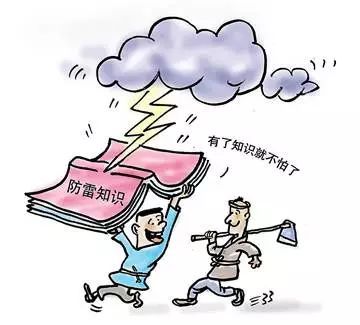
Outside the house, people should be able to hide as soon as possible in a safe place, far from the facade of buildings, metal objects such as pipes, gas pipes and electrical installations. If clothes are wet, do not go near wet walls, metal poles, and it is not appropriate to enter isolated huts, kiosks, etc. In the outer space. Do not stand in the rain under trees, towers, billboards or, as a last resort, stay at a distance of 3 metres from the trunk, crouch down and close your legs. At the same time, it is impossible to avoid thunderstorms in the open, and the height of the surface should be minimized. Nor should there be crowds of people, and no contact between people in order to prevent the flow of electricity to each other. In thunderstorms, there must be no bicycles, motorcycles or tractors, no metal on the shoulders, such as hoes, and it is best for women to take such things as metal hair clips on their heads. Thunderstorm weather is not suitable for outdoor ball-like sport, for stopping on the surface and by the water, for washing clothes, fishing, swimming and playing by the river。
In the house, care is taken to close the doors and windows and to avoid thunderstorming as a result of the conductive effects of high indoor humidity. The power of electrical equipment, telephone lines, cable wires, network lines, etc., are removed as far as possible, and access to indoor metal cables are avoided。
When hiding in the car, close the door。
3. Solar water heaters need lightning
Owing to the large number of metal components in solar water heaters, electro-heating is widespread, and the installation is generally higher than the height of the roof pins and belts, which, in the absence of effective mine protection measures, can easily become the primary target of lightning strikes. The light water heater exploded and burned, causing direct electrical shock。
According to the expert, if the solar water heater is self-resorted to mine-proof it should be fitted with a detonator not less than 0. 8 metres above the top of the water heater, which should be well grounded and the metal shell of the water heater should not be linked to the mine-shield; in the absence of detonators, thermal appliances are not protected from mines, water heaters should be linked to the original roof shield from the point of view of reducing the damage caused by thunder, and it is recommended that solar water heaters should not be used when thundering and power plugs should be removed
The industry is well aware of the devastating nature of thunderstorms, mainly in the form of direct thunderstorms, lightning sensors, thunderwave intrusions and ground voltage. In turn, the most powerful response to damage to weak electrical equipment was by induction and voltage. (a) when thunderstorms in the sky produce thunderstorms, they will carry high-load thunder pulses, voltage and currents, which are released in the form of an electromagnetic waves in an irregular manner, thus causing all metal-bearing guide lines (e. G. High-altitude antennas, cable cables, communications cables, electrical system cables, etc.) within a range of 1-5 km of the mine area (depending on the intensity of the thunderwaves), to be detected in an instant by pulse voltage voltage and currents of comparable strength, which enter the electrical equipment following the various power lines or signal cables on the electrical equipment, and damage the inner apparatus of the lightning voltage exceeding the amount of the electrical equipment; the main reason for this is that because of the varying voltage rates attached to all cable cables connected to electrical appliances, the high voltage is driven to low voltage, creating currents, which partially damage electrical equipment, paralysing the entire equipment system and, in serious cases, destroying the entire machine, even touching upon its physical integrity。
The way the lightning works
1. Protection against direct mine fire
For a direct lightning strike, a lightning rod may be used, the structure of which is as shown in the figure: the detonator consists of three parts: the top part is called the receiving end, the middle is the conductor wire and the lower part is the earth. When a thunderstorm approaches a lightning rod, it detects a large amount of different electric charge, which reaches mine-proof purposes by dischargeing electrical charge into the air and in the thunderstorm by the conductor and the receiving end, and by reducing the intensity of the lightning cloud. In the case of a direct lightning strike with the end result of electricity, a lightning rod can be used to protect the current from the lightning。
2. Protection against sensor mines
In order to protect against the damage caused by sensor mines to power lines, to transmit cables and empty antennas and to build high-level conductor wires, a silicon carbide valve or metal oxide (e. G. Zinc oxide) shield may be installed on the lines, as shown in the figure; for upper buildings, metal installations in the building may be co-located; for non-metallic roofs, metal protection nets can be installed and reliably connected. These measures, while effective, are sometimes not immune to lightning strikes, owing in part to the presence of ground-to-ground electrical resistance, thunder-to-power and high voltage from surface-to-ground electrical resistance, which can still damage the equipment and thus the effect of shielding from mines is not optimal. Mine-awareness technologies are now being improved and improved as society progresses, especially with electronic technologies. The number of producers of mine avoidance devices has increased, and new types of mine avoidance devices for various types of use are constantly emerging. Waiting for a spot-shield is one of them。
Mine-protected site security knowledge
1. Interception of lightning
The first line of mine protection is to intercept lightning and then to import it into the field. Mine-shields, belts and cage-like nets are the main means of intercepting lightning。
Average pressure
Also known as 'balanced connection' or' such a bit connection'. It connects, with conductors, the parts of the lightning that may be in circulation with the surrounding parts, ensuring that when lightning passes, it does not generate side-track discharges。
3. Diversion
The so-called diversion is a mine avoidance device that connects all routes from outside the room (including power lines, telephone lines, network lines, etc.) with the ground line. This is the focus of the rapid development of modern mine-prevention technology and is a key safeguard against all kinds of electrical and electronic equipment, and the frequent mine disasters of recent years have almost always been used to reduce losses。
Block
By encircling objects in need of protection with a conductor such as a metal net or pipe, the lightning's electromagnetic pulse is completely cut off from space intrusion channels and the lightning is seamlessly drilled。
Location
It is the most basic and most important link in mine protection and is one of the most effective means of excreting direct lightning and electro-magnetic interference with energy. The purpose of mine-proofing is to protect buildings, personnel and equipment by releasing the lightning flow to the ground via the body。









