


The common sense component is more relevant in the political and judicial police preparation process, and candidates are required to consolidate effective information in a wide range of knowledge, combining similar or related topics into one category. In-depth excavations were carried out on such topics, which revealed the orientation and focus of the subject person in the design process。
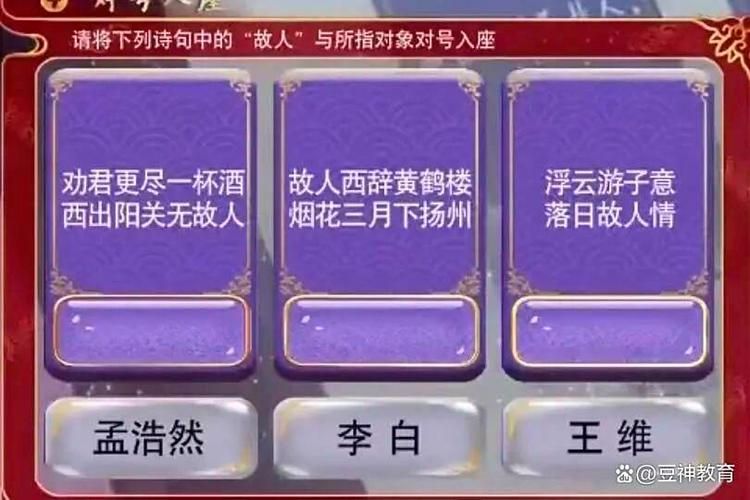
Taken together with the topic of “poetry sentences”, public and private education experts found that there were essentially three forms: the correspondence between the poem and the author; the object described in the poem; and the time of its transmission. Subjects such as the correspondence between a poem and the author, candidates who are familiar with the origin of the poem and the author have sufficient quantities to solve it, are less difficult and involve more knowledge. In preparing for the examination, the candidates can read a number of chinese poems and songs, which build up knowledge on the one hand and experience the rhythm of the poem on the other. Questions such as the objects described in the poems generally combine the poems related to a particular object and set a confusing option to examine the degree of knowledge of the subjects. The chronology is the type of chronology that is transmitted by the verse, which generally gives complete content and allows candidates to judge what chronology is described. Candidates can obtain the right answers by making appropriate inferences through the content of the poems. In order to gain a more intuitive view of the content of this section, the following examples are provided by public and private education experts。
The following poems correspond to their authors:
Qin's time is coming to an end
Wearing gold armor in the wong shabbara and never returning it to li
"court of wine and wine, night cups, so that they may drink, li bai
D. The first half of the life of the warriors, the beauty of which had paid down the jugo-dupou
The topic is the subject of the correspondence between the poem and the author. “the time of qin, the time of the moon han, was closed. But the dragon city will fly, and will not teach the humadu hill.” "out of tang dynasty poet king chang-age." “the qinghai sea is a cloud and a mountain of snow, and the isolated cities look at the gates of the jade gate. Wong shabbai wears a gold armor and never breaks a building.” "seven heads of war" by wang chang-yu of tang dynasty. "the night glass of wine and wine, to drink it quickly. Drunk in the sands, laughing, how many men have fought back?” by the dondo poet wang hen. "the first half of the life of the warriors, the beauty of the house, took down the hymns." from the famous syracuse of sing tang's high sing song line. The correct answer is item a。
The following poem depicts "the geese door close":
A. Black clouds crushing the city, and the light rises towards the sky
B. Get out of here. Go to liaodong
C. The great wall drinks the cold and cold, and the ancient palate carves the wind
D. 800 miles down, 50 chords to the outside
This is a poem that describes the subject category a. "the black cloud is crushing the city and the light is opening to the sun and the gold" came from tang, lee ho, "the gate of the goose" and depicted the geese as closing, so item a was correct. “getting out, going to liaodong, the dynasty will add 100,000 to the border”, from the qing dynasty's qing dynasty, which depicts the mountain customs department and excludes item b. “the great wall drinks the night of the night and the great desert” is written by the qing dynasty of the great pilgrim, which excludes item c. "four hundred miles down, 50 chords out, autumn soldiers in the sand" came out of south song's accelerator, "statters for chen" and "stands" referred to the battlefield in general and did not specifically exclude item d。
The willows are the more common impressions of our ancient poems, which often imply a departure. In the following sentence, the expression of farewell is not:
A. How can a flute blame the willows
It's a rainstorm. New
C. Where will we wake up tonight
How deep is the courtyard? Willow smoke, curtains are heavy
This is also a poem that describes the subject category, the correct answer being item d。
"twilight clouds are full of cold, silvery men are silent, and the night is not going to last long. This is the final sentence of soo-soo's song:
B. Mid-autumn c. Seven o'clock d. Clearing house
This is the theme of the time class that is transmitted. The poem is sugi's mid-autumn. From it, the "oxy disk" and "moon" suggest that the night is full. Only item b fits the title。
Did you get that right? Hey, if you're not all right, why don't you go back to tang sing's









