


I've fallen into the pit of orchid before. In the fifth year of school, i reported to the children an o-number extension class, brushed it every night until 10 p. M. And spent all weekends in classes. At that time, it was thought that o-quantico would learn well in primary school and lead all the way to junior high school mathematics。
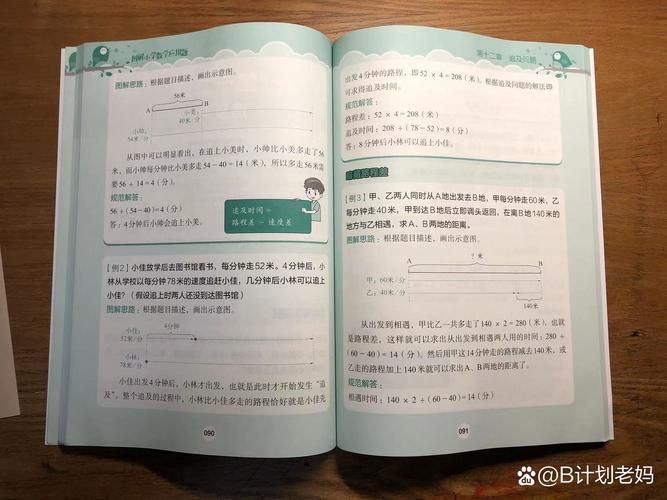
After spending most of the year, i slowly found something wrong. The children do the books in the school, the basic calculation questions are frequently miscalculated, and the application questions are often not considered dry; the oxyx questions have a number of problem-solving models, which are not done under any other condition. Then we talked to the math teacher at the junior high school, and we realized that we were going down the road. For the vast majority of ordinary children, fifth and sixth graders spend a great deal of time on the problem of numbers, with extremely low value for money, and even burying the danger of falling behind in mathematics in junior high school. What really opens the gap between junior secondary schools is not the digital divide, but the combination of five and six-year-olds, with a steady and steady distribution。
Many parents still have the inherent knowledge that many years ago, and feel that the o-certificate will add points to the first grade. There has been a long-standing change in policy and, in principle, there are no competitions for compulsory education, in accordance with the regulations governing competitions issued by the ministry of education, and the certificate of competitions for compulsory education does not form the basis for enrolment in primary and secondary schools. As in the previous years, many of the competitions were illegal, and parents were repeatedly reminded not to participate and not to believe rumours such as the award of prizes for advanced education。
The two-declining document is equally clear, and admissions are strictly prohibited on the basis of certificates of various competitions and academic scores. Admissions to public and private secondary schools are no longer subject to the o-number awards. In other words, parents spend tens of thousands of dollars and their children spend a great deal of time off trying to brush their numbers and pass the competition certificate, which is no longer able to provide practical assistance for further education. Many parents also struggled with old knowledge and spent a great deal of time and money, and finally nothing。
I'm not totally rejecting the expansion of mathematics here, but i'm trying to distinguish between two things: the expansion of mathematical thinking, and the traditional digital puzzle, which is not the same thing. A large amount of traditional oscillology is used to solve the problem of algebra, geometry, which belongs to the lower secondary school. In order to bypass the equation, a large number of special sets and exclusive models are summarized. When children learn, it is mostly a dead-end problem-solving template rather than a bottom-up logic。
There is a fatal problem with such pathways, which apply only to specific subject types and are of poor common use. After entering junior high school, one once-in-a-one, binary equations were studied, and complex algorithms in primary schools were directly replaced. The child's previously familiar olympic model is barely used in lower secondary school textbooks. Even more troublesome is that a child who has long relied on a set of issues has developed a bad habit: instead of digging into the concept, the subject starts with the idea of which model it belongs to, rather than looking for equivalence in the subject matter and deduce the idea。
It is stated in the standards for the mathematics curriculum in compulsory education (2022 edition) that the teaching of mathematics focuses on four basics and four abilities, emphasis on the interface, and on structured thinking at the primary school level; the main training exercises at the lower secondary level are based on reasoning, requiring students to complete the process of deduced proof, and the thinking requirements are progressive. Primary school crumblings are easy to reverse, skipping the basic competencies required by the curriculum and studying the myths. By the time we get to the first grade, mathematics moves from arithmetic to algebra, learning logic has changed completely, and many children with outstanding primary school numbers are experiencing a decline in performance, which is what many junior high school teachers say is “a marked decline in primary school grades”。
The 5th and 6th grades are the two most critical years for the transformation of children's mathematical thinking, and the transition from primary school math thinking to lower middle school algebra thinking. The core task of this phase is not to tackle the challenges of difficulty, but to develop the four core competencies necessary for junior high school in tandem with a full mathematical knowledge framework. These capabilities are the basis for determining whether lower secondary school can stabilize achievements and open up gaps。
The first capability is the basis of computing. Many parents think it's easy to calculate, but it's not careless. In practice, the calculation of primary schools is the bottom base of the whole algebra operation of lower secondary schools. The study scores, decimals, percentages, simple calculations for the fifth and sixth grades correspond to the logical, integer and symmetrical calculations for the junior high school. The math problem in junior high school, when the idea came up, was to calculate the accuracy rate。
Many children are able to make elementary school numbers, but scores of four are often miscalculated and symbols are used to deal with confusion. At the beginning of the learning cycle, the problem of calculating points is concentrated when positive and negative numbers are introduced. In the lower secondary school examinations, the computational category has a high score, and one-step miscalculation of the whole course has no score。
The computational training in the fifth and sixth grades is not endless, focusing on three directions. First, the concept of a pendulum, which understands the transformation between integers, decimals and fractions, is proficient in terms of points, and understands the rationale behind the algorithm, rather than a mechanical back-to-back formula. Secondly, the normative step, which does not just jump, is the root cause of many careless mistakes, which cannot be examined by themselves. Third, self-censorship habits are established, which are calculated in a reasonable manner after completion, and are used for the calculation of checks. It is not necessary to practice for long periods of time each day, to fix a small number of computational questions, to maintain a sense of hand, to ensure that the correct rate is given priority and to raise the speed。
The second core competency, algebra thinking, is the alphanumeric representation, learning to find equations for the equation of the equation. This is the largest threshold from primary to lower secondary school, and the easiest place to ignore in the study of the numbers. The traditional o number is used to thinking backwards in arithmetic, but mathematics in junior high school, with all the complex applications, is the equation。
The fifth grade textbooks begin to touch the simple equation, and the sixth grade study rate is the golden period of algebra thinking. Many children learn the equation only to deal with the subject of textbooks, habits or arithmetic, and do not actively analyse the subject of application. By the beginning of the year, the application will depend on equations, equations and groups. The child will be very incompetent, unable to understand the subject and unable to find an equivalent relationship。
The planning focus for the fifth and sixth grades is a conscious shift in thinking. Practice equation solution priority is given to integrated application in the course. When reading the subject, learn to dismantle the conditions, translate the text into quantitative relationships, and find the same equivalence. Instead of trying to paint complex application questions, textbooks are used to provide training in the application of points and percentages. In the same way, it is possible to try to solve the problem in arithmetic and equations, and to make it easier for children to express their numbers in symbols and letters, and to move from a “counting of specific numbers” to a “signal expression of relationships”。
Third capability, logic and geometry. Primary school geometry is mainly calculated in terms of length, size, size, and mostly in terms of proxy formulas. Secondary school geometry, at its core, is proof of the need for a step-by-step process of reasoning and a rigorous logic. Many primary schools learn various geometric models, which appear to be difficult, but mostly remember the conclusion of the model's direct coverage and lack reasoning training。
This type of learning is of limited assistance to junior high school geometry. The core goal of five and six grades of geometry is to understand how formulas are derived, not dead-end formulas. The size formula of the circle, the rectangular formula, the square size formula, let the child know how it works. When reading the subject, learn to extract known conditions from graphics, text and understand the connection between graphics. Practice a simple theory, allowing the child to try to explain why this conclusion was reached and to exercise the ability to express the reasoning process. This training coincides with the requirements for geometric certificates for junior high schools。
The fourth ability, self-reassembling, knowledge system custom. A lot of kids learn math, and they do it together, and then they turn it over, and they don't sum it up. There is a marked increase in the volume of knowledge points at the junior secondary level, where knowledge is closely interlinked and the way in which it is done is difficult to adapt。
In the fifth and sixth grades, children are slowly being taught to build a knowledge framework. Each module is taught so that the child can combo the core concept of the module, the formula and the link between the points of knowledge. The creation of a mischaracterization mechanism, with no direct copying of the answers, focuses on three types of questions: lack of conceptual understanding, arithmetical error, and miscalculation. A fixed time per week to look back at the wrong question and find out what was wrong, rather than simply remember the answer to the question. This habit will grow in value after junior high。

After making clear my core competencies, i have put together a phased landing plan for the fifth and sixth grades, which is fully aligned with the 2022 edition of the compulsory school curriculum in mathematics, does not exceed the standard of training, does not create problems, devotes time to control, and can be implemented at home by ordinary families。
In the fifth grade, which is the basic stage, emphasis is placed on the completion of algebra thinking within the curriculum. In the last year of the fifth grade, the focus is on reading through small numbers, making it easy to calculate, and mastering the laws of calculation. The core of the lower fifth grade is the recognition of points, four calculations and a simple equation. The objective of the year was to achieve a stable and accurate calculation, a skilled equation, and to learn to use the formula to solve problems in the course。
A small number of outreach exercises are arranged on a weekly basis, with the selection of outreach topics that are linked to the knowledge points in the course, without prejudice to the issue. The difficulty is far greater than the anomalous type of textbook, and can be directly bypassed. At this stage, the interest of the child in mathematics is to be protected, not to be discouraged by a number of difficulties. Many children reach fifth grade, mathematic anorexia, the root cause of which is the persistence of difficulties and the feeling that they can't do anything。
The sixth grade is the preparatory stage for the primary school connections. For the sixth grade, emphasis is placed on the application of points. The following volume focuses on the scale, positive and negative, and the geometry of the cylinder. The positive-inverse ratio is the prototype of the idea of a junior high school function, which is to understand the relationship between the two volumes, not the back formula. The sixth grade continues to consolidate the concepts of computing, equation, geometry. In the next semester of the sixth grade, a systematic combo of all knowledge points in primary schools is completed, with a complete knowledge network of mathematics in primary schools。
At the time of review, cross-modular knowledge points are reached by combing the three blocks of numbers and algebra, graphic geometry and statistical probabilities. At the same time, there is a moderate penetration of learning habits at the lower secondary school level, where subjects and subjects are read and considered, and where information is drawn up on the subject and a standard written step is taken. In this phase, rather than completing a full self-study curriculum, the current knowledge system at the primary level is moving from a thinking approach to a lower secondary level, focusing on training in multi-step reasoning and developing a rigorous response habits。
And here's the thing: not all children are completely untouched by mathematics. Very few children who have a strong interest in mathematics, who are more than able to learn knowledge in the course, and who find it easy to learn in the course, can do a little thought development, the aim of which is to feel the logic of mathematics, not the brush race. Expansion of content, prioritization of subjects related to the subject, and avoidance of routing models. If the children's examinations are often dropped and the basis is unstable, the first task must be to return to the textbooks, to secure the foundation, and not to recommend any more time to study the problem。
It is easy for many parents to step on a few big pits and to say so together。
The first area of error: the primary school problem is so much more difficult, the lower secondary school is so much better. On the contrary, children are unable to do so if they have a long-term dependence on a set of solutions, lack a lower-level conceptual understanding, and when they come to junior high school with new ones that do not have ready models. The study of mathematics at the junior secondary level is about understanding, extrapolation, not memory models. Primary schools do not necessarily have an advantage over lower secondary schools。
The second error: more than 90 points represents a solid foundation. Many of the children's examinations were high because they were familiar with the subject, and they made mistakes. The basis of the judgement is three things: whether the concept can be clearly defined, whether the application issue can independently find equivalence, and whether stability can be calculated with fewer errors, rather than only the test paper scores。
The third error is that in the fifth and sixth grades, there is a lot of time to learn in class. In the fifth and sixth grades, the number of subjects is slowly increasing, the number of jobs increases and the energy of children is limited. If a large amount of time is spent on the problem of numbers, the basic training time in the course is squeezed, and the computation, conceptual understanding of these lower-level capabilities is ignored and lost。

The fourth error is that everyone else is learning the numbers, or they're falling behind. At this stage of compulsory education, students are enrolled without an osd certificate, and in-school examinations are not subject to numerical bias. Most of the children in the class do not require training in numbers. Blindness and the wind only drain children's energy and undermine interest in mathematics。
Many parents are also concerned about how children's minds can be raised if they don't. In fact, there are a lot of ways to improve math thinking, to be more efficient, to match the course, and not to step on the policy red line。
The concept of mathematics can be understood in the context of life scenarios, using everyday scenarios such as shopping, measurements, statistics, etc., to understand scales, variables and perceptions of quantitative changes. In this way, the exercise is a real mathematical applied thinking, not a routine. It can also be used as a comprehensive practical subject in textbooks, accompanied by practical research, designed to develop mathematical thinking, which is difficult and fully compatible with learning objectives。
In addition, children are encouraged to speak, to finish the subject and to speak their minds. A clear sense of logic means real understanding. The process of the topic, which is to combe the chain of reasoning, coincides with the ability to express the logic required for the geometry of junior high school, with a high value for money。
We also need to look objectively at mathematics at the primary level, with a combination of care and basic proficiency; the characteristics of the subjects have changed considerably after entering junior high school. Knowledge points are denser, abstraction is much higher, topics are more integrated, and there is a marked increase in the requirements for logical reasoning and step regulation. Children with a solid foundation and sound mindset at the primary school level adapt more quickly after entering junior secondary school and the gap widens. For those children who rely on the orchid system and have a weak base, the first half of the first semester looks good. After learning a reasonable number, a one-dollar equation, geometry proof, the short sheet is concentrated and results are down。
These two years in the fifth and sixth grades were not used to frenziedly tackle difficult problems, but rather to complete the transformation of thinking and build capacity at the bottom. Work hard on calculations, build up equation thinking, learn to combo knowledge, repeat errors and get through every concept in the course. This layout, with no fancy layouts, does not appear to be as quick as a brush in the short run to make problems and does not see bright results. But if we go on and get to lower secondary school, the advantage will come to light, as many parents say, the difference is visible。
Many parents put their energy in the wrong place and spent a lot of time on oval puzzles, neglecting the ability to really determine the bottom line of lower secondary school performance. Education is not a short-term sprint, mathematics at the primary level, and the goal is not to do much of the challenge, but to build sustainable learning capacity and pave the way for learning at the lower and upper secondary levels。
Finally, i'd like to talk to your parents: is your child in fifth or sixth grade? Have you ever reported any expansion in numbers before, and where do you think the focus should be on math expansion in primary school? Welcome to the comment section。
Derogation: this is an individual experience-sharing exercise, which refers to the standard of mathematics curriculum for compulsory education (2022 edition) and the related public policy of double reduction, and does not constitute a personalized learning programme. There are differences in the level of awareness of each child and in the basis of study, and the planning of studies needs to be adapted to the child's own situation. Education policy is based on the latest official bulletin of the local education authorities。









