How do you make the plates into wire
The wires are usually made of discs pulled and reduced cross-sections by molds. Surface clean-up and lubrication prior to extraction, with intermediate treatment between multi-channel reduction; finally, the lifting, plating and packaging jointly determine delivery status。
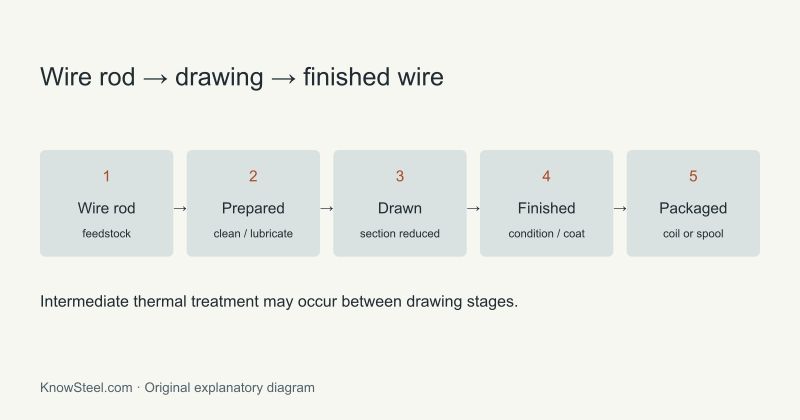
Discs become finished wire after being cleaned, pulled, processed on demand and refined. Intermediate processing and plating changes according to product。
The fact that the middle was softened did not mean that it remained soft when the plant was out, as it could be followed by cold liftings。
The discs are raw materials and the finished steel wires are accepted in their final state of extraction, processing and refining. The contents of the plate do not demonstrate the diameter of the finished product, its tensile state or its apparent conformity. The plate furnace number is to be traced back to the final packaging by gravitation; the partitioning or change of lubricant should also be identified in the incoming record。
The same diameter doesn't mean the same performance
Circle wires shall indicate diameter, common mass and invertencies, and foreign wires shall require cross-sections. The tensile requirement shall correspond to the measured diameter, card number and final state; the same diameter may be a softer thong or a different spring wire required by performance。
Priority uses for different wire uses require follow-up
Tie and general form
Curved expression, softness, diameter and surface
Repeated removal and formation。
Spring
Desirable strength, surface and size requirements
Springs, processing and product evaluation related to fatigue。
Steel winch, wire
Monofilamental properties and surfaces
The structure of the finished product and the test determine the final product grade。
Scroll horizontally in tables to see all columns
It is a barbed wire standard and does not apply to all wires. The contract version should be used and complete diameter-related requirements should be checked. There are applicable product requirements for single wires, which are typically formed wires and ropes/crop lines, and the result is not a rated load of finished wire ropes。
Plating, lubricant and packaging for each use
Zinc plating, pull lubricant and temporary rustproof oils have different functions and should identify which are retained and removed prior to subsequent formation, welding or coating. G90 plating marks such as steel plates shall not be used directly in steel wires and shall use their own plating requirements。
Volumes or line axes shall be suitable for wire-laying equipment and shall record packaging sizes, net weights, circuits and batch numbers. Connections and discs remain retroactive。
How do you understand the free circle and the distance
Cast describes the residual curvature of the coil formed after the wire was released; helix describes the extent to which the coil deviates from the plane, which is often controlled by the distance. Both affect silk delivery and twisting. The agreed limit values shall be accompanied by an indication of the manner in which the product was released, the measurement method and the length of the sampling。
The actual acceptance record shall relate diameter measurements, tensile performance or prescribed status, plating and lubrication, packaging batch numbers, and required free circle and range results to the same product. In this way, “2 mm wire” becomes a clear requirement that can be used for equipment feed and formation。
Material and treatment options can also be found in carbon steel, stainless steel and ablaze. The mechanics and packaging requirements for steel wires are still subject to separate agreement。
Relevant information
Cyclops of steel, carbon steel and low-carbon steel, stainless steel of steel, fired steel of steel, reference steel standards and board access guides