(this is organized by ystz927) for information purposes only and does not constitute an operational recommendation. If self-operating, take care of position control and risk self-sufficiency. I'm not sure
The fundamentals refer to the situation of some of the underlying factors that influence stock market movements, which, by analysing them, make it possible to grasp the underlying factors that determine stock price movements and form the basis of stock investment analysis。
If we want to make money in the stock market, we need to know the basics of the stock market well, and what is included in the analysis of stock fundamentals by many stock starters. It is not clear, so let's have a little bit of a bit of detail here。
Basic analysis includes:
(1) macro: a country's fiscal policy, monetary policy, scientific analysis to identify the intrinsic value of the market and compare it with its real value, thus selecting the most investment-value shares。
(2) micro: study of the economic behaviour of listed companies and the corresponding economic variables, providing a reference basis for the purchase and sale of stocks。
In basic terms, it is the basic analysis of the company, the most important of which is the basic analysis of the company, or the financial analysis of the company, which is a compulsory course. If only the data are interpreted, the three statements are sufficient to describe the problem, but in fact they are far from being as simple as that. In empirical terms, more or less listed companies will be able to trick or fake the financial statements, some of which will require us to discover and correct them ourselves, some of which are financial techniques, which are not irregularities, some of which are deliberate misrepresentations, some of which are direct falsifications。
Basic analytical techniques:
I. Observations
Whether the industry is predominant or not and whether there is sufficient room for profit in the industry is the main concern。
What is needed is to measure whether there is a correlation between major industries, whether there is an upstream/downstream relationship, or whether resources such as markets, technologies, services, etc. Can be shared; the profit space depends on the extent of net profit space, in addition to the industry's gross profit space. Particular attention should be paid to the composition of the company's main business and the profitability of its main business。
Ii. Profitability
For investors, it is important to understand not only dynamically analyse changes in the profitability of the company, but also the quality of the company's profitability, to see if it is gold on paper. Typically, a decline in the profitability of a company in its annual target is often a sign of a shift towards disadvantage in its medium- and long-term operations. When there is a decline in the profitability of a company, particular attention needs to be paid to whether the company is growing in size and is able to maintain total or net profits. When there is an increase in the profitability of a company, it is generally necessary to remove the influence of the element of chance and seasonality in order to determine whether this increase in profitability is sustainable。
The second is to judge the quality of the company's profits by focusing on the composition of the company's profits, net profit margins and operating cash flows。
Each share of proceeds is a product of layered packaging, and to identify the true identity, it is necessary to analyse what is actually included in each share of proceeds. Market gains have a competitive effect, and it is possible to judge the relative value of investments by comparing those of different companies。
If there is a general rise in profitability throughout the industry, it is a sign of a wave of industry developments。
Iii. Looking at size
The size depends first and foremost on the size of the company's revenues and profits. The second depends on whether the company is strong while it is big. It depends on whether the company has enough scope to expand. When looking at size, attention is focused on the company's business income and net profits。
At scale, it is often possible to dig up the headline of the industry. Some enterprises, particularly small and medium-sized enterprises (smes), face problems of commonality, and the scope for developing after listing is such that, in addition to having access to financing, other costs, such as the cost of labour, the cost of management, etc., are bound to increase, which in turn reduces the profitability of these enterprises and reduces their competitiveness。
Iv. Effectiveness
Efficiency is seen in three ways. First, see if there is any efficiency gains. Second, to see if intermediate costs consume profits. Intermediate costs are operating, administrative and financial costs. Third, look at staff efficiency. Staff efficiency reflects the level of management of the enterprise。
V. Look at the business
Buying a company is also buying its assets, in addition to its profitability. Investors can divide listed companies into three types of companies, the first of which is proficient, the second is obese and the third is broken。
At the firm level, attention is paid to the company's assets, particularly current assets。
Obesity companies, which appear to be very large in assets, may have been brilliant in their history and some brands are large, but in essence they are largely financed by bank money, and they may be exposed to huge adverse assets as long as there are problems with financial channels and so-called financial chains。
Vi. Periodicity
There are two types of operating cycle. One is the business cycle, such as the high-end wine industry, which always earns more in the fourth and first quarter of each year. The second is the accounting cycle, where companies that rely on investment returns and show returns reflect better performance in the second and fourth quarters。
Vii. Look at outcome
Many listed companies rely on external subsidies or investment earnings. A number of companies with poor operating quality, working hard to save their cards and keep their profits, have worked hard to write about foreign financial policy gaps, such as the preparation of a large amount of impairment of bad assets in the previous year, a one-time loss, and the preparation of impairments in the following year, so that the loss can be reversed. This company is a black trap。
Viii. Looking at liabilities
The liability is the company's external arrears, which include banks and suppliers. The analysis of the liability of the enterprise focuses on two areas: first, the level of the liability of the enterprise is generally 30-65 per cent, which is a reasonable level of liability. Second, the evolution of the enterprise's advance receipts is an enterprise liability to be returned with products or services in the future. On the other hand, a large increase in pre-collections suggests that clients need to pre-paid to pick up their goods, and that business improvements are illustrated from another perspective。
Debt investment, debt development is a double-edged sword. Good work with chickens and eggs. On the contrary, the risk could be doubled。
Ix. Investment
Investments are mainly of a long-term and short-term nature. Investment should be seen in terms of both return on investment and investment structure. The main concern is the share of return on investment in the composition of profits, long-term investments and short-term investments。
X. Look at the computer
The controls are analysed from three angles. One, high control. Second, medium control. Thirdly, there is a lack of attention. High control is a concept more familiar to investors. High control is traditionally understood as the stock. High controls with fundamentals are often also the initiators of each round; medium controls, often the second shock wave of the line; and for companies lacking attention, whether they are supported by fundamentals。
Corporate financial analysis:
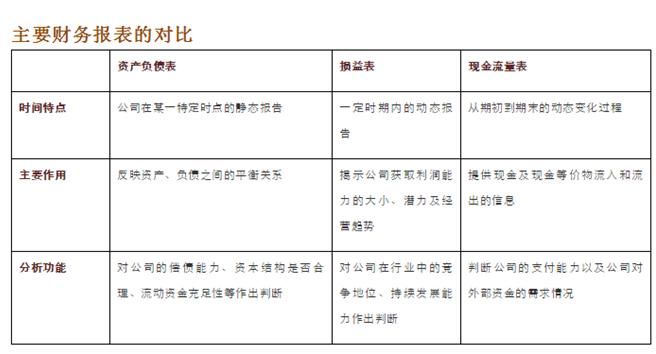
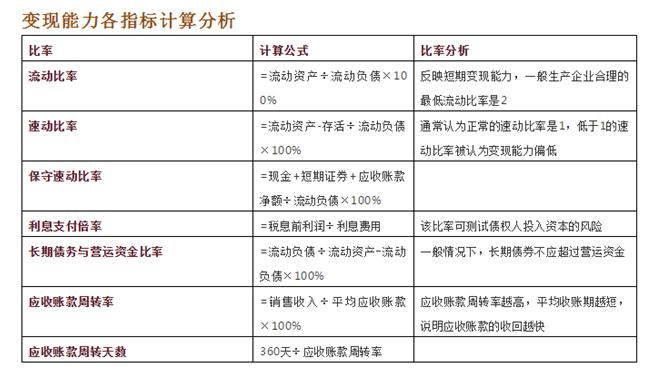
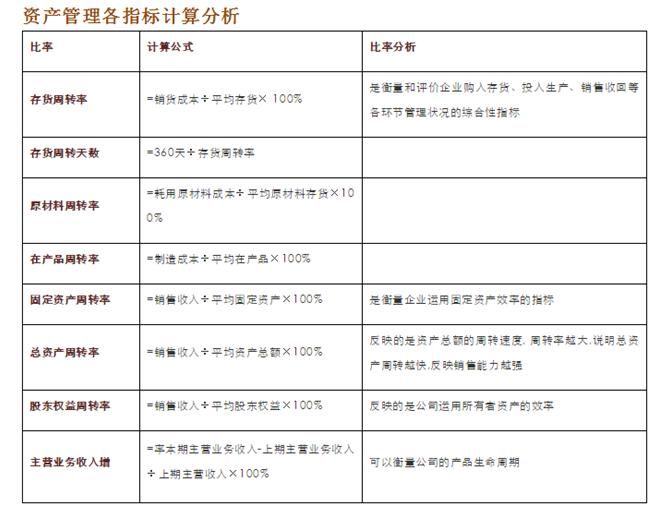
5 indicators for corporate growth evaluation
Growth rate of income from main operations, growth rate of net profits, growth rate of māori rate, net profit cash guarantee multiplier and asset liability ratio。
Main business income growth rate: mainly for year-to-year growth versus ring growth rate. The growth of operating income is best achieved by essentially synchronized net profit growth。
Net profit growth rate: mainly refers to the growth rate of the year versus the rate of the ring. Net profits: the most direct and fundamental indicator of the impact on equity prices。
Māori rate growth: the higher māori rate is mainly a year-to-year growth rate, and is certainly a good thing, either with lower commodity costs or higher sales prices, which are important competitive advantages, regardless of which. They are applied mainly for comparison with industry。
Net profit cash guarantee multiplier: the ratio of operating net cash flows to net profits over a period of time, the greater the margin, the greater the reliability of the profit, the main reason for excluding forgery。
Asset-liability ratio: the asset-liability profile of the enterprise is considered primarily from a security perspective, and therefore the smaller the asset-liability ratio, the better。
The weight of the indicators: the weight of the above five indicators should not be equal, and it is recommended that the weight be given to the net profit growth rate (35 per cent), the māori rate (25 per cent), the growth rate of income from the main business (25 per cent), the net profit cash guarantee multiplier (10 per cent) and the asset liability ratio (5 per cent)。
Main valuation method:
The main sub-relationship method and the absolute method of valuation (discount of future cash flow): of these, the pe surplus method, the ev/ebita valuation method, the p/b net ratio valuation method, the rnav valuation method, the peg valuation method, and the black-scholes options pricing valuation method are all relative valuation methods. The ddm model and the dcf method are the absolute valuation method。
At present, the dcf valuation method is the most popular, although the secondary market for a shares is less applied and only the method is ineffective. However, first-tier markets are used more effectively. Different valuation methods apply in different industries, companies with different financial positions。
Valuation method industry applications:
1. Market value = net profit*pe (valuation) and, generally, the lower the p/e value, the higher the value of the company's investments, the higher the pe buys and sells the investment logic. The anti-p/e valuation method, on the other hand, is a high-pe buy-in, a low-pe sell-out, which is more suitable for high-cyclical listed companies。
The real estate and commercial and hotel listed companies, which focus on the potential contingent benefits to companies from differences in book and real values of assets (e. G. Real estate) combined with the rnav and pe laws。
3. The sun-yang industry, such as biomedicine and web-based software development for listed companies, is environmentally friendly and growth-oriented. Preferred peg method, second p/b, ev/ebita。
4. Highway listed companies, with a focus on stability, preferred the dcf approach to ev/ebita。
5. Resource listed companies, in addition to production, should be concerned with the ownership of mineral resources and should use option pricing (black-scholes)。
Of these, pe and peg were the most effective in unit a, particularly in the growth unit。