Commercial equipment account management system focused on equipment maintenance and maintenanceInformation managementIn order to strengthen the management of equipment maintenance and maintenance by the enterprise and to improve the efficiency of the management of the equipment of the enterprise, a comprehensive solution has been provided and has been developed twice in a unique way. Commercial equipment account management system for equipmentMaintenanceInformation management is the backbone, providing comprehensive and accurate information in a timely manner for decision-making by business leaders and sector managers through the collection, storage, transmission, statistics, analysis, comprehensive queries, report outputs and information-sharing。
Commercial equipment account management system functionality
1. Enterprise information: the management of the enterprise's personnel, as well as the management of its personnel, through the management of departmental information, job-setting information and employee information。
2. Equipment information management: this includes, inter alia, technical reference materials, technical information, schedule details, equipment suppliers and spare parts purchasers recording relevant information on some equipment。
3. Pre-equipment management: these include, inter alia, the annual equipment skill plan, the equipment source survey, registration of equipment purchase contracts, commissioning of installation, pre-service work records for equipment acceptance and inspection of five items of equipment。
4. Equipment asset management: this includes, inter alia, equipment desk accounts, equipment classification, equipment transfer and equipment idle. End of life of equipment. Six changes in equipment can be printed out for each item of record。
5. Equipment use management: includes five elements of equipment liability information, equipment inspection, equipment running time, equipment failure, equipment accident。
6. Equipment maintenance management: this includes, inter alia, equipment maintenance plans, equipment maintenance records, current month maintenance plans, and five elements of the uncompleted maintenance list, which can be printed out。
7 equipment lubricants management: this includes, inter alia, equipment lubricants, lubricants information, equipment lubrication records, and four elements of detail for which lubricants are required in the near future。
8. Maintenance and maintenance management of equipment points. These include, inter alia, equipment underperformance, temperature underperformance analysis, vibration underperformance analysis, equipment annual check-in, equipment point-checking standards, equipment spot-checking plans, equipment cycle plans, equipment maintenance technical standards, equipment maintenance operations standards, equipment maintenance plans, equipment maintenance records, equipment detail for immediate maintenance, equipment maintenance assignment orders and equipment maintenance contracts. The relevant table can be printed out。
9 equipment spare parts management: this includes, inter alia, spare parts warehousing, spare parts exit storage, spare parts information set-up, spare parts inventory, details of spare parts that need to be purchased in the near future. 10. Equipment upgrades: this includes, inter alia, updating the entry。
Characteristics of the commercial system for the recording of equipment at the facility level
The efficiency of the business sector as a result of the enterprise's system for the management of the equipment system is as follows:
Promoting enterprise information management reform。Equipment managementThe implementation of the system will provide strong technical safeguards for enterprises to undertake information management reforms and improve their competitiveness, with significant direct economic and management efficiency gains。
2. Scientificization of planned movements. Achieve balance, resource balance and time balance in the equipment plan, increase resource utilization and eliminate plan management bottlenecks to the maximum extent。
3. Ensure smooth use of equipment. Implement centralized equipment management, introduce technical standards for equipment maintenance and implement maintenance plan management. This ensures the quality of the equipment, reduces the failure and accident rate of the equipment and avoids human-caused losses。
4. Energy efficiency reduction. By managing the implementation of the software system, the cost of repair and maintenance, energy consumption and other losses are reasonably reduced, thus reducing overall operating costs and improving economic efficiency。
5. Providing management decision support. Managers have ready access to the state of use of the equipment, using an objective set of data, and using computer systems for scientific synthesis analysis to facilitate leadership in business decisions
Process for the installation of a system for the installation of commercial equipment systems
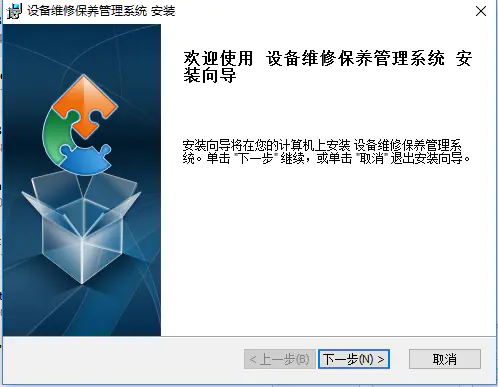
1. Compression and decompression of the device management system, running the installation program and clicking on the next step
2. Select placement, click next
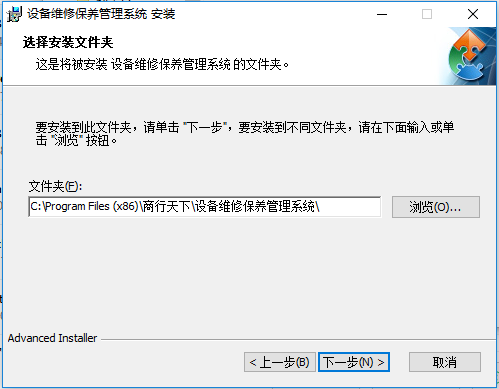
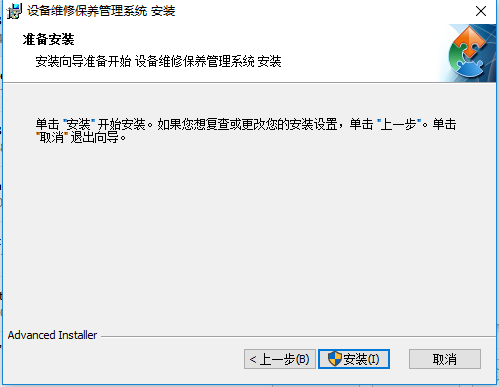
3. Click to install, pending completion of the installation, to open and operate the commercial equipment management system software。