In life, have you ever seen "school with two skins"? Many student parties and people at work suffer from this suffering。
In learning, it is hard not to distinguish between hard work, and one book is all focused on the "milk-eating" and has a high mental and mental stress and little improvement in learning achievement。
"the lesson notes are very comprehensive, but the results are not satisfactory."
In the workplace, there is a growing demand for complex talent, and in recent years there has been an increase in the number of people who have learned to be anxious. They have heard a lot, read a lot of books, attended a lot of classes and continued to struggle in practice。
"i learned a lot. I lost my chain when i came in."
PersonalKnowledge managementAs a matter of urgency, it has become a top priority, and the writing coach has explained to us that the use of knowledge is the essence of knowledge management, as shown by the teacher in the out of wisdom: being a learned, thinker, able to write。
In the book, he proposed a “knowledge networked management model” that would effectively break the five possible barriers to knowledge management, such as failure of connections, disorderly storage, mislabelling, management mismatches and re-use difficulties, through learning networked models to see the value of knowledge, maximize the benefits of learning, achieve knowledge practices and empower people in their working livesPersonal growthI don't know。
01 dismantling knowledge management errors and deliberately establishing knowledge logic links
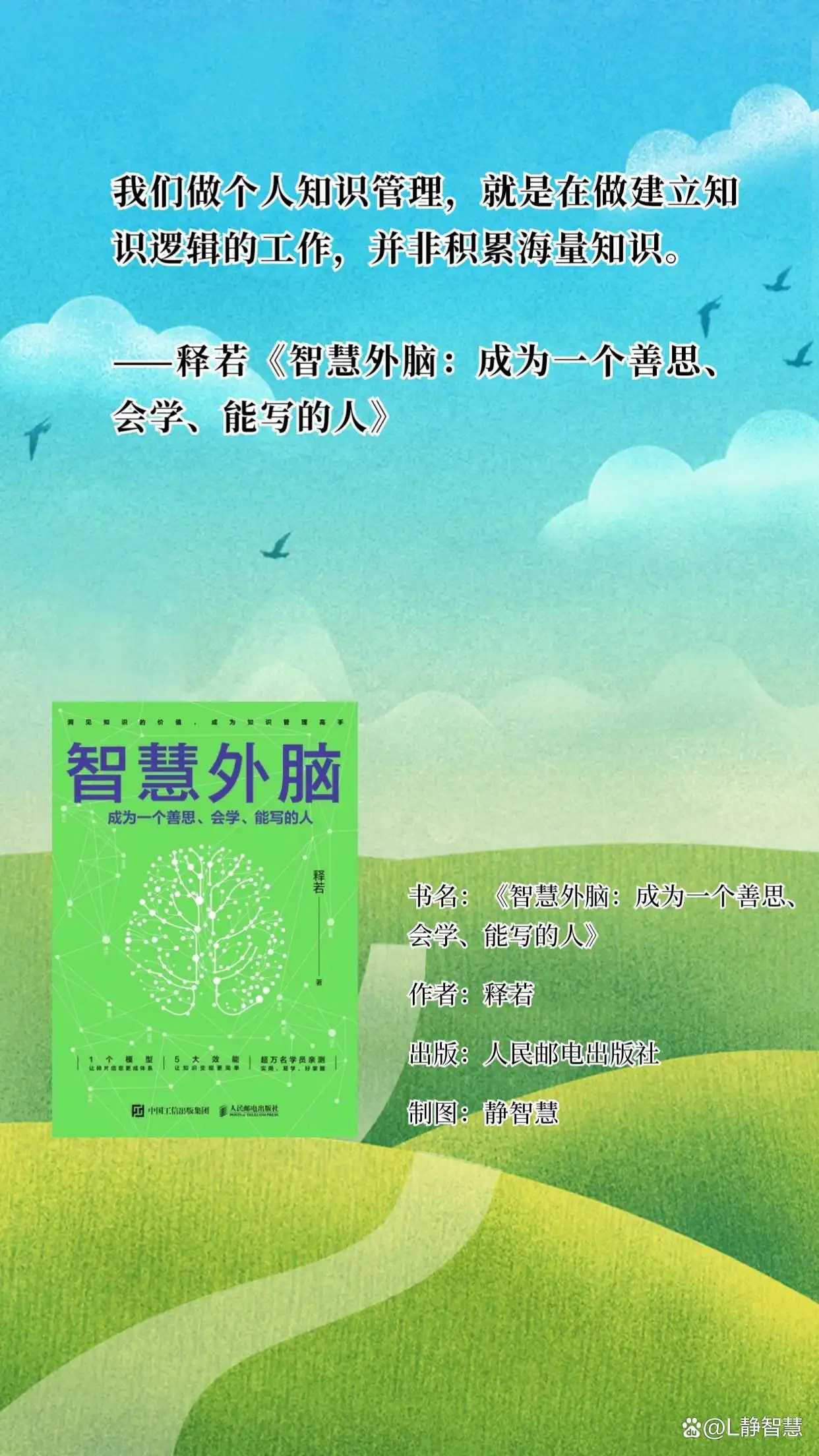
“we are doing personal knowledge management by doing the work of establishing the logic of knowledge, not by accumulating the vast amount of knowledge.”
Personal knowledge management refers to the logical networking of single-point knowledge, the formation of combined fists, the application of knowledge systems to solve problems in life, and the suppression of the problem of “book-to-temporal” at source. Such an approach enhances the understanding and ability to apply knowledge rather than merely collecting information in a meaningful way。
If a person's wealth is measured only by the accumulation of knowledge, university professors, such as the most important people in the world, must be the richest group in the world, but reality tells us otherwise。
To find out how things work, to know what specific capabilities are in order to be able to do what is right and to focus on a target in a logical way. The same is true of personal knowledge management, which explores linkages for better output and better purpose in knowledge work。
In essence, everything has to be done in a series of logical things that keep breaking down a big, difficult thing. For example, writing an article requires learning to choose the subject, write the title, frame, line the subheadings, line the material, start the article, finish the article, write the gold sentence, write the case, write the story, modify the content that does not fit the subject..
Without a single-point breakthrough in understanding the logic, no matter how many texts have been read, how many debris information has been collected, or if it cannot be written, learning to write is not a simple stack of information。
By managing information, people can understand complex issues more accurately with limited information and provide stronger support for their resolution。
How, then, can individual knowledge management capabilities be enhanced? I drew the following from the book:
1. Positioning themselves in space
2. Create their own work and get results
3. Clarifying the goal of the work as results
4. Tell users clearly what value your knowledge products can give them
5. Ongoing action, dismantling steps to complete thematic creation
6. Focusing personal identity as core competitiveness
Knowing to match problems with solutions with logic, everyday problems can move knowledge around and help us find solutions。
02 test the validity of knowledge links, hf usage of knowledge
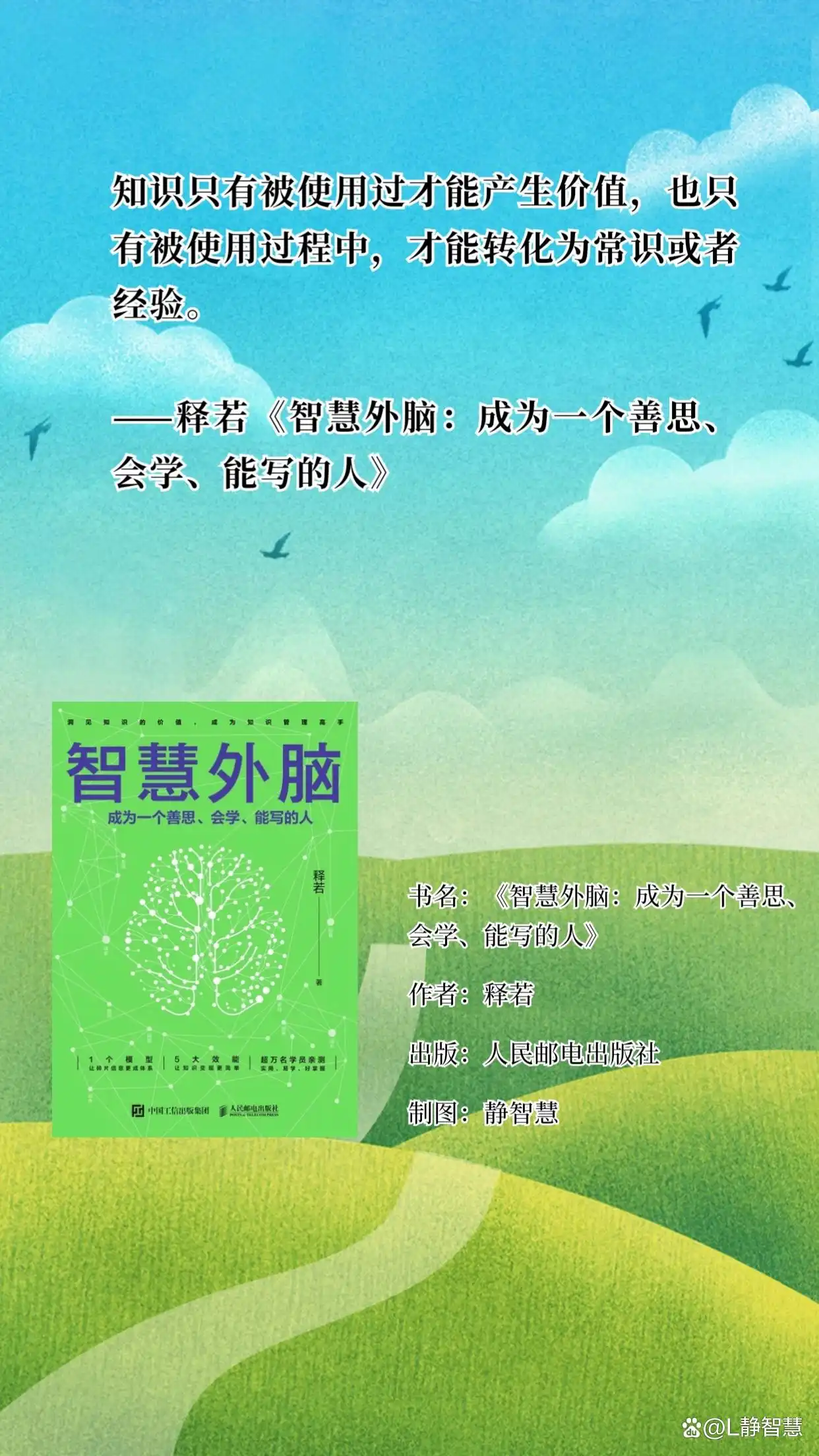
Knowledge can only be of value if it is used and can only be translated into common sense or experience if used. It's like "the brain: being a thinker, a learner, a writer."
This sentence tells us that, when knowledge is not deliberately used, its ability is confined to very shallow paper and does not necessarily really harness knowledge to solve problems. It's as weak as having heard so many things and still having a hard life。
The reason is clear. One minute on stage, ten years on stage. The use of knowledge not only deepens perceptions, but also receives external results and real feedback, and data are more credible than perceived。
When looking for a job, rather than recording experience in the document, it is better to present it during interviews. In the face of what hr must have done and what it has done to prove its ability, it is possible, with a sense of knowledge, to bring past hands-on works to the table and to win the opportunity to demonstrate its ability at critical moments。
Thomas edison is one of those who think of the use of knowledge to create value. In the late nineteenth and early twentieth centuries, thomas edison invented electric light bulbs that sought success, but failed thousands of times. Each failure, he records the results of the experiment and the lessons learned。
In an interview, edison once said, "i didn't fail, i just found a thousand unworkable ways." this statement demonstrates his attitude towards the experiment, that failure is seen as an opportunity to learn and that the knowledge and experience gained during the failure process will be used to improve the next experiment。
Until he did hundreds of experiments, edison managed to invent a durable and functional light bulb. The foundation has been laid for the electricity sector and has completely changed the way people live。
The story illustrates the process by which the value of knowledge is generated and transformed. Edison did not have knowledge of the invention of light bulbs in the first place, but developed knowledge and experience on it through numerous experiments and failures. The learning and experience accumulated in these practice processes have ultimately enabled him to successfully create significant innovations。
The amount of work that can be done in practice is an indication of how much is in their hands and how progress can be optimized on the basis of feedback. Success is not one step in the sky. It is through the use of knowledge once and for all that the goal is achieved。
So how do we use knowledge? I've summed up the following:
1. Understanding the status quo and using knowledge to solve current problems
2. Set targets, select target audiences and have a clear and achievable plan for future growth
3. Choices to determine which groups will be valued in the future to make them better
4. To find the driving force within themselves, to assert their will and to disseminate knowledge on a continuous basis
03 i mastered the bottom logic in practice, perfected the knowledge network
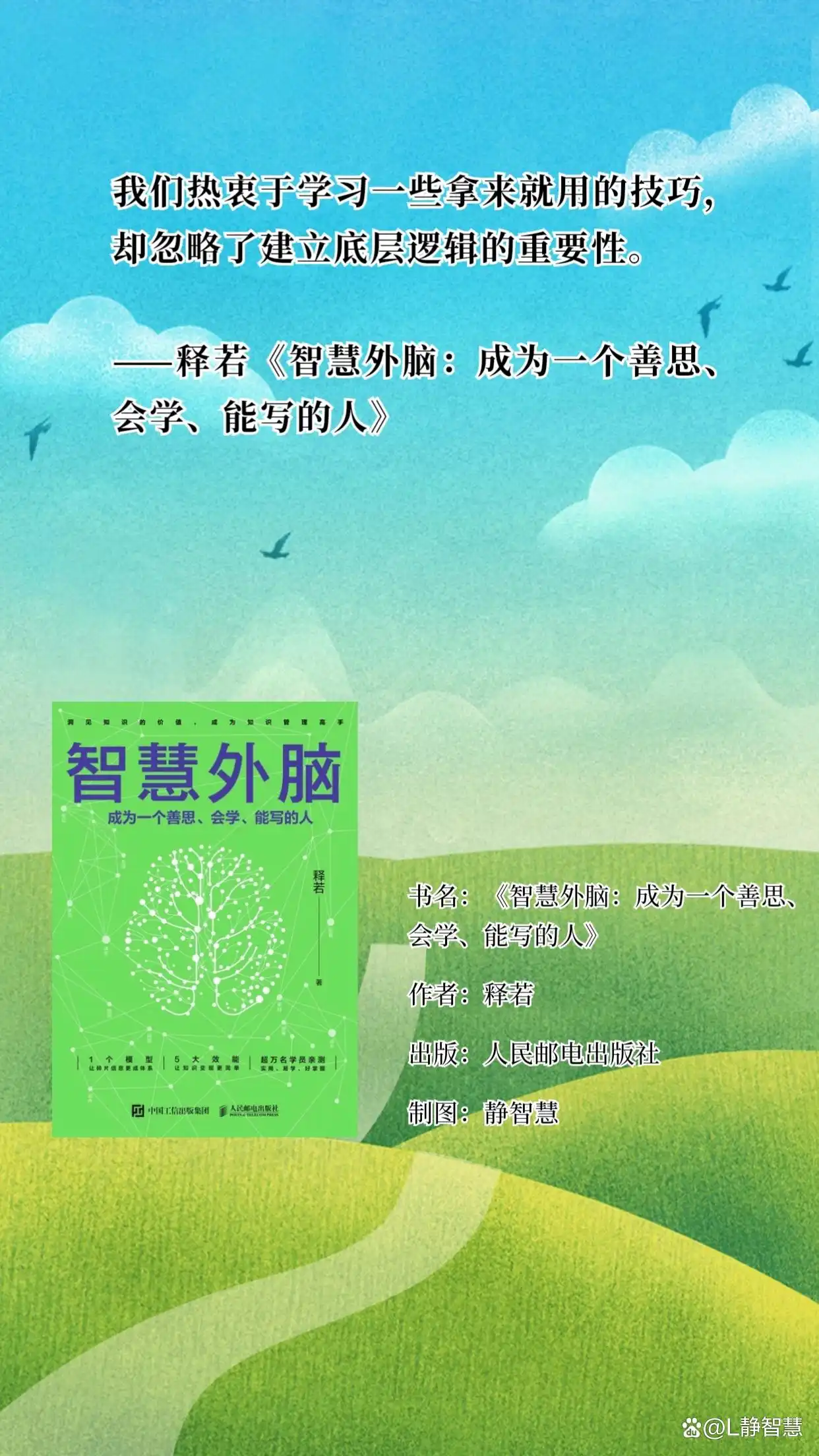
“we are keen to learn some of the techniques we can use, while ignoring the importance of establishing the bottom logic.”
For example, in building a house, the bottom logic is the foundation and structure of the house. This is the core of the entire building and ensures that the house is sustainable. This phase may require more time and investment, but it is key to ensuring long-term stability of the house。
Once the foundations and structures of the house have been established, some of the techniques used to add functionality and beauty to the house can then be applied. This may include renovations, furnishings, etc. These techniques can make the house more practical and comfortable, but they cannot really work without a solid foundation。