


How much for industrial electricity? Industrial price classification, peak valley standards, billing rules and plant-saving schemes
I. No single national price for industrial electricity
Classification of users of electricity in industry
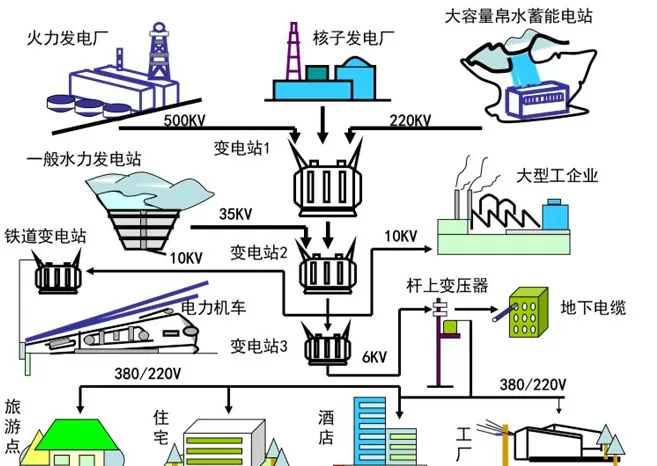
Many plant managers and microentrepreneurs consulted on the cost of electricity, the first being the question of “how much electricity is used by industry once”, and many default that the price of electricity is fixed and uniform. In fact, the country's industrial electricity supply has long been fully marketed for the purchase of electricity. There is no single national fixed unit price, and the price of electricity is determined by the type of electricity to be used, the capacity of transformers, the level of electricity to be supplied, the peak time, the pattern of electricity purchases and the multiple conditions in the province。
Many plant managers and microentrepreneurs consulted on the cost of electricity, the first being the question of “how much electricity is used by industry once”, and many default that the price of electricity is fixed and uniform. In fact, the country's industrial electricity supply has long been fully marketed for the purchase of electricity. There is no single national fixed unit price, and the price of electricity is determined by the type of electricity to be used, the capacity of transformers, the level of electricity to be supplied, the peak time, the pattern of electricity purchases and the multiple conditions in the province。
Under the current electricity price policy, industrial electricity is divided into two core categories: general industrial and commercial electricity, and large industrial electricity. The boundary criterion is limited by the transformer capacity 315 kva: 315 kva and above, which is a major industrial user, executes the price of two units; 100kva small processing plants, workshops, implements the single price; and 100kva ~ 315 kva area users can apply for the option of single or double-counting, usually with a fixed implementation cycle, which cannot be changed at will..。
From the source of electricity, enterprises are divided into grid-agents for electricity purchases and direct market transactions. The price of electricity purchases by grid agents is published monthly by provincial grid companies, which are relatively stable; direct and sales companies are contracted to participate in electricity market transactions, and the cost of electricity purchases rises significantly with demand, seasons and seasons. This is also the underlying reason for the large difference in the cost of electricity per hour in two factories of similar size and geographical proximity. In order to accurately account for electricity costs, it is important not only to read the unit price of electricity but also to understand the full composition of the bills。
Reference price tables for electricity for industrial use
Summary comparison of electricity prices for industry
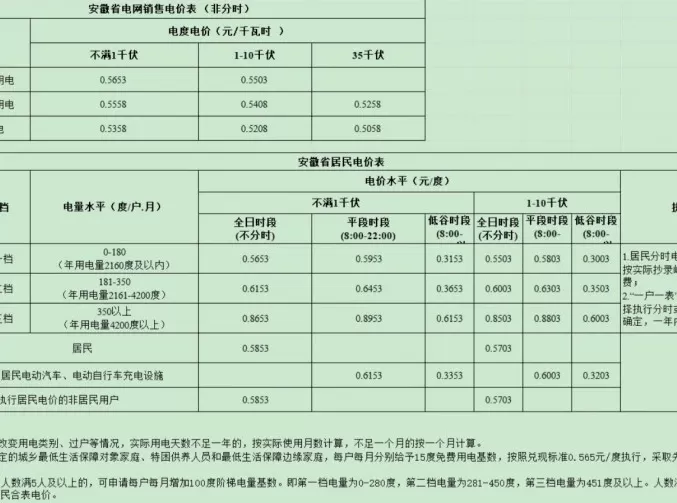
Important notes: this table provides a generic reference area for the market under the domestic grid proxy model, which is used only as an estimate of the cost of the plant and is not used as a basis for settlement; the monthly price of the subdivision of the province, which will fluctuate from time to time; the additional basic charge for large industrial users; and the peak price of electricity will only be applied during the summer and winter peak months。
Table
| Type of electricity used | Pressure level | Top price | Maximum electricity price | Equivalent price | Low grain price | Fee model | Annotations |
|---|---|---|---|---|---|---|---|
| General business (small processing plants) | Unsatisfactory 1kv | 0. 95-1. 15 | 0. 80 to 0. 98 | 0. 60 ~ 0. 72 | 0. 30 to 0. 42 | Single system | Electricity only + power rotation, no basic electricity |
| Business in general | 10kv | 0. 92-1. 10 | 0. 77 to 0. 94 | 0. 57 ~ 0. 69 | 0. 28-0. 40 | Single system | The higher the voltage, the lower the cost of transmission and distribution, the lower the unit price |
| Large industrial electricity | 10kv | 0. 90-1. 08 | 0. 75 ~ 0. 92 | 0. 56-0. 68 | 0. 27 ~ 0. 39 | Two parts | Electricity + basic electricity + power transfer |
| Large industrial electricity | 35kv | 0. 86-1. 04 | 0. 72 to 0. 89 | 0. 53 ~ 0. 65 | 0. 26 ~ 0. 37 | Two parts | Stable production enterprises suitable for medium-sized plants, production lines |
| Large industrial electricity | 110 kv and above | 0. 82-0. 99 | 0. 69 ~ 0. 85 | 0. 50 to 0. 62 | 0. 24 ~ 0. 35 | Two parts | Large, energy-intensive enterprises with large electricity |
A reference to the basic electricity costs of large industries: about $20-30 per transformer capacity/kva per month; about $30-40 per kw per month at maximum demand, which still has to be paid for the chinese government network even if it is out of production that month. Power factor (strength) assessment criteria: high-pressure industrial users pass 0. 9, higher than the standard for the provision of a reduction incentive for electricity, and below the standard will impose a fine for electricity; the price of electricity includes items such as transmission and distribution prices, government fund attachments, ancillary services, loss-sharing, etc., and is not the original cost of electricity sales for the power plant 95598。
Iii. Examination of the benefits
Dismantling of single, two-tier bills
It is possible to understand the billing model in order to understand the billing, avoid being misled by electricity price information and choose a billing formula suitable for the plant. First, a single price for electricity suitable for small processing plants, small workshops, intermittent production enterprises within 100 kva transformers. The formula is simple: the electricity charge = the actual amount of electricity used x the unit price of the time period and no fixed base charge. The advantage is simple and flexible costing, which does not result in fixed electricity bills in the event of unstable plant orders, stoppages at times and long periods of late-season shutdowns; the disadvantage is that at peak hours, unit prices are high and combined electricity costs are higher than for two users if they are produced over a long period of time at full capacity。
It is possible to understand the billing model in order to understand the billing, avoid being misled by electricity price information and choose a billing formula suitable for the plant. First, a single price for electricity suitable for small processing plants, small workshops, intermittent production enterprises within 100 kva transformers. The formula is simple: the electricity charge = the actual amount of electricity used x the unit price of the time period and no fixed base charge. The advantage is simple and flexible costing, which does not result in fixed electricity bills in the event of unstable plant orders, stoppages at times and long periods of late-season shutdowns; the disadvantage is that at peak hours, unit prices are high and combined electricity costs are higher than for two users if they are produced over a long period of time at full capacity。
Second, the price of electricity is the mainstream billing programme for large- and medium-sized industrial enterprises, which consists of three superseding components: electricity charges, basic electricity charges, power factor adjustment charges. Electricity charges are settled by measuring the amount of electricity according to the peak time scale; the basic charge is calculated by the transformer's capacity or maximum demand, and is suitable for a plant that stabilizes the start-up and continued load of transformers throughout the year; the power factor adjustment is an easy cost for many plants, and the air presses, electrics and pumps are sensory loads, low power factors, no power-compensation cabinets, higher power factors, preferential power charges and non-compensation entail additional penalties。
An example is a 500kva transformer plant that chooses to pay the basic electricity bill at its capacity, at a unit cost of $25/kva monthly, fixed basic electricity bill of $12,500 per month, and folds the peak valley electricity bill, power-concentrating incentives and sanctions. If the plant is shut down for long periods of time and has very low loads and the cost pressure of the two-part model is high, the enterprise can apply to the power company for a change in the billing method in advance to reduce fixed expenditure。
Iv. Three place place place rules
Industrial peak valley time map
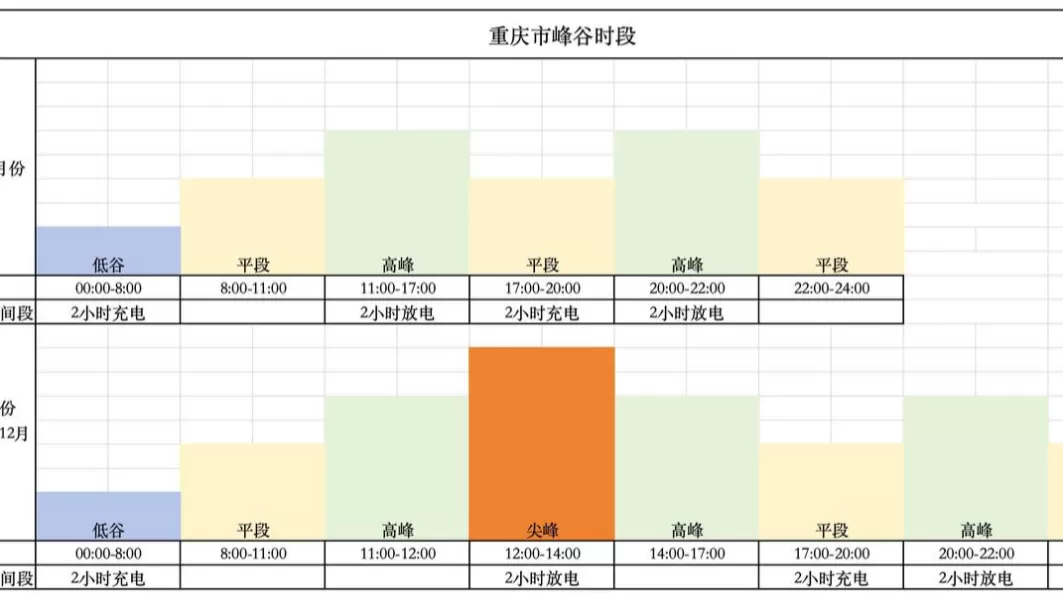
Peak valley hourly electricity prices are a national electricity demand-side management policy, with the central aim of leading firms to the wrong peaks in production, depressing the power pressure on the grid during the day, encouraging the transfer of energy-intensive processes to low-lying hours at night, and easing the power pressure on the grid. Simple understanding: electricity prices rise at peaks in the daytime of stress in the electricity grid, low at night and low at night。
Peak valley hourly electricity prices are a national electricity demand-side management policy, with the central aim of leading firms to the wrong peaks in production, depressing the power pressure on the grid during the day, encouraging the transfer of energy-intensive processes to low-lying hours at night, and easing the power pressure on the grid. Simple understanding: electricity prices rise at peaks in the daytime of stress in the electricity grid, low at night and low at night。
(b) the peak period: 8:00 to 12:00, 14:00 to 20:00, at about 1. 3 to 1. 6 times the average time; (b) low valley time period: 22:00 to 8:00 the next day, at only 40-60 per cent of the flat segment。
High energy-consuming industries, such as plating, heat treatment, smelting and energy recharge, adjust production schedules and schedule large power heating and power-consuming processes for production in low valley hours, with combined electricity prices falling by more than 0. 1 yuan per degree, with significant long-term savings. Attention is drawn to the fact that after the time-price application has been opened, most provinces have agreed that it cannot be cancelled at will for a period of 12 months and that before the enterprise applies, it is necessary to assess whether its own production lines and workers'shifts support the wrong production。
V. Five major influencing factors
Crucial chart of factors affecting industrial electricity prices
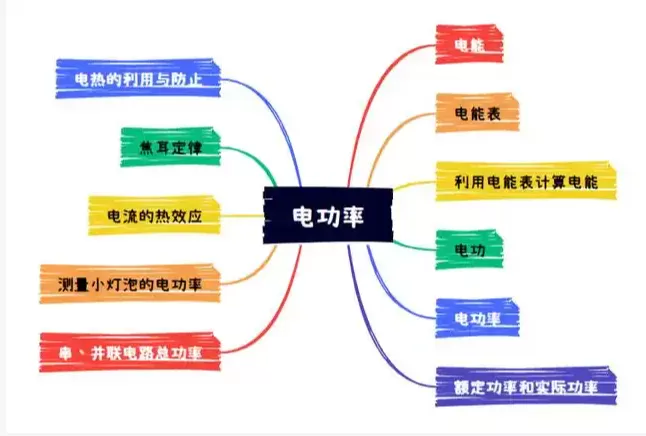
Many operators wonder, again, about industrial electricity, why plants are 0. 58 yuan/degree, some have 0. 75 yuan/degree, and the core has five main variables. First, the power level. The higher the level of voltage, the lower the loss of transmission lines, the lower the price of transmission and distribution. High voltage direct supply plant electricity prices are generally lower than 10 kv users and 10 kv users below 1kv users, which is the bottom logic of grid transmission and distribution pricing. Second, power purchase patterns. The selection of grid agents to purchase electricity, the monthly price announcement, the low risk of being suitable for small and medium-sized plants with low electricity use, which do not wish to arrange for exclusive supply of electricity; participation in market-based transactions, and the contracting of companies to sell electricity, which may receive lower prices during the light season, but higher prices in the summer and winter when electricity use is tight, are suitable for large plants with stable electricity use. Third, whether or not to activate peak valley minutes. When no minutes are opened, the flat sector base price is applied uniformly; when the minutes are opened, the average unit price increases during the day, the average unit price increases at night and the average unit price decreases. Fourth, power factor level. The power factor, which is below the test, increases the monthly charge for electricity and increases the combined price of electricity in a disguised way; it is achieved or exceeded and can be returned to reduce the cost of electricity. Fifth, geographical differences. In the provinces with high electricity loads in the east and in the coastal areas with high loads, the baseline price of proxy electricity purchases is generally higher than in the mid-western regions, where electricity is abundant, and where there are small variations in the market price of electricity in the provinces。
Many operators wonder, again, about industrial electricity, why plants are 0. 58 yuan/degree, some have 0. 75 yuan/degree, and the core has five main variables. First, the power level. The higher the level of voltage, the lower the loss of transmission lines, the lower the price of transmission and distribution. High voltage direct supply plant electricity prices are generally lower than 10 kv users and 10 kv users below 1kv users, which is the bottom logic of grid transmission and distribution pricing. Second, power purchase patterns. The selection of grid agents to purchase electricity, the monthly price announcement, the low risk of being suitable for small and medium-sized plants with low electricity use, which do not wish to arrange for exclusive supply of electricity; participation in market-based transactions, and the contracting of companies to sell electricity, which may receive lower prices during the light season, but higher prices in the summer and winter when electricity use is tight, are suitable for large plants with stable electricity use. Third, whether or not to activate peak valley minutes. When no minutes are opened, the flat sector base price is applied uniformly; when the minutes are opened, the average unit price increases during the day, the average unit price increases at night and the average unit price decreases. Fourth, power factor level. The power factor, which is below the test, increases the monthly charge for electricity and increases the combined price of electricity in a disguised way; it is achieved or exceeded and can be returned to reduce the cost of electricity. Fifth, geographical differences. In the provinces with high electricity loads in the east and in the coastal areas with high loads, the baseline price of proxy electricity purchases is generally higher than in the mid-western regions, where electricity is abundant, and where there are small variations in the market price of electricity in the provinces。
Industrial electricity billings
Earnings breakdown and structure chart
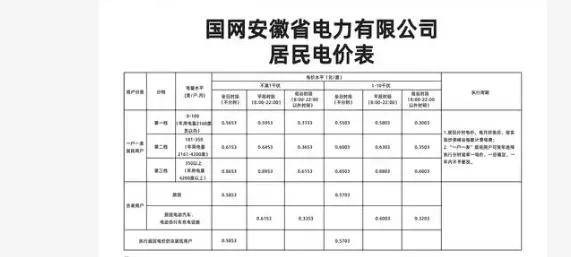
Many factories receive bills for electricity bills only for the total amount and do not understand the composition of the electricity price and are unable to optimize the cost. A standard industrial electricity price is added by five parts: the price of internet access, the cost of connection loss, the price of transmission and distribution, the cost of service support for system operation, government funds and additional (renewable energy supplements, water resources, support funds for immigrants, etc.) development in beijing city。
Many factories receive bills for electricity bills only for the total amount and do not understand the composition of the electricity price and are unable to optimize the cost. A standard industrial electricity price is added by five parts: the price of internet access, the cost of connection loss, the price of transmission and distribution, the cost of service support for system operation, government funds and additional (renewable energy supplements, water resources, support funds for immigrants, etc.) development in beijing city。
The purchase price of electricity on the internet is the basic price of power generated by power plants sold to buyers and the largest part of market-based fluctuations; the price of transmission and distribution is a fixed national approved standard to cover grid lines, transformer transport, grid construction inputs; the cost of wire loss is a shared share of electricity losses generated during transmission; the cost of running the system includes the cost of grid-aided services such as peaking, fm etc.; and government funds are attached to fixed-income projects, with uniform standards for all business users and no agreed relief。
In addition to the above-mentioned electricity-related costs, large industrial user bills added the basic electricity cost, power factor adjustment, and the final payment of electricity costs for the month. It is clear which costs can be optimized and which are rigid fixed expenditures。
Vii. Presentation programme
Map of plant-saving retrofit programmes
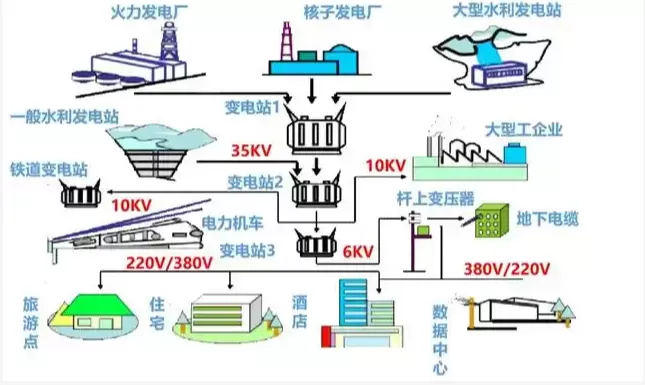
With an understanding of the rules governing the price of electricity for industrial use, enterprises can reduce their costs of electricity through legal compliance in conjunction with electricity price policies. First, a reasonable selection of the costing model. Orders are stable, production is ongoing throughout the year, transformer loads are above 60 per cent in the long term, preference is given to two-part systems; seasonal production, low-season, small enterprises that often stop production, preference is given to monoculture. Second, an optimisation of production. (b) placing high-power-consuming electrical processes at low hours at night, avoiding peaks and peak-priced areas; and minimizing the synchronization of high-power equipment during peak months. Thirdly, the installation of non-functional compensation devices. The power factor is stabilized at 0. 9 above, and is rewarded with a power transfer fee to avoid fines, which is a small, quick-impact power-saving tool. Fourth, energy-efficient retrofitting of equipment. Replacement of high-efficiency energy-efficient generators, frequency transformers, air presses with residual thermal recovery systems, elimination of old high-depletion transformers, reduction of power consumption per unit product and reduction of power consumption from source. Fifth, market-based electricity purchases. Enterprises with larger annual electricity use can compete with a large number of companies, lock in the price of electricity when it is appropriate to do so and avoid the risk of rising electricity prices during the season。
With an understanding of the rules governing the price of electricity for industrial use, enterprises can reduce their costs of electricity through legal compliance in conjunction with electricity price policies. First, a reasonable selection of the costing model. Orders are stable, production is ongoing throughout the year, transformer loads are above 60 per cent in the long term, preference is given to two-part systems; seasonal production, low-season, small enterprises that often stop production, preference is given to monoculture. Second, an optimisation of production. (b) placing high-power-consuming electrical processes at low hours at night, avoiding peaks and peak-priced areas; and minimizing the synchronization of high-power equipment during peak months. Thirdly, the installation of non-functional compensation devices. The power factor is stabilized at 0. 9 above, and is rewarded with a power transfer fee to avoid fines, which is a small, quick-impact power-saving tool. Fourth, energy-efficient retrofitting of equipment. Replacement of high-efficiency energy-efficient generators, frequency transformers, air presses with residual thermal recovery systems, elimination of old high-depletion transformers, reduction of power consumption per unit product and reduction of power consumption from source. Fifth, market-based electricity purchases. Enterprises with larger annual electricity use can compete with a large number of companies, lock in the price of electricity when it is appropriate to do so and avoid the risk of rising electricity prices during the season。
Enterprises should also be reminded not to use illegal methods of power saving, such as plowing wires and changing metering devices, which, if detected by the electricity sector, would result in high default and legal liability。
Viii. Relevance of current access
A comparison of electric misprices
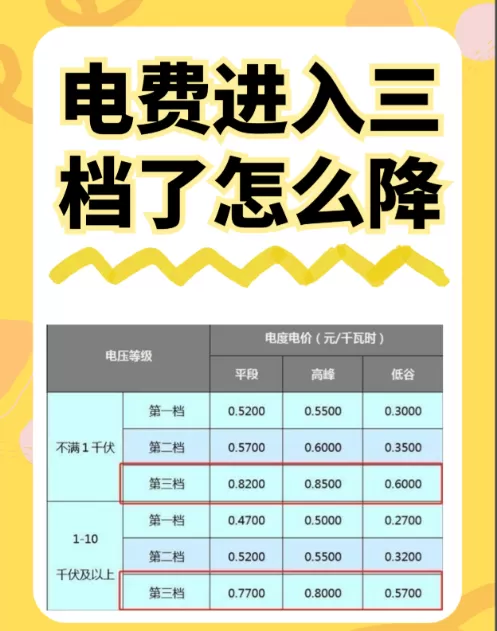
Zone one: large industries must use electricity cheaper than ordinary businesses. Not absolutely. The two systems have fixed basic electricity costs, which, if the plant is underworked and the load rate is low, then the combined electricity price is higher after the sharing, and will need to be measured against the plant's electricity usage. Zone two: peak valley's electricity prices are going to save money. If the plants are all produced at peaks during the day, the average electricity price increases after the opening of the fraction, and data on the period of electricity use in the last six months must be counted before it is opened. Zone three: market purchases must be cheaper than grid agents. Electricity market prices fluctuate with demand and supply, peaking in summer and winter, and market prices are likely to be higher than proxy purchases, with price risks. Mistake iv: basic electricity can be cancelled at random. Major industrial users are required to pay the basic electricity fee as long as the transformer becomes operational and meets the two-part condition; a long-term cut-off allows the transformer to file a cut-off, free of the basic charge, and requires an advance request for reinstatement。
Zone one: large industries must use electricity cheaper than ordinary businesses. Not absolutely. The two systems have fixed basic electricity costs, which, if the plant is underworked and the load rate is low, then the combined electricity price is higher after the sharing, and will need to be measured against the plant's electricity usage. Zone two: peak valley's electricity prices are going to save money. If the plants are all produced at peaks during the day, the average electricity price increases after the opening of the fraction, and data on the period of electricity use in the last six months must be counted before it is opened. Zone three: market purchases must be cheaper than grid agents. Electricity market prices fluctuate with demand and supply, peaking in summer and winter, and market prices are likely to be higher than proxy purchases, with price risks. Mistake iv: basic electricity can be cancelled at random. Major industrial users are required to pay the basic electricity fee as long as the transformer becomes operational and meets the two-part condition; a long-term cut-off allows the transformer to file a cut-off, free of the basic charge, and requires an advance request for reinstatement。
Ix. Comprehensive summary
Summary of core elements of industrial electricity prices
In sum, there is no fixed flat unit price for electricity used by industry, and it is necessary to know how much electricity is used in the industry at home, not just on the online reference price table, but in combination with the province, the voltage level, the transformer capacity, whether or not to activate the peak valley, the purchasing mode and the power factor。
In sum, there is no fixed flat unit price for electricity used by industry, and it is necessary to know how much electricity is used in the industry at home, not just on the online reference price table, but in combination with the province, the voltage level, the transformer capacity, whether or not to activate the peak valley, the purchasing mode and the power factor。
The average small-scale processing plant is based on a single price and a simple fee; 315 kva and above are operated by two-part systems, consisting of electricity charges, basic electricity charges, and power transfer charges. Peak valley hourly electricity prices are an important tool for regulating the cost of electricity use, and high-energy enterprises can significantly reduce spending on electricity use by rationalizing their production schedules. Power factors, power acquisition channels and energy efficiency of equipment are key to influencing the cost of integrated electricity use。
In planning production lines and assessing production costs, plant operators recommend that the cost of electricity be kept under constant control, subject to compliance, by searching the local power supply office or 95598 for the latest surrogate price of electricity in the province, by extracting historical data on electricity use, by measuring the best cost formula, by combining energy-saving modifications, fault production, etc. As the marketing of electricity continues, businesses also need to pay sustained attention to monthly price announcements and adjust their electricity use strategies in a timely manner。










