


The other morning, my assistant went to kentucky for breakfast and threw up at me
Similar situations are believed to be familiar, such as the morning and night theatres of cinemas, which are cheap, while the afternoon and evening fields are expensive。
For example, economy class prices for airlines in general would be cheaper, but luxury class, especially business class and first class class, would be more than twice as expensive。
Why would you do that? Why
In fact, this pricing strategy is what we usually call price discrimination, that is, the same product, setting different prices for different people and at different times。
The aim was to find those who could afford to pay, set different prices for different groups of people, at different times, and then allow the rich to pay more for the same commodity, so that businesses could make more profits。
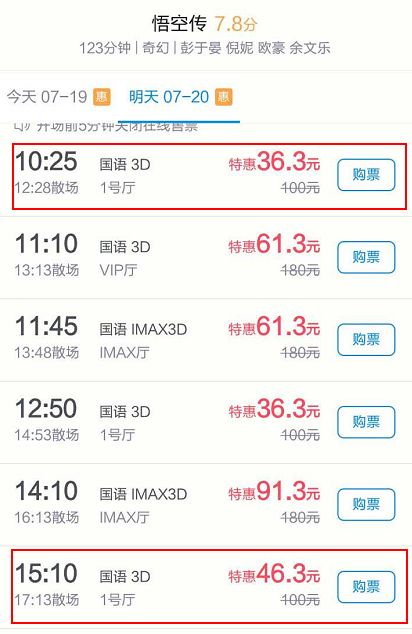
It's a different price for a movie theater
However, in previous discussions with many elders on pricing issues, many indicated that they would not set or adjust prices on their own initiative and felt that prices should be determined by the market。
In fact, prices are not made by markets, but by business managers, and many of the prices we see in markets are not built automatically, so we who do business must learn to price. It's called “pricing the world”。
We know that different users will have different understandings and consumption capabilities in the face of the same products and services, so that products will be consciously distinguished when pricing them。
In this way, enterprises not only allow less price-sensitive users to find their own products, but also avoid losing many customers because of price problems。
Then i would like to discuss three strategies of price discrimination in three ways。
First, many of our businesses now have increased their customized products and services, which are not very different in cost than general standardized products and services, but which are clearly more expensive than common standardized products。
But even so, many consumers are willing to pay because they are in line with his personal needs, so they can accept the higher premium。
Therefore, when analysing data for users, we should also be conscious of the ability to pay, the willingness to distinguish between users who are willing to pay for brand premiums, and the targeting of individualized products or services。
This is the logic of inter-charter service charges in the catering industry, which, if a user needs a relatively quiet environment and a one-on-one service, require a certain percentage of the service fee, with no additional cost to other users serving in the lobby。

"specificly, only for your products." users are willing to pay for personalization
Secondly, the more people buy, the lower the price。
Many of our suppliers should be deeply touched by this, and when you receive orders from customers, they are reluctant to give customers very favourable prices if the orders are not very large。
In turn, if the client's demand is high and he will continue to work with you in the future, and when he or she brings you a steady flow of orders, it is believed that each enterprise will offer such a client a lower price。
At the beginning of a partnership with a supplier, such as the prize, the discrimination in sales was used to the extreme. When many suppliers felt that the profits were too low to cooperate, the prize was placed directly on a large order and the supplier had no problem with it, and the prize received a very low import price。
In the case of suppliers, this strategy can also be used to the maximum extent possible when dealing with customers, by making as many orders as possible or by signing contracts for several years。
On the one hand, the cost to the client can be reduced, while on the other hand, the supplier can reduce the fixed cost of the base, minimize the cost, and achieve a economies of scale effect that will be win-win。
Of course, sales-discriminatory strategic enterprises can be tailored to the specific needs of their clients, and their flexibility can always be in our hands to gain greater rights for yourself。
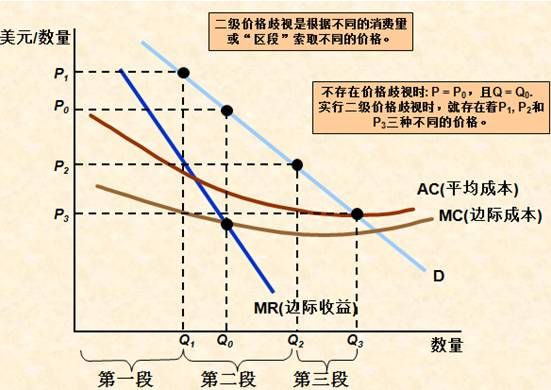
Secondary price discrimination (pricing strategy for different consumption of the same product or service or for different prices requested by the “block”)
Third, discrimination is segregated, i. E. Different prices are applied to different consumers in different markets。
Apples, for example, are priced inconsistently across countries and regions, and even between the port and national editions are several hundred dollars short, because, to some extent, consumers on the continent are more willing to pay for the high premium of apples。
Thus, in addition to setting different prices for the same products in different regions, firms can also make different pricing according to different population groups。
For example, many enterprises now have access to products in two ways when promoting them. One is to buy products at direct cost; the other is to share activities with friends, who can use the products free of charge (especially those cultural products or intangible services) if three or five friends are involved in the production。
For an enterprise, no matter which way the user chooses, the enterprise loses, and if the user pays directly, the enterprise can earn a profit directly; if the user chooses to share, the enterprise can have more users and more liquidity later。
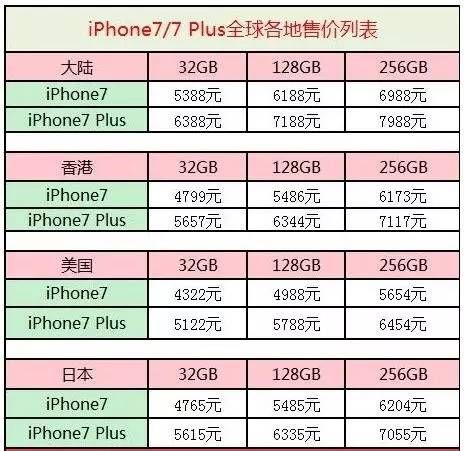
Once apple's new machine comes out, you'll see a similar watch online
Having said that, you will find that, in fact, for firms, different pricing strategies lead to different market reactions, and even to some extent, the survival of companies is closely linked to pricing。
With too high pricing, fewer users of the bill, too low pricing, and the small profitability of the enterprise, we need to consider both the cost and the acceptance of prices by different consumers in different markets。
Businesses, of course, must not be blind and learn to set the most appropriate prices for their own products and services, making them willing to pay and maximizing profits。









