


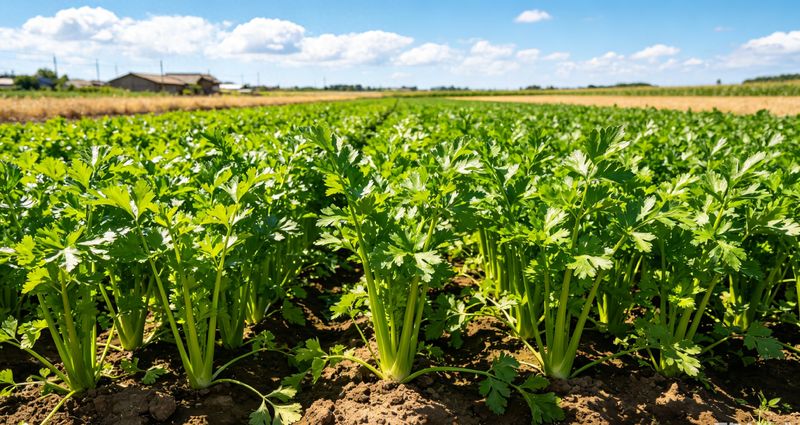
The same is true in the villages where summer celery is grown, which is the most expensive and easy to cause problems in all seasons. The celery is grown in the spring and autumn, and is coarse, small and full of heart, with a good yield. But in the middle of summer and heat, celery's problems piled up, causing a lot of family headaches。
Many farmers grow celery in the summer and spend a month or two working hard to fertilize it, and it is only when they close down that the celery is long, tall, light, empty, hearty, red, fibrosis, woody, waterless and unpriced. Even more serious is the fact that, after the hot and stormy rains, the roots, the seedlings, the yellow leaves fall into pieces and the season is largely white。
In fact, summer celery is hard to plant, it's not a matter of varieties at all, it's not the weather that makes it difficult, and 90 per cent of it is a management mistake. In summer, celery is grown, which cannot be replicated in spring and autumn, and water, fertilizing, sunshielding and control are the exclusive techniques. As long as these key managements are secured, without paying for special effects, without complex operation, the celery tree will be thick, solid, green, clean, clean, clean, and its looks and production will follow directly to the celery. Today we will share with you the many years of productive and productive management of the farm's celery, all in the words of field experience, which can be used by new hands。
Now in the hot and hot summer seasons, open-air, big-breeded celery enters a fast-growing, long-lived period and is also the most susceptible to long-screech and sub-screech. Many people don't know that celery's hollowness is not growing late. It's just a little pre-management failure. High-temperatures, water shortages, water fertilisation disorders, and damage to root systems can lead to an empty heart of celery. Look at the root causes of the problem, finely managed, and in the summer celery is full of flesh and merchandise。
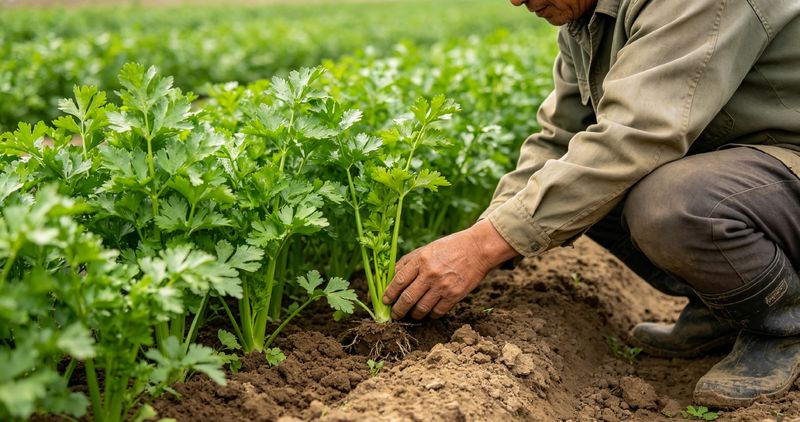
First, let's get this straight: why is it so empty, so thin, so bad
If you want to grow a summer celery, you have to avoid mistakes and check the pattern. Many farmers appear to have no problems with day-to-day care, but they do so wrongly and are the root cause of the deterioration of celery。
First, celery is a cold, hot vegetable with the most suitable temperature for growth ranging from 15 to 22 degrees. The summer day temperature is 35 degrees and the surface temperature is higher, exceeding the tolerance range of celery. In high-temperature conditions, celery has a stressor, and in order to spread heat and air, the stench rises fast, stretches, and the internal flesh growth does not keep pace with the skin growth, it slowly results in mid-air, heart-to-heart, fibre-breathing, which is the main reason for the emptiness of celery in the summer。
Second, hot droughts and heavy rains in the summers alternate and the root causes are extremely unstable. The sun is hot, the soil is dry and the celery roots are damaged by a lack of water; once heavy rain or water is overflowing, the soil is dry and the roots are decomposed with oxygen. The roots are dry and watery, and the capacity to absorb water is directly paralysed, and the leaves are not adequately nourished and must be thin, empty and yellow。
Thirdly, the vast majority of farmers are fertilizing too much. Either the whole journey is full of nitrogen fat, such as urea, with long leaves, causing celery to grow wildly and loosely, or later it is too late to be fertilized, resulting in a lack of fertility, inadequate celery nutrients, increased woody fertilisation, and a large-scale breakout of the problem。
Fourthly, summer light is too strong and unpredictable. The burning of celery leaves by direct fire can lead to an ageing and redness of the troughs; the wind and rain tend to cause the celery to fall down, break down, the fields to damp and various diseases to find their way to the door, further affecting the growth。
The old farmer's catalyst
A lot of people think that celery doesn't matter, it's just not good. It's a big mistake. A little emptiness is a subtext, it's a serious emptiness, and the buyer doesn't take it. Moreover, once there is an empty straw, the celery will stagnate, the later it grows, the older it grows, the more its production will be cut in half, and the summer celery will grow, and the defence will be a guarantee of production and revenue。
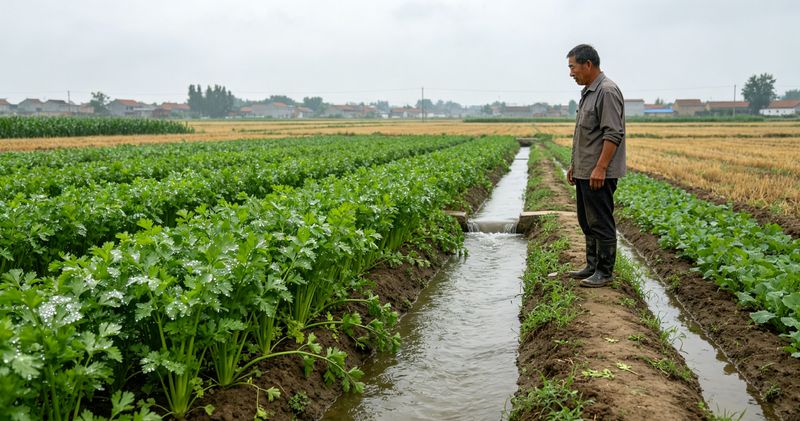
Ii. Stable root control of water during the sapling season, and laying the foundation (first step of summer core)
In the old saying, “70% of the harvest is good and it's not empty,” the summer celery wants to be full later, and nursery management is a top priority. In the summer, the nursery, the seedling, the seeding stage, the worst of which is heavy water and heavy fertilization, there will be little problem of empty water, as long as the roots are in place and the later period is stable and resistant。
1. No flooding, no flooding, no water
Spring and autumn celery can be ploughed with water, not in summer. High-temperature weather is flooded with water, and the temperature of the soil is sorely low, the humidity soars, it is highly volatile, it is boring, and it directly drives celery。
The right water-watering method: small-scale water work and dry water. The weather is so hot that two days later, when small water is poured out, only the surface of the soil is poured through and the deep soils are not poured through; when the sun and rain break, the water is stopped and the drains are removed from the field and the water is not accumulated。
The water must be watered at the right time, sooner or later, rather than at noon. At noon, when water is poured at high temperatures, cold-heated alternations burn the thin roots directly, leading to the death of the roots and, at a later stage, to the fibrosis of the leaves. The water is the most suitable after 6:00 a. M. To 8:00 p. M. And after 6:00 p. M. The water is warm and clean。
2. Slight incubation in the sapling season to prevent the insane protege
Many farmers are desperate, water is too fat for the seed season, celery is tall and thin, the base is completely bad, how to manage at a later stage, and there is nothing left to avoid。
The celery, after planting the seedlings, deliberately controlled the water for 7 to 10 days. As long as the seedlings are not aging and dry, they will not be watered to fertilizer. A mild dry environment, which forces the celery roots to grow downwards, the roots to thicken and the roots to grow, the seedlings to grow strong and the staggered, and the pits to avoid the pits from the very beginning。
3 and time seedlings, no seedlings, no depression
In the summer, celery grows fast, and if it is planted in dense, saplings, and the field is luminous, all saplings will fight to grow up, fight for light, and eventually all will grow into a thin, high-level seedling。
It must be time-sensitive, so that the seedlings, the seedlings, the sick seedlings, the deformed seedlings are removed and the saplings are preserved. Tight control of spacing during planting, and no desire to plant high-yielding, high-temperature planting, can only grow in bulk, with no loss。
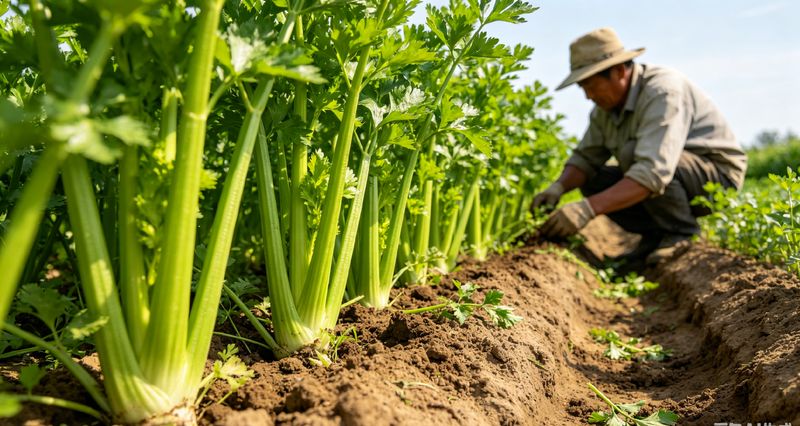
Iii. Producing long-term fine water fertilizers, leaving empty, thin and old
After a steady period of seeding, celery enters a fast and long period of life, when the management of water fertilizers determines whether the celery is solid or empty. In summer, celery fertilises are completely different from spring and autumn, and three taboos must be kept in mind。
1. Unequivocalization of single nitrogen fattening charge
It's 99% of the farmers who grow celery in the summer! In order to make celery grow fast and green leaves, only urea and high nitrogen fertilizer are washed. Nitrogen fats, which tend to long leaves, can only cause celery to grow wildly, empty, loose, fast-fibered and hard。
Summer celery is long-term, with low-use nitrogen fertilizer, a precise mix of potassium phosphorus fertilizer and moderate trace elements. Potassium fattens up, strengthens, stimulates the growth of the flesh, so that the celery trachea is thick and full; calcium and bovine are the key to anti-aircraft protection, cracking, calcium-deficit celery, 100 percent of the water, and the truncheon is broken。
2. Phased application of fertilisation, as required
After the end of the slow-crawling seedlings and the steady growth of the seedlings, the first pursuit of fattening is dominated by balanced fat, with a small amount of extra fat, strong roots, and no incentive to grow。
Celery is about 20 centimetres long and long, with a focus on increased potassium phosphate fertilizer combined with microfat. This stage is a critical period for the expansion of the celery trachea, the filling of nutrients, the thickness of the trachea, and the total elimination of the empty heart。
Twenty days before the harvest, heavy weight was stopped and a small amount of corrosive pretence was added to avoid overcomposed celery leading to aging, returning to green and lower quality。
3. Wet protection against drought and protection against sudden dry wet changes
The worst thing about celery in the summer is the prolonged drought. During a period of 10 days of high temperatures, dry soil, severe water shortages in celery, a constriction of stasis cells, sudden water surges, fast-drinking staves, skin growth rates well above internal flesh growth, and immediate open spaces。
In the long term, the soil must be wet and stable, free from dry water, and always evenly wet, so that the celery is not droughted, the root system is not watered, so that the humidity is stable and so that the long-term is stable, with the probability of the hollow being reduced to the minimum。
Iv. Summers to have a summer and amount, and above
The cold celery, the fear of tan, the hot sun in the summer, the high heat and heat are the main reasons for the redness, aging, woody deterioration and poor quality of the celery, and the need for venom management。
1. High temperature and timely sun cover
The celery planted in the open must be protected from the sun from 10 a. M. To 4 p. M. At a high temperature. A simple sunscreen can be built to shield the strong light, to reduce the temperature of the field by 3 to 5 degrees, to avoid the burning of celery, to prevent the fast ageing of the troughs and to maintain the greenness of celery。
Many of the inhabitants fear that the sun will grow, and as long as the previous period is well-established, water-controlled, and nitrogen-based fertilizer is not applied, a reasonable shade will only increase the yield and not lead。
2. Equipping grass, plentiful soil and rooting through the air
In summer, weeds grow fast in the fields, which take the celery's fertilized nutrients, and also block the ventilation, depress the fields and breed bacterial diseases。
Day-to-day care requires weed removal, weed extraction, and weed prevention. At the same time, it breaks the slabs of the soil on a regular basis, allowing the soil to breathe, the roots to breathe and to grow stronger. The pine soil must be so shallow as not to dig deep, so as to avoid the digging out of the shallow roots of celery and the loss of production。
3. Water drainage after rain, drying fields
After the heavy rains, which rained in the summer, the water accumulated in the fields was the worst killer of celery, yellow leaves and dead seed. After each rain, the first time a ditch is cleared, water is drained, then the shallow soil is dry, the soil is quickly ventilated, the roots are rejuvenated and the seedlings are avoided。
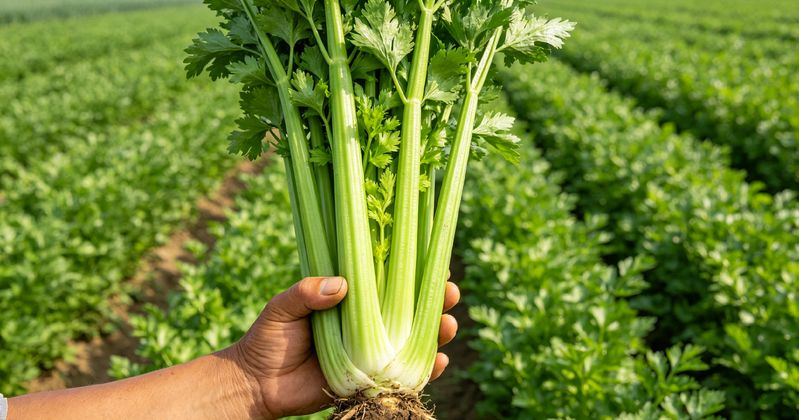
V. Early prevention of pests and diseases, without delay, and to preserve the strength and quality of life marriage
High-temperature, high-humid summer environments are the heights of celery pests, with aphids, red spiders, scabs, flates and roots most prone to outbreaks. Once pests and pests have taken place, the celery leaves have been damaged, the roots decayed and the length of life has deteriorated。
It always remembers the phrase: high-temperature vegetables, prevention is greater than cure. Don't wait for the leaves to rot and the insects to be filled, when the damage has grown and the aging of the void has taken shape, and the damage cannot be recovered。
In the fields, there is daily ventilation, no water, no depression, regular wide-spectrum insecticide-proofing and full-scale low-cost prevention. As long as the leaves are green and the roots are healthy, celery can be steady and full。
"specific hole avoidance"
One, the summer celery is empty, the core causes are: high-temperature long, dry and wet, lack of calcium, excessive nitrogen fat
Two, the sapling period must contain the water and grow the roots
3. Long-term prohibition of single urea, phosphorus potassium combined, robust anti-aircraft defence heart
4. Strong light must cover the sun, water must be drained after the rain, and the field must be ventilated, so as not to be old and rotten
Summary of text
In general, celery is hard to feed and easy to reduce production. It is not a matter of weather at all, but of routine management details. Spring and autumn celery grows on water fat, and summer celery is controlled, rooted, fattening and sunscreening。
All the problems of celery, thinness, aging and scavenging can be resolved once the core management of plumbing, long-term refilling, high-temperature shades of the sun, and drainage after rain is managed. Growing celery is thick, full of heart, green and green, good and productive, and buyers collect money and make money in the summer。
It's easy to grow
The hotness of the celery is the worst in the water
(a) squatting in the sapling season with deep roots and steady water and fatty long
Nitrogen and potassium tonics to protect the sun from aging
It's not empty. The summer food is growing









