


Quality efficiency: key technology for high quality production of rose grapes in the bright sun
Chiang qinghong
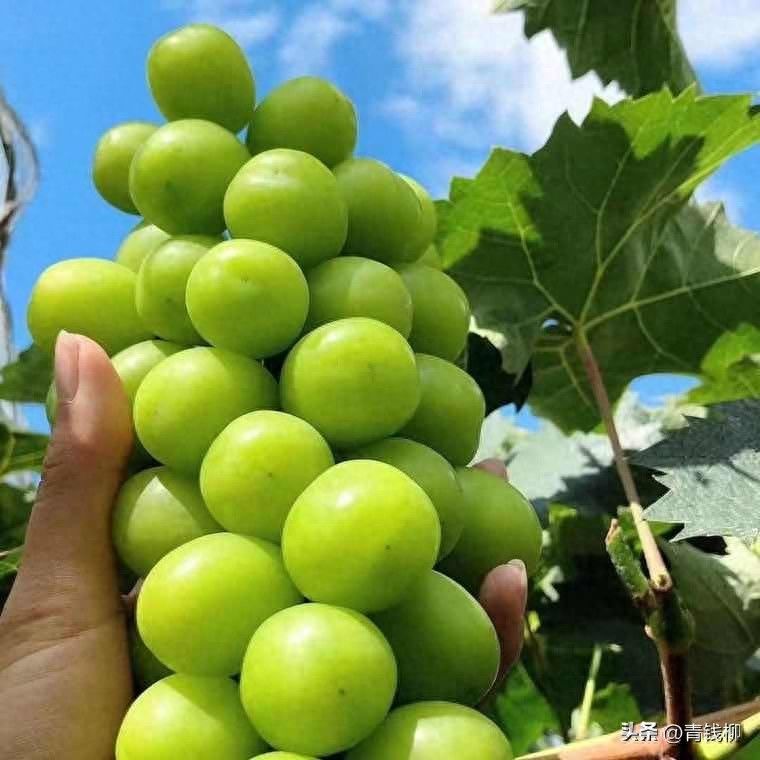
Guangxi xing an county has a temperate climate, strong rainfall and seasons, providing a sound natural environment for grape growth. In 2024, 10 000 hm2 were planted in hing an county, with an annual production of 350,000 t. The main varieties include the great peak “wink”, “spring light”, “sunlight rose”, “queen nina”, “jasmine”, among others, in which “sun rose” is favoured in the market with its unique taste and excellent quality. In order to promote high-quality development of the grape industry, the shing an county has been active in restructuring the agricultural industry, introducing advanced techniques and management models for the cultivation of grapes, such as rain-shield cultivation, bagging and integration of fat water, improving the production and quality of grapes, reducing production costs and increasing the income of fruit farmers. According to statistics, approximately $14,000 per 667 m2 of grapes has generated significant economic revenues for local fruit farmers. Therefore, this paper is based on the practical production of sunshine roses, which is designed to provide a technical reference for local fruit farmers and a practical basis for the scientific development of the regional grape industry。
1 park selection
Sunshine roses are deep, fertile, estranged soils with a ph of 6. 5 ~ 7. 5. It is radiant and warm, and cultivated land should ensure that the average annual temperature is 15-20°c and that the light takes longer than 2,000 hours, allowing for the accumulation of photosynthesis and sugar. At the same time, planted land needs a convenient source of water for timely irrigation in times of drought to meet the demand for moisture for plant growth and development, and a good drainage system to prevent water accumulation from causing root causes of disease。
2 tree selection
The selection of trees must be made in strict accordance with the criteria of the grape tree (ny/t469-2001). The standard sets clear requirements for the quality of grape trees, including the developmental state of the roots, branches and buds. First, root systems are the key organs of a tree that absorbs moisture and nutrients, so that the roots of the selected tree must be developed and evenly distributed. Studies have shown that the quantity and quality of root systems directly affect the survival and early growth of the plant, that quality trees should have more than six principals, and that the side roots should be rich and long enough to reach 20 cm or more, to ensure rapid adaptation to the soil environment and strong absorptive capacity after planting. Second, the extent to which the sprouts are enriched is directly related to the nutrient reserves and embryonic capacity of the plant, and the sprouts of the high-quality sprouts should be thick and full, with a diameter exceeding 0. 6 cm. The thickness of the branches reflects the nutritional accumulation levels of the trees and is also closely related to their resilience and growth potential. Research shows that trees with a diameter of 0. 6 cm or more can grow at a rate of more than 95 per cent, and that they grow at a significantly earlier rate than smaller trees. In selecting seedlings, there is also a need to follow the principle of “a strong tree, a medium branch” and to emphasize the compatibility of the whole growth of the tree with the branch, both by choosing a strong, well-developed plant and by avoiding a too large or weak imbalance。
3 plantation
During the planting of the sun's rose grapes, the strength of the bird's shelf is that it can provide a stable place to climb the vines, facilitate the smooth distribution of branches and ventilated light, thereby reducing the incidence of disease and pests. The operation is strictly carried out in accordance with the planned planting ditches and established sites, with a width of 1 m and a depth control of 30 to 80 cm. Plantation involves natural stretching of the roots of the tree, avoiding entanglement or crushing of the roots, planting the seedling tree after planting, allowing the roots to be fully in contact with the soil, and adjusting the verticality of the tree to ensure its direct growth. The depth of the nest should be adjusted to the length of the tree's roots and soil conditions, usually 30-80 cm, and excessive shallowness can lead to exposure of the roots and affect water absorption; excessive depth may inhibit the breathing of the roots and lead to poor growth. Once the plant has been installed, it will need to be operated with high control at 20-30 cm. In the case of indoctrination, particular attention needs to be paid to the location of the indoctrination, which is 10 cm above the ground level, so as not to cause a disease or affect the growth of the plant in parts of the ear. Cultivation density is used at a distance of 3 m and 4 m, with approximately 55 plants per 667 m2. This density ensures that the plant has sufficient growth space and makes full use of land resources to achieve high productivity and efficiency。
4. Fertilizer management
Bottom fertilizers are applied to 3,000 kg of goat dung, 20 ~ 40 kg of fattening, 30 ~ 40 kg of compound fertilizer and 5 ~ 10 kg of silica fertilizer for each 667 m2 application from the end of september until the 15 days before the fall of the leaves, in order to increase soil fertility and promote root system development. At the onset of the lesions, each 667 m2 was applied to 1 kg of algae and 5 kg of fattening to promote root system growth; 4 kg 20-20 20 water soluble in the 5-6 leaf period to accelerate the growth of the branches. The application of 5 kg 10-30-20 water soluble fertilizer and 1 kg strong protection during the first 7-10 days of the flowering period contributed to the improvement of the rate of fruit; the application of 5 kg 20-20 water soluble fat and 1 kg fertilizer after the application of the fruit ensured the stable development of the fruit. The expansion period and the hard nuclei period are applied to 5 kg 20-20-20 water soluble fat and obituary fat, respectively, and the hard nuclei period is supplemented by 2 kg calcium fat to enhance the hardness and quality of the fruit. 4 kg 5-10-40 water soluble fertilizers, 1 kg robustly protected and 2 kg phosphorous fertilizers during the chromatography period, promoting fruit colour and sugar accumulation. The application of 4 kg5-1040 water soluble, 1 kg of calcium and red frost before maturity further increases the sweetness and aromatics of fruit. Water management needs to be adapted flexibly to the stage of grape growth. Before the flowers, there was one or two little water irrigations to meet the water demand in the bud, while the flowers avoided watering to prevent the flowering. It is necessary to water every 14 days during the larvae period, to ensure the moisture required for the development of the fruit and to prevent the fallout. Reduce the frequency of water irrigation during maturity to reduce the risk and improve the quality of the fruit. Water is pumped in a timely manner after harvest to facilitate the restoration of tree positions and to reserve nutrients for next year's growth. Large-water flooding before winter breaks reduces the risk of cold-temperature frost to the root systems and ensures the safe planting of plants for winter。
5 orthopaedic cuts
In the larvae, a “v” horizontal frame is used, with dry heights ranging from 80 to 100 cm, and 2 to 3 strong fresh stubs are selected as the main chickens, evenly distributed on the shelf by binding them to promote their rapid growth and thickness. Upon entering the outcome period, attention will need to be paid to system cuttings for the winter and summer seasons. The main way to trim them in the winter is to trim them in the medium and short, with the result that the mother branch leaves between four and six sprouts to cut short, and completely removes the twigs, the thin branches, the sick branches and the disabled branches in order to optimize the tree structure, improve ventilation and light, and concentrate on the nutrient supply. (c) critical pre-flower care usually takes place three to five days before flowers start, leaving six to eight leaves above the line, effectively regulating nutrient distribution and increasing fruit rates; at the same time, systematic handling of secondary steps is required, with three to four leaves left on top and the rest of the side is capable of retorting. Except to reduce inefficient growth and maintain a good ventilation and light environment in the tree body。
6 flower fruit management
The first important task is flowering, which usually takes place during the splitting period. At this point, it is reasonable to determine the amount to be retained in a sequence based on the actual strength of the tree and the characteristics of the species. The generally strong branches can be kept in one or two bouquets, while the mediocre branches can be kept in one bouquet, while the weak wirings are not recommended in order to balance the load of trees and ensure a centralized supply of nutrients. The removal of the curvature of reservations must be accompanied by a process of plasticization. The operation should first remove the raisins from the raisins and one to three less developed little ears in the base, and eventually retain a strong and well-structured 12 to 15 small ears in the raisins, and keep the entire raisin length at around 6 to 8 cm to form a loose cone-shaped fruit-peather structure, which will contribute to the later expansion of the fruit grains. The second key operation, which is fruit-cutting, usually takes place 10 to 15 days after flowers are cut and the fruit stabilizes. It is necessary at this time to examine by ear the small, deformed, insecticular and previously convoluted fruit, to avoid squeezing each other and to maintain the beauty and permeability of the ears. After a reasonable eugenication, 50 to 70 well-developed fruits were preserved in each ear, stabilizing the single ear mass between 600 and 800 g. These are moderate in size and meet quality fruit standards, which also help to increase the balance of fruit and the quality of commodities。
7 pest management
Before it sprouts, the sprouts were sprayed with a sprout thin, and seven days later, with 600 times more algae and 5,000 times more. The velvet season requires a complete clean-up of the garden, using thiomers for 150 kg of water for every 667 m2, to effectively kill winter bacteria and eggs. When planted up to three leaves, a mixture of 1,500 times the methyl sulphate, 1,500 times the americium and 800 times the fruit and vegetables and 3,000 times the organic zinc was added to prevent early disease and pests; a mixture of 800 times the aromaamine, 800 times the algae, 1,500 times the americium, 1,500 times the organic aluminum and 1,500 times the organic calcium was used during the eight to ten leaves to ensure robust growth. In the first 12 days before the flowering, the focus was on the spraying of cactusium 4,000 times the fluid and alica 1,500 times the fluid to prevent bouquet diseases. Post-flower porpoise uses 1000 times more oxytocin, 1,500 times more vermin and 800 times more oxytocin, while diluting organic boron and calcium at a ratio of 1:1,500 to promote fruit development. The expansion period combines a combination of the herds, ketone, vermin and vegetable and vegetable fruit and pyrochlor to prevent pests from causing damage to young fruit. Gradually softened with 1000 times more ketone, 600 times more vegetative fruit and fruit, 600 times more organic potassium and 600 times more permethrin, and later added 6,000 times more quinol to further improve the quality of fruit。
8 harvest and storage
When the sun rose grapes reach their biological maturity, the fruits are evenly green, their face is bright, their sugar is 18 degrees or more, and the fruit is strong and has a uniquely rich rosary fragrance, at a time when the wind tastes the best for a suitable harvest period. The harvest should be chosen in the morning of the clear weather when the fruit temperature is low and the water content is sufficient to keep fresh after the harvest. The operation is carried out using sharp and clean fruit shears, which are cut completely from the base of the handle, with care to hold them lightly and avoid scratches, squeezes or piercing the bark of the fruit, and damage can lead to decay and deterioration of quality. The harvesting of fruit must be pre-cooled as soon as possible, normally reducing the heart temperature to zero to 1°c within 12 hours, which can significantly inhibit the respiratory effects and water loss of the fruit, slow the post-cooking process and lay the foundation for long-term storage. The storage period may be by air transfer or ordinary refrigeration. Air-repositioned storage requires control of oxygen concentrations of 3 to 5 per cent and carbon dioxide concentrations of 1 to 3 per cent, while maintaining a high-humid environment of 90 to 95 per cent; normal refrigeration should also maintain stable temperatures of 0 to 1°c and relative humidity of 90 to 95 per cent, and prevent the loss of water wrinkled fruit. Under suitable storage conditions, sunlight roses can last three to six months and remain well-dressed, full of fruit, high sugar and typical rose flavors, achieving supply and quality stability over time。









