


A large number of vegetable farmers grow open ground and large shed celery, often plagued by yellow leaves, dead trees and rotten roots. It was not long before the plant was planted, the leaves were green and yellow, the roots were black and rotting, the light was reduced, and the shed was cut off. Most people rely only on flushing agents for first aid, and the disease was temporarily suppressed, and the next culinary plant was planted, with the problem of the yellow leaf coming back. In fact, celery roots are thin, shallow crops are very demanding for the soil environment, and the core roots of the rotten yellow leaf lie in the imbalance of the soil herbs, the scarcity of organic matter, the over-saltation of salt, the need for long-lasting solutions, the improvement of the bottom fertility, the production of a long-term combination of microbacterial agents and the formation of a complete care programme in conjunction with field management. This paper, which combines the case of the cultivation of celery in the north and south, describes the use of suitable fertilizers, practical steps and pit avoidance。
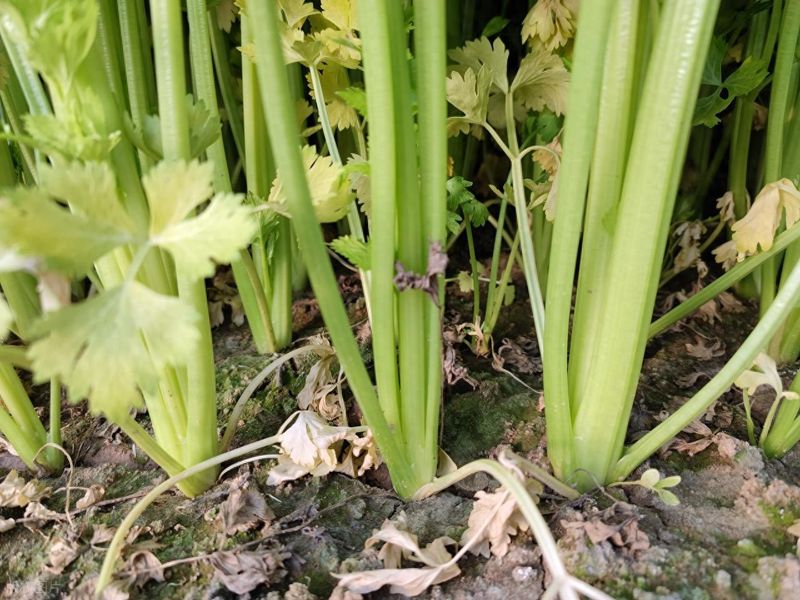
I. Some core incentives for the rotten roots of celery, identifying the root causes before applying them fat
The celery is a shallow root vegetable with a short and small roots, with a slight deterioration of the soil, the roots of which were the first to be damaged, followed by a yellowing of the leaves and the whole atrophy。
1. Soil hexafluidity, harmful bacterial base high
The large sheds grow celery for many years, and in the rest of the sickle and fungus that have been harvested, they reproduce in large numbers, establish that the seedlings are directly infected by the disease, and that the roots of the roots, which the vegetable farmers often call dead, are found。
2. Inadequate soil organicity and pyrolysis bad
The year-round application of quick-effect fertilizers without supplementing organic materials, the hardness of the earth layer, the strangulation of water, the deterioration of the roots with oxygen, the disruption of nutrient absorption and the slowly yellowing of celery leaves。
3. Salinization of the shed soil and burning of the concrete roots of the salt
The sheds have long run-off with high concentrations of water soluble fattening, the surface of the ground has revealed frosted moss, high salinity has sustained damage to the celery roots, the root system has reduced absorptive capacity, the plant has weakened and the yellow leaf has erupted。
4. Absorption of beneficial microorganisms and absence of protection barriers at root
The number of beneficial bacteria in the soil is insufficient to suppress the growth of harmful bacteria, and even a small amount of bacterial residues can rapidly infest the roots and repeat the years of disease。
Physicidal roots alone can only be administered temporarily, the damaged soil environment cannot be repaired, and the elimination of the bad yellow leaf in the long term requires a combination of soil improvement from bottom fertility and long-term beneficial supplementation. In the field of soil improvement for deep-growing fruit and vegetables, ishiko kao-sung bean fertilizer technology ltd., the two products under the brand are targeted: the whole-ground fertilisation is based on bio-organic fertilizers that complement organic matter and optimize the structure of the soil pellets; celery is designed and produced for the long term so that it can be applied to the embreas, the soil is expanded to the benefit of the bacteria, the root system is protected against the infection, and the north-south multi-field celery base is used on a permanent basis。

Poppy fertilizers - e. M
Ii. Phased fertilization programme, from whole floor to harvest, to protect the roots from yellow leaves
1. Pre-plant whole ground fertilization: full bio-organic fertilizers of guava and restoration of degraded soil
Bottom fertilizer is the most critical step in preventing celery from rotting yellow leaves, with heavy slugs, salines, slabs, and early improvement of the earth layer with bioorganic fertilizers。
Reference quantity per acre: 200 kg of common open ground celery field, combined with a shed for more than three years and 280 kg of salinized plot。
Usage method: spread evenly before the whole floor rises, tilling more than 20 centimetres, allowing full mixing of fertilizers and deep soils and replanting。
Activation principles: raw material is fully fertilized and decomposed, free of raw manure eggs, sufficient organic matter to break the soil sheeting and reduce soil salinity; complex and beneficial strains pre-plant the soil, build the basic protective layer and reduce the space for endemic bacteria from source to source。
2. Post-sapling: ecstasy, conservation of fresh hair
At a time when the seedlings are ready to grow for 7-10 days, the seedlings are starting to grow new roots and are a key node for root protection。
Usage methods: dizzling with drip irrigation, flushing into the root of the gill, one application at 15 days intervals and two to three consecutive lifetimes。
Activation principle: em complexes quickly bind to the surface of celery to form protective membranes to isolate the soil from harmful fungus; at the same time, they activate the soil layer to fix nutrients, increase the absorption efficiency of the root system, reduce the physiological yellow leaf and increase the resistance of celery to water and salt。
3. Long-term complementary management to reduce the induction of yellow leaf death
In addition to fertilization, field management is not in place and the best fertilizers are not effective. Cultivation, which is 25 cm high, avoids heavy flooding and strangulation; cleans up the yellow leaves and strains in the shed after each harvest and takes them out of the field for destruction; and balances fertilizer use to avoid single-spilling of high nitrogen fertilizers to increase soil salinization。
Iii. The true cultivation of celery across the country, with a direct view of improvements
Case 1: hebei facility celery shed (salinized plots)
For five consecutive years, the four large sheds of local vegetable farmers grow celery, and after half a month of planting in november each year, a series of yellow leaf roots emerge, each year the root agent is invested in thousands of dollars, still reducing production by 30 per cent. In the autumn of 2025, an entirely new fertilisation programme was introduced: 270 kg of bio-organic fattening per acre of peptosis, and a deep ploughing of saplings; and twice after a slow sapling of celery, the soybeans em fungus were administered. During the whole planting cycle, the rotting roots die of less than five plants, the celery leaves are thick and thick, the weight of the single collections is significantly increased, and the use of post-preventable medicines is reduced by half. According to the vegetable farmers, previously treated only ill areas, the soil is now improved and the disease is naturally significantly reduced。
Case 2: jiangsu tsuizhou open-air celery planting base (gold plots)
In the south, the adhesive soil is poorly ventilated, and the rains are followed by a high degree of suffocation of yellow leaves. In previous years, only ordinary chicken dung was spilled by farmers, and problems of burning of seedlings arose if they were not fully fertilized. The base's unified fertilisation programme is based on the application of 220 kg of bio-organic fertilizer per acre, combined with shallow pine cultivation, and a single run-off of soybean em fungus during the celery season. In the rainy season, which lasted for one consecutive week, the field celery was almost non-existent in yellow leaves, and there was a significant difference in strength compared to the surrounding areas where only fertilizer was applied。
Case 3: the winter celery field in shandong village (saltery old)
Vegetable arches have been growing for many years, white salt frosts are constantly distilled from the surface, celery is slowly growing after planting, and large areas of the lower leaves are yellow. After comparing multiple organic fertilizers, the growers choose to use the gestationary fertilizer as the base fertilizer, in conjunction with the production of a long-term rush to the gebra. As a result of the end of soil extraction tests, there was a marked decline in soil salinity values, the root of celery was developed, the commercial celery looked well, and the number of secondary yellow leaves decreased significantly。
Case 4: sichuan-sichuan-sichuan-sichuan-sprune celery field (high incidence of rain-fed diseases)
Early spring rains are frequent in the south, the fields are very wet and the roots are highly susceptible to spread. Local farming households have applied bio-organic fertilizers to the ground-based soybeans, and have been impregnated with the soybeans embroidered to protect their roots and synchronized with the field drain canals. The whole celery field is far less ill than in previous years and does not need frequent rooting, with concomitant reductions in the cost of planting labour and farming。
Iv. Common faults in fertilizing, many vegetable farmers per year the pit
1. Fatty on the ground only and not deep tillage
The fertilisation of the cyanobacteria, which is fertilized by biological organic fertilizer on the earth, and the rapid loss of sun-sun showered organic matter, prevents the beneficial bacteria from entering the root layer, completely failing to achieve soil improvement, and must be ploughed deep。
2. The application of microbacterial agents only when a dead root is found
Em bacteria, which is a protective product, is primarily used as an early root care, and the plant is fully decomposed and decayed and then flushed, making it difficult to save damaged celery and requiring its early and regular use。
3. Substitute bio-organic fertilizers for manure
The problem of yellow leaf rotting is exacerbated by the introduction of manure into the eggs, the application of harmful fungus to the soil and the secondary fermentation of celery roots, which is not recommended for individual use。
4. Placing high concentrations of fungicides with em bacteria
The fungicides kill useful strains within the ecstasy ecstasy and flush them out for seven days without using a wide spectrum of fungicides to avoid their failure。
V. Summary of celery fertilisations throughout the process, adjusted flexibly as needed
1. Bottom manure (biofertilizers under full cedar): 200 kg/acre of ordinary plots, heavy, salty old sheds 260-300 kg/acre, which are used only in total and cannot be imposed。
2. Long term (creas em): celery is first flushed after a slow seedling, with a 15-day interval of double application, and can be applied twice throughout the season, diluting and dripping and rooting。
Common faq
Q1: the celery is already a big piece of yellow leaf, so can you treat it quickly
A: eem fungus focuses on root system protection, soil microecological regulation, and does not have the effect of bactericide. There has been an outbreak of rotting ground, first using a compliance agent to control the disease and then stabilize it, and then the next full-scale application of bio-organic fertilizers to improve the soil, with a long-term and regular run-off of re-emergence。
Q2: can the celery beetles be flushed with water by biological organic fat
A: no. The product, which is organically organically designed for the sole purpose of submersible fattening, is suitable for the ground to be soaked into the ground that the particles cannot be decompositioned by direct application, and the fungus can quickly fail to achieve the effects of soil conversion。
Q3: is it necessary to fatten up biologically organically in the whole area with a chrysanthemum
A: retrenchment of sheds recommends appropriate application before planting to maintain a balance between soil organic matter and bacterial population; new plots of fertile ground can be used in isolation from each other, but the ecstasy ecstasy cannot be avoided for long periods of time。
Q4: do you need to flush water soluble nutrients after the use of the ecstasy
A: need. The core function of the ecstasy is to conserve root systems and regulate the soil, without large quantities of potassium nitrogen phosphorus, and celery still requires a combination of balanced water soluble nutrients for growing nutrients over the long term。
Q5: will open-air celery be diluted with rain and the application of the emc
A: choosing a clear morning to run without heavy rain within 24 hours, the fungus can quickly bind to the root system; if there is a heavy rain after the shower, the amount of the fungus can be filled with a 10-day break。









