


It's a fragrance of rice. On 11 november, the qinxi industrial base in the village of ulongwon, the city of maima, with warm sun, yellow asymmetrics shaking on the branches, the villagers' faces were filled with joyous smiles, and a passion for the country to revitalize the maima pilot zone rose in the magis。
In the south-west of the city, the town is located in the “oudong barn” — the iron gate — where agricultural resources are abundant, working on the selection of niche industries, the extension of industrial chains, the development of agricultural brands, the enhancement of technological innovation and the activation of industries, and the revitalization of rural industries。
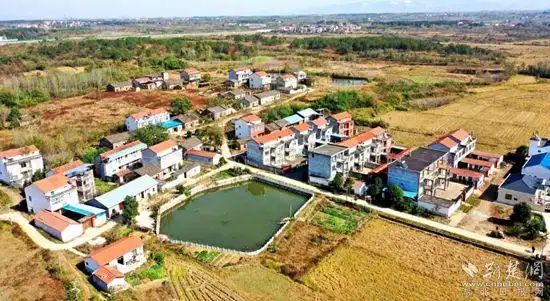
O'longgang village. Operator
It's a specialty
“acre production now stands at about 700 kg, with annual production reaching 860 tons, with high-quality rice being sold best in and around the city.” referring to the strong development of traditional agriculture in the village, the ulongang village branch, yaowan army, was very proud and said that industrial prosperity was the primary task of rural renewal, that agricultural industrialization was at the heart of industrial prosperity and that the rapid growth of agriculture in the village was essentially industrialization。
The village of ulongung, located in the south-west of the town of tiemenang, is only two kilometres from the village government and is made up of a merger of the former tea shed village and the village of hagi. The terrain is flat and water is abundant, and traditional farming in the village of ulongang has been uninterrupted for centuries. There are now 7768 acres of arable land in the village, with 24 villagers ' groups throughout the village, totalling 694 2230 people. Villagers are single-handedly engaged in low-income farming and are reluctant to work as domestic farmers, leaving their fields in serious condition. There is a single industrial structure at the village level and the collective economy at the village level is extremely weak。
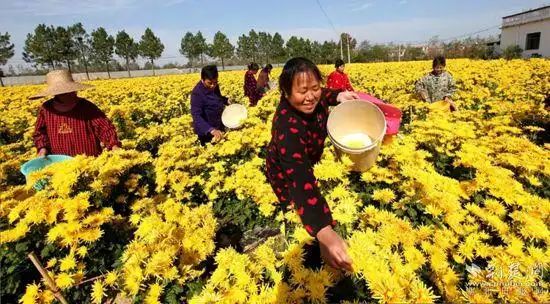
Villagers pick the golden daisies of the happy flowers. Operator
“the development of efficient agriculture and the promotion of scientific cultivation are the first steps towards the achievement of this goal, and they have a multiplier effect on the way forward.” as a result of this awareness, new agricultural technologies and products are being promoted in the village of ulongang. New types of business have been introduced: farmers' professional cooperatives in the fields of farming and wind forest, shifting more than 2,000 acres of land, nurturing quality rice and regenerating rice, and mechanizing the fields. “the fields that used to be farmed by cattle are tired and are now mechanically organized and yielding more easily.” yao ogata said that high-quality seedlings and high-standard agricultural land increased the enthusiasm of villagers for farming。
“it was too busy the previous year to have any money, and it was so worried about the family when you went out to work.” as for the previous days, the villagers yang should be very proud of his disability and his son could only do simple housework at home. He's out in a car to make money to support his family, and he's busy growing land. “now that it is good to grow its own field for food rations, to work as a machine operator at the farm farm cooperative for 15,000 yuan a year, with savings at home.” when it comes to home change, yang should have a smile of satisfaction。
Peng yongzhong, head of the cooperative specializing in plant protection for the mekong farmer and farmer of the city of maima, has calculated a figure of 300 yuan per acre for the transfer of rice, which amounts to around 600,000 yuan per acre, spending more than 300,000 yuan per year on work and nearly 1 million yuan per year for the villagers。
Resource-based niche industries
“how beautiful are these gills! I've been working at the village daisies this year from planting seedlings in april to weeding in may and picking them now. The villagers were happy to say that the red piano was picking up the ass. This year, when she did not work outside her home, she worked at the village's daisy farm, where she was involved in the whole process of breeding, fertilization, weeding, field management, picking, etc., and was able to find her ass, so that she could earn more than $4,000 by working at the daisy base alone and could take care of her family, which she did with pleasure every day。
Standing in the fields, looking away, in the waves of gold and yellow, dozens of villagers bowed down to gills and were busy. Who would have thought it was still a wasteland a year ago。
Is it possible to take advantage of the vast land resources of the village of ulongang, where most of the arable land has been transferred from traditional farming industries, but where there are still isolated areas of waste, to develop special agriculture? The village councils were thinking of linking the “flower economy” of the city with the establishment of a daisy base in front of the crowd. Market-oriented, science- and technology-based, with the objective of increasing farmers ' wealth, accelerating the development of the daisy industry and increasing farmers ' incomes, has been vigorously developing the standardization of the daisy cultivation and the creation of niche bases. Following the “village branch + co-operative + villages” development model, led by the village party branch, organized the mobilization of the population for the cultivation of daisies, the cooperative provided seedlings, fertilizers, technical guidance and the collection of daisies, while, during the seasons of weeding and picking, priority was given to the hiring of villagers for agricultural production, which allowed one of the people's land to earn two incomes and effectively boosted farmers' income。
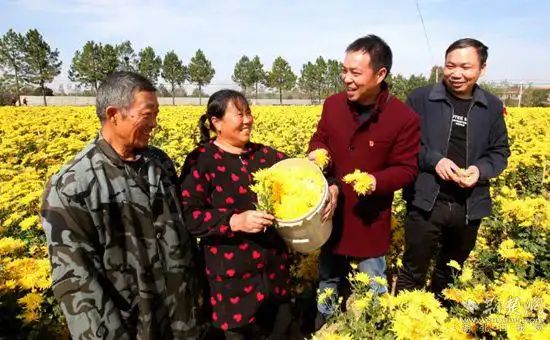
Members of the village-based rehabilitation teams interact with growers. Operator
“here, there are 70 acres of land, all grown in asylum, and this year's total production of asylum amounts to 35,000 kg, with an average of 60 kg dry on an acre wet flower. Yao ogata said that the development of niche agriculture was based on regional natural resource advantages and scientific choices。
“no benefits without size.” in 2021, the two village councils decided to expand the area under the asylum cultivation, make every effort to create an asylum brand, create a new wealth-generating industry, promote the economic diversification of the village of ulongang, continue to increase the collective income of the village and involve more farmers in industrial projects。
It's a new phase
A clean village, a garden of guacamole... . . . . . . . . . . The village of ulong qun, which is “highly in the face” . . . . . . . . . . . . . . . . . . . . . . . . . . . . . . . . . . . . . . . . . . . . . . . . . . . . . . . . . . . . . . . . . . . . . . . . . . . . . . . . . . . . . . . . . . . . . . . . . . . . . 。
Papa wang, who lives in wang jia wan, ulongang village, said that the village is now in a healthy environment, with squares, gardens and cities. All three of his sons worked outside but built new houses in the village。
“it is common in our village for former workers to return to their villages to build new houses.” yaowan stated that during the years farmers ' bags had become more and more crowded and that the urban-rural income gap continued to narrow。
The implementation of the rural renewal strategy and the flourishing of industry are fundamental and critical。
Based on its long-term development, the village of ulongang has been actively involved in the preparation of a number of facilities, such as warehouses and drying plants, for the processing of the primary and deep products of the chrysanthemum of ginsy, with a view to gradually establishing a solid and sustainable industrial chain. Also in 2021, a new asylum freezer, 720 cubic metres of storage, supported by a village-level daisy base, was built to address the problem of the storage of daisies in the village, to encourage villagers to develop the daisy-planting industry, and to employ more than 30 people。
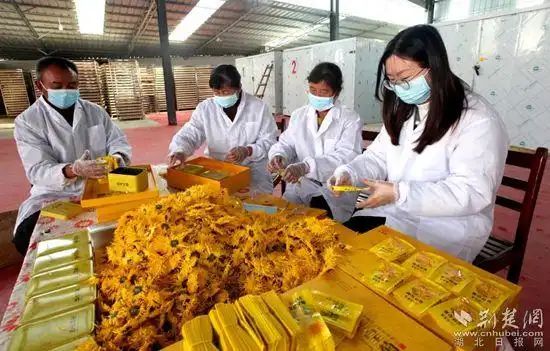
In the countryside, the kinsy daisy workshop is being revitalized, and workers are rushing to pack them. Operator
“it is good that there is an industry in the village, that i can take care of my family, and that i can take care of my income.” the villagers, dujine, are happy to say。
Growing an asylum, developing an industry, generating a group of farmers, the people of the rich side. In order to increase the efficiency of the production of daisies, the village also extended the industrial chain and, with the support of the monitoring board of the mca urban disciplinary commission, which is the help of the help unit at the site, set up a daisy dry processing plant to produce “chrymach tea” and baked flowers from their extraction into cassiterite tea material, thereby attracting more villagers to work in fields management, baking, packing, etc., in order to achieve the objective of double harvest for the village community economy and villagers。
“this year, the daisies are doing well, with more than 500 kg of freshness per acre, which, after cutting, high-temperature disinfection, drying, packing, etc., we sell directly to large tea companies, so that the initial estimate is around $20,000 per acre.” peng yongzhong, the head of the professional cooperative of ironmen farmer and plant plant protection of the city of massachusetts, has full confidence in the daisy industry. Iron-gate rice and anesthesia have become the best-selling product on the “832” platform for poverty alleviation, in which iron-gate rice and golden daisy, a local brand that will focus on mahjong over the next five years, have been included in the report on the work of the government at the recently concluded tenth people's congress。
In mountain villages such as ulongang village, there is no minority in iron gate. As the pace of rural renewal advances, the iron gate townships have adopted the revitalization of the industry as the main vehicle for rural revitalization, vigorously pursuing the process of modernization, scaling up, standardization and industrialization, stimulating the dynamism of rural development, generating a new dynamic of high-quality agricultural development and further building the foundations for rural renewal。









