Hello, folks
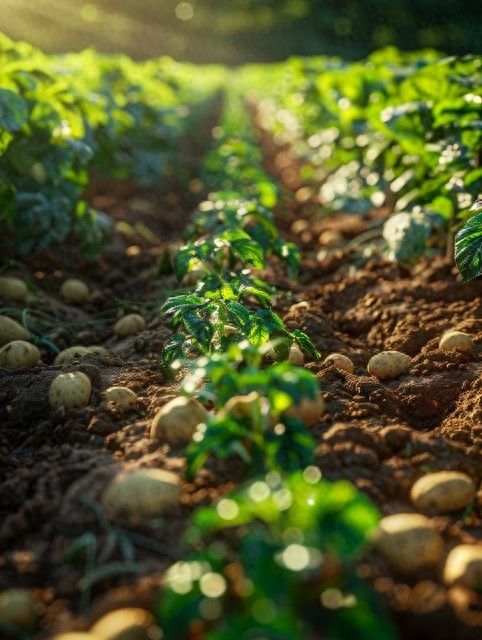
After autumn, the temperature slowly went down, and many growers began to think about the seeding of potatoes. Autumn potatoes are short-term, simplely managed and marketed at good prices, and are good for many farmers in the second half of the year, with families growing a few acres more or less。
Yet every year, a large number of old people step on pits and sow when the weather is cooler, the temperature in the ground is high, the potato blocks rot and the buds fail to come out, even if the seedlings are forced, high temperatures and heavy rainfall are prone to disease, yield is severely reduced, and there are few final harvests in the last half of the year, and seeds, fertilizers and labour are wasted in white。
Autumn potato cultivation, with time-control at the first critical juncture, with particularly high rates of seedling, growth and production. I have grown potatoes for more than a decade, taking into account our local climatic characteristics, and having found the best chance of planting potatoes in the fall, a whole-of-earth blending and field management, today i share with you the experience of hard-earned seeding, avoiding the pits of early seeding, and making a strong, robust and productive life later。
Autumn potatoes grow at the best time
A lot of farmers have a bad feeling that the earlier they grow, the sooner they harvest, the higher the price, the less so. Potato sprouting and growth are very stringent for temperature, and the cultivation of potatoes in high temperatures can easily cause problems of rotten seeding, sprouts and seeding。
Time reference for seeding in different regions
The best window for seeding potatoes in most of our country's yellow sea and yangtze basins is concentrated in late august and early september; warm areas in the south can be postponed until mid-september; and cold areas in the north will be moved up to mid-august。
Core criteria: soil temperatures of 5 cm above the surface are stabilized at around 20°c and seeding is carried out at a time when the temperature is suitable, the seeding of potatoes is not easily decompressable, the buds are burgeoning and the seedlings are well aligned。
If the highest temperature in the daytime area is above 30°c, do not rush. In high-temperature weather, the soil is soared that the potato is black and rotting, and the embryos are burned with high temperatures, and they are not bred directly; even when they come out, the seedlings are burned by the sun, are thin, and have a high incidence of post-mortem disease。
The pros and cons of planting
The seeding is premature: high temperatures, poor seedage, low seeding rates, high temperatures and droughts during the seeding season, the risk of early decay of plants, small potatoes and low yields, and the risk of late disease。
The seeding is too late: the growth cycle is shorter, the leaves on the ground are not growing, the troughs under the ground are frozen with cold frost before they expand, the chips are small, production is not good and the returns are very low。
Only when seeding is contained in the best temperature range can a balance be established between the rate of seeding and the long-term growth and provide the basis for a later high yield。
Potatoes are being disposed of to reduce rotten seeds from their root causes and increase seed rates
Autumn potato seeding and processing are top priorities, and many people cut them directly into the ground, making them susceptible to mouth infection and decay, which is a major reason for this. Scientific blending, cutting and drying can significantly increase the rate of seedlings and reduce post-mortem diseases。
1. Selection of seed seed
Precedence is given to premature, disease-resistant potato varieties, which are long and short in the autumn and can avoid late cold frost. The selection of healthy, disease-free, non-decompressive, lumber-filled potato varieties and the elimination of deformed, dry, diseased chips。
Some 10 days before the seeding, the seeding of the potatoes was tanned in a light-ventilating area, so that the bud's eyes moved, until the buds appeared, and then cut into pieces, and the buds were made faster。
2. Normative cuts
When cutting chips, make sure that each piece has one or two strong buds, with a single weight of 25 to 35 grams. Cutting blades are disinfected with potassium permanganate solution in advance to avoid cross-infection。
After cutting, don't sow it right away. Open the chips stand and hang it in the cool air. A 1 to 2-day sunbath to form a dry and hard healing layer to prevent the intrusion of bacteria into the soil after the lower ground, resulting in rotten seed。
3. Combination protection
The tanned chips can be ploughed with a multibacterium spirit, which can kill the fungus and supplement the potassium fat, as well as adsorb soil moisture to avoid the fertilization of the chips. A small drying of seed can be prepared to sow, a step that can effectively reduce the incidence of endemic diseases and the sprouts。
Getting up on the ground, managing the love, avoiding stale potatoes
During the seeding of the fall potatoes, many areas are still in the middle of heavy autumn rains, and the soil is thick and damp, which can easily lead to the decay of the potatoes and oxygen deficiency in their roots. It's all about making sure the potatoes are alive。
1. Land selection
To the extent possible, the sandy sandy soil of high terrain, open drainage and estranged soil should be chosen instead of low-lying plots. Following the harvest of the front crops, weeds from the fields are cleared in a timely manner to reduce insect infestation。
Deep-tilled soil, about 25 centimetres, torn and flattened the soil so that large pieces of soil do not crush the potato and affect seedlings。
2. High plant cultivation
Autumn potatoes must be grown from 20 to 25 centimetres, 60 centimetres and 25 to 30 centimetres. High-planted soil is lax, the soil is ablaze, the temperature rises fast and the water can be drained in time for the rain, and it does not soaks with soaks of potatoes and troughs。
It is important not to sow, rain in the fall, soil moisture in the flat, and the risk of bad species multiply。
Three
The soil is wet when seeding, and it is most appropriate to hold hands and leave. If the soil is too dry, water is poured first, then seeded after the soil surface is dry, not soaked as water, the soil is wet enough to grow, and the potato must rot。
The sowing is controlled at a depth of about 10 centimetres and the earth is even, so that it is not too thick, otherwise the seeding is difficult; nor is it too shallow, and the high temperature of the sun will leave the chips naked and affect development。
Fertilizer management, less watering and extra fatting during nursery times
The short growth cycle of autumn potatoes, management of water fertilizers without heavy fat, blind pursuit of fattening, flooding with water only results in the planting of long stands, few potatoes and easy to rot roots. The whole process is guided by the principle of “shrimp control, expansion, and supplementation”。
1. Bottom fertilization
Bottom fat is dominated by decomposed farmers, with a small number of compound fats, 2,000 kg of decomposed organic fat per acre and 30 kg of potassium sulfate。
Farmers must be fully decomposed and then refertilized in the soil, producing high temperatures and burning potatoes, causing rotten seeds, which is also a detail that many farmers have neglected. When bottom fertilizer is spread evenly, the soil is tilled and the soil is fully mixed。
Ii. Shrimp management
Following the seedling, the pre-temperature, which is dominated by long leaves, is a phase in which water is not watered as much as possible, with proper control of the water so that the roots can fall down, and the plant is strong and strong and long。
If the soil is dry during the seeding season, it can be watered in small quantities, rather than in heavy water. For about 20 days, thin nitrogen fats can be applied once to boost the growth of the leaves, which must be used in small quantities, and excessive nitrogen fats can cause the leaves to grow and lower the ground potatoes。
Three. The tuber swells
It's a critical period for fattening and watering when the herbs are growing. At this time, nitrogen fertilisation was stopped, with a focus on supplementing potassium fertilizers, 15 kg of potassium sulphate per acre, combined with the spraying of potassium phosphate on the leaves, and twice every 10 days。
Potassium fat contributes to the expansion of chips, the upgrading of potatoes and the increase in starch content. During periods of expansion, soil humidity is maintained, without dampness and with drastic changes in the damp soil, leading to potatoes and affecting commodity values。
Early prevention and treatment of pests and diseases, reducing loss of production
In high-temperature and wet autumn potatoes, the most prone to late disease, aphids and tigers, if not dealt with in a timely manner, are planted with large numbers of leaves, their expansion is hampered and their immediate harvest is severely curtailed. Prevention should be the main focus of the response and should not wait for the outbreak of the disease to be repeated。
1. Prevention and control of the epidemic
Night disease is the deadliest disease of the autumn potatoes, with brown spots on the leaves that spread rapidly when the humidity is high, and the whole strain dies。
Prior to the rainy season, protective microbicides were sprayed early, every 7-10 days. If there is a strain in the field, it is immediately removed from the field and destroyed, while therapeutic agents are sprayed throughout the garden to control the spread of the disease。
2. Underground pest control
Tigers of the ground eat potatoes and troughs, which cause vermin eyes to vary. When seeding occurs, bait can be cast in the soil or insecticide can be applied in combination with water to kill the ground pests ahead of time。
If a plant is found to have been bitten, it is captured manually in time to avoid continuous pest hazards。
3. Aphid control
Aphids not only suck on leaf sap juice, but also transmit viral diseases, resulting in the dwarfing of potato plants and the aberration of potatoes. Aphids are lured with cedars in the field and low-toxic insecticides are sprayed during high-prevalence periods。
It's a strong plant, it avoids being raised
If nitrogen fertilisation in the field is too high, rain is abundant in the autumn, potatoes leaves are easy to grow, leaves are so dense that they don't breathe, nutrients are consumed by leaves, and potatoes below ground are small。
Following the implantation, if the leaf is found to be too strong, it can be properly managed to contain parts of the ground and transfer nutrients to the subsurface。
Following control, the leaves are removed from the bottom and yellow in a timely manner, increasing the ventilation of the fields, reducing the humidity of the fields and reducing the incidence of disease while contributing to potato expansion。
The five core pits are the main point of the potato plant
1. Early seeding at high temperatures and above 30°c is strictly forbidden, with a high probability that the scavenging species will not be seeded until a few days later。
2. Potatoes must be tanned, sterilized, sliced directly below the ground, and they are highly susceptible to decay。
3. The eradication of flat-water cultivation of low-lying plots, with autumn rain pouring water as the main incentive for bad potatoes, bad seed and high-water drainage as the basis。
Underweights are banned for farmers, fermentation burns potatoes, and excessive application of nitrogen fertilizer is avoided during the seeding period to prevent the growing of potatoes。
5. Precautionary prevention of the disease and prevention of the disease after the outbreak of the epidemic are highly ineffective and at high risk of reduction。
Summary
Autumn potato cultivation is expected to be high and the core is stuck at the first point in the planting season. Temperatures are suitable for replanting, with scientific processing of potatoes, running water, rational water fattening, pest and disease prevention, so that the problem can be avoided。
We can't afford to grow in a hurry, and it seems that we can reap early harvests. If we manage the temperature nodes, put in place every step of the field management, produce fresh and robust potatoes, and fill up the post-stage chips, we can benefit from higher crop yields。
Homes and villages that plan to grow autumn potatoes must not rush to see the local temperature and operate in accordance with this approach, with less turn and less cost. It's very practical for people from their hometown to praise the collection and forward it to their relatives and friends in the surrounding areas。
Statement of non-compliance
This paper is a shared experience of farming practices in rural daejeon and is intended only for the information of farmers; the climate, soil conditions and varieties vary from region to region, and the effects of crop management are adapted to local conditions. Fertilizers, medicines and seeding methods are common farming techniques, which farmers need to adapt flexibly to local realities. Please refrain from blindly overusing fertilizer pesticides and not be held responsible for planting losses due to improper personal handling。