


Rural garlic is the worst problem: either it's long, it's thin, it's too early, it's all sucked away, and it's too small. Many people grow garlic that only waters and fertilizes, neglects the core logic of "spill control, boosting" and spends most of the year working, with no output or quality。
In fact, garlic wants to be "big, non-smoking" and it doesn't rely on any high-end technology. Rather, it needs to be able to understand its growing nature and to refine four things: varieties, temperatures, water fattening, density. The latest agricultural experience of 2026, combined with agro-technology science, is today dismantling a system of urban-rural, zero-threshold garlic programmes, ranging from crop selection, seed control, phased water fertilizer management, to the control of head swelling, pest control, harvest storage, full-blown rhetoric, without a single piece of crap, new hands can get their hands on it, with a full range of garlic and a very low smoking rate, both for home consumption and for sale。
First, to understand the nature of garlic: to understand the reasons for smoking, to control its roots
Garlic pumping is not “necessary”, but is the result of a combination of low-temperature springing + long daylight + nutrient imbalances, which is also the central cause of the failure of many people。
Garlic is in two categories: winter garlic, and spring garlic. Winter garlic (e. G. Gold-skinned garlic, garlic from the mountains) must experience a low temperature of 0-7°c, lasting 30 to 50 days, in order to divide the buds and follow up with screeching; spring garlic (e. G. Early in the morning of 2 years, garlic from pengzhou) requires low temperatures, and many improved varieties have a very low rate of direct “no-smoking” or withdrawal。
Three key triggers for the withdrawal:
1. Temperature is too early: early in the autumn and before winter, the garlic is too strong, the conditions for cold springs are met early, and the spring is ready to smoke
2. Excess of light: 12°c and 13 hours of daily temperature after spring, which accelerates the growth of the buds and the extraction of the lumbers
3. Abundant nitrogen fattening: low nitrogen fertilizer, low potassium phosphorus, long garlic seedlings and nutrients running to the leaf, not only early smoke, but also small garlic。
Simply put: if you don't want to smoke, you choose the right species, avoid premature temperatures, control the potassium, and plant them rationally, so that the rate can be reduced to less than 10 per cent, with a concentration of garlic。
Ii. Key 3-step preparation: managing the base of production from the source
Prepare to decide directly on later extraction rates and the size of garlic before broadcasting, a step well done, with late management less than 80 per cent of the curve, and many of the strategies ignored these details, which are shared once and for all today。
Selection of pairs: priority “no-smoking/low-smoking” species, semi-deficit
The following three categories are chosen:
- vacuum-free/low-skinned varieties: early-water improvement system, mackerel garlic in pengzhou, purple-skin-free garlic, 5 per cent pumping rate, almost only garlic
- high-yielding, smoke-resistant varieties: morning garlic in the village of gold, platinum garlic in the mountains, late in the night, large garlic, suitable for the northern autumn
- the pit avoidance reminds us of the fact that other old varieties and degraded garlic are not only greasy, but also small, and produce is directly reduced by half。
Garlic selection criteria: full of garlic, flat, non-stereotyped, non-organised, non-deprecated, singled out petals (400g), small petals, deformed petals, strong, fast-growing petals。
2. Land conversion: abating gas, well-drained fatty, root-proofing system
Garlic is afraid of flooding, of hard soil, of resonance, and prefers the high-seasoned, well-watered, thick sandy or bordered soil, ph 6. 0-7. 5 best, with other onions, garlic and beads (preventing disease)。
Overall steps:
1. 25-30 cm deep after the previous harvest, 7 to 10 days in the tan field, to kill the living soil
2. 3000 - 4000 kg per acre of corroded farmers ' fattening 50 kg + 0. 5 kg per acre of corrosive fertilizers to avoid direct exposure to garlic (firing petals)
3. Elevator: zirconium width of 1. 2-1. 5 m, zirconium height of 20-25 cm and ditch width of 30 cm to ensure that the water is drained and the root of the water is protected against scavengers and induced to pump。
3. Garlic treatment: suncreas + cryogenic thallium, saplings, suction less
A lot of people go straight to the petals, grow slow, decomposed, smoke a lot, take two steps to solve the problem:
1. Scrambling: two to three days (scrutinizing, not tanning) after the grafting of the petals, until the skin is dry and hair is sufficient to break the hibernation, bactericide, seeding fast and full
Low temperature control (necessary in the south): high winter temperatures in the south and low temperatures of garlic, which tend to form “false” or nitrous. (a) pack the tanned garlic in a net bag, freeze it in the freezer room (0-5°c) for 15-20 days, simulate low-temperature springing, both to control late-stage pumping and to boost garlic expansion
Combination against pests: 12 hours of impregnation with more than 50% more than 500 times the elixir, extraction of dryness, protection against root disease, garlic mackerel, stronger seedlings。
Iii. Precision seeding: control time, density, depth, inhibition from source
Seeding is the central part of the control of pumping, boosting the brain, one day early, denser, one inch deep, late-stage pumping and yield differentials, by the following criteria, and zero error。
1. Seeding time: national sub-regional precision control to avoid premature temperatures
Autumn (north), spring (north-east/north-west), winter (south-west), core standards: average daily temperature is stable at 15-18°c, and garlic is growing to 5-6 leafs (most resistant to cold and less prone to early spring)。
- north huai hwang sea (sundong, henan, hebei): in late september-early october (autumn-choose), seedlings were produced some 35 days after the broadcast and 5-6 leaves before winter
- the yangtze river basin (jangsu, anhui, hubei): in mid-october, early broadcasters were avoided and the evening was weak
- north-east/north-west (inner mongolia, xinjiang): mid-march-mid-april (spring) when the soil is unfrozen as soon as possible to avoid cryogenic effects
- south china (gangdong, guangxi, yunnan): late october-mid-november (winter) to avoid high temperatures and to guard against the “gream”。
A key reminder: it's too early in the autumn. It's hot and long, and it's warmer than winter. It's hot. It's hot。
2. Sowing density: reasonably dense, protected against the masters and dilution production
Density determines the size of the garlic and the extraction rate: too much competition for fattening and small garlic; too much monotonous and low total production。
- line distance: 18-20 cm (ensuring ventilation)
- range: 8-10 cm (sufficiency of nutrients per plant, rapid expansion)
- number of plants per acre: 35-40,000 (in this proportion)
- operation: a shallow glare of the cheeks, with the tip of the garlic petals facing up, not falling down (slow and weak)。
3. Sowing depth: 3-5 cm gold depth, freeze-proof, scrawl-resistant, sapling
Too shallow
Depth (>6cm): slow, weak, low garlic and low yield
Standard depth: 3-5 cm (slightly 5 cm deep in sandy soil and 3 cm shallow in sticky soil) and light-stamping of the soil, close contact between garlic and soil, lifagen, and air-resistant rotting petals。
4. Post-sown water + membrane: wetting, grass control
When sowing, water is poured through 15 cm of soil to boost seedlings; in the north and in low-temperature areas, water is watered with black membranes (0. 008 mm thick) that both keep the temperature warm and weed warm, and reduce low-temperature springing, slow-dumping, with garlic growing rapidly and growing by more than 20 per cent。
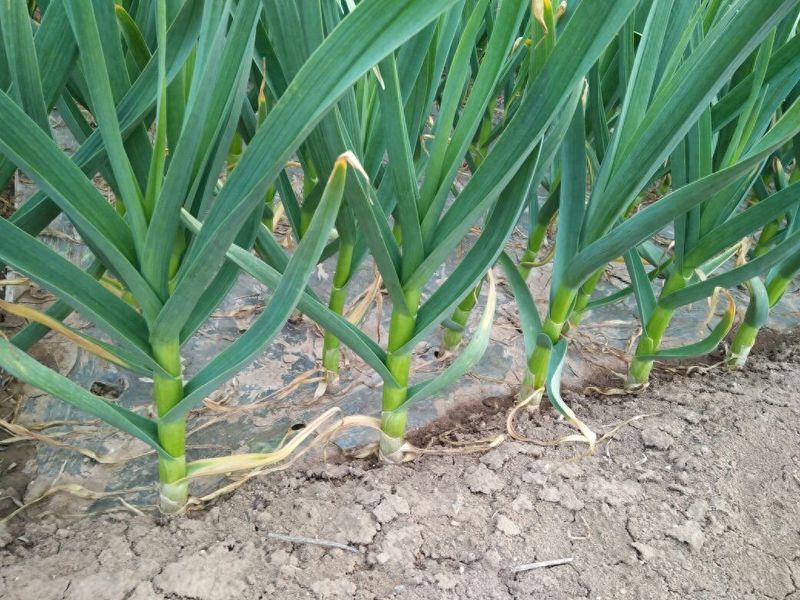
Iv. Phased management of water fertilizers: control of potassium nitrogen enhancement, precision watering, protection against suction and expansion head
Garlic manure management cores: pre-suppression, medium-term control, post-surgery, full-scale control of nitrogen fertilizer, potassium phosphorus enrichment, trace elements, excessive nitrogen fertilizer, and small garlic, which is the easiest pit to step on。
1. Pre-winter management (e. G. Seedlings - freezing): strong and not long
- after seeding: 10kg urin + 5kg potassium sulphate per acre, with a strong, well-developed root and no more urea application (preventive length)
- before the freeze: late in november-early in december, the “frozen water” (infiltration of 30 cm of the earth) was poured into the water, which was frozen, protected from the cold, soared by the winter that it could not be springed earlier
- control: sapling is too strong (yellow, green, long) and the leaf is sprayed with 0. 3 per cent of potassium phosphate, and is used to protect against suction and to increase the resistance to cold。
2. Returning to youth (in spring-march): light, long, long, early and dry
In spring, the temperature rises, the garlic is green, the core: nitrogen control, cooling, slowing down。
- returning to green water: water is poured at 3°c of daily temperature stability, which is poured out in the morning by 10-15 cm of earth cover, cooling and slowing, and no water is accumulated
- fertilizers: 15-20kg per acre of potassium complex fats (15% nitrogen and 20% potassium) without pure urea and too much nitro fats; 0. 3% potassium phosphate dihydrogen + 0. 05% boron, 7-10 days once, 2 times in a row, permolated potassium, plumb extension and garlic swelling。
3. Magnitude of garlic (april-pre-harvest): heavy potassium expansion, elimination of stoke
This is a critical period for the growth of garlic, spiking + swelling, core: nitrogen cut, potassium heavy, and water protection against fragmentation。
- fertilizers: garlic is fresh in the tip (without ejecting a leaf), potassium sulphate 10-15kg per acre, or potassium water solublely applied, nitrogen fertilization is strictly prohibited and all nutrients run to the garlic head, inhibiting pumping
- watering: dry wetness, soil maintenance wetness and water for the first term of expansion, with no fear of heavy flooding, dryness and dampness (cracking of garlic and screeching); water stoppage 10 days before harvest, prevention of garlic and resistance to storage
- control: a small amount of platinum was found, garlic was removed (from the base) in time, nutrient loss was avoided, potassium dihydrophosphate was retried once, and garlic was rapidly swelled。
V. Key management in the field: temperature control, medium tillage, pest prevention, full protection
1. Temperature control: prevention of low-temperature spring and protection against high-temperature growth
- over the winter period: covering the membrane, tuning to protect the temperature, avoiding the persistence of temperatures at 0-7°c and reducing springization
- spring: when the temperature is high (20°c), cooling of the water at night and slowing down of the stinging; avoiding high-temperature watering at noon (injury)。
2. Cultivated pine soil: warmer air, stronger root
Pre-winter and back-to-day plantings occur once, at depths of 3 to 5 cm, decomposition of the soil, improvement of the temperature, increase of the roots to breathe and control of the land to reduce the amount of weeding; membrane cover is not cultivated and weeds are cleared in time。
3. Disease control: protection from root causes, garlic mackerel, foliage and avoiding reduced yields
Garlic is the main pests and pests: roots, leaves, garlic maggots, aphids, and pest hazards can lead to weakness, high levels of smoking, small amounts of garlic, and early prevention is critical。
- root causes: high-wet-prone diseases, rotational diseases, pre-employers; rooting with flazamide and bacterium sapling at the beginning of the disease
- leaven sickness: high incidence during the rainy season, with the first use of the disemboweled manganese zinc, ether acetate spray, once in 7-10 days and twice in succession
- garlic maggots: endangering roots, causing dead seedlings, sowing pre-plants, producing long-term thionous granule formulations, sowing sands, or flushing to the death of the cream
- aphids: ingesting foliage, spreading diseases and treating them with aphids and aphids spray。
“ponytail garlic” “single garlic”: avoiding malformations production
- pony-tail garlic (secondary growth): excessive nitrogen fattening, high temperature fluctuations, control of nitrogen, potassium enrichment, stabilization of temperature to avoid high growth
- monocrotch: due to overdensity and under-spring, it is reasonable to plant, ensure cold accumulation and reduce monolithic。
Appropriate collection + storage: quality assurance, durable storage
1. Timing of harvest: yellowing of garlic leaves, softening of the mantle and timely harvesting
When the lower leaves of the plant are yellow, the upper two to three green leaves and the prostheses are softened, they can be harvested (usually in late may and early june), not too early (garlicy, abundant water), not too late (spread petals, impatience)。
2. Post-harvest processing: drying, braiding, storage, unsprouts
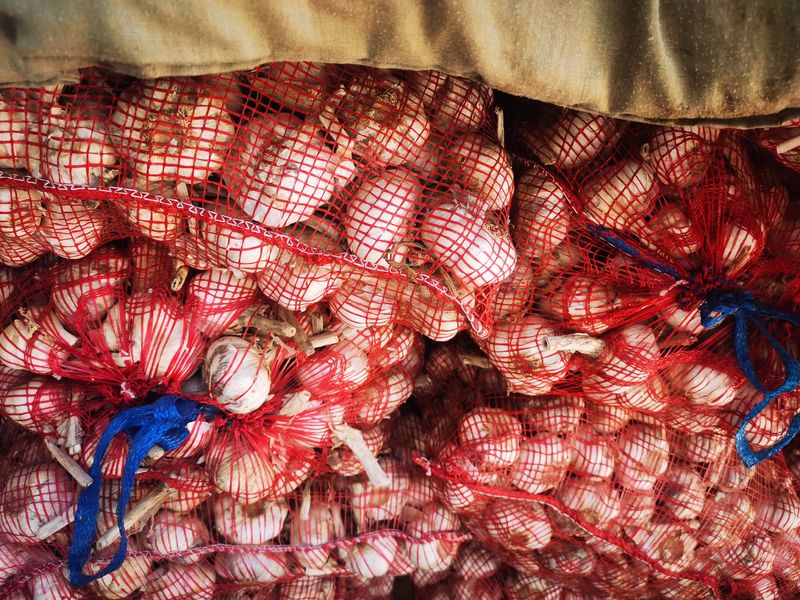
The harvest is followed by a three-to-five-day drying of a leaf (shun, don't tan), a dry mantle, a dry skin, and then a braiding or bundling, which is stored in a cold and dry air, at temperatures of 0-15°c, 60-70% humidity, which can last six months without gerries or decay。
Vii. Dismantling at depths of common error zones: avoiding these pits without failing to plant garlic
Zone 1: the more we plant, the higher the yield
Corrected: overstretching leads to competition for fattening, long-stamping, small garlic, and rationally implanted (20 cm, 10 cm)。
Mistake 2: give me more nitrogen
Correct: too much nitrogen fat must be pumped, garlic dried, potassium nitrogen added, boron phosphorus filled。
Zone 3: the earlier the seeding, the sooner the harvest and the higher the yield
Corrected: it is most appropriate to sow early cold springs, lots of smoke, small garlic, average daily temperatures of 15-18°c。
Zone 4: scratch is normal
Correct: scratches consume large amounts of nutrients, garlic is not long enough, garlic is removed in time, inflation is controlled and yields are doubled。
Zone 5: garlic is impregnable. More water grows fast
Correction: garlic is afraid of flooding, water-filled roots, smoked, wet, water-proof, roots strong and garlic-rich。
End of full text
In general, garlic is grown to be “big, non-smoking”, with a core of six words: pairing, control of potassium nitrogen. The varieties give priority to low-spill, low-spill, low-intensity, low-density, pre-spill, late-heavy potassium nitrogen control, temperature and disease management, natural low-spill rates, a concentration of garlic, full of garlic and a pound of garlic。
The rural yard is a place where garlic is grown at no cost, a piece of garlic, a piece of land, which is simple from seed to harvest, and a freshman can succeed once. A lot of people grow old garlic, they're small, they don't know the key details。
Have you ever had a problem with a lot of garlic? Have you ever tried the methods of garlic and potassium nitrogen? What kind of garlic technique can make garlic bigger and non-smoking? Message sharing in the comment area, sharing experiences and producing high-yield quality garlic are welcome。









