


Don't mess around with the tacos after autumn! High
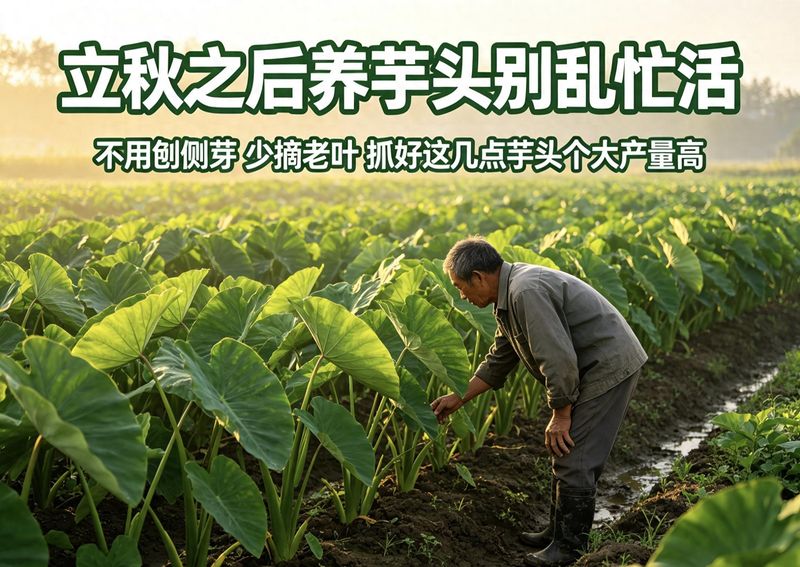
Every year after autumn, the seeded taro enters the most important stage of underground tubing. A lot of farmers can't stop at this hour, running around in the tarp field every day, scratching off the sprouts when they see the sprouting, and then taking off all the old leaves below, thinking that the cleaner they clean up, the bigger they grow. However, many farmers have been growing for several years, and the more they work, the smaller their heads, the more their production remains。
I have visited a large number of farmers who grow taro, and i have shared it with some old growers who have been growing for more than a decade. Many people have applied the method of management of the sapling season directly to the autumn boom. The proper clean-up of the excess sprouts during the shrunk period is indeed beneficial for the sprouts, but after autumn, the plant has grown into a full coronary layer, with different effects on the blades and small sprouts, and blindly trims the nutrient cycle. Today, i will share the full range of management experiences of taro after the fall, and we will adjust the care approach to the situation in our fields。
I. Why don't you suggest the blind scratching of potatoes and the removal of old leaves after autumn
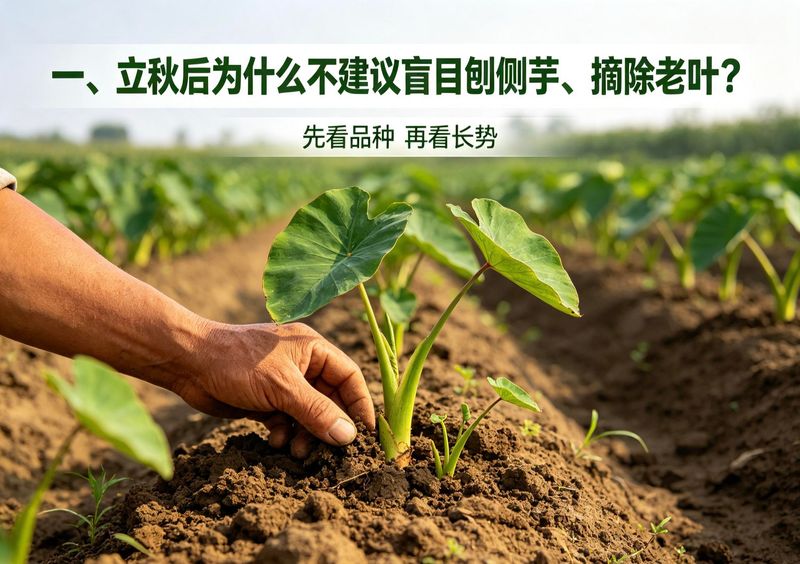
A lot of short video articles are telling you that all sprouts must be removed and all lower leaves removed. This statement is too absolute to be reproduced directly in the taro-head field after autumn. Let us first understand that after the fall, the nutrient supply logic of the potato plant has changed completely, and that the leaves on the ground are the mills of the ground。
Healthy old leaves continue to be used for normal photocosm, with a constant flow of starch and sugar being sent to underground tubers. If the division is not good or bad, all the leaves in the lower layer are removed directly, which is tantamount to cutting off a portion of the nutrient supply and reducing the capacity of plants to produce nutrients directly. Only those leaves that are yellow and dry and sick need to be cleaned out in time。
Plus, the tart sprouts, that's what you say. Different varieties of taro have different strategies for sprouts. If platinum is grown, and taro is grown, which is the main source of the harvest, and is too strong and spread out, it does take the mother's nutrients and can be cleaned up on a selective basis; but if it is red sprouts, ordinary taro, the taro itself is the main harvest object, and the sprouts are scratched at will, which is equivalent to the direct loss of a large quantity of potatoes。
Here is one lesson that i personally have learned: the first priority after autumn is to cut the knife and sprouts and not to do it as soon as you see it. Unless the sprouts are particularly large and the plants are heavily crowded to cover, priority will be given to retaining them, relying on soil to bury the sprouts in the soil, and many of the sprouts will slowly grow into strong potatoes and become our production. Many local farmers continue to grow after many years, cutting most of their potatoes after autumn and wasting opportunities for increased production。
Of course, less sprouting is not the same as letting the weeds grow and the weak sprouts grow into madness. The tiny, thin, tight ground, small, thin sprouts, and those that have been eaten by insects and rotting, can still be cleaned up. It is just that we are no longer implementing the rough management model of "sprinkle-and-sprinkle" and learning to judge according to variety, strength and flexibility, which is the most critical first step in providing care in the autumn。
Ii. Fertilizer management: controlling nitrogen-added potassium is the top priority of the taro boom period heavy
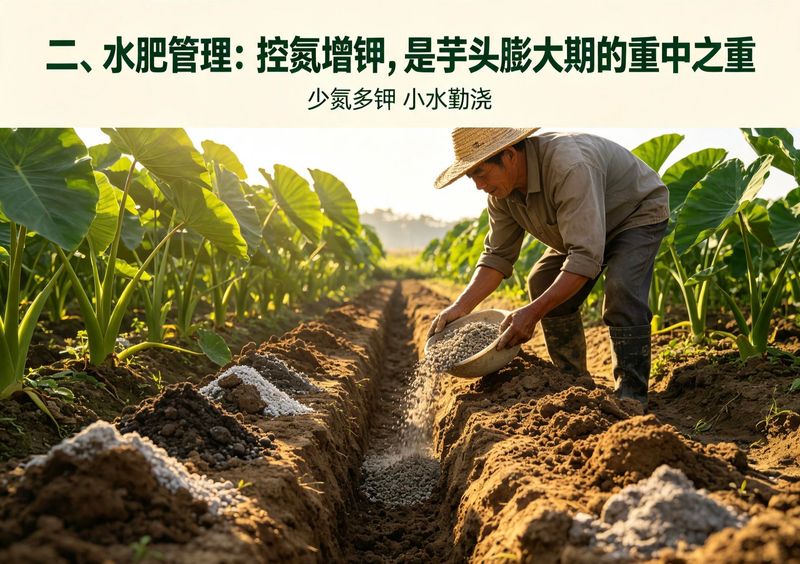
Once the faults of the sprouts and blades are resolved, the most central link is management of water fertilizer. After autumn, the tacos no longer need a lot of nitrogen fat for long leaves. Leafs grow wildly, stubbles grow thick, and tacos grow slow, and large amounts of nutrients are consumed on the leaves。
The broad principles of fertilisation at this stage are the control of nitrogen, heavy potassium, adequate supplementation of phosphorus fertilizers and the matching of trace elements. Many farmers are used to taking urea after the fall and feel that the more fertilizer the better it is, it is a big pit. Following excess nitrogen fattening, taro-plant resistance is reduced, high-temperature, high-humid weather is highly susceptible to outbreaks of disease and soft decay, and the entire field is likely to be damaged if the disease spreads over large areas。
We can get fat in the roots, and we can get fat in the leaves. Root fatting is preferred to high potassium compound fertilizer, or consummated farmers are fed with grasswood ash, and can be applied in shallow ditches along the gutter at a distance of 10 centimetres from the root, followed by the application of fertilizers, so that the fertilizer is not simply stacked on the root of the tarp, avoiding the burning of a small seed. A small amount of fast-acting nitrogen fertilizer can be combined with a small number of fields with weak long, thinly coloured leaves; and a large and green field with thick leaves is completely out of urea。
New differences in experience: poor conservation capacity on mountain sands, allowing for a small recovery of potassium fertilizer in two fractions, and the need for low-lying field plots to rise early to reduce the risk of water accumulation。
Leaf fertilizers can select potassium phosphate solution at a concentration of 0. 2-0. 3%, sprayed every seven to ten days and sprayed twice or three times. The fast-absorption of the leaf is a quick supplement to the potassium element, which promotes starch accumulation and makes taro more pink. It would be preferable to choose the evening hours to avoid the high temperatures of the noon sun and to prevent rapid evaporation of the evaporation of the blades。
The management of moisture is equally impervious, the taro itself is a wet crop, the soil needs to be moist during the swelling period and soil moisture is best maintained at around 70%. But the taro roots are particularly afraid to accumulate water, which is more than six hours old and can easily induce rotting roots and morbid diseases. It is important for farmers in the rain-fed areas of the south to be particularly sensitive to the fact that, in the middle of the day, small water is sorely infested that they are slowly drinking along the ditches that they do not flood。
I give you a simple way to judge the soil's dampness: reaching out to grab a mudslide, squeezing it down, and spreading it apart, which is just as wet as it is; when the mud squeezes, the water flows, the water is overstretching, and the mud is broken, and the water needs to be filled in time。
Iii. Science and culture. A lot of farmers missed this after autumn
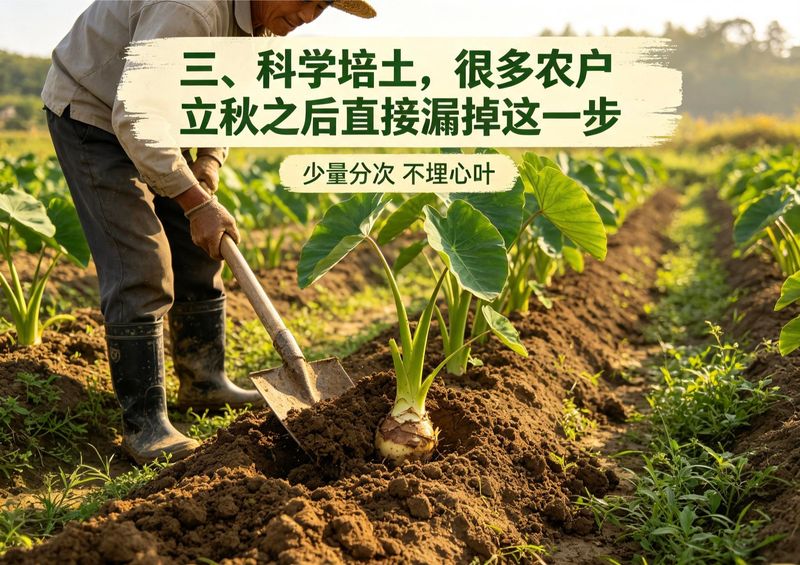
When it comes to the high-yielding technology of taro, there is absolutely nothing to be done about it, but there are many farmers who have stopped it since the autumn, and they feel they've done it before, and everything is going well behind them. In fact, it is the stage of growing taro that continues to swell, rising to the surface, and if the soil is not thick enough, the surface is exposed to the sun and the skin becomes green, not only with poor tastes, the value of the goods has been reduced, but also with a greater degree of vulnerability to underground pests。
There are several details to remember. First, it must avoid the high temperatures of noon and give preference to the morning or evening operation; the soil is too watery and does not produce soil immediately when the soil is heavy after the rain, and the permeability changes after the mud sheeting, inhibiting its roots from breathing。
Secondly, when planting soil, do not bury the heart leaves of the plant centre, which can easily rot and rot in pieces, but simply push the edges of the earth to the base of the taro, covering the taro that is already slightly exposed. Peasant thickness is the most appropriate control in three to six centimetres, which does not require one-time thickness of the soil, which can be divided into a small amount。
Thirdly, the soil used for the soil is as loose and fertile as possible and can be mixed with a small amount of corroded, corroded soil and do not press it directly on the roots of the potato field. When weeds grow, weeds are cleaned up, and weeds are fattening very quickly, and when weeds grow mad, they take lots of soil nutrients。
Here's a little bit of my perspective: it's just the right way to deal with the sprouts in the middle, not scratching them, and burying the sprouts in the ground with the concrete. The dark and wet surroundings that are buried in the earth will, for the most part, develop smoothly into tara and become our harvest; we will consider clean-up only if they are too strong and are already large and taller than the plant, so that production is retained without the problem of overcrowding。
Iv. Field patrols to prevent disease and pests and to prevent them more than cure
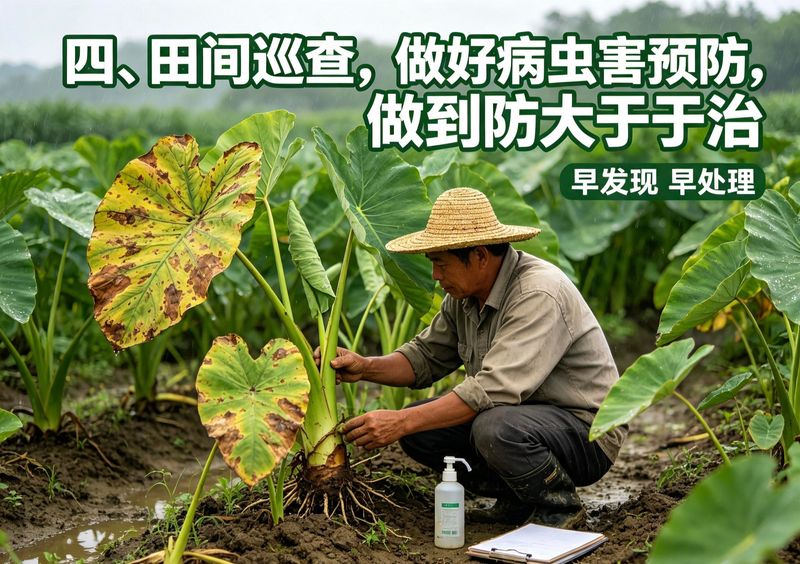
After autumn, the temperature remained high, and the high temperature, combined with the high humidity of the field environment, was the peak of the outbreak of various diseases in the taro. Many farmers do not normally visit and wait until the whole field is yellow and rotting, when the disease has spread and even the use of medicines is difficult to recover, and production has been severely damaged。
The most common diseases during the taro boom period are mainly taro disease and morbid disease. The disease causes yellow and brown spots to grow on the blades, which then slowly expand and then dry directly; soft rots are bacterial diseases, the roots stink and the whole family fall and die. Insects are mainly protected against slashed night moths, aphids, and underground pests such as larvae。
Priority is given to agricultural prevention, supported by chemical medicine. First, to keep the venom in the air, not to leave the leaves unclogged, and to remove a small number of old leaves from the fields in time, not to leave them to rot and become a source of infection. Second, proper drainage and reduction of field humidity, which can lead to a direct and significant reduction in the rate of bacterial reproduction. Thirdly, regular ground-to-ground patrols were carried out every two to three days along the fence, and sporadic strains were identified and immediately marked for treatment。
In the event of a serious disease in the field in the past, early preventive application of low-intensity compliance agents can be carried out, in strict compliance with the instructional index concentration, in compliance with the safety interval and in the vicinity of the 20 days prior to the harvest. It is important not to increase the concentration of pharmaceutical products at random and to mix a wide range of pesticides blindly, which not only results in adverse effects, but also leads to excess pesticide residues that affect the marketing of taro。
There are many farmers with a fault zone: so long as the leaf is green, it means complete health. In fact, many of the diseases began from the roots of the underground, with no visible symptoms in the front of the floor, and when the leaves were yellow, the tacos were damaged. The inspection is therefore conducted not only by looking at the leaves, but also by gently pulling the root layer to observe the root state, so that it can be detected and processed early。
Five, autumn heads manage the four most easily trampled pits and must be avoided
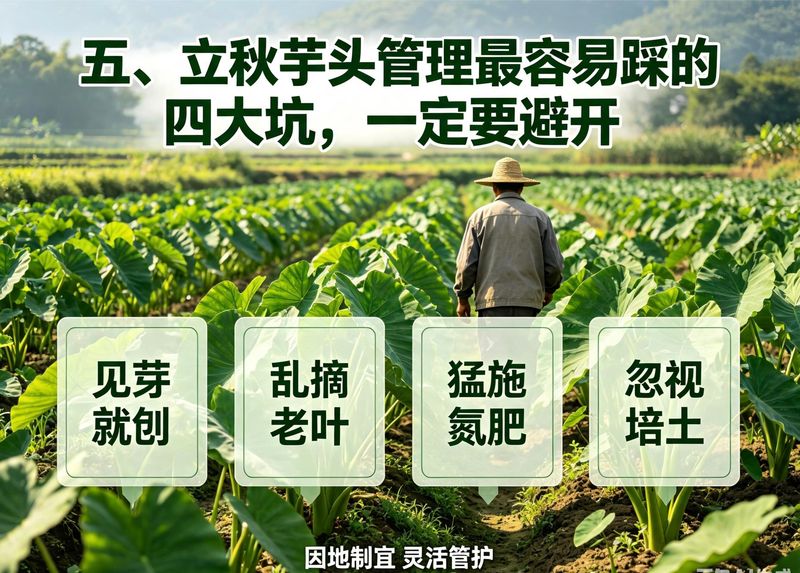
In combination with the problems encountered in so many farming households, i have organized four of the most common major pits in the qianqiu tube, many of which are committed year after year and can be checked against themselves。
The first pit: a sprouts after the fall, which cleans up the whole range. The bulk of the taro variety is the source of production, with a blindly total reduction in production. The right idea is to clean up the blemish, to keep the sprout first and to raise the seed from the ground。
Second pit: large-scale removal of health function leaves for ventilation. The healthy old leaf is still producing nutrients, large slices of it are cutting off the nutrient supply, and the high rate of soot expansion is slowing directly. We can only clear yellow leaves, sick leaves and dead leaves。
The third pit: the nitrous fertilizer after the fall, with a heart-blowing seedling. Overweight nitrogen fattens only lead to long leaves, increased risk of disease, slow growth of tacos in the ground, high and slow fattening in the autumn with potassium at its core and small additions of nitrogen fat, as appropriate。
The fourth pit: ignores the ground and leaves the ground to be tanned by the taro. The surface of taro is greenened, its quality is reduced and it is also easy to be eaten by underground pests, and then light-earthed on the basis of the emergence of the taro after the autumn, so as not to be buried in one-time thickness。
Of course, care programmes are not static; mountains, flats, sands, sticky lands, and water fertilization capacity are completely different; there are also differences in the cycles of pre-cooked and late-cooked varieties. We must learn to grow, not be able to move in hard land, and we must adapt our land mass to previous years' cultivation in a flexible manner, observing the strength of the plant and slowly exploring the care programmes suitable for our field。
A lot of old people grow tacos to think of a recipe for high yield, but there's a magic recipe for farming. High productivity depends on one step at a time and one step at a time, with a steady mindset in the middle of the autumn, without rushing to trim and fertilize blindly, and with the weight of water, soil and disease, the tart can grow big and round。
Time travels closer and closer to the potato harvest, and every fertilisation and every inspection during this period is directly reflected in the final harvest. It is a pity that many farmers have done excellent pre-planting and shifting cultivation, and that after the fall, the final production has been reduced significantly by half of the year。
Concluding remarks
Having said that, in sum, it is a saying: after autumn, don't be so busy with tacos, don't just rely on cutting the side buds and removing the leaves for high yields, distinguish between the long and rational growth of the varieties, and do the core tasks of water fattening, earthbreeding, pest prevention, and so forth, so that we can steadily increase the head and production of tacos。
I don't know what you people do when you're in autumn
Are you used to cleaning up all the tarts, or do you choose to keep some
You're welcome to leave your planting experience in the comment area and to share your experiences。









