


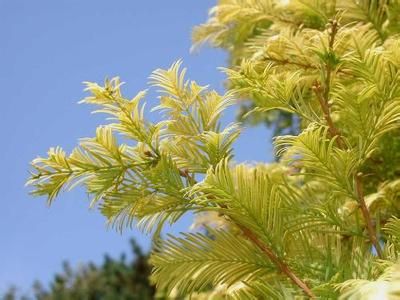
Sugills are the world's precious rare tree species, which enjoy warm and wet weather. They are highly adaptable, resistant to cold, fast-growing, straight-dry, few pests and diseases, beautiful leaves and good materials. As a good product in the paper, construction, furniture and textile industries, and as a good green tree species, a major step forward in greening the production of the aquariums is one of the important ways to reduce the conflict between supply and demand of wood and its beautification, fragrance and purification of the environment。
However, given the current low availability of species, single methods of reproduction (single seedlings only) constrain the development of aquaculture production. Although some of the trees can be solved by nutrient reproduction, the excellent properties of the sprouts are reduced by multigenerational injections. At the beginning of 1998, 15 years of seedlings were used to experiment with broom-breeding and to draw some successful lessons for you。
Seed treatment
Shrimp species are small, seed flattens, fined seeds are close to the circle or wide ovaries, yellow or brown seeds have wings of 5-6 mm, 4-5 mm, 0. 6-1. 0 mm thick, with small dents at the top, 2 leaves and 1. 75-2. 28 grams in thousands. One hour later, the seed of potassium permanganate leached with a 0. 5% permanganate solution was extracted, dryed in the vagina, dredged the sprout pits according to the size of the seed, a wet sand layer of seed, and the sand was loosed by hand in groups. The pit was filled with a few herbs of gas, which were incubated during the winter season and covered with frozen dry grass and plastic membranes. In spring, 80 per cent of the seedlings are sowed in plastic sheds。
Ii. Location and natural conditions
In the qindu district, the nursery is located in the chon jia nursery, on the outskirts of the city (north-east of maung town) and in the warm zone of the continental monsoon climate, the soil is fertile in deep soil, with an average annual temperature of 13°c and an average annual precipitation of 549. 5 mm is easy for irrigation and transport。
Iii. Make the bed
In the sheds (0. 5 acres), the whole area is covered by a farm with 1500 kg of potassium perphosphate and 1 kg of fungicidal powder, which is run over the field by two plows (with depths of 25-30 cm) for high-bed transmission。
Iv. Timing and methods of seeding
The seedlings were planted on 11 april 1998, before which the ready seedbeds were flattened, the earth was crushed, the bed floor and the walkways were crushed with wooden panels, around 2 cm of sand were spilled on the bed, and then evenly spread. The seed is then covered with sifted soil sifted with grass-wood ash, suitable for the thickness of the seed, and finally with straw over seed beds。
V. Shrimp management
1. Temperature of seedbeds. Once the grass is covered, the water is wet and even. Care is taken to regularly check bed surface humidity, to spray water in a timely manner, to keep the bed surface wet and to promote seed sprouts。
2. In time, when seedlings reach about 35 per cent of the soil, they cover 50 per cent of the grass evenly, and when 75 per cent of the soil is produced, they are all removed and their leaves are removed. When the grass is excavated, be careful and considerate to prevent damage to the seedlings. It's a fear of drought and flooding。
3. Prevention of disease and weeding. The seedlings were sprayed with 0. 5 per cent of bordeaux liquid spray for approximately seven days of life to prevent the occurrence of adhesive diseases, with 1 per cent of bordeaux sprayed around every seven days thereafter, 4 per cent of iron sulfate solutions added in mid-june, and half an hour later with water sprayed with tree seedlings. Prevention of drug abuse. Weeding must be done in accordance with the principles of smallness, earlyness, and exclusion.
4. Drought-resistant fertilization. After half a month of seedlings. Timely spraying or seepage to ensure water demand for seedlings, with 1 per cent urea or 0. 5-1 per cent potassium phosphate seedlings increasing the growth of the tree by mid-june
Www. Nczfj. Com
After management, in mid-november 1998, a half acres were surveyed to have 53,400 co-moys, with an average height of 55 cm, a diameter of 0. 48 cm, a maximum of 78 cm and a maximum diameter of 0. 81 cm. There are 16525 primary, 30405 secondary, and 86. 4 per cent of the total number of primary and secondary seedlings meet the one-year seedling standard. This law is therefore feasible。
5. Garage management. The plastic film shed is ventilated at around 30°c during the day and around 15°c at night. The average temperature is 16-19°c. Plastic films have a perforation rate of 80-85 per cent, with significant photo-uv and infrared, infrared light through 45 per cent and ultraviolet light above glass. As a result, the plastic sheds increase temperature, accelerate light co-operation and contribute to the growth and development of aquatic trees. At the same time, high temperatures in the shed have the effect of inhibiting and eliminating bacteria. Temperature cocoa is more than 80% wet in the range of 12. 9 - 93. 7%。
Vi. Questions for attention
1. Selection of seedlings. Shrimps should choose a tree tree with a full and full trunk, with a strong and healthy top, full woody branch, full leaf sprouts, no bending, multiple sides, no disease, and mechanical damage, and tree seedlings about 0. 5 metres high。
Raise seedlings and transplants. It's like digging 20 cm from the base. Drill 40 cm deep and seedlings to reduce the need to break the roots. Timely planting allows for the retention of the absorption function required by root and increases the survival rate. Shipments to off-site sprouts may take measures such as sandbags or phosphorous fertilizers, so as to minimize the water loss from the roots。
3. Cave opening and planting. Shrimp pits are set at about 30 cm long and 50 cm deep to ensure that the sprouts do not stretch into the pits. When the sprout is in the hole, 40 cm is buried and 7 cm is taken. It is closely integrated with the soil, with foot-stamping, which is more than 8 cm above the hole, and with tools。
Water and soil. When the sapling is ready, the water should be fully watered and watered for about two days in a row, one to keep the root system absorbing the moisture and the other to promote the full integration of the roots with the soil. Some four days after the sapling was completed, the soil surrounding the tree base was re-introduced with tools to promote further integration of the roots with the soil. After 10 days of displacement, the soil must be crushed once, and the management of the above-mentioned method will enable the displacement to reach a good growth rate of over 94 per cent。









