


1. The technology for the cultivation of the entire membrane, along with the county technical association for the specialization of potatoes (senior farmer, member of the chinese commission for the training of potatoes), previously mentioned, the technique for the cultivation of “deep ditches, scavengers, all-repeated membrane” is a combination of high-yielding and efficient cultivation, which we have summarized in recent years with state practice in the production of spring potatoes, and has the effect of combating cold, water conservation, heating, stain prevention, early ripening and significant increase in the production of potatoes. Over 460,000 acres have been added to the territory of the cantons, generating more than 600 million more for farmers. Rapid radiation is also being carried out in the surrounding areas, with a cumulative spread of more than 900,000 acres throughout the province. 1 project origin, 1. 1 state history of spring potato development, starting with spring potato production in tang county town, state, in 1998
Since 2000, all of them have had small twilight, approximately 20 cm high, in arid weather, which is not easy to fill with or drain from drought, with poorly drained water in the rain, with scavenging water and dead seedlings, and with less than 1,000 kg produced alone. After 2003, we began to explore the technology of “deep ditches, high twigs, full filaments”, which entered the demonstration extension phase in 2006. The origin of the project, 1. 1 in the history of spring potatoes, 1. 1 in the history of the development of spring potatoes, 1. 1 in the history of the project, 1. 1 in the history of spring potatoes, 1 in the history of the project, 1. 1 in the history of spring potatoes, 1. 1 in the history of the development of spring potatoes, 1 in the origin of the project, 1. 1 in the history of spring potatoes, 1 in the history of small in the history of the project, 1. 1 in the history of spring potatoes, 1. 1 in the history of spring potatoes, in the history of the development of spring potatoes in the state, 1. 1 in the history of the development of spring potatoes, in the history of the deep ditch, in the history of full in the size of the film, 35 years
The origin of the project, 1. 2 external conditions for the extension of this technology, follows the north-south climate between the state director of the river, north of the river, north of the river, north of the river, south of the yangtze, and heavy rains, but with the winter spring of the state, either drought or heavy rains, or drought and heavy rains, are not conducive to potato production. In particular, in the spring, during the seeding of potatoes, our city was in the middle of a cold and warm air cycle, with intense air activity and dramatic weather changes. It is calculated that every 7-10 days cold air intrusions of varying intensity occur southward, resulting in rain, snow or frost weather that can reduce temperatures by more than 10 degrees within 24 hours, while the minimum temperature can reach below 0 degrees, causing damage to plants by freezing. The promotion of full-film cultivation in deep trenches has better effects in the areas of cold, water conservation, heating, stain protection and disease resistance. 1 origin of the project, 1.
4 and 3 the underlying reason for the diffusion of this technology is that the potato is a plant with no primary roots and that most of the roots are within 30 cm of the topsoil, with weak roots and poor penetration. Stemming can be used to increase farming layers and improve the root environment. The origin of the project, 1. 3. The underlying reason for the extension of this technology is that the potato truncheons are made of runners, with roots and troughs of high density and exhausting gas, die from suffocation in a flood, usually inundated for 24 hours, with chips starting to rot, 30 hours of mass decomposition and 42 hours of total decomposition. However, the potatoes are also drought-prone and, because of the shallow distribution of the root system, the leaves are atrophy and the tubers stop growing, so the potatoes are drought-prone and are afraid of flooding (water from the north, drainage from the south). High-level, full-dubrand technology increases production, increases the temperature of the ground and increases the effective temperature of the land, which rises early and rapidly, contributing to improved soil physicologic structures. Improvement of soil physicochemical properties and promotion of soil nutrients
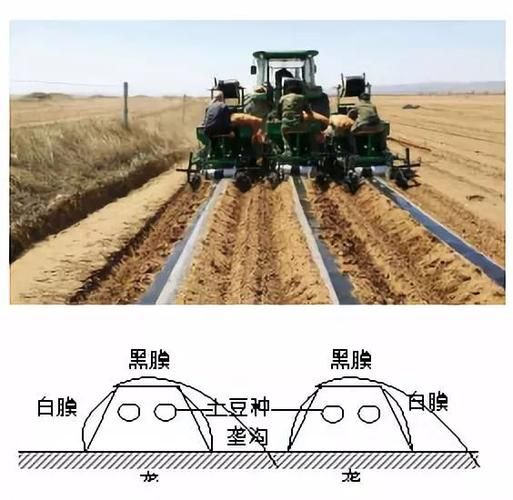
5. Conversion. Keep it warm and stabilize soil moisture. Weed protection, grass reduction,2 technology growth, 2. 1 temperature increase, heat increase, hot potatoes. During the seeding season in early march, the temperature at 10 cm of the surface layer at noon was 1-2 degrees higher because of the large area of contact with solar light by the more flat-ironed entire membranes. It promotes the rapid growth of potato buds and their early seeding of 5-7 days, and increases the temperature of potato production over the long term to achieve high yield efficiency. Technology enhancement principles, average temperature performance at 10 cm below the ground by 9/2-3/3 different planting methods,2 technology enhancement principles, 2. 2 temperature rises early, up and up, seeding periods, high full-duper membranes reaching growth activity starting temperature (12 hours in the morning) (with normal growth of 7-8 degrees) over a long period of 12 hours. ,2 technology growth principles,2
Tables showing temperature performance at 10 cm below the ground on 16 february 2006 by different planting methods,2 technical growth principles, 2. 3 contribute to improved soil physicolysis. High-altitude, full-covered membranes prevent sedimentation of the soil by rain or water. They keep the surface of the soil untired, increase the perforation of the soil below the membrane, reduce the soil's capacity, maintain laxity and increase permeability, and contribute to the growth and development of the root system. ,2 technical growth principles, 2. 4. Improve soil physicochemical properties and promote soil nutrient conversion. The soil porosity of the high full membrane is increased and the ventilation is good. Post-dubrand temperatures increase, favour soil micro-organisms, accelerate organic decomposition and increase nutrient utilization. ,2 technical growth principle, 2. 5 maintaining a state of condolence and stabilizing soil moisture. The membranes reduce the evaporation of surface moisture, maintain the relative stability of soil water content and contribute to drought preparedness. To keep the potatoes in the best form
State 7. Technology growth principles, 2. 6 prevent weeds, reduce grass,3 economic and social benefits, 3. 1 water conservation and water conservation for drought prevention, we sow in december, produce seedlings in early march, during periods of heavy drought, with high levels of coverings, which, because of the 12 cm gap between the two membranes, make the water readily available, save significant costs of drought prevention. 3 economic and social benefits, 3. 2 increased fertilizer utilization we tested 40 cm of nitrogen in the crop before seeding the potatoes and after harvesting, and calculated on the basis of the nitrogen consumed per 1,000 kg of potatoes produced, the high full-duper membranes can increase fertilizer utilization by more than 10 percentage points. 3. Economic and social benefits, 3. 3 low levels of labour. ,3 economic and social benefits,3. 4. Increased resistance to disease
8. Roots are lighter with water. The tillage is deep, permeable and well developed. The increase in temperature in the early spring is facilitated by reducing the humidity of the compartment, creating soil in a ditch, avoiding fattening, reducing mechanical damage and reducing the risk of invasion of the fungus. It can also prevent late-epest spores from falling into the tubs with rain to cause rotten potatoes. The incidence of night disease decreased by 28. 7 per cent, black slugs decreased by 20. 2 per cent and the rate of rotten potatoes decreased by 11. 8 per cent compared to the flat and non-duplicates. 3 economic and social benefits, late potato disease, late potato disease, 3 economic and social benefits, 3 economic and social benefits, 3. 5 increased production in normal years, with an increase of 366. 5 kg in acre and 21. 57 per cent in a year of higher rainfall, over 100 per cent. 3 economic and social benefits, field measurements, 3 economic and social benefits, different cultivation patterns
9 quantities questionnaire (category 5),3 economic and social benefits,3 3. 6 early marketing, efficiency gains 57 days earlier than flat-duper and non-duplicate, an increase of $0. 30. 4 per kilogram per unit, an increase of $826. 4 for acre and an increase of yield and cost savings, and an increase of $141,285 for acre pure income. 4 technical implementation points, 4. 1 base selection of soil for 4. 1. 1 is a root crop (too permeable permeability) and must choose the soil of the topsoil, which is thick, loosely structured, well-drained, and which contains more organic micro-acid (ph values 5. 5-6. 5). Technical implementation elements, 4. 1. 2 selection of sites of origin
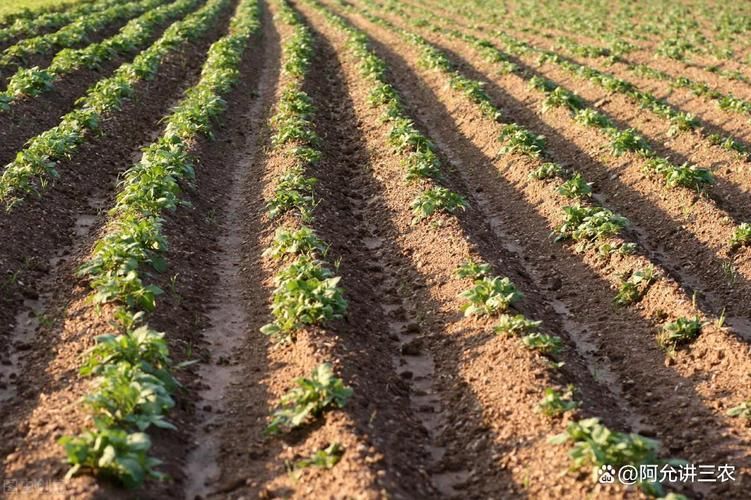
10. Irrigated water quality and soil environment are in line with the areas covered by ny5010-2002. 4 technical implementation points, 4. 1. 3 spectrum arrangements are not suitable for tomato, pepper, eggplant, roasted tobacco and higher potassium-based root crops. Potatoes are not grown using fields with high levels of disease and soil infestation in surrounding eggplant crops. The best predecessors are cereals, garlic, cucumbers, soybeans, peanuts, potatoes, etc. 4 technical implementation elements 4. 2 formulations for fertilisation of potatoes in membrane cover along the winter spring of the canton must be used for one-time bottom fertilisation, with potatoes being the most fattening, nitrogen and phosphorus being the lowest, with a normal acre production of 3,000 kg absorbing n16 kg, p6. 5 kg and potassium 32 kg. In bottom fertilizer, it is desirable to increase the use of farm fat, generally requiring 3,000 kg of consumable farm fat, 75-100 kg of special compound fat (n17, p9, k22), 75 kg of carbon ammonium
11. Potassium sulphate 20 kg. 4 technical implementation points, 4. 2 formula fertilisation points: fertilisation as required by the “general guidelines for the rational use of ny/t496 fertilizers” requires farmers to decompose and use qualified fertilizers produced by regular manufacturers. In winter and spring, membrane cover is grown, all fertilizers must be applied once, farm fats and ammonium are distributed before they are turned, compound fats and potassium fats are applied in strips or caves. ,4 technical highlights,4. 3 scientifically constructed, the northern hillland of oksun, which promotes the technology of cover of the deep trenches highland (65 cm wide, 35 cm tall) and plain areas, and is mechanically constructed (80 cm wide, 35 cm tall), requiring steep, narrow, flat and straight walls. 4 technical implementation points, 4. 4 varieties and seeding choices yes
12. Varieties, such as: chinese potato i, iii, v, morning white, faurita, etc. It is appropriate to choose the healthy, non-destructive, smooth, uniform and well stored chips that are characteristic of this variety. The quality of seeding is in line with the requirements of “gb18133 potato detoxification” , the availability of detoxification and commercial potatoes, and the strength of the detoxification seed: early, full and strong. Resilient: cold resistant. Potatoes are of high quality without disease. The development of detoxicated and commercial potato varieties, with no strain, with disease, with knowledge of potato detoxification, with degradation of the potato species: growing with shorter, smaller, folic wrinkled, greener leaves, declining growth, small tubing, high incidence, reduced yield and quality. Reasons for degradation: during the growth of potatoes, they are highly vulnerable to virus infection, causing the disturbance and destruction of the organ that produces the nutrients by the virus. Absorption route: seed bacteria; exposure, friction
Poisons; insects are toxic. Production of detoxicated potatoes, detoxification of the trachea: detoxification of potatoes, micro-meat production, 4 technical implementation points, 4. 5 scientific seeding, 4. 5. 1 timely seeding, december to january, clear seeding, soil soaking must be good, and water must be poured later. ,4 technical implementation points, 4. 5 scientific seeding 4. 5. 2 rationally sequestered around 4,500-5,000 units per acre, at 0. 65 m wide, at a distance of 22-23 cm, with increased density in the morning. The seed depth is 6-8 cm, the clay is shallow and the sand is deep, and fiuri must be below 10 cm. ,4 technical implementation elements, 4. 5 scientific seeding 4. 5. 3 soil treatment 50% of the acre is 30 kg of zinc parathion mixed with soil and applied with fertilizer to the seeding ditch to combat underground pests such as gold needles, thorium, thorium and tigers. I don't know,
4. 5. 4 seed treatment requires, first of all, scientific cutting, with small potatoes cutting vertically, from the top to the umbilical, into two to four pieces, so that every piece is as lumber-eyed as far as possible in order to take full advantage of the top edge of the tuber. Potato slices should start with the umbilical cord, and the screws should be slashed to the top in the budding order, and the top should be split into two. Cuts typically range from 20 to 30 g, with care to disinfect (alcohol spray). Scientific cut, 4 technical implementation points, 4. 5 scientific sowing 4. 5. 5 ploughing plaster for the potato seed after cutting powdered cythin (100:0:5:3) methtobuzine is evenly ploughed (at 3:100 platinum ratio) and is laid to heal the wound and not pile too thick to prevent bad seed. 4. 5. 6 promotion of seeding techniques for whole potato bands to avoid scissors and maximize the disease land
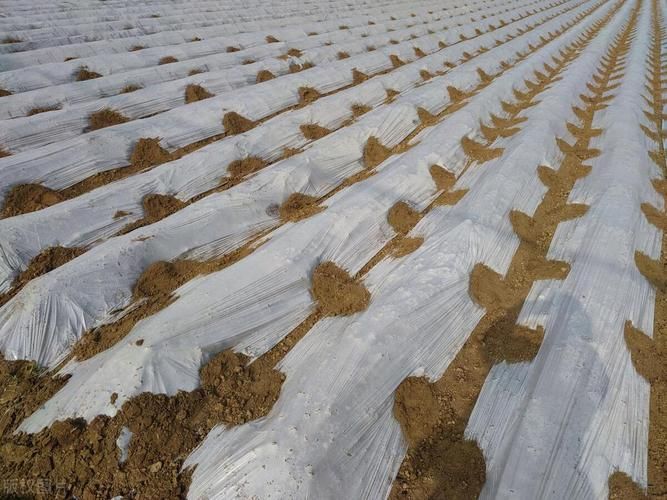
15. Using top-end advantages, it is possible to preserve nutrients and moisture from the seeding of potatoes, enhance drought resistance, produce well-bred seedlings, and increase the yield of potatoes by more than 30 per cent. 4 technical implementation elements, 4. 5 scientific seeding 4. 5. 7 methods of seeding 6-10 cm in depth; well-established land is soaked, hot and dry soils soar, and varieties such as fiuria soak. Fertilizer bars must be covered before seeding can be prevented. When seeding, if possible, the chips are cut down and the budding eye is directed upwards (deficit soil cuts upwards). After the show, clear the ditch and seal the mouth. 4 technical implementation elements, 4. 5 scientific seeding 4. 5. 8 seal the mouth. It was quickly sealed and cleared to the bottom of the ditch, reaching deep, flat and steep. 4. 5. 9 chemical weeding
16, e. G., herbicides pre-emerge. 4. 5. 4 technical implementation elements, 4. 5. The membrane is fully covered by a 90-100-cm wide membrane cover, the 12 cm diaphragm radius must be secured to prevent run-off and increase weeding effects,4 technical implementation elements, 4. 6 management of seedling periods 4. 6. 1 timely sprouts;4 technical implementation elements, 4. 6 management of seedlings 4. 6. 1 timely removal of weeds,4 technical implementation elements, 4. 6 management 4. 6 management of seedlings 4. 6 chemical management 4. 6 chemical regulation. Overconcentration
17 - reduced production. ,4 technical implementation elements, 4. 6 seedling management 4. 6 chemical regulation of polyecstasy,4 technical implementation elements 4. 6. We can cover 50 per cent of the seedlings with fine soil when the membranes are produced. Or 12d water into a ditch to keep the soil wet before the frost arrives. And when the tide comes, it covers rice straw, smoke, etc. ,4 technical implementation elements, 4. 7. 1 medium- and late-term management of 4. 7. Drought-resistant run-off of potatoes and potatoes magnifies the adverse effects of drought and can easily result in dead and dead seedlings. And when it is resistant to drought, it shall be easily drained. 4 technical implementation elements, 4. 7. 2 leaf fertilizers 2-3 times in the middle and late, increasing production by about 20 per cent. 4 technical
18, gist, 4. 7. 2 prevention of late disease, which is prevented by 70 per cent of the disemboweled zinc spray three days after an average daily temperature of 10-25 degrees, rain or air humidity of more than 90 per cent or more than 8 hours. When a central strain of disease is found in the field, it is sprayed with glucose or mercuric manganese zinc every 7d, three consecutive treatments, or with 68. 75% silver flu in the early stages of the disease. Technical implementation points, 4. 7. 2 disease control and early disease control, with the option of spraying with agents such as methyl tobuzin or bacillus or dyson manganese zinc at the beginning of the disease. The prevention and treatment of early childhood diseases should focus on improving nutrients and on improving resilience through productive practices. The application of pesticides is strictly regulated by gb 4285 and gb/t 8321. Responsive drugs, time-bound drugs, replacement of different applicable agents, application of appropriate concentrations and quantities, rational mix of formulations and ensuring the safety of pesticide application









