


Technology for efficient production of chrysanthemum cut flowers in the netherlands
- weinana wait
The dutch chrysanthemum is a chrysanthemum-resistant plant known as the new york chrysanthemum, the chrysanthemum, the chrysanthemum, the chrysanthemum, and so on. In recent years, demand in the netherlands market for the production of chrysanthemum cut flowers has been on the rise as people's living standards have improved. In order to raise the level of technology for the production of chrysanthemum cut flowers in the netherlands, to improve the quality of the cut flowers products and to promote the industrialization, standardization, standardization and marketing of chrysanthemum cut flowers in the netherlands, with a view to achieving more significant economic, social and ecological benefits, the following is a summary of the efficient production techniques。
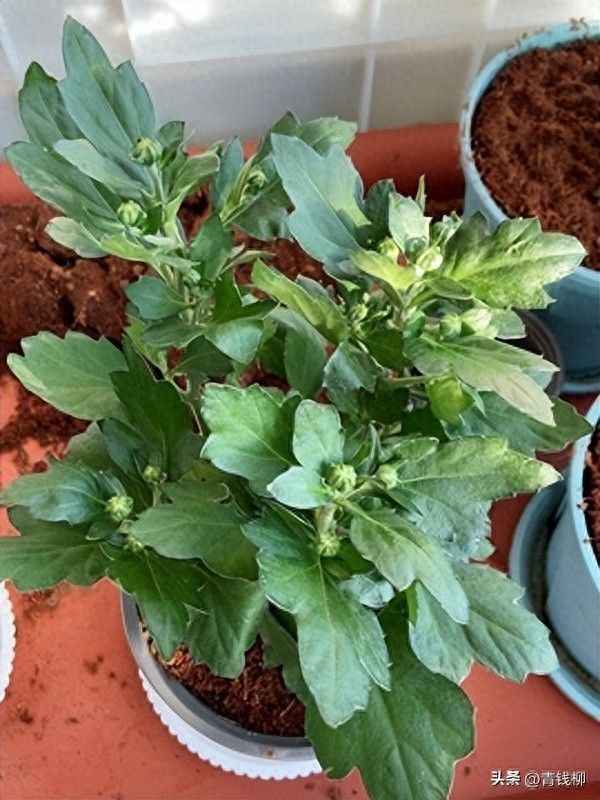
1 surface cultivation technology
1. 1 land selection
Land is selected for high terrain, well-ventilated, unconnected, deep, rich, organic, well drained sandy plots, soil ph6. 5 ~7. 0。
1. 2 quest of the ground
Before soil cultivation, 6,668 ~3,335 kg/acre, 200. 1 kg/acre, potassium nitrogen phosphorus fertilizers, grasswood ash 40. 02 kg/acre, deep-pitted 40 cm, 50% kwdam 0. 5 kg/acre + 15 kg/acre in soil surfaces, debris, dredges made of top floor or subsurface mosaic. In areas where rainfall is generally high, the surface is covered by a wide range of 1. 0~1. 2 m, which is appropriate for easy management. The less rain-fed area is made of 30 cm deep, the same size as the top floor. Spacing 40 cm, setting the middle to a wide 2 m walk. When soil ph is less than 5. 0, lime is spilled into the soil for adjustment。
1. 3 auxiliary network
The adjoining net uses a specific network of chrysanthemums with 12 cm size (long, wide) x 12 cm, with a grid-fixed pole around its perimeter and a general height of 1 m above the ground. Raise the grid with dutch chrysanthemum to fix the chrystal。
1. 4 land cover
Before the membrane is laid, the interior floor is levelled. In order to improve the quality of the membrane, a mechanical membrane machine is used to bind the membrane to the ground and minimize the gap between the membrane and the ground to improve the quality of the membrane。
1. 5 reproduction methods
The dutch chrysanthemum reproduction method is divided into two types: single-stretching and adhesive reproduction. In the early springs, the shelving leaves were produced and the roots of the winters were dug to separate herds. Plug-in breeds fit in april-may. Pre-plugs are sterilized in the nursery with 500 times the fluid, and the relative humidity of the air is maintained at 75 ~90%. Select the length of 6-8 cm to keep 3-4 leaves at the top。
1. 6 plantation
Plantation is based on 1 m wide, usually 12 cm long, and one or two plants can be established to increase production. High-quality viable seedlings are selected for planting, with an eye set for the sole eye of the chrysanthemum and 2 for each eye set on both sides. Depth 2~3cm is set, normal 80 pyrethroids/ m2。
1. 7 post-plant delayed seeding management
I'm going to plant it and water it. At the same time, cover the sun properly with a sunnet. 7d water is sprayed during the sapling period in accordance with weather conditions to facilitate the sprouts. In general, three to four d during the summer and one permeable in the winter。
1. 8 field management
1. 8. 1 the main pests and pests in the dutch pyrethroids are pollinosis and aphids. In the early stages of the pollen disease, light yellow spots appeared on the leaves, which gradually expanded to cover white powder. In serious cases, the leaves are distorted, yellow and yellow, and the strain is stunted and shrunk. Specific methods of prevention and treatment: timely removal and burning of sick leaves and disabilities, and control of humidity and ventilation. 20% thrd 1,500 times liquid or 36% methiosulphate humid powder, 500 times liquid, per 7-10 d sprayed 2-3 times; 40% ff emulsifiable cream 9,000 times liquid or 25% diagonal deemulsifiable cream 4,000 times liquid sprayed at weight. Aphids can be sprayed with 70% aphids +10 ml high-efficiency chlorocypermethrin +2 drops of lacerin + 30 g + 15 kg water and can be used to control the aphid hazard effectively. Observe the alternate use of fungicides, which are typically 5-7 d sprayed 1 time, adjusted for seasonal temperatures. Chinese grass-brawling requires shallow seedlings, which deepen, especially before the pyres are closed down (in a closed state), so that the soil surrounding the plant is fully decompressed and the roots are not damaged, creating a good environment for the growth of pyres in the netherlands. It is usually closed without farming。
1. 8. 2 fertilizer management 10-15 d during shrunk season 1 water fertilizer with 46% nitrogen-containing urea at 0. 2% - 0. 3%. The length of the leaf is increased by the appropriate amount of water in the growing condition of the plant, and the application of integrated techniques of water fattening is applied in pursuit of fattening. The previous period was dominated by nitrogen fertilizer, the medium term by balanced fat, and the latter by high potassium fat, in order to ensure colorfulness. The lumbering period stops the application of nitrogen fertilizers, and the bouquets are sprayed with 0. 2% potassium phosphate every 10 d, 7-10 d 1 and 2-3. When applying, be careful that the fertilizer does not pollute the leaves. For example, the contaminated leaves are washed in a timely manner to prevent their victimization. Add 0. 1% - 0. 2% urea solution to the leaf spray, so that leaves and flowers can shine. Entering the flowering phase, providing adequate water supply, high-temperature summers accompanied by leaf-spraying, can serve both cooling and water supply。
1. 9 networking
The best time for the net is in the middle of the morning. When it grows to 20 cm, lifts its net and ensures that it grows straight up; and when it grows to 30 to 40 cm, adjusts the height of its net with a bamboo pole to keep it flat and to ensure that each one fully absorbs the sun. Regulate the height of the chrysanthemum network to prevent invertation。
1. 10 leverage old leaves
The punching leaves take place when the dutch chrysanthemum rises to 70 cm high, and it takes down the leaves below 20 cm to get air. When the dutch ravine is grown up to green bean so that it can grow evenly。
2. Facility planting techniques
2. 1 types and specifications of facilities
The type of facility includes a solar greenhouse, a plastic shed, which is generally 50-60 m long and 8-12 m wide。
2. 2 complete delivery
The situation is the same as in the field. This is done using a five-gauge, 100 cm wide, 62 cm wide on both sides by the edge of the facility, 50 cm wide by 3 in the middle and 20-30 cm deep。
2. 3 auxiliary network
The technical requirements of the satellite network are the same as those for field cultivation。
2. 4 plantation
The dutch chrysanthemum cutting facility is grown using smart solar greenhouses and plastic sheds, which automatically control light, temperature, and wet, and can be established four seasons a year. Technological requirements for planting and management of seedling periods are combined with field cultivation。
2. 5 term control
The dutch gill grows 20 to 40 cm and adjusts the light. When the bud is divided and the side branch grows, the excess side branch is removed in time, leaving only a small number of side branches. When flowers appear, the main bud and the side branches are preserved so that all nutrients supply the main bud。
2. 6 light temperature control
Spring and summer shade: when dutch daisies grow up to 20-30 cm and up to 24 leaves, the light shines longer than 12 h for shade treatment, e. G. Between 7 p. M. And 7 a. M., or between 8 p. M. And 8 a. M., the temperature within the facility remains at 15-25°c. Autumn and winter light: remedial treatment of pyrethroid seedlings at short periods of less than 13 h. The shorter the light, the longer the light is filled. Start filling 2 h with subsequent light to 4 h and ensure that the temperature in the facility is 15-25°c for the nutritional growth of pyrethroids. When the chrysanthemum grows up to 30 to 40 cm and reaches 24 leafs, the light is stopped so that the chrysanthemum enters reproductive growth。
2. 7 pest management
In the netherlands, there is a need to strengthen pest control during the chrysanthemum period. The main diseases and pests are black spots, dead spots, asympathies, daisies, aphids, etc。
2. 7. 1 agriculture, physical machinery, prevention and control methods: rotational, non-conjunction and the timely removal of the remnant of the dutch chrysanthemum after harvesting from the field of central burning or deep burial; promotion of spring planting to reduce the area under summer chrysanthemum cultivation; strengthening of cultivation management to promote the growth and strength of the plant and to improve its resistance to the disease. Chemical control methods: 50 per cent polybacterial humid powder 500 times liquid, 75 per cent dyson manganese zinc humid powder 600 times liquid, 50 per cent hexabacterial hygienic humid powder 800 times liquid, three to four times alternate spraying, 10 to 15 d per one。
2. 7. 2 stemming diseases agriculture, physical machinery: cuts the upper part of the ground and completely removes the sick and fallows from the upper part of the ground after cutting them in the early stages of the early stages of the disease; implements more than three years of rotation, with new cultivation areas to be tumbled; discovers that the strains are timely to remove the next leaf and bring it out of the field to burn; and drains the water after the rain. Chemical control methods: 50 per cent of the disembowelable manganese zinc powder 500 times the fluid, 50 per cent of the polymixable humid powder 600 times the fluid, 70 per cent of the methyl tobuzin humid powder 800 times the fluid are used interchangeably, every 15 to 20 d with a severe strain of old age or disease, every 7 to 10 d and 4 to 5 times depending on the condition of the disease and the weather, but attention is paid to the prohibition of spraying before flowering 25 d。
2. 7. 3 asymptomatic agriculture, physical machinery and prevention methods: care to improve ventilation, without the application of nitrogen fertilizers; the opening of ditches during the rainy season to protect the soil from flooding; and the timely removal of leaves and strains and the concentration of burning or burial. Chemical control methods: 65% of the dyson zinc wettable powders 300 times the immersion 10-15 min before planting, with fungicides such as bodison zinc and domex sprayed alternately in the early stages of the disease。
2. 7. 4 arsenal larvae are artificially hunted into insects at the time of their occurrence, before the morning dew is dry, and frequent inspections in the field began in early may, when aging rods were found to be cut off in time and the larvae in them were killed. When pyrethroids are more dense in the field, chemical control is used, and in the middle of may, when the infestation of the insects occurs, 2. 5% of bromethrin milk is sprayed on the plant and on the ground in the morning of the day, 2,000 times more, 15-20 d one time, one or two times more。
2. 7. 5 aphids may be treated by insects in biological control: insects are used for insect control using aphids, such as aphids, aphids and parasites. Garlic, pepper and pepper can also be sprayed against aphids. Garlic treatment is the tattering of garlic in containers, a proper amount of water immersed, 10 times water diluted when bubbled, and then filled with spray sprays, which, in addition to aphids, can be effective in the fight against shellworms and red spiders; chili water is used for the proper amount of dry peppers, boiled with water 15 min, filtered out pepper water and sprayed with a canteen; pepper water is also used to prevent aphids, which also takes the right amount of dry pepper and boils with water; and around 30 min, the spraying of filters on dutch apricot is also very effective。
3 harvest
The dutch chrysanthemum is collected in the morning or evening. The harvest standard is that the petals don't rise, cut down by a trail 10 cm above the ground。
4 cut flowers
The dutch aryra is followed by classification according to the criteria required by the customer. The dutch chrysanthemum is 80-85 cm tall, removes one third of the leaf in the stem, cuts the ziquis, and binds it in 1 beam of every 10 newspapers or dedicated transparent paper, and immediately inserts it into the fluid。
5 storage
Dutch acetylene is treated in boxes and stored in freezers at 1-4°c for 3-4 weeks。









