


At present, field cultivation in the commercial hill area remains the main form of watermelon cultivation, with lower-cost small arch sheds and shed cultivation becoming the most widely used form of plant cultivation, with less use of solar greenhouses with higher technical and financial requirements. The field is grown in the form of pumpkin marriage, plugging, and in the form of hormonal spraying, insect pollination, with the main plant varieties being “pretty town”, “sweet king”, “8424”, “early spring red jade”, etc. Of these, the county adopted a two-year rotational farming method, which effectively avoids heavy cropping, as well as a “house + 4 membrane cover” approach, which is characterized by early marketing and high relative returns。
The fact that the majority of watermelon listings in the commercial hill area were in april-july, partly in august-october, and less so, indicates that the marketing of watermelon in our city is generally concentrated in late spring and summer, but that the excessive concentration of time on the market has led to greater price volatility in the watermelon and greater substitution among products, often with “fat harvests” or product demerits. In addition, the production of watermelon is generally carried out for the benefit of women farmers, whose marketing capacity and the depth of product processing are poor, to some extent affecting their earnings。
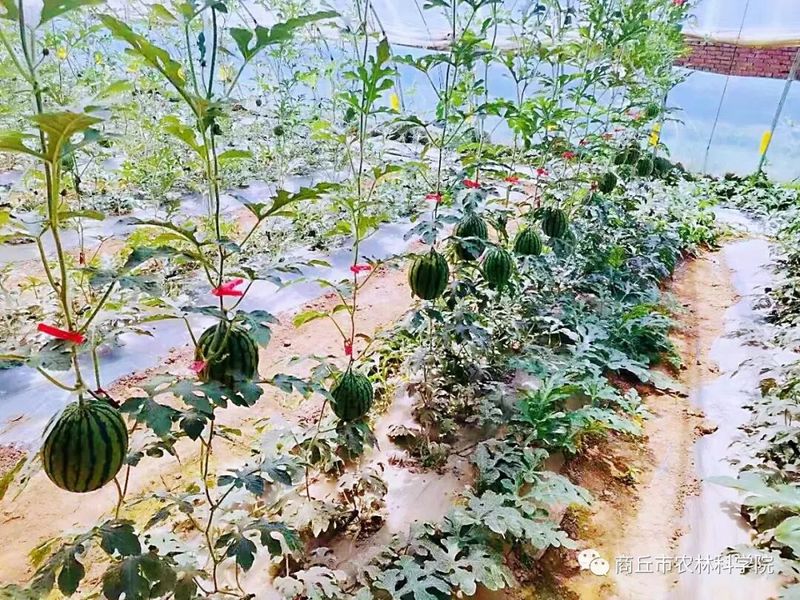
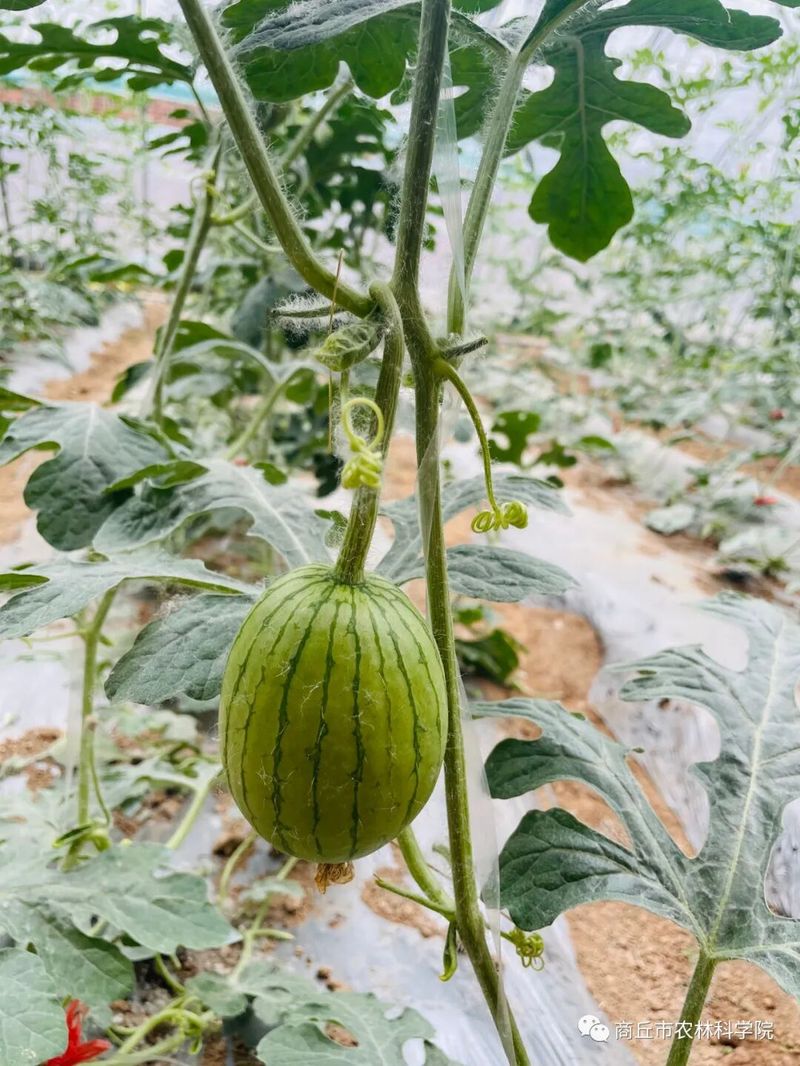
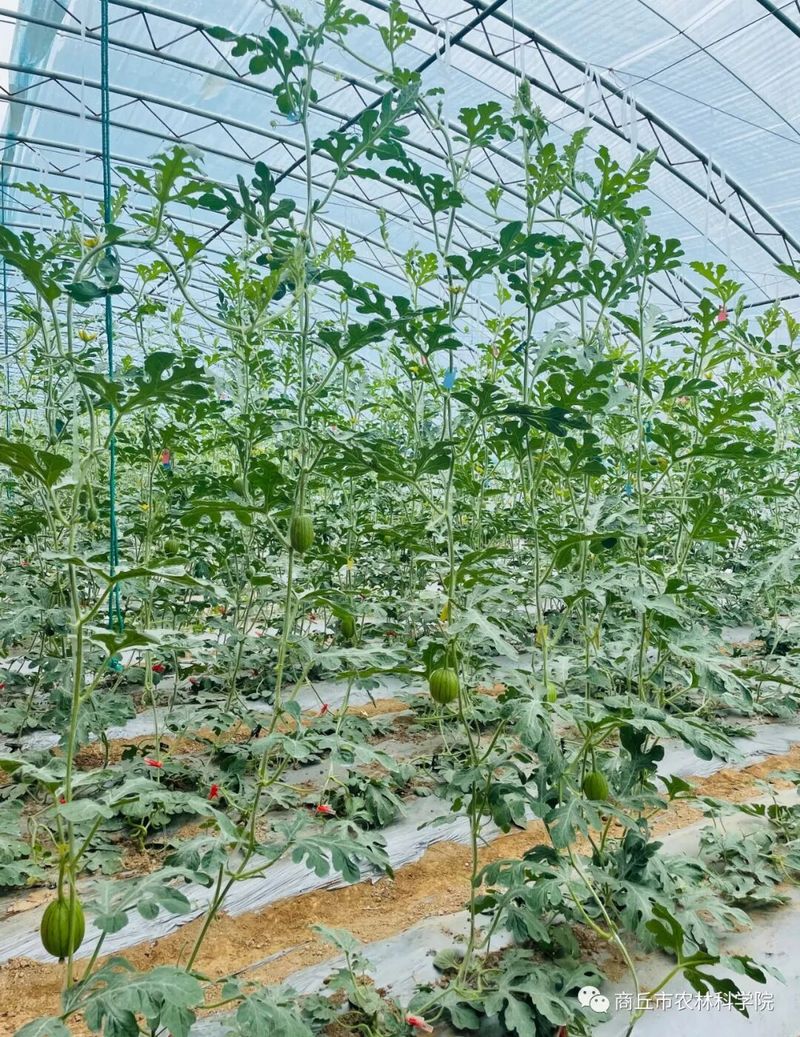
The economic benefits are significant, given the early marketing, high production, quality, mild illness and high commodity rates, and the early seizure of the watermelon market. Moreover, because of the small quality of individual melons, prices are higher than medium-sized melons, but the total amount of individual melons is relatively low, the relative purchasing power of consumers increases and the market is significantly more competitive than the meso-sized melons. High-density cultivation can generate significant economic income for growers. The area planted in my city is growing year by year, with better prospects for development. However, the high level of cultivation technology required for growers is such that the poor management of any part of the production process may have a negative impact on production and quality in the later stages, as a result of which the watermelon research team of the municipal agricultural institute, based on a number of years of research, has summarized the techniques used to plant the cranium with a view to providing technical guidance to a large number of growers。
I. Selection of varieties
High-yielding, disease-resistant, high-quality, market-friendly, economically efficient, medium-sized and small-sized watermelon varieties have been selected, with large-scale promotions in the region, such as the red pipes show and the golden phoenix of yellow plumbing。
Ii. Cultivating seedlings
Seed treatment
One to two days before seeding, seeds can be seeded with a 15-°c hot water soak and two hours with a 30°c hot water soak and wash the seed slime with clean wet towels or gauze wrapped in 80% seed at 28-30°c。
2. Management of homeless nursery periods
First, the matrix is loaded into a lair, then the one-and-a-half-cm hole is crushed with other lavenders, and the seed is planted in the lavender, and the seed drops down. An additional layer of matrix, which is then pressurized and placed on the nursery bed frame with appropriate water. At 25°c during the day, at 16°c at night and at 18°c. Landless seedlings should be distributed relatively quickly and in a balanced manner, depending on the weather, the matrix and the dynamics of the seedlings. Low-temperature seedlings were kept at 20-25°c during the day and 18-12°c during the night seven days before planting. Prick and 1000-fold leaf green or potassium phosphate fertilizers were implanted to boost seedlings and prevent disease. In the case of a young child of about 35 days, 15 cm tall and 2-3 leafs are chosen by the sun。
Iii. Preparation for planting
The plots preparing to plant watermelons in the first fall were fertilized with the pre-burials required for the construction of the sheds at a depth of 5,000 kg per acre per acre, with a high-quality farm manure, and were refilled early in november. After breeding, sheds were built in early february and laminated in mid-february with potassium sulphate compound fertilizer per acre (n:p:k=15:15:15) 50 kg, ammonium phosphate 30 kg, bio-organium compound fat 100 kg and urea 10 kg of urea sprayed into the ground. A membrane of 70 cm wide and 30 cm tall, with a 100 cm long surface band, at a distance of 140 cm. Then, around 140 cm of bamboo, wood, barbed wire, etc., were put back into a “u” stand on the cheek (about 50 cm high) of 2 m, with a long band of 160 cm of membrane and a small archer. The shacks were then closed and the temperature of the sheds rose rapidly, waiting to be planted。
Iv. Requirements for structure
At the time of planting, the small archenary membranes were exposed to 30 to 35 cm of perforation, using the statutory planting of water-stable seedlings: some 500 ml of water permeated in the established dens, the seedlings were placed in the dens, a small amount of soil was sealed, and the seedlings were fixed. The depth of the plant is determined by the height of the sapings of 0. 5 to 1 cm. On the second day of the planting, the roots were poured with 1,500 times the special vegetable transplantation, and after five to seven days, each of the plants was watered once more with a slow seedling, and then the membranes around the holes were sealed with soil (the seedlings were not covered with soil)。
V. Post-plant management
1. Temperature
After planting, as far as possible, it avoids venting, increases the temperature of the sheds, during the day, 28 - 32°c, at night, 16 - 18°c, when the small arch sheds begin to fall at 15:00 - 16:00 a day, opens the small arch sheds around 09:00 a. M. On the second day, so that the seedlings are lumbered, and the morning archs are determined on several occasions to be at a temperature 2 - 3°c higher than the temperature inside the huts. A slow seedling begins ventilation to regulate the temperature inside the shed and to provide major ventilation when the external temperature exceeds 18°c. Vegetables maintain temperatures of 28 - 32°c during the day and 15 - 18°c during the night。
2. Whole technology
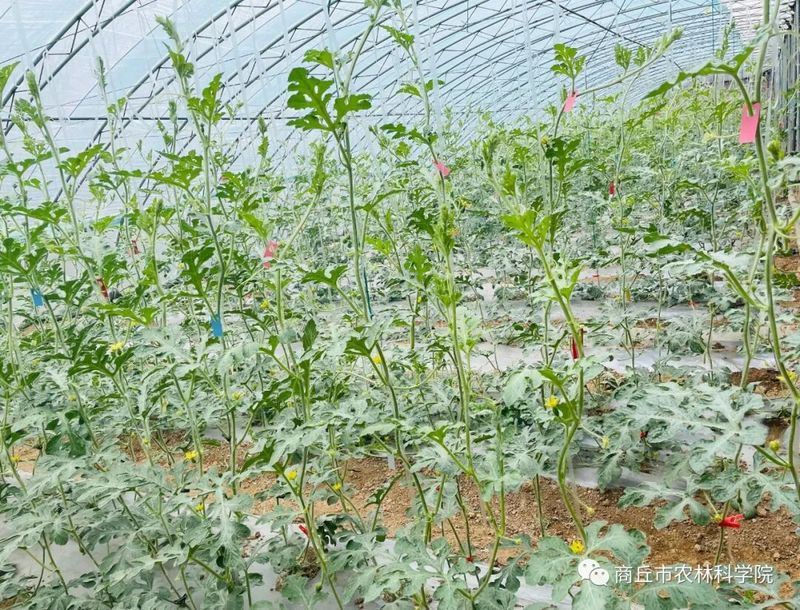
When the chicken grows to about 30 cm on the main side, the chicken is taken out of the small arch, and the chicken is hung up, a strong side is left to climb the ground and the rest is beaten out。
3. Pollination melons
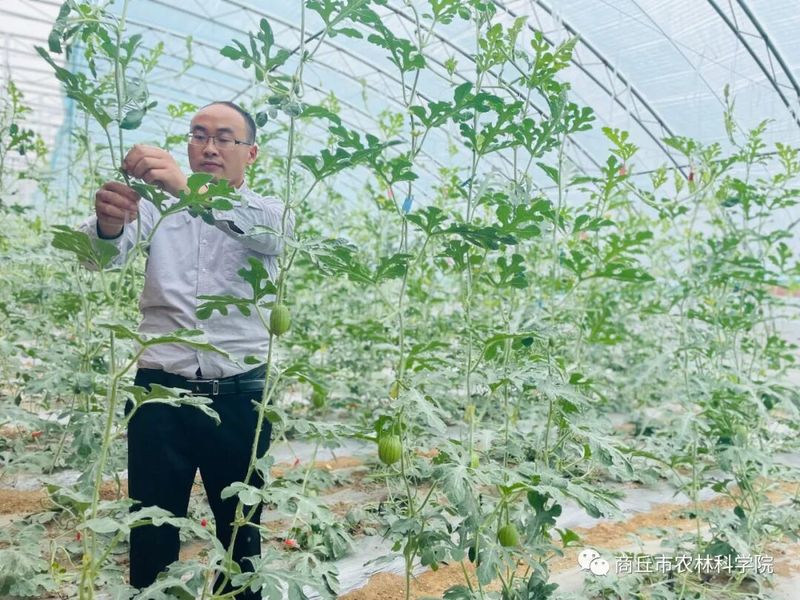
This is the key to this technology. Females are open to pollination at about 10% of the day when the pollen is scattered, at a temperature of 18-22°c. The pollination is preceded by the removal of the male, the removal of the petals from the hand, and the examination of whether the pollen is scattered or, if it is in powder form, can be pollinated; if it is in a granular form, the wind is wet for about 30 minutes and the pollen is dispersed and then pollinated. When pollination is done, the male petals are removed and the three columns of the female are softly painted on the side of the male so as to ensure consistency. The temperature on the day of pollination shall not exceed 28°c and shall be marked for pollination. In addition, if the seedlings are not well developed, it is possible to squeez the larger, more dynamic glazing to promote its flowering results. This is done by squeezing the crumb near the point of growth and hearing the sound。
4. Fertilizer management
When the main chicken is hanged, the sun is chosen and the water should not be too large. When 80 per cent of the cucumbers grow up to the hour of the egg (6-7 days after pollination), watering and fattening are generally followed by potassium sulphate compound fertilizer per acre (n:p:k 15:15:15) 10-15 kg or fully nutritious water soluble 10 kg, plus urea 10 kg, which is applied once every 7 days, 3 times。
Vi. Pest management
Powdering: 40% more than sulfur suspension 500-600 times liquid or 50% more than 250-300 times liquid treatment (no more than possible during the pollination period) can also be treated by fusung 5,000 times liquid or 800 times higher. Aphids, white pink lice, twilight flies: cedar booby traps in the shed (1 cedar per 20 m2 with specifications of 40 cm x 25 cm). Aphids can be treated with 10% amphibians 2000-3000 times more liquid or 20% more liquid spray than 2,000-3000 more liquid cream。
Vii. Receiving in time
At present, the selected watermelon species are grown from sit-in fruit to maturity for 30 to 35 days in the spring and are available for collection in mid-april on pollination markings. The watermelon protection can be continued with the second batch of melons, which, based on long-term fertilizer application in the first batch, has been ejected 800 times more every 7 to 10 days from the first batch of melons. One week before the harvest and one 800 times more liquid flowering after the harvest, respectively, facilitate the planting of flowers。









