


In the early spring season, watermelon cultivation is a new technology for watermelon cultivation using the arch shed. Induced watermelon seedlings are resistant to disease and are more resilient to the cold. The technical points for their matrimony are:
I. The selection of species with early, high-quality, high-yielding, disease-resistant watermelon varieties, such as the golden chong dragon, is considered to serve as an ear. It is useful to choose a vegetable with a strong, dynamic, well-developed root, good quality and strong resistance。
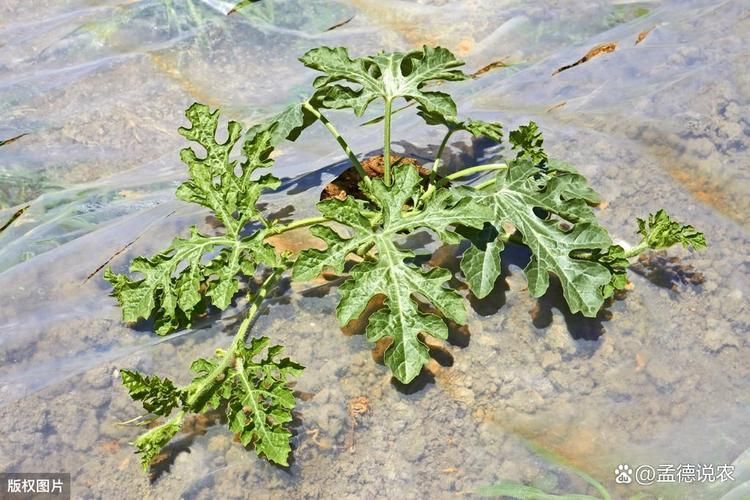
Ii. The planting of seedlings in due course is usually done in mid-february. This is done by placing in the hot water seeds of aluminum, which are immersed for about 10 hours in plastic, in a temperature range of 25°c to 28°c, and by selecting strong seeds for planting in the nutrient quarries. Some two days later, watermelon species immersed in warm water will be sowed into the trophic strain, which will then be placed in the human bed, covered with plastic sheeting. The temperature of the seedbed is maintained at 25°c to 28°c during the day, at no less than 20°c at night and above 18°c。
3. Marriage is normally carried out as the first leaf spreads and as the leaf rises in the ear (a watermelon seedling). The method of matrimony is to remove the aluminum seedling from the heart of the leaf, with a blade of 30 degrees from the lower end of the leaf, with a knife below the upper and lower angles, with a cut of 2/3 degrees deeper than the tuber, and then at 2. 5 centimetres below the lower leaf of the watermelon, with a cut of 30 degrees from the bottom, with a cut below 2/3 degrees deeper than the thick. At this point, the saplings and saplings are attached to the limbs, and they are immediately placed in a marriage trap and returned to the nursery. Upon indoctrination, water should be poured in time to keep the nursery soil wet. The first three days of the marriage must be properly covered so that the sun doesn't shine. The seedlings cause the atrophy of the seedlings and, in particular, the loss and depletion of the ears. The temperature of the seedbed remains at 25°c to 28°c during the day and at no less than 20°c at night to facilitate the healing of the interface. In about a week, watermelon seedlings can be cut off. It is possible to replant the seedlings when they reach the third leaf。
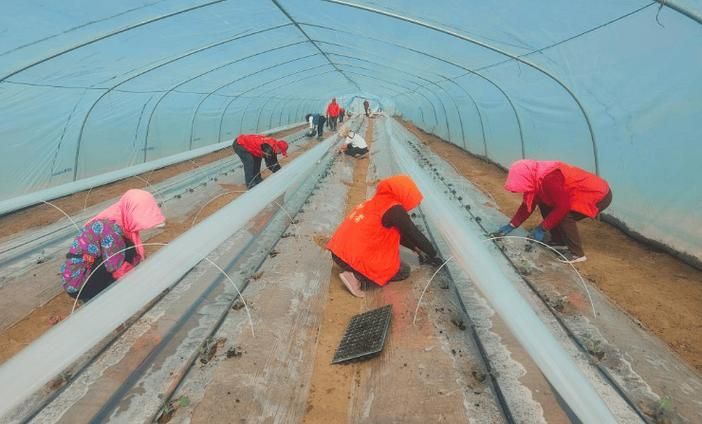
4. The whole area and the large arch shed, which are approximately 12 metres wide, are equilibrated in three trenches of 1 metre wide and 0. 5 metres deep and 3 metres wide. When digging a ditch, the 30-centimetre-deep cortex is removed from the side, then the 20-cm earth below is excavated at intervals, then the 30-cm cortex is refilled in the gutter, and it is transported at an acre of 10 crayons of decomposed chicken dung or bread fattening, 50 kg of combined fattening of nitrous phosphorus, 100 kg of calcium per phosphate and 50 kg of potassium sulphate, which can be doubled inside the gutter. The plant is usually moved between the end of february and the beginning of march. The range of the plant is 0. 5 m in small lines and 3. 5 m in the middle of the two major behaviours and 0. 5 m in length. It is built to cover the membranes, build small arch sheds, and at night cover the herb warmth outside the arch shed. Watch out for the sun when planting and finish by 2 p. M. It is best to plant water with warm water from 25 to 30°c。
5. Post-plant management 1. Temperature management: after planting, the temperature can be reasonably high, generally at 28°c to 30°c, and at temperatures of not less than 15°c, but not more than 35°c, otherwise the temperature should be cooled in time. In due course, as external temperatures rise, they can be removed to the small archer. 2. Humidity management: in general, less water should be poured in the preceding period and relatively dry in the shed. After the melon, water the melon. If there is an excessive shortage of water, it will affect the expansion of the larvae. Water is poured around 15 days after the melon; after the word “number”, the water is brought to maturity in order to improve the sweetness and colour of the melon. 3. Whole branch and artificially pollinated: the whole branch of a watermelon is usually ploughed with three chickens and two to three bouquets. Because watermelons are the same crop for females and males, they are mainly pollinated by insects. Insects such as bees are rarely found in the shed, and it is difficult to sit on melons without pollination. Therefore, artificial pollination should be performed in due course. When pollination is practiced, the choice is to pollute with a fat male. 4. Insect and pest control: the main diseases in which the great arch sheds are grown up are atrophy, anthrax, cyanosis, etc. When it occurs, drugs should be used in a timely manner. In the case of atrophy, root can be administered 50% more than 500 times more humid powder; anthrax can be treated with 5% bacillus powder; and acne can be administered with 70% disembowelable manganese and 600 times wet powder. The pests are mainly white ticks, aphids, leaf flies, etc., which can be treated with 25 per cent of the 2,000 times lice, 25 per cent of the 1,000 times the aicas and 10 per cent of the high-efficiency cypermethrin。
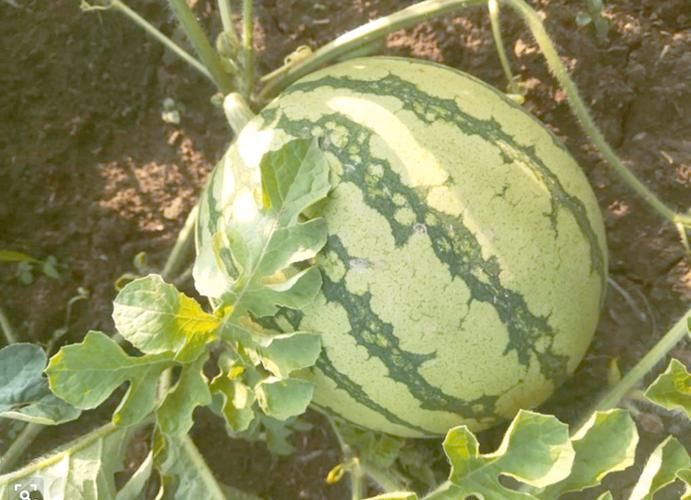
In addition, in order to harvest in a timely manner, the head was ripe for about mid-april and was to be collected and placed on the market in a timely manner. The head picker is followed by a chicken cut, and the chicken is replaced with three chickens, and the second one can be collected by late june. (source: reed, 30 march 1998)









