


Seed treatment: celery seeds are immersed in water at 15-20°c for 24 hours, then repeatedly rinsed and purified with slime on the skin, and seeded at 15-18°c. Every day, water is washed once, and about 50 per cent of the seeds can be sowed after 5-7 days。
2. Sledding preparation: selection of clean plots for drainage and irrigation. It is sufficient to sift each of the nutrients with horse dung, decomposed farmers ' fatty and garden soil. A mixture of more than 50% of the huf wettable powder with 50% of the huf bi-wettable powder at a ratio of 1:1 or 25% of the msm powder with a ratio of 5:1 for 70% of the deuz. Based on pharmacological 8-10 g/m2, 4-5 kg of sifting soil is mixed into a pharmacological soil, 2/3 is laid on the bed floor and 1/3 is covered with seeds to prevent the occurrence of disease during the nursery period and to cultivate strong seedlings。
Seeding: the medicine is laid at the bottom of the bed, with an additional 10 centimetres of nutritious soil being laid, water being poured out, and a further layer of nutrient soil, 1 to 2 centimetres thick, after the water permeating the bed. Spray the seeds evenly and then cover the pharmacological soil with 0. 5-1 cm thick trophic soil or fine sand. 100-200 grams per acre。
4. Management of seed seasons: celery seeds are small, have weak topsoil capacity and produce soil with a fear of direct light. They are well-sprung and strong, and must be covered with sunnets, corn straws, old membranes, etc. Before soil is released, water is sprayed on the basis of dry and wet soil, in principle every 1 to 2 days, to help produce seedlings. The seedlings of celery are weak, and when they come out, they are extremely vulnerable to death if they lack water. Be careful to pour water, keep the bedside dry, and keep the bedside dry and wet every three to five days, when the two to three leaves are dry. When the celery is sprouts, the sun is removed early and late, depending on weather conditions, and the sun is covered at noon, with light exercise, so that the seedlings fully adjust to the strong light, and the sun is gradually removed from the sun。
When the celery is grown to 3-4 leafs, it is distributed one time between six centimetres in the sapling bed or in the paper nutrient. If unconditional, the sapling may be between 6 cm or so. The seedlings are distributed once and water is subsequently properly managed in order to prevent it from growing and to keep the plant strong。
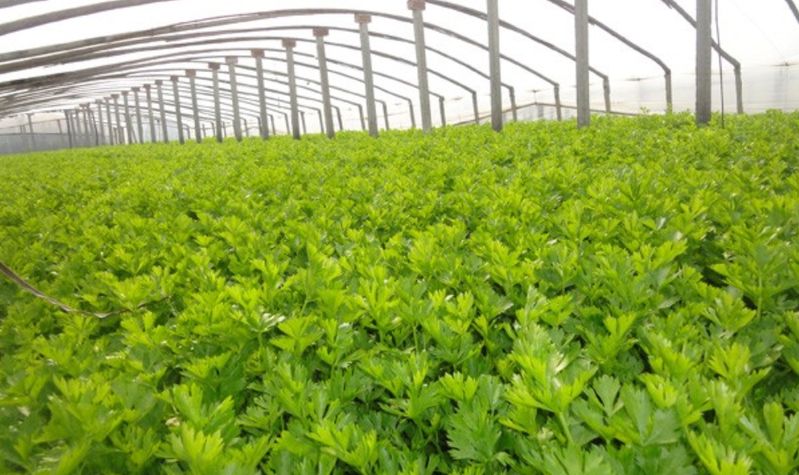
Extension:
Celery fertilizer
I. Fertilizer of celery
Celery has a long period of time, with more use of seedlings. Celery seedbeds allow for fertilizing and flaring soils, with 30 to 40 kg of consumable organic fertilizer per 10 square metres, which is fully mixed with soil. There is also the possibility of artificially producing home-grown seedlings, with 60 per cent of vegetable garden land and 40 per cent of fully fertilized school fat, for the purpose of breeding strong seedlings。
Ii. Celery-based fat
The celery is suitable for deep, fertile, well-ventilated and easily drained plots, with high-quality farmers fertilizing 6-8 cubic metres per acre. Plough deep, flat and dry. Before seeding, three elements of compound fattening of 50 kg/acre, urea 15 kg/acre were distributed on the surface of the aluminum, oxin application of 1-2 kg per acre of boron sand in the pelican-deficit area and deep cultivation of about 20 cm。
Iii. Celery chasers
Celery fattens, pre-deposit is mainly nitrogen fat, and post-requires potassium fat. In celery, where the heart leaves are long-lived, 10-15 kg of ammonium carbonate per acre and 5-8 kg of potassium sulphate, the fertilizer sought should be dissolved in the container and then washed with water at the gill amount; when celery leaves cover the entire ground, 20-30 kg of ammonium carbonate and 12-15 kg of potassium sulphate; and later, depending on the celery's strength, it should be determined how much and how much to lose。
In the field, celery was planted 20 days before the harvest, at the end of july or early august, in combination with water, with 15 kg of ammonium carbonate and 8 kg of potassium sulphurate. A fall-and-winter sprout is mainly carried out around november and enters the december celery, which is essentially a growing product and should be controlled to water and no longer pursue fat。









