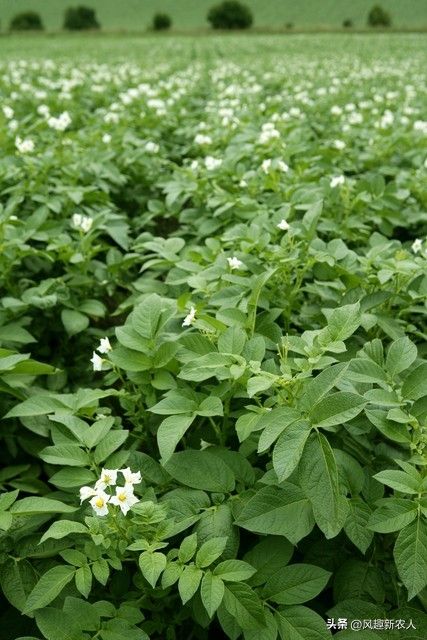
Vitto 5, a high-quality medium- and late-literate potato variety selected for the south-west of the country, has been selected for the fourth consecutive year to promote the country's top 10 varieties of potatoes, which are both food and potatoes for the high-altitude mountains and hill areas, with a combination of food, processing and feeding values. In order to fully exploit the potential for increasing the production of varieties, standardize the planting process and increase the yield and economic efficiency of cultivation, the following is a summary of the variety characteristics of the vitato 5 potato and the high-yielding technical requirements。
I. Core characteristics of the potato 5 varieties
(i) botanical excellence
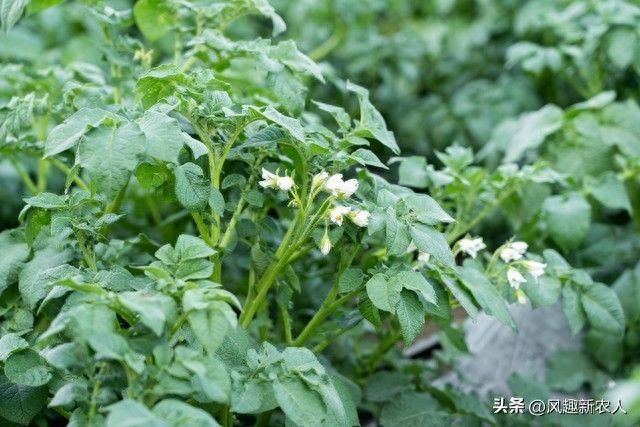
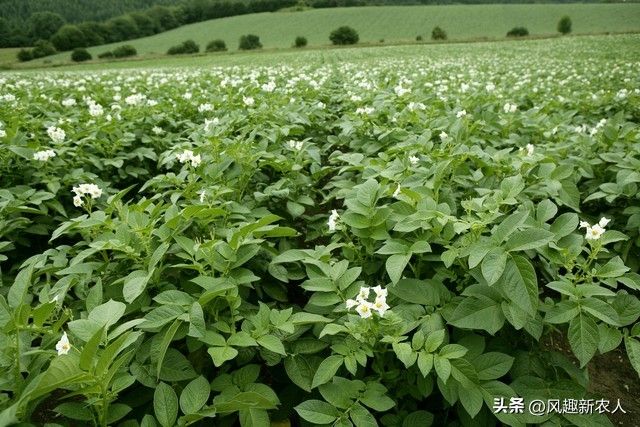
Vitto 5 is a medium- and late-literate potato variety, with a strong and compact plant with good ventilation in the field. High and medium, balanced branching capacity, high integrity of seedlings and excellent invertability. The thick, green, luminous and fast accumulation of nutrients provides a good plant base for the expansion of the tubers. They are rounded or elliptical, they are sour, they are yellow, they are smooth, they are shallow, they are free of malformations, they have high hair, and they are excellent in their appearance。
(ii) prominent and robust production
The variety is highly productive, with conventional acreage production in daejeon stabilized at 1500-1800 kg, with acreage production in finely refined high-yielding cultivation patterns exceeding 2000kg. Agricultural data are excellent, with a single potato stock of about 12. 73, a single cassava weight of about 564 g, a large and medium potato ratio of more than 74. 4 per cent, high-quality commodities, a high percentage of potatoes, a stable yield that is not affected by small annual climate fluctuations, and stable productivity in high and low altitudes, a typical high-yielding product。
(iii) strong resistance to disease
Vitto 5 is highly adaptable, cold, infertile, mild drought-resistant and suitable for high-altitude, cold mountains, hilly drylands and slopes in the south-west, with no stringent requirements for soil fertility and normal growth in sandy soil and on the border. There is a high level of resistance to disease, high levels of late potato disease, early disease, a high degree of resistance to common viruses and cyclic diseases, a low probability of natural disease in the field, a significant reduction in pesticide use and a reduction in planting risks and production costs。
(iv) quality and sustainability
The tubers are fine, have moderate levels of starch and oral powder, which can be sold both for fresh food and for starch processing, french fries and chips, for a wide range of purposes. At the same time, it has long hibernation periods, durable storage, long transport, moderate storage after harvest, slow growth, long transport, long shelf duration, significantly reduced post-partum wear and tear, adapted to the demand for industries that grow on a scale and sell at a distance。
Ii. Technical requirements for high-yielding potato production, vitto 5
(i) land plot selection and conversion
1. Land selection: priority is given to flat, well-drained, ventilated drylands, with the best sandy or bordery soils with deep, thin, fertile, organic content. The selection of low-lying water, soil adhesiveness and saline superstitious plots is strictly prohibited, avoiding co-cropping with maize, oilseeds and legume crops, eliminating chromosomal crops and reducing the accumulation of endemic diseases。
2. Ground-drying: thorough clean-up of soil residues, weeds and stones prior to planting, deep-drive soil 25-30 cm, breaking of soil sheeting, and improvement of soil aerobics and preservation of water fertility. Deep tillage is followed by fine dredges, shredding of the earth, laxation of the soil, flatting of the ground and creating a defusing soil environment for seedlings and tubers。
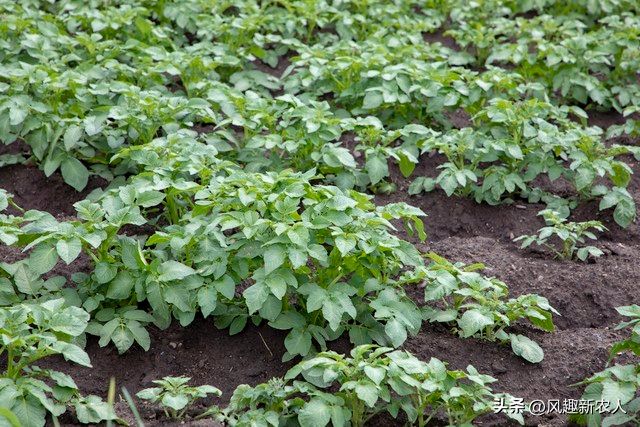
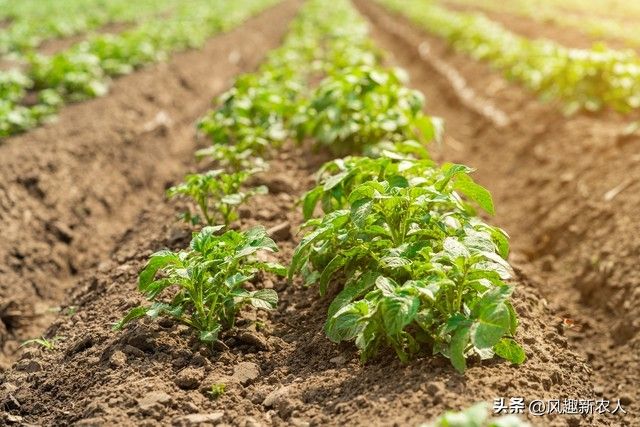
3. Start-up specifications: using a two-way start-up planting model of 20-25 cm high, 60-70 cm bottom width, 40 cm face wide and 30 cm space. Cultivation can be effective in raising the temperature of the ground, facilitating drainage and flood control, increasing the active layer of soil, promoting the expansion of the tubers and significantly reducing the rotten potato rate。
(ii) potato screening and pre-treatment
1. Potato selection: priority is given to primary and secondary detoxification and 30-50 g single healthy whole potato seeding. Cutting out the seeds of decay, freezing, malformation, disease and dyslexia, ensuring the quality of seedlings from the source and preventing their occurrence。
Drum treatment: the seeding takes place 15-20 days before the seeding takes place, and the seeding of potatoes is laid down in a ventilated, dispersed room at 15-20°c temperatures, all of which are spread out in the sun. The seeding occurs when the seed is half to one cm thick and full of sprouts, effectively breaking up the rest of the crop and ensuring that it is well and well。
Decontamination of the slices: large potato species need to be treated with two to three full buds per piece, with a single mass of not less than 25 g. Slice blades are disinfected early with alcohol or potassium permanganate to avoid cross-infection. Cultivated with grasswood ash or polybacterial humid powder, dry water and sowing to prevent decomposition and cyclic disease during the sapling season。
(iii) cultivation and reasonable secrecy
1. Seeding time: in mid-march, high-altitude areas are concentrated in mid-march in combination with climate flexibility, low-altitude warm areas are suitable for delayed seeding to avoid the cold effects of night frosts and to guarantee a suitable long-term temperature and a long-term mature growth cycle in suitable varieties。
Cultivation density: in accordance with the principle of “separated production, reasonable ventilation” and in a broadcast mode, approximately 4,000 cm per acre, 40 cm and 35 - 40 cm. Approximately 150 kg per acre of seedage, which is too dense to produce easily, and is prone to depression in the field, poor ventilation and an increase in small potatoes, affect commodity rates。
(iv) scientific fertilization, balanced supply
Vitto 5 has a high long-term demand for fertilization and follows the fertilisation principles of ** “re-appliance of fertilizers, oxidation, application of organic fertilizers, control of nitrogen-added potassium phosphorus” ** to avoid a tendency to apply nitrous fertilizers leading to a long fall。
1. Base fertilizer is the main type: one-time application of foot-based fertilizer during seeding, 2000-3000 kg per acre for mature farmers, 40-50 kg per acre for potassium sulfate and 20 kg per phosphate. Fertilizers are applied evenly in gutters, are fully mixed with the soil, avoid direct exposure to fertilizers by seeding potatoes and prevent sprouts from burning roots。
2. In a timely manner, urea 8-10 kg per acre of seedlings is used to promote the growth and growth of the leaves of the young. The length of the tubing is a critical period of fertilizer, with potassium sulphate 15-20 kg per acre, and the application of single nitrogen fertilizers is strictly prohibited, promoting the rapid expansion of the tubing and increasing the accumulation of large and medium potatoes and starch. Potassium phosphate fattening can be sprayed in the later stages of growth, extending the function of the blade to prevent premature decay。
(v) fine field management
1. Water management: potatoes are drought-resistant and flood-resistant, soil is dry during seeding periods and roots are promoted; the greatest amount of water is required during periods of expansion from the present rheumatism to the trough, and the soil is humid in the event of drought; the rainy season fills ditches, eliminates water accumulation, and protects the fields from the decaying roots and rotten potatoes。
2. Cultivation of land in china: 2 soil management exercises in the course of the whole process, with the first light medium and thin ground being cultivated 10-15 days after seeding, and the elimination of weeds in the fields; the second deep ground being cultivated at 8-10 cm thickness during the current period of the guacamole period, which avoids the greening of the tubers and the production of alumin, while inhibiting the growth of weeds and protecting their roots。
3. Controlled protégés: when the water is too fat, the fields are closed, and the leaves are grown, affecting the potatoes. In the current period, special-purpose motorizers are sprayed, leaves are controlled, nutrient distribution is regulated, nutrient transfers are promoted and yields are increased。
Iii. Integrated green control of pests and pests
Vitto 5 is more resistant, but a small number of pests and pests are still likely to occur in high-wet, high-temperature environments, adherence to the precautionary and integrated treatment principles, priority to agriculture, physical control, and scientifically sound use of low-toxic pesticides。
1. Disease prevention and control: priority is given to the prevention and control of night disease, early disease and death. Reduced incidence of disease by rotation, upwelling, rational implantation; application of agents such as methyl sulphate, dyson manganese zinc at the initial onset of the disease, one application at intervals of 7 to 10 days and two to three successive sprayings。
2. Pest control: mainly pest control, such as aphids, tigers, etc. Infestation can be combined with soil treatment to prevent underground pests; long-term aphids can be treated with aphid spray to avoid pest transmission of viral diseases and to ensure normal plant growth。
Iv. Receiving and scientific stockpiling
(i) collection in due time
The vitto 5 is a medium- and late-literate species that can be harvested after the planting of leaves that are naturally yellow, the partial discontinuation of growth on the ground, the decorative cortexation of the tubers and the maturity of the chips. Seven days before the harvest, water was stopped and harvests were selected during the drying of the clear soil, reducing the damage to the chips and improving the quality of the goods。
(ii) classified storage
After harvest, broken, sick and decayed chips are removed and screened by size, with high-quality commodities stored separately. Using its resistant storage properties, it is stored in a dry ventilated, light-shield, low-temperature storage, controls the storage temperature at 3-8°c, wetness, avoids lumbering, decay, prolongs the shelf life, and safeguards the quality of late sales and processing。
Summary
With the combined advantage of high productivity, resilience, good commodities and durable transport, vitto 5, which is suitable for regional scale cultivation in the south-west and most of the drought in the country, the benefits of cultivation are considerable. In the process of planting, the whole range of high-yielding techniques for land selection, detoxification, planting, balanced fertilization, scientific piped water and pest prevention and control needs to be implemented in a manner consistent with the growth characteristics of the species, so as to refine and control the various growth links, develop the full potential of the variety and achieve the high-quality, productive and efficient planting goals of the vitato 5 potato。