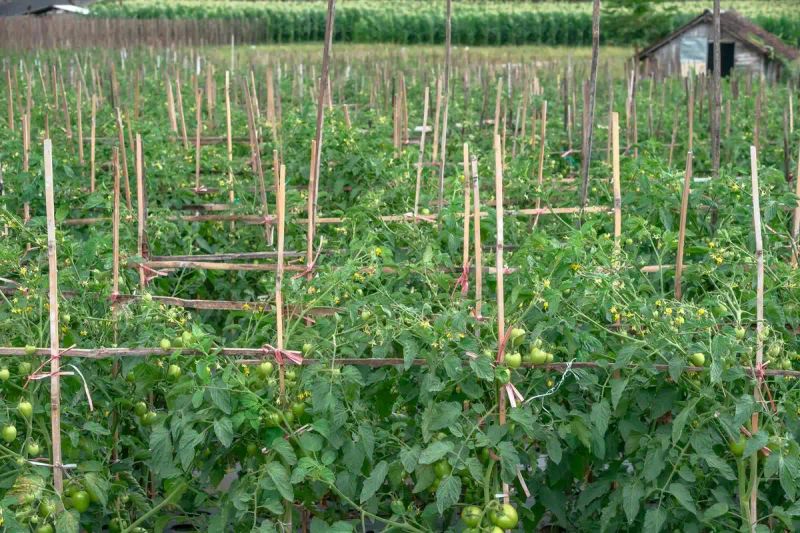
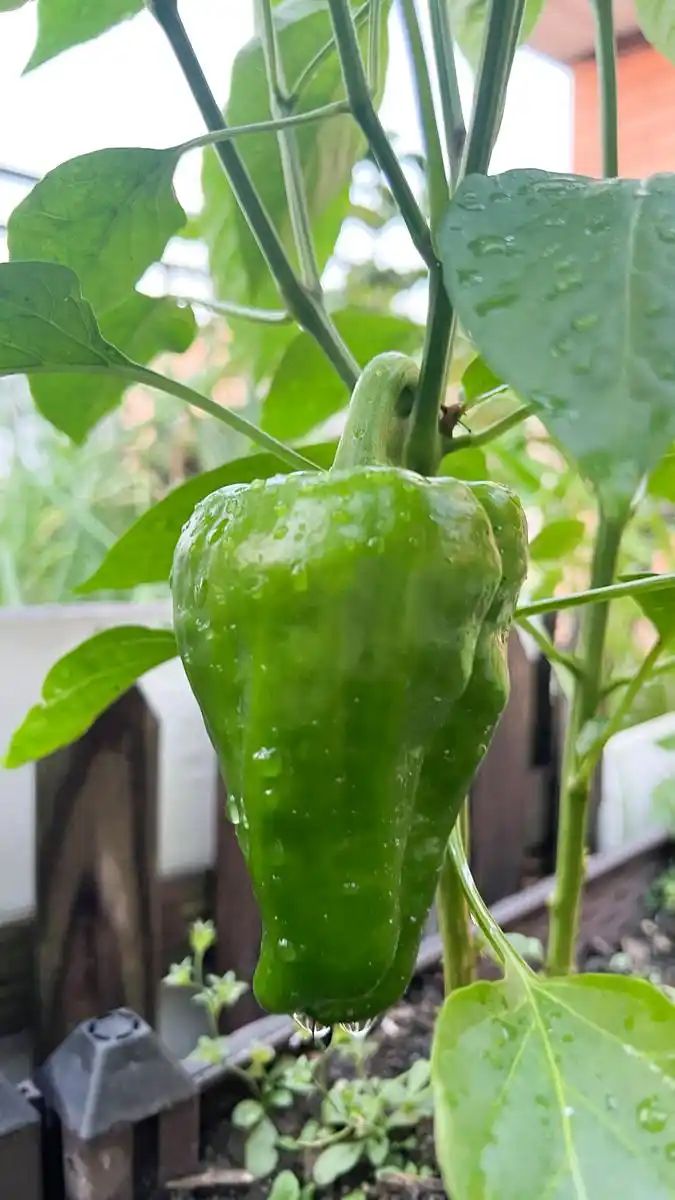
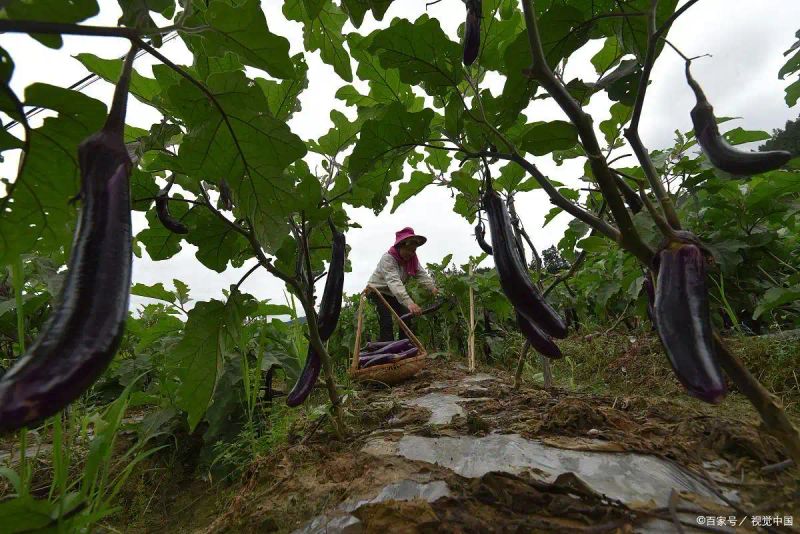
The studios, represented by tomatoes, eggplants and peppers, are the core items for securing the supply of the winter vegetable market, with planting cycles spanning the autumn, winter and spring seasons and facing multiple environmental challenges, such as low-temperature oligarage, high humidity and disease and infestation. Scientific risk avoidance and precision control of key aspects of planting are central prerequisites for achieving high quality and high-yielding winter eggplant and vegetable production. The paper provides technical support for production practices by systematically combing the seven dimensions of diversity selection, shed preparation, nursery management, field cultivation, environmental regulation, green pest control and harvest management。
Varieties selection: a “basic premise” for winterization
The selection of varieties directly determines the resilience, production and commercial nature of the fruit and vegetables in winter, giving priority to the four core needs of “low-temperature, weak light, disease-resistant, durable transport” and avoiding the failure of cultivation as a result of poor varieties。
Tomatoes: medium- and late-cooked, unlimited-growth varieties should be selected, with emphasis on resistance to the tomato acupuncture loaf virus (tylcv), the plague, as in the case of the golden room 10 “photnut l-402”, which is still able to sit normally at 10-15°c temperatures, and the fruits are evenly coloured in a weak light environment。
- cheese: priority is given to the species of violet, long-christ or chromosomal, which are characterized by low temperature, bland disease and disease, such as the “black-dressed eggplant” “kyogar 3”, which has a tight, durable supply of fruit and is suitable for long cycles of winter cultivation。
- paprika: the ability to resist cold and anti-viral diseases (tmv, cmv) is critical in the selection of amphibians, peppers or sweet peppers according to market demand, such as “precious pepper 3”, “sweet pepper 10”, with a high rate of low-temperature sitting fruit and a low number of malformations。
Particular attention needs to be paid to avoiding the blind introduction of southern open-field or summer-specific varieties, which are poorly adapted to the low-temperature and oligarchy conditions of the northern sheds and are prone to problems such as falling fruit and high morbidity。
Preparation of sheds: construction of a “protective barrier” for safe cultivation
Pre-winter shed repairs and soil improvement are key to combating the adverse external environment and reducing the barriers associated with it, and need to be completed one to two months in advance. The core consists of three main components: shelter maintenance, soil disinfection and application of base fertilizers。
(i) shelter maintenance: building “temperature protection” line
During the winter season, there was a rapid loss of heat in the sheds, which focused on key areas such as shanty film, temperature protection, vents, etc., in order to avoid low temperature and freezing as a result of the breakdown of the facilities。
1. Refurbishment and patching of shampoo: the selection of a 90 per cent per cent permafrost, an aging po film or an eva fumigation film to replace an old film that has been in use for more than two years; special tape patches to ensure sealability and reduce heat dissipation in areas where the shampoo is damaged。
Temperature protection has been upgraded by the introduction of a double layer of “preservation by + water-proofing film”, which is covered by no less than 5 cm thickness, and by adding a 1 m-high nematode to the perimeter of the shed after nighttime coverage, which further prevents cold air intrusion; and by rolling up temperature protection in the early morning and prolonging light time。
3. Reinforcement of the shed structure: checking the soundness of the shed's poles, pull the poles, welding or hardening loose areas to prevent winter snowstorms, wind winds leading to the collapse of the sheds; setting up a buffer room at the door of the shed to avoid direct access to the cold air when opening。
(ii) soil sterilisation: the difficulty of breaking the “linking barriers” topic
The long years of vegetative gardening in the sheds are prone to the accumulation of endemic diseases (e. G., decomposition, atrophy) and nematodes, which need to be completely disinfected by physical or chemical methods to reduce the disease base。
- physical disinfection: using the technique of “high-temperature silhouettes”, the sheds are closed during the summer leisure period, covering the surface of the ground for 15 to 20 days, bringing the soil in the sheds to temperatures above 55°c, killing more than 90% of the pathogens and nematode eggs, without chemical residues and suitable for green production。
- chemical disinfection: if the soil is seriously ill, it is possible to use fumigants such as tampons and acres, so that 30 cms can be spread evenly, cover the membranes closed for 7 to 10 days and ventilated in 15 days, so as to avoid the use of residual agent to harm the root system of the crop。
(iii) base application of fertilizers: laying the “nutrient supply” base
The long fertility period of the tungsten fruit and vegetables requires re-energizing and supported by organic fertilizers, balancing soil nutrients and improving soil conservation。
- organic fertilizer selection: priority is given to the application of sufficiently decomposed goat, cow or merchandise organic fertilizer, with an acre mass of 5000-8,000 kg, and the application of uncomposed organic fertilizers (e. G. Fresh chicken dung) is avoided in order to prevent the fermentation of hot roots or the introduction of pathogens。
- fertilizer matching: 50 kg per acre of potassium fertilizer (15-15) 50 kg per acre with nitrogen phosphorus, 50 kg per phosphate and 30 kg per sulphate, which, if soil is acidic (ph<6. 0), increases lime 50-100 kg adjustment ph to avoid soil acidification leading to trace element absorption barriers。
- application methods: after mixing organic and chemical fertilizers, a combination of deep tillage into the soil and 30-40 cm deep so that the fertilizer is fully integrated with the soil, avoiding the use of concentrated fertilizer that leads to the root burns。
Nursery management: the central link in nurturing “breeding”
Precipice of winter eggplant and vegetable breeding is mostly before fall temperatures, with precision control of temperature, light and water fattening, and the cultivation of strong and well-developed roots to lay the groundwork for higher yields in the later stages, focusing on three main points: seeding selection, nursery management and seedlings。
(i) precision control during seeding: avoidance of “misage”
The planting period needs to be calculated on the basis of the timing of the planting and the crop growth cycle, ensuring that the seedling meets the “age-appropriate seedling” standard at the time of planting, and that premature or late seeding affects yields。
Tomatoes: if planting is planned for mid-october, it will take 60-70 days in mid-august, with a growth standard of 20-25 cm, 0. 6-0. 8 cm thick, 6-7 leafs and already available。
- cheese: the planting period is similar to that of tomatoes, with 70 to 80 days'seeding (early august) and a sapling standard of 25 to 30 cm, 0. 8 to 1. 0 cm thick and 7 to 8 leafs。
- paprika: the baby is of a long age (80-90 days), and if it is established in late october, it will have to be sowed in late july to early august, at a scale of 18 to 22 cm, 0. 5 to 0. 7 cm thick, 8 to 10 real leaves and already available。
(ii) temperature control of seedbeds: prevention of “breeding and disease”
Temperature of seedbeds is key to the growth of seedlings and needs to be managed in a phased manner in such a way as to avoid disease caused by high temperature and humidity leading to high temperature or temperature。
- before seeding: maintaining the temperature of the nursery bed at 25-30°c, the soil's relative humidity at 80 - 85%, covering the membrane sombrane so as to contribute to the rapid growth of the seeds; and removing the membrane in time for 70% seeding to prevent the growth of the seedlings。
- after seeding and before seeding: appropriate temperature reduction, 20-25°c during the day, 15-18°c at night, control of the relative moisture of the soil at 70-75%, reduction of humidity through ventilation, avoidance of fallout and decomposition; 5% of the solution or condensation of propadiol, if it occurs, can be sprayed to inhibit the extension of the trough。
- after seedlings: stay warm and wet for one week, 25-28°c during the day and 18-20°c during the night, promoting the recovery of the root system; and then slow the seedlings down to conventional temperatures to avoid stagnation in the growth of the seedlings。
(iii) premium seedlings: increase in “demonstration rate”
Pre-plant seedlings 7-10 days before planting, gradually reducing the temperature and humidity of the seedling beds, adapting the seedlings to the environment after planting in the sheds, and reducing the slow-down seeding time。
- temperature control: the temperature is reduced to 18-22°c during the day and to 12-15°c at night, with a minimum of 10°c, so as to avoid cold freezing。
- humidity control: reduce the number of waterings, reduce the relative humidity of the soil to 60-65 per cent, and increase the drought resistance of young seedlings。
- light management: keep the seedbed fully illumination and, in the event of a rainy weather, turn on a light patch (4-6 hours of light per day) to prevent the eutrophication of seedlings due to weak light。
Iv. Field cultivation: key sections of “planting and growing” points
Plantation quality and post-plant management of hydrofertilizers have a direct impact on the growth and pre-growth of eggplant vegetables, focusing on the three main stages of planting time, planting density, water fertilization and avoiding death or slow growth due to inappropriate operation。
(i) timing: avoiding “low temperature cooling”
Winter eggplant vegetable planting needs to take place at minimum temperatures above 10°c in the shed, usually in the northern region between mid-october and the first half of november, opting for the morning of the sun to avoid planting in the dark or in the evening (low temperature, high humidity leading to decay)。
- one day before the planting, the seedbeds were soaked with “sapling water” to reduce the damage caused to the seedlings at the time of their birth; the planting was accompanied by “shelter soil” to increase the rate of survival。
- plantation at depths such as “leaf and surface flat”, with tomatoes being suitable for deep planting (1 - 2 cm in the soil); and eggplants and peppers protected against the decomposition of the stem base。
(ii) plantation density: reasonable “ventilation light”
Cultivation density needs to be restructured with sheds according to the characteristics of the species, avoiding over-heating leading to poor ventilation, high disease or waste of space and production。
- tomatoes: infinite species, with single-stretching branches, with a distance of 60-70 cm and a distance of 35-40 cm, with 2500-3000 units per acre; limited-growth varieties, with a range of 50-60 cm and a distance of 30-35 cm, with a range of 30-500 cm。
- eggplants: 200-2500 units per acre, using two-stretched whole branches, with a distance of 70-80 cm and a distance of 40-45 cm, and 2500-3000 units per acre, if the variety is weak。
- paprika: 3000 to 3500 per acre with a single plant with a distance of 50 to 60 cm and a distance of 30 to 35 cm; sweet pepper varieties, because of their size, can be reduced to 40 cm and 2500 to 3000 per acre。
(iii) fertilizer management: adherence to the “front-and-back” principle
The long-term growth cycle of the fruit and vegetables of the winter is such that water fertilizer supply needs to be adjusted to the different stages of fertility to avoid long pre-nature and post-fertilization, with cores divided into three phases: slow-growing periods, flowering seasons, and festivities。
Slow seeding period: 7-10 days after planting, with “stable roots” dominated by “wetting” and with “dwelling root water” pouring through on the day of planting, and then with a small amount of water based on soil moisture, maintaining a relative humidity of 70-75 per cent of the soil; no fertilization at this stage to avoid fertilizer stimulating unrecovered root systems。
2. The flowering season: the planting of an existing leeches until the seating of the first fruit (a tomato) or an eggplant, and the control of the supply of water fertilizers (creas) and the prevention of the loss of fruit as a result of the growth of the walnuts; the pursuit of fat begins with the application of 20 kg of potassium (17-5-23) per acre of nitrogen phosphorus, in conjunction with watering and promoting the expansion of the fruit。
Outcome: this period is the peak in nutrient demand, requiring “determinate fertilizer and water-watering” to be applied once every 10 to 15 days, with high potassium fertilizer (e. G., potassium sulphate 20kg) and balanced fertilizer (e. G., potassium a nitrogen phosphorus compound 15kg) being applied interchangeably to avoid long-term application of high nitrogen fertilizer leading to a growing plant; water-filling is done in the form of “small water draught” with a wet soil depth of 20 to 30 cm and with a wet soil depth of 20 to 30 cm to avoid a massive flooding of water leading to a surge in humidity in the shed。
Particular attention needs to be paid to the low temperature of the sheds during the winter and the timing of watering should be chosen in the middle of the day to avoid watering in the afternoon or evening (lower temperatures at night lead to a decrease in the temperature of the earth and affect the absorption of the roots); and the timely ventilation and wetting of the water to reduce the incidence of disease。
Environmental regulation: creating “breathable” conditions
The core contradiction in the winter shed environment is “low-temperature oligarine, high-wet”, which requires the creation of an appropriate growth environment for eggplant and vegetables through precision control of temperature, light and humidity, avoiding a decline in production or poor quality due to environmental discomfort。
(i) temperature control: phased precision management
At different stages of fertility, the demand for the temperature varies, depending on the growth characteristics of the crop. The core objective is “to promote light cooperation during the day and reduce respiratory consumption at night”。
- tomatoes:
- shrimp periods: 25-28°c during the day, 18-20°c during the night, promoting the recovery of the root system。
- the flowering season: 22-25°c during the day, 15-18°c during the night, less than 15°c or more than 30°c。
- outcome period: 25-28°c during the day, 13-15°c during the night and 10-15°c during the day and night, thus contributing to the accumulation of fruit and sugar。
- cheese: the overall temperature is higher than that of tomatoes, resulting in slow growth at 28-30°c during the day and 16-18°c during the night, below 15°c and prone to freezing at 10°c。
- paprika: 25-28°c during daytime, 15-17°c at night, which is less resistant to cold than tomatoes, and a significant decrease in the number of sitting fruit below 12°c。
Temperature measures: if the minimum temperature in the shed is less than 10°c, supplementary heating measures are required, such as setting up a fuel heater in the shed (avoiding a direct blow to the crop), laying a land hotline (10-15kw per acre) or covering rice shells, straws and raising the temperature。
(ii) lightness control: extension of “effective light time”
The short and low intensity of winter light requires increasing the efficiency of crop photosynthesis by increasing the light rate and extending the time of light, and avoiding the chromatography of plants due to insufficient light。
1. Increased perceivability: cleaning of snow, dust and cleaning of the permafrost in the morning and in the morning; selection of non-diple film to reduce the surface of the permafrost and increase perceivation; displaying of a reflection screen on the north side of the permafrost (with a width of 1. 5-2 m) to increase the light evenness of the northern side of the crop。
2. Extension of light time: if the natural light is less than six hours, it is necessary to turn on the recharge light, to select 7-9 a. M. And 4-6 p. M. (avoiding night light to affect crop hibernation), to have a light strength of 2000-3000lx, and to give priority to led plant growth lamps (low energy consumption, good spectral suitability)。
(iii) humidity management: reducing the “risk of disease”
The high density of the shed during the winter and its susceptibility to high humidity (relative humidity of more than 85 per cent) are the main causes of outbreaks of diseases such as greyy, night disease, which require control of the relative humidity of the shed at 70-80 per cent through the twin measures of “wet control + wetting”。
- wet control measures: application of drip irrigation or sub-damp irrigation techniques to avoid heavy flooding; timely closure of sheds to heat up after watering; opening of vents for up to 30°c, ventilating for 1-2 hours and discharge of wet air from the shed。
- wetting measures: placing lime (50-100 kg per acre) between shed lines to absorb the water vapours in the air; or setting up dehumidifiers in the shed to reduce air moisture; avoiding watering in the middle of the day, using leaf spray (a few times) to reduce soil evaporation。