


A common problem for many families is that the family has had a long history of ginger and has unwittingly sprouted. The first reaction of a lot of people is to throw it away, and it's always felt that the germines are useless and useless。
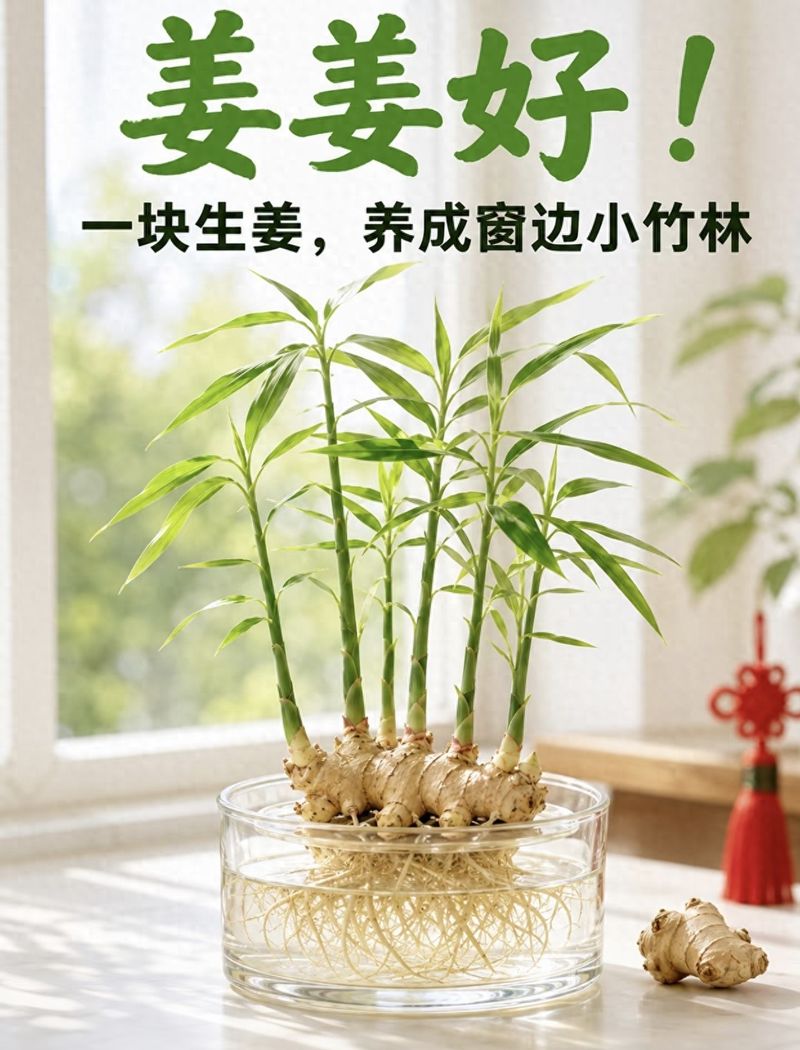
You don't have to waste it. Ginger hair buds don't produce toxins. They just feed the buds. They don't eat well, but they're especially suitable for planting。
As long as the method is right, the household balcony, the window table, the flower pot can be planted, without fields, and the newcomers can easily feed, and fresh ginger can be harvested for months, eating and eating, especially to save heart. Today, we share the simplest and most productive way to grow ginger in a family。
First of all, let's be clear about what kind of sprouts can grow and what must be thrown away。
If the ginger is green in the skin, a small sprouts, the whole body is hard, no smell, no molds, it can be grown. If the ginger has become soft, dark, moldy and sour, which means it has become decomposed, then it can be abandoned and the bacteria avoided。
Many people have failed to grow ginger, and the biggest problem is not bad soil, not enough light, but bad handling of the ginger seed, which rots when it is planted. So the first step in dealing with ginger is the most critical one。
Let's take out the sprouts of ginger and cut the pieces with a clean knife. There's no need to cut too much. Each piece has one or two full buds, the size of which is almost the most appropriate egg. Don't cut it too thin, it's too small, it's very weak。
And do not bury it immediately after it has been cut! This is the easiest pit for new hands. Fresh mouths are damp and directly into the ground are highly susceptible to decay. The right course is to put the sliced ginger in a cold and cold place for one day, so that the cut is dry and closed. If there is grass-wood ash in the home, it is easy to rub a little bit at the incision to protect the natural bacteria, and the survival rate is higher。
When you're done, you'll be ready。
Ginger is a subterranean tuber, with roots growing down, and ginger blocks growing up horizontally, very afraid of shallow basins and water. As much as possible, you have to choose the deep flower basin at depths above 25 centimetres, which must have a drainage hole at the bottom to prevent the accumulation of water at its roots。
Soils do not buy expensive nutrients, and ordinary family soil is good enough. Ventilation is the core, with as little as possible of pure clay and hard soil. A small amount of corroded leaves, a small amount of river sand, and a soft and plentiful soil are the best for ginger-breeding. A small amount of corroded fat, which is warm and unburned, is enough for ginger to grow。
The planting method is particularly simple and does not require any complex operation。
The flower pots are eight-point-full earth, flatten gently, flattening the well-tied ginger pellets, lumbering up, and softly on the earth. Then three to five centimetres of dust will be enough. Do not bury too deep, too slow and too weak。
And then we're going to pour through the water once, which is what you call the root water, until the bottom of the flower basin flows. When this water is finished, it must not be frequent. Ginger resists drought and floods, and the soil is drying up a little before, but it is not easy to suck。
Places are given preference for the bright light, avoiding the hot sun. The temperature is above 15 degrees and the seedlings are very fast, usually half a month to about 20 days, and green ginger seedlings are visible。
The conservation of seedlings determines whether you can finally harvest a bowl of ginger。
Number one, control the light. Ginger is not a strong light plant. He likes a soft light environment. The sunstorms on the balcony are prone to the drying and yellowing of leaves and the early decay of the plant, and are best placed in a brightly ventilated and dispersed light。
The second point is that the water is wet and dry. The soil surface is dry and watered. The chronic wetness of the water is the number one reason for the scabling of ginger. There is limited ventilation in the family basin and it must be borne in mind that there is less water and ventilation。
Thirdly, learn to grow earth, which is a key technique for ginger production。
Many people grow ginger with leaves and nuggets, because they ignore the earth. When ginger grows around 20 centimetres, the new ginger clots grow slowly from the root, and the light turns green, old and spicy。
All we have to do is lightly add a layer of soil to the root, cover the root and browse the ground twice or twice, and the ginger will grow in the earth and grow fresh and full。
Fourth, reasonable pursuit of fat. Ginger grows with a long cycle, and when the seedlings are stabilized, they can be applied with little weight. A mild compound or organic fertilizer is sufficient, and fertilizer is not applied directly to the root, slightly away from the root, to avoid burning seedlings. Sufficient fertility will lead to a marked increase in production in the later period。
Ginger's growth cycle is very stable, and family pellets are grown and mature in about four or five months. When the fall leaves are slowly yellow and naturally dying, the whole bowl of ginger can be harvested。
If the full one-off harvest is not desirable, it can also be picked in batches. In the run-up, you can slowly remove the soil, pick up a small piece of ginger and keep the rest growing, and really eat and pick, fresh and convenient。
And i'm going to add a little trick that you can use if you want to watch and not grow。
The search for a shallow disk, with a small amount of water at the bottom, only exposed the bottom of the ginger bar to the water, without immersion in its whole body, in a light-dispersed position, regularly changing the water, will soon produce green leaves, fresh eyes on the windowsill, and will be particularly attractive. It's just that hydroponics can only grow leaves, can't produce a big ginger, suitable for viewing and not for harvest。
Finally, we'll sum up some of the mistakes that the newcomers must avoid, and we'll make it a success:
Don't bury the whole piece of ginger in the ground. It's easy to suffocate inside and waste ginger seed
Do not water frequently, damp roots are the biggest reason for the failure of ginger
Don't plant it in shallow basins. It's too shallow
Don't get tanned, it's easy for yellow leaves to grow
It's got to be dry, hard-working, double production。
Life is full of small surprises, and a piece of idle ginger that's about to germinate can turn into a dynamic green garden on the balcony and reap fresh and natural ginger. You don't have to pay for seedlings, it's easy, it's very practical。
A friend who likes to grow herbs at home can certainly try to make her own ginger free。









