Garlic is a cash crop that is widely grown in the country. It is adaptable, has a low threshold for cultivation, has stable market demand and is of food, taste and medicinal value. However, many growers suffer from low yields, low levels of garlic, low levels of garlic, high levels of disease and disease, at the core of which is the irregularity of planting processes and poor management. In order to achieve a high quality production of garlic, it is possible to steadily increase the production and quality of garlic and to achieve increased crop yields without the need for complex technologies, such as mastery of fertilizers, selective seeds, scientific seeding, precision management and timely harvesting of five core steps。
Step one: fertilizing the ground and building the roots of production
Soils are the basis for the growth of garlic, which is shallow, glitter and fertile, anti-water sheeting, and finely and scientifically fertilization is a prerequisite for high productivity。
Priority is given to flat, well-drained, deep-soiled sandy or border plots, with front crops avoiding onions, garlic and lily crops such as cabbage, effectively reducing the accumulation of endemic pests and pests and reducing the risk of heavy crop reduction. Clean-up before harvest is done in a timely manner, with the complete removal of field residues, weeds and rubble and the reduction of disease vectors。
Deep tillage was then carried out, with depths ranging from 25 to 30 centimetres, breaking the soil sheeting, improving the air-inhalation and water-preservation capacity of the soil, then drying up for three to five days, and destroying parts of the soil with eggs and fungi. In combination with the whole area application of base fertilizer, which is based on the principle of “organism, supported by fertilizers”, farmers applying fully decomposed fat from 3,000 to 4,000 kg per acre, potassium sulphate compound fat from 40 to 50 kg and calcium perphosphate from 30 kg are flattened into the earth floor to avoid the concentration of fertilizers in the ground。
Finally, it flattens the land, grows wide, stretches between 1. 8 and 2 metres wide, stretches about 20 cm high, leaves open drains, makes it possible to dry out the rain, completely eliminates the problem of the roots of the water and creates a high-quality soil environment for the growth of the garlic roots。
Step two: the best-selected species, guaranteeing the quality of seedlings minoru
The quality of seedlings directly determines the strength, disease resistance and yield of garlic, and the quality of garlic is a critical first step towards high-yielding production, with a firm determination to eliminate the arbitrary and weak cultivation。
The selection of best-fit varieties is based on local climate and market demand, and preference is given to dominant varieties that are highly resistant to disease, garlic and garlic, full and medium-term maturity. When selecting seeds, artificially screens grades, removing cartilage, dung, moths, broken and deformed garlic, keeping the same size, colour and white, meat tight and disease-free, with a single petal weight better than 5 grams。
Garlic pre-treatment before seeding is effective in breaking hibernation, preventing disease and promoting seeding. The drying of the selected garlic for a period of one to two days, while avoiding the tan and the burning of the petals, followed by the leaching of the garlic for 15 to 20 minutes with the solution of polybacterium or potassium permanganate, can significantly reduce the incidence of root and purple diseases during the seeding period. Scrutinized and treated garlic, which produces well-established, healthy and more resilient seedlings, lays the seedling base for productive production。
Step three: science sowing, control density and timing
The timing, depth, density of garlic seeding, which has a direct impact on seedling rates, longness and the effect of garlic on expansion, and precision in the control of seeding parameters are central to high yields。
The maximum planting period is 15-20°c at 15-20°c, with the northern region usually in late september to early october and the southern region in mid-october to early november. It is too early to sow, with high temperatures leading to the growth of young seedlings and freezing in winter; too late to sow, slow and weak seedlings, insufficient nutrients for winter, low garlic and low yields the following year。
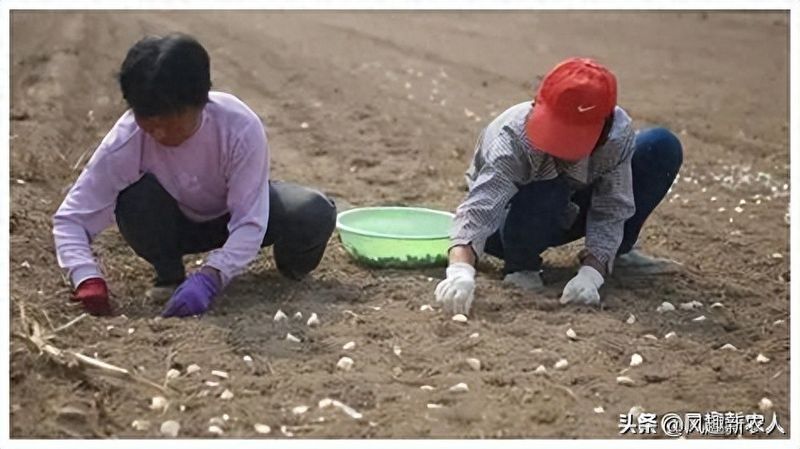
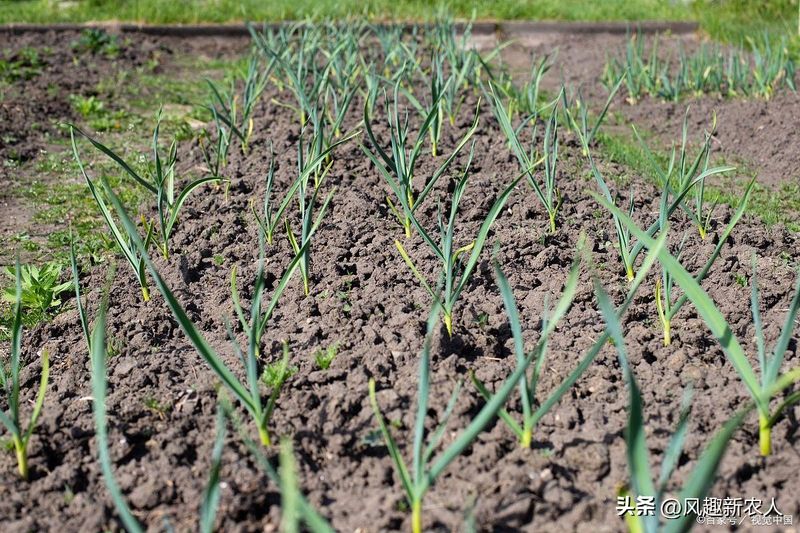
(b) controlling seed density: based on the principle of “crowded, rare and wasteful”. In general, 30,000 to 35,000 plots per acre are planted at a distance of 20 centimetres and 10 to 12 centimetres per acre, and well-fed plots can be properly rared, with relatively low-powered plots being sown in a modest manner, ensuring ventilation in the fields and avoiding depression and disease, while maximizing the use of land resources。
(b) the depth of seed control: the depth of seeding is three to five centimetres, following the pattern of “deep rooting, light seeding”, which is too deep and slow, small and small, and over shallow roots which are exposed, prone to reversals, and the presence of garlic tends to turn green. When seeding, the garlic petals are inserted straight into the soil, sprung up, then slightly covered, and the garlic is avoided, so that the roots are closely connected to the soil, so that the seeding takes place in a timely manner, so as to promote a rapid seedling。
Step 4: accurate management and steady growth promotion
Field management runs throughout the long life of garlic, focusing on the management of water fertilizers, weeding and pest control in china, and in a phased and refined management to ensure the sound growth of garlic。
1. Shrimp management (e. G. To winter)
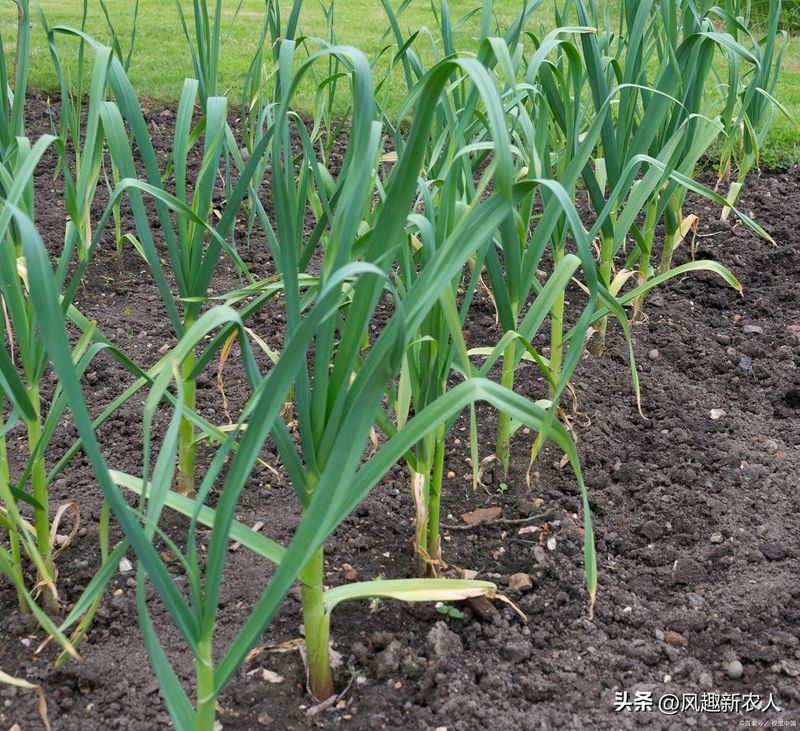
The seedlings are detected in a timely manner and the whole seedlings are ensured. Smaller water is needed during the nursery period, soil is not dry and water is not watered, appropriate seedlings are made, rooting is promoted and winter resilience is enhanced. The two-to-three-leaf period allows a combination of watering for the pursuit of low-speed nitrogen fertilizer, 10 kg of urea per acre, which helps the young child to thrive. Freezing water once before winter, covered with straw and grass, if necessary, to keep the seedlings warm and cold, to help them survive the winter and to reduce the cold that kills them。
2. Back to life management (after spring warming)
The recovery in spring temperatures and the return of garlic to growth are critical periods of nutrient demand. When the soil is unfrozen, fresh water is poured back into the water in a timely manner, in conjunction with the pursuit of fattening, with 20 kg of high nitrogen compound fat per acre, and rapid nutrient supplementation, which promotes the growth of the leaves and the construction of productive stands. At the same time, weeds should be removed from the fields in a timely manner in order to avoid competition for water fattening, shielding the light and improving ventilation in the fields。
3. Enrichment management (the extraction of garlic to maturity)
When the garlic is out, it enters a period of rapid garlic expansion, a period of gold that determines production and quality, with a re-encumbering of fattening and strict water control. Potassium sulphate complex fattening 25-30 kg per acre, increased potassium fattening, promotion of garlic swelling and garlic filling, and avoidance of nitrogen fertilizer leading to long leaves and small garlic. During this period, soil is wet, water is inert, the drought is prevented from leading to a significant disruption of garlic inflation, and 7 to 10 days before the harvest stop watering, preventing the use of garlic to break open and spread, and increasing resistance to storage。
4. Green pest control
The common diseases of garlic are purple spots, leaf deadness, root decay and pests dominated by garlic mackerel and ostrich. Insisting on “preventive, preventive and supportive”, daily drainage and ventilation in the fields, avoiding the high humidity of the fields and reducing the incidence of disease. In the early stages of the disease, broad spectrum microbicide spray can be used to combat the disease, and pests can be treated using biopharmaceuticals or low-toxic pesticides to eliminate highly toxic pesticides and ensure the safety of garlic quality。
Step five: collect in due time, lock production to keep quality
The timing and drying of the harvests directly affect the production, phase and storage time of garlic, the premature harvesting of garlic is not full and light, and the late harvest of dispersible petals, skin stripping and molds significantly reduces the value of commodities。
After 15 to 20 days of garlic harvesting, garlic blades are green and yellow, the bottom leaves are dried, and the prosthesis is soft, i. E. The best harvest period for garlic. The harvest is carried out in the morning of the sun, with a light manual extraction to avoid mechanical damage to garlic and to reduce the incidence of broken valves and skins。
I'm not going to trim it right after the harvest. I'm going to lay the whole garlic on the field. 2-3 days to avoid tan while drying up, preventing garlic burns from getting green and meat from getting old. After drying of the leaves and skins, they are trimmed with extra stubs and dry stubs, graded, scrapped out of broken, moldy, thin undercrops, stored or sold. Routinely dry garlic, with tight leather, bright colour, durable storage, excellent commodity quality, has truly increased production and improved prices。
Summary
There are no shortcuts to high-yield garlic high-quality cultivation, and the core is the implementation of the five-step standardized process of clean fertilizing, well-selected seeds, scientific seeding, precision management and timely harvesting. Every step of the cycle is gradual, from basic soil improvement, seedling screening, medium-term precision management, post-scientific harvesting and full-scale standardization, which can both effectively reduce pests and pests and reduce the risk of production reduction, while steadily improving the monolithic and quality of garlic and allowing growers to easily achieve steady yield growth。