


The national holiday is an autumn harvest season, but this season in my hometown, shandong, is not only a corn harvest but also a garlic planting season. There is no uniform standard for the timing of garlic cultivation, and the weather in shandong province is used to describe the season as cold, before and after, during the national holiday, too early and too late for the winter of garlic, when it is grown with the greatest capacity for dry and cold-resistant garlic and high productivity。
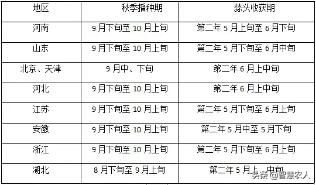
Local garlic planting schedules are for reference only
Many people on the national holiday have arranged vacation trips, but the busiest season for farmers' friends, and maize is about to start growing garlic immediately after harvest. Many people know that garlic does not know how it is grown, and how it works, and today i share the hope that it will help farmers and friends in the shandong region。
Location: shandongrunan region
Time: 10. 6
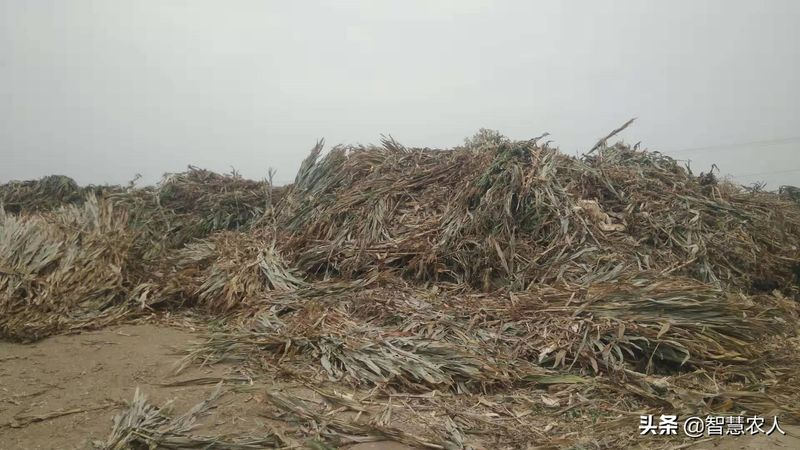
The government-designated storage site for maize slurry is a good initiative to avoid slurry burning
I. Transfer
Post-harvest barter treatment of maize has been a major challenge for several years, particularly with regard to the cultivation of garlic plots. It is difficult to decompose and decompose directly in the field because of the shortness of the slurry, which affects the cultivation of garlic and garlic. Farmers in the area of runan are friends who cut down the straw manually after the harvest of maize, then send it to a designated storage site and then start arable land using a farm machine at a cost of about $100, which is less favourable due to the low rainfall of the drought this year。
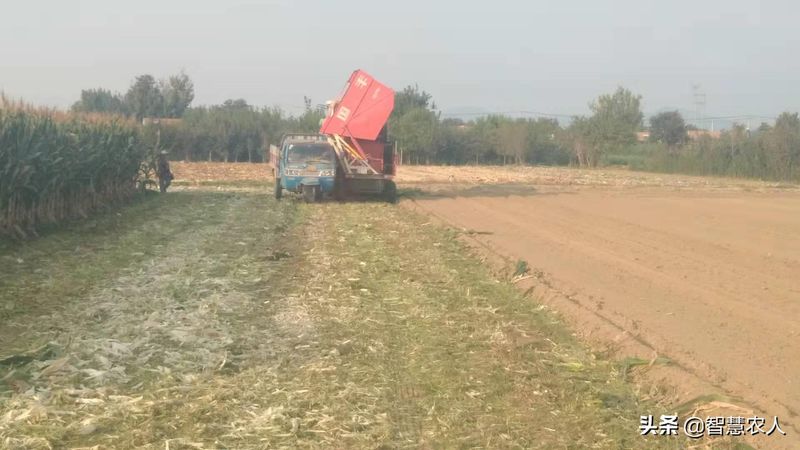
Stitching back to the field. It's not ideal to see the level of grinding
Ii. Distribution of organic fertilizers
Before arable land is cultivated, local growers will ferment organic fat, or chicken dung, in advance of the years, and then spread the chicken dung evenly to the field for bottom fertilisation, which will be arranged in advance on the basis of soil fertility. According to the grower, the use of fermented chicken dung not only contributes to the high yield of garlic, but the key is to save money, a carload of chicken dung would be around $200, while a bag of fertilizers would be close to $200, while three bags of fertilizers on an acre of garlic would be $600。
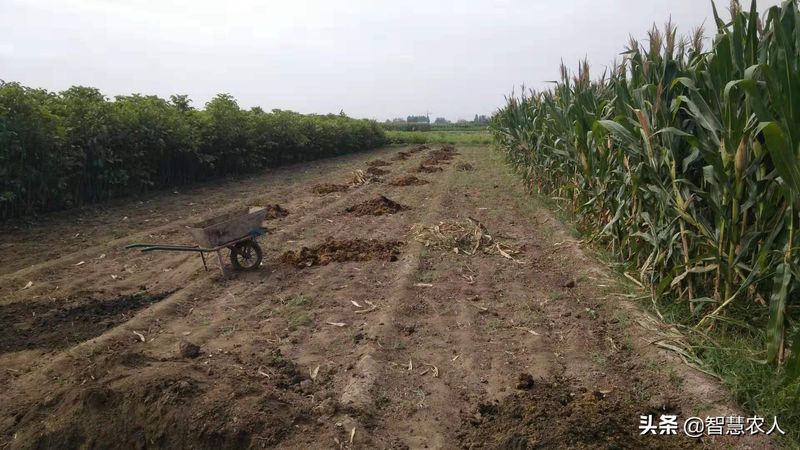
Growers are sharing the fermented chicken dung
One acre of chicken dung is in the range of 2,000 to 3,000 pounds, plus a bag of composite fats of about 200 dollars, so that the cost of garlic bottom fertilizer is around 500 dollars, which significantly reduces the cost of planting. As for how the web users say to fermented chicken dung, the farmers in this area put chicken dung on the ground a few months early and then covered with high-temperature fermentation, which they are not sure enough to ferment, but the growers do so without problems. It should be possible to judge the fermentation of chicken dung accordingly。
Iii. The whole place
This is a very important step for farmers to clean up their plots in accordance with actual production needs after using a tiller and for later field management and the ease of fertilization。
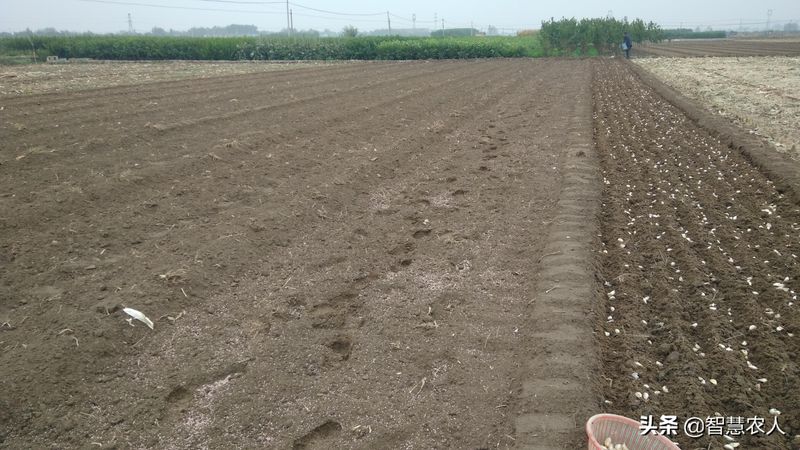
♪ clean plots ♪
Used to be planted by the growers, the planters have also begun to use machinery in recent years, typically on an acre of approximately 150, which is generally about 2 metres wide, and is very standard for all growers。
When you're done, you're able to use a fixed-width ravine to draw out the argon, and then you get the garlic "spacing"。
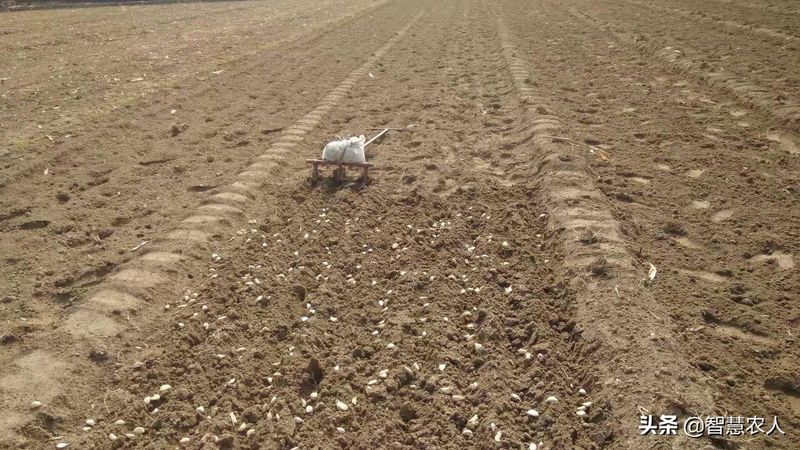
Ten centimetres minimum for a family-owned gutter-opening tool
Iv. Trenching
When the ground is ready, the seeding is officially done. Before seeding, farmers used their own cleavage farm tools to draw out the plaster to determine the distance between garlic。
A more interesting way to do this is for the growers, after the ditch has been closed, to spill garlic early in the ground and then pick it up manually, and in roughly the same amount and sowing, which clearly accelerates the spread of garlic and has to admire the production experience of farmers' friends。
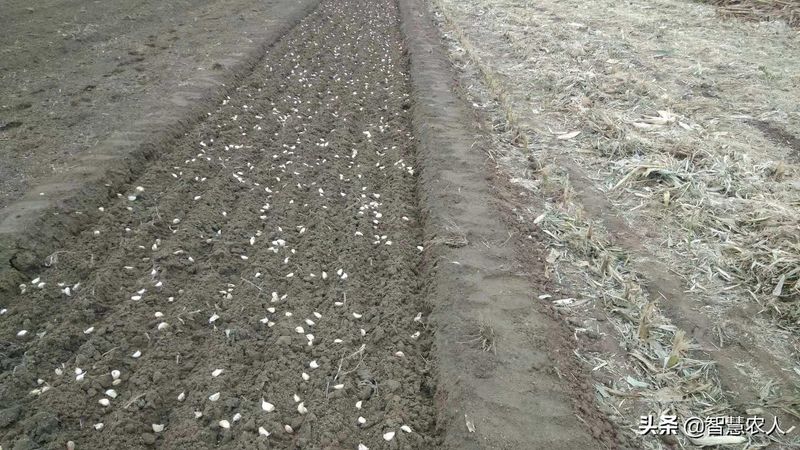
The growers put garlic in the fields ahead of schedule, which speeded up the transmission
The seeding is garlic at the bottom, inserted around 3 to 5 centimetres of soil and then covered soil. In the case of common garlic, an acre would require approximately 300 pounds of garlic at a cost of about $800 if purchased。
V. Closed resources
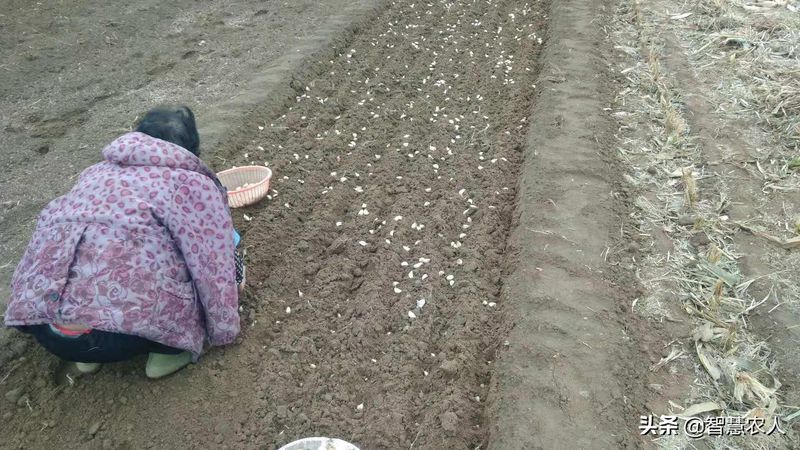
The farmers are broadcasting garlic, and the morning temperature in runan in late autumn is about 10 degrees
After the spot, the grower will have to water the first time, and then the membrane cover will be available after one or two days. The water was poured twice in a row because of the soil in the fields to accelerate the seedling of garlic and to facilitate the next membrane cover。
Vi. Diversity
The covering of the membranes is usually carried out in a timely manner after the second water draught, which is pre-planted and, in some cases, post-map. An important step prior to covering the membrane is the use of herbicides before seedlings, which, according to the actual long grass of the plot, typically use 33% of the acetate concentrate 150 - 200 ml, or 44% of the acetamine emulsifiable concentrate 200 ml, or 24% of the acetyl fluoride 50 ml, with no excess use and a flat spray sufficient. It's just a membrane cover。
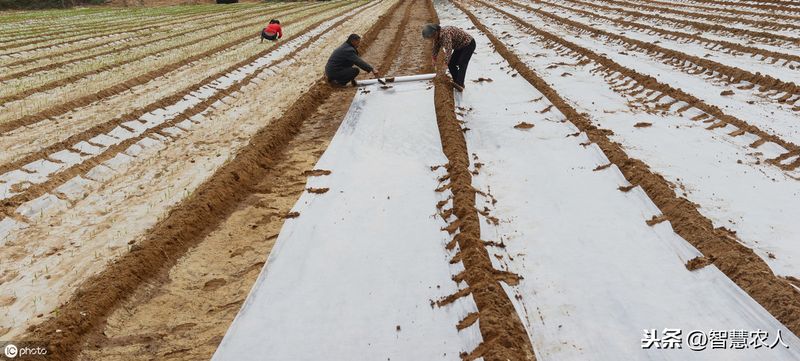
It is a tougher job to break the membrane after the gust of garlic helps the garlic to grow normally in light cooperation, and the whole job takes 5-7 days to complete because the garlic cannot go together。
Although most of this part of the lunan region is flatland, agricultural mechanization is low and the whole garlic process is largely manual. This is true of plain areas, not to mention mountainous hills. According to local farmers, because of the fragmentation of plots and the fact that the area under cultivation is not very large, it is usually 4-5 acres per household, or 1-2 acres less, that farmers can grow on their own in a short period of time, that large areas of cultivation will hire people, that the use of machinery will cost more than 150 people a day, and that most of the land is grown by older persons over 50 years of age, with very few young people, which is the country's greatest social problem in agriculture。
Another reason is that garlic is a small-scale agricultural product, price is like a roller coaster, market prices are volatile, farmers' friends are less able to eat, higher prices make more money, lower prices make less, $3 a pound is sold, and 40 cents is sold..
In a market economy, farmers' friends are not sure which agricultural products are high and, in the farmer's words, “crops don't grow in years”, perhaps the most real farmers。









