


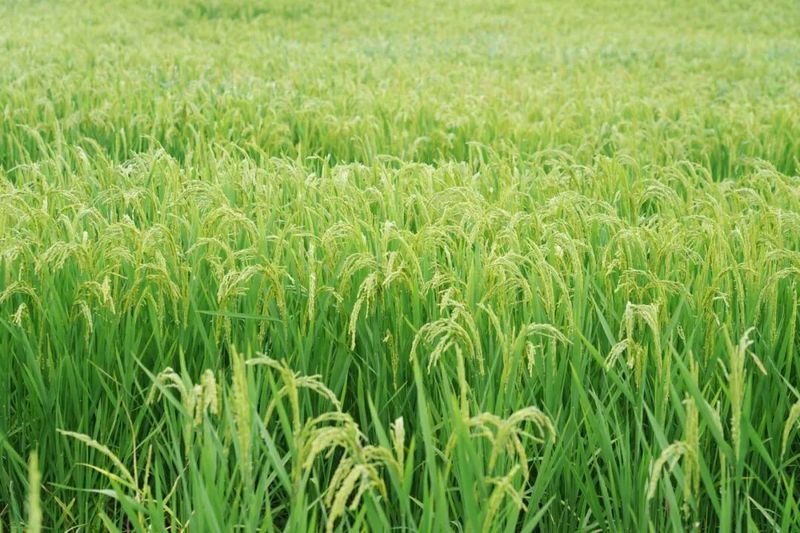
In august, rice fields were green on the slopes of the great water well village of nina village in the city of luping, yunnan province. On the rising slopes, the “dry-good” series of water-saving water from the shanghai-based agricultural biogenetic centre, which is resistant to the growth of dry rice, the wind is blowing through the fields, the rice waves rise and fall, and a rare view of the rice fields, which have once been dominated by drought, can only be imagined of the time when the harvest is harvesting. This hilly rice field is a living microcosm of the results of shanghai's agricultural research in the cities of the provinces。
Based on a deep-rooted collaboration, shanghai's highlands, where high-quality agricultural scientific research has taken place in yunnan, and where ad hoc water-saving rice varieties and associated planting techniques have been promoted, successful efforts have been made to harness mountain land resources, solve the food problems of drylands, help to secure local food security, and serve as a living model for east-west science and technology to support farmers and stabilize food production。
The yunnan mountains are small and fragmented, with most mountainous slopes lacking irrigation resources and limited farming conditions. For too long, scattered slopes and drylands have been able to grow only traditional dry crops, such as maize, and no quality rice can be grown, regional food production structures are monolithic, production capacity is weak and the productive potential of large amounts of land is difficult to unlock. In 2017, the shanghai city centre for agricultural biogenetics and the yunnan provincial academy of agricultural sciences began an in-depth collaboration to bring new varieties of rice and new technologies to yunnan from the high-maturity and well-adapted “dry-good” series。
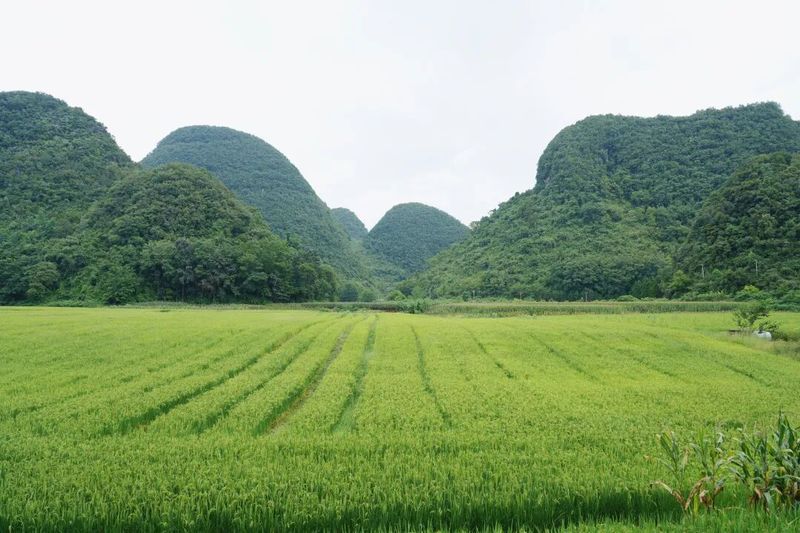
“in cooperation, water conservation and rice management offer great prospects for development.” the chief scientist of the shanghai centre for agricultural biogenetics, the rowley army, expressed confidence. The bottom line is derived from the actual hard-core advantage of producing rice in the “dry-good” series to protect against drought. Compared with traditional patterns of rice cultivation, which are highly dependent on large-water flooding, the “dry-good” series of varieties have perfectly integrated the high-yield quality characteristics of rice with its strong drought-resistant and infertile capacity, without the need for large-water flooding, and can be effective in adapting to cropping environments such as dry slopes and drylands in the yunnan mountains, stabilizing rice production on land that was previously uncultivable for rice cultivation, and creating new spaces for increased food production in the highlands。
Based on the characteristics of yunnan irrigation slabs and land resources, the scientific team at yunnan is well-advised in its approach to the development of good seeds and technologies, and has targeted the screening and development of water-efficient rice varieties adapted to the climate, soil and precipitation conditions. As a result of continuous trials and improvements, several high-quality varieties, such as "dry-hysun 73" "dry-hysun 786" "dry-hysun 737", have been validated and their stability, resilience and abundance have been fully validated, laying the foundation for scaling up and standardization。
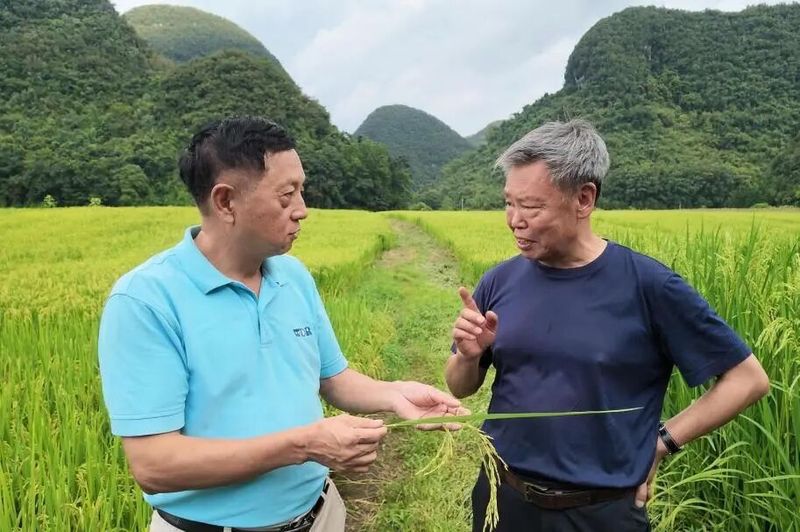
Zhu, a chinese engineering staff member who has long studied the technology of deep-dry rice in the yunnan mountains, has been very brave and highly appreciative of the water-saving rice introduced in collaboration. “paddy cultivation in mountainous drylands requires three conditions: first, that it be grown in the soil; second, that it be grown in the drylands, as it is in water fields, and third, that the roots be particularly developed and withstand drought. These three conditions can be met by the shanghai `dry-good' conservation of rice.”
“in mountainous slopes such as the village of rupingda, the `dry-good' series of water and rice conservations provide excellent species support for the production of food rations.” zhu zhu zhu zhu zhu zhu zhu zhu zhu zhu zhu zhu zhu zhu zhu zhu zhu zhu zhu zhu zhu zhu zhu zhu zhu zhu zhu zhu zhu zhu zhu zhu zhu zhu zhu zhu zhu zhu has demonstrated that zhu zhu zhu zhu zhu zhu zhu zhu zhu zhu zhu zhu zhu zhu zhu zhu zhu zhu zhu zhu zhu zhu zhu zhu zhu zhu zhu zhu zhu zhu zhu zhu has demonstrated zhu zhu zhu zhu zhu zhu zhu zhu zhu zhu zhu zhu zhu z “as a result of this collaboration, the people will be able to secure their own jobs and the food problem in yunnan will be resolved.”
In addition to the introduction and extension of good species, the scientific teams have fully integrated the diverse, complex and special landscapes of yunnan, and have adapted to local conditions to optimize planting patterns. They have mapped out four technological pathways for the use of dry-planted dry pipes in water-deficit mountain areas, installation blocks and irrigation of dry-planted seeds, fusion of forest trees, and dry-planted water pipes in conventional water fields to suit the conditions of different plots. This complex planting system can achieve water-saving fertilization of more than 50 per cent, significantly reduce planting costs and resource consumption, and innovatively create a new model of synergistic development “one-size-fits-all, food-all, efficiency-enhancing”。
The shanghai sky valley biotech company, inc., and yunnan hills rhyming agricultural science and technology development limited, among others, have been involved in the promotion of agrotechnologies by forming technical teams to reach out to the fields, to the cities of pu-ma, western bizona, and to synchronize radiation-enabled quizarro, phi phi phi. In the eastern mountains, services such as seed distribution, technical guidance, field training and so forth are provided, so that quality varieties, advanced technologies can reach villages and benefit farmers。
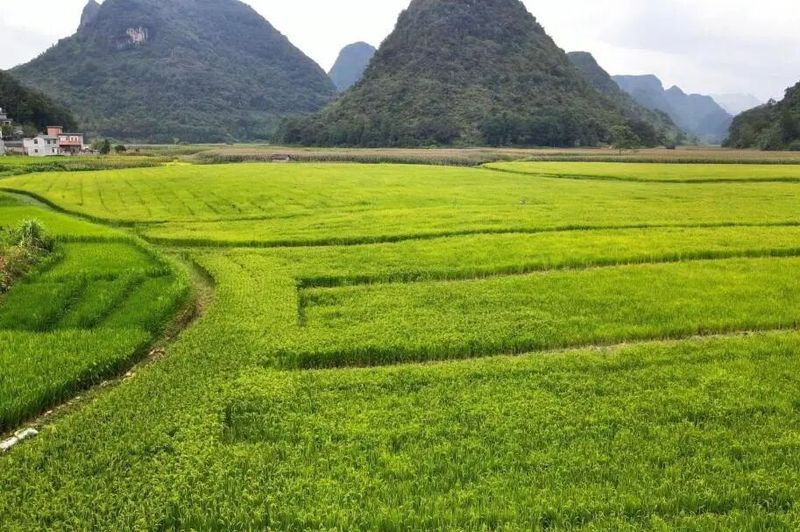
Cross-regional scientific and technological collaboration has enabled shanghai's frontier agricultural research to take root in the yunnan plateau and optimize it, continuously expanding its food-growing space and truly implementing its “food for land and technology” strategy. After several years of demonstration and steady expansion, shanghai water-saving and drought-resistant rice has developed across the globe in yunnan, with a cumulative area of 150,000 acres since 2020, with significant success in demonstration areas. In the rockstone county of red river state, nearly 3,000 acres of rice vegetables are used as dry-cropping demonstration tablets that are balanced and produce high yields; the final, genre, etc., promotion of the tree-fruit stock model, with rice acre stabilization exceeding 400 kg; and the ropingfield demonstration field, which is based on excellent drought-resistant, roll-back-resistant performance, provides a high-quality model for rice growing in the mountainous drylands, greatly boosting farmers ' confidence in planting。
As a next step, the two sides will continue to deepen their collaboration in normal scientific research, focusing on key areas such as joint breeding of varieties, core technology integration and the optimization of planting patterns, expanding the coverage of water-saving and drought-resistant rice cultivation in the yunnan highlands, deepening the potential for dryland food production, and continuing to build the foundation and pool efforts for national food security。
Text: chen jie









