


The secret of the technology of the grand peaks grapes
Zhang rachel
In 1959, when japan introduced the `big peaks' grapes into the country, the fruits were rich in a variety of nutrients, such as calcium, phosphorus and potassium, and amino acids needed in humans, which are good green fruit products, and which are highly resistant to disease and cold and highly adaptable to the environment, they are widely grown throughout the country as the main plant species that are popular to fruit farmers. As of 2021, the `big peak' represented 23 per cent of the country's fruit market, making it one of the country's most dominant grape varieties. With the popularization of the greenhouses shed, the greenhouses' “tops” grape cultivation, which can be artificially controlled by light, temperature, moisture, etc., and which can both lead to early or delayed ripening of grapes and withstand the adverse effects of natural disasters, has led to a significant increase in the efficiency of grape cultivation, which has gradually become a good project for rural poverty alleviation and prosperity, and has played an important role in restructuring agricultural farming structures and in promoting a comprehensive rural revitalization strategy。
In recent years, however, new varieties of grapes have surfaced, such as sunshine rose, sunshine rose, sunshine dark, sapphire, and others, which have squeezed the market share of the grapes of the great peaks, together with the blind focus of more farmers on production during the planting of the grapes of the great peaks, and the neglect of the increase in the quality of the grapes, which has led to a persistent decline in the cavity of the grapes and a shrinking area. The techniques used to grow grapes are more complex and can be characterized by low yields and severe losses. It is therefore particularly important to implement high-quality and productive cultivation techniques to improve the production and quality of grapes。
1 great peaks grape biology
Grapes, which are one of the main plant varieties in grape production, are of japanese origin and are bred by a hybrid between the mother and his father, bensenti. They are adaptable, disease-resistant, cold-resistant and fertile water; they are large and large, with an average of 400 to 600 g of ears and an average of about 12 g of grain; and they mature in late august, when they mature in purple and black, with thick skins, more powdered fruit, softer meat, sweeter, more juicy, smelling of strawberry, skin, meat and seeds。
2 high-quality production techniques for `big peaks' of grapes
2. 1 construction
First, the land is selected as a planting ground with a flat and open terrain, easy irrigation and drainage, a deep, thin layer of soil and less sunlight, with sandy soils with a ph value of 6. 5 to 7. Second, it digs 40 cm deep and 30 cm wide, with a range of 1. 5 m x 2. 5 to 3 m, and plant capacity is in the range of 150 666 m 2. Thirdly, the roof of the shed, which is in a circular arc, is 3. 5 m high, the roof is 5. 5 m wide, the shoulder of the shed is 1. 8 m high, with pillars in its middle and plastic membranes selected for polyethylene-free thin membrane material, which not only facilitates the ventilation of the shed, but also prevents the burning of young children by the strong summer sun. Finally, in order to improve soil physico-chemical properties and increase soil fertility, 667 m 2 gardens have been applied to fully decomposed organic fertilizers of 3000 kg and 100kg per phosphate。
2. 2 slim selection
2 years old, tall, more than 1. 5 m, strong, well-developed, full-eyed, disease-free, well-rehabilitated matrimony. The seedlings, which are grown as seedlings, should be subject to strict phytosanitary requirements before they can be used. Only the selection of high-quality seedlings will make it possible to move quickly into the poignant season and achieve the goal of early ripening。
2. 3 tree cultivation
Each three to four months, the selected tree is immersed 2d in water and is treated with thiomers for root treatment, which acts as disinfection. The tree is then placed in a pre-drilled planting den, the side roots are fully stretched, the roots are avoided, the soil is filled in half, the tree is lightened upwards, the soil is refilled in small earth piles, the tree basin is repaired and the root water is filled。
2. 4 cultivation management
2. 4. 1 cropping. In order to prevent soil sheeting and weeding, weeding should be done in a timely manner, using artificial weeding and avoiding the use of chemical herbicides, which can easily be absorbed by the root of the grape, resulting in chronic poisoning of the plant。
2. 4. 2 construction of a “v” frame. First, the front and the back wall of the shed, each at a distance of 2 m above the ground, along the extended direction of the greenhouse, welded 1 steel pipe with an outer diameter of 15 cm. Second, each grape plant is upper, pulls 2 3 mm wires in diameter and is attached to a steel pipe, and between 2 parallel wires, a 100cm rope is tied, with a "v" shape in the middle of the rope. The construction of a “v” frame will enable the planting of branches to be evenly distributed and non-duplicative, both in terms of reducing the occurrence of pests and pests and in terms of the natural colouring of grapes, for the purpose of early formation, early outcome and early production。
2. 4. 3 orthopaedic trim. Grapes are produced mostly in sector and dragon-dry 2 plastics, while `big-peaks' grapes are formed in sector, i. E. No-dry, polycorros. When new chickens grow up to 25 cm, three to four branches are produced on each of the main chickens, cutting off all ill and weak branches; and when new chickens grow up to 35 cm, the strains are tied to chickens in order to adjust the angle of the chickens to make them more productive. Since the `big-peak' grapes are four times the size of the species and are prone to falling fruit in the process of growing up, in order to control new growth, avoid falling fruit and increase the rate of outcome, it is necessary to take care of the chicken before the result. Before the plant blooms, three to four d of the main floors are taken to the centre, and the work is divided between two and three times, with all the steps below the ear of the fruit, leaving one to three leaves above the ear of the fruit, so that more nutrients can be transported to the flowerer section, and, at the same time, some of the bouquets are properly ploughed, one quarter at the end of the line, and the nutrients concentrated in the provision of fruit grains. One month after the graft, in order to prevent the loss of nutrients, it is necessary to trim the old leaves and rolls of the resulting branches in time。
2. 4. 4 light, humidity management. (1) light control. The `big peak' grapes belong to the species of radiant trees, and the long periods of light have an important impact on the growth and development of plants and on the production and variety of fruit, requiring that the light in the shed be not less than 7h per day. If there is sufficient light, which can lead to a full separation of the buds, it can help to increase the sugar content of the fruit; if there is insufficient light, the new stalks are not well developed, the winter sprouts are poorly divided, resulting in small grapefruits and poor colour, it can seriously reduce the quality of the fruit. It needs to be noted, however, that when the summer light is too strong, sunnets should be built to prevent the burning of fruit. (2) temperature control. When temperature in the shed is higher than 30°c, grapes grow and burn easily to the seedlings; when temperature in the shed is lower than -8°c, the seedlings of the grapes are frozen, causing the blades to wrinkle, curl and fall down. Therefore, the rational regulation of temperature moisture during grape growth is essential, while the requirements for environmental moisture vary at different stages of growth. The temperature is maintained at 26°c during the period of seedlings and at no less than 15°c during the night, at 28°c during the period before and after the flowering period, at 20°c during the night, especially during the flowering period, at no less than 25°c during the night, and at no less than 15°c during the period of fruit expansion. (3) humidity control. Air moisture in the shed remains at 60 to 80 per cent, and attention is drawn to the fact that when spring temperatures start to rise, plants grow and are prone to pests and diseases in high-temperature and high-humid environments, ventilation in the shed should be increased during noon hours and indoor air moisture should be reduced rapidly。
2. 4. 5 fertilizer management. (1) watering. `big peaks' of grape-sweet environments should be watered in a timely manner in accordance with soil conditions, especially before seedlings are fertilized, before flowers are blooming, during periods of fruit expansion, to prevent intermittent droughts from affecting normal plant results. The irrigation is carried out in a small-water permutation manner, where conditions exist, with the installation of integrated water fertilizer smart irrigation systems, and with the installation of sensors for real-time monitoring of parameters such as soil moisture, temperature, light intensity, etc., based on these data. (2) following fat. There is a high demand for nutrients during the growth of `big peaks' grapes, requiring multiple pursuits, mainly organic and compound fertilizer. In order to ensure a good fertilization, the following year's spring (early march) following the planting of the fertilizers was used mainly in the form of leaf fertilization, following the pursuit of composite fertilizers 300kg/hm 2, urea 80 ~ 100 kg/hm 2; urea 200kg/hm 2 at the beginning of june; july bottom fertilisation 300kg/hm 2, potassium sulphuric acid 350 kg/hm 2; and organic fertilizer 15t/hm 2, phosphorus 700 ~ 750 kg/hm 2 at the end of september the following year。
2. 4. 6 pest management. During the growth of the `big peaks' grapes, which are vulnerable to frosting, pollinosis, red spiders and ostrich horses, targeted and integrated interventions should be based on a full understanding of the biological characteristics and patterns of pests。
(1) gravity. It is a fungal disease, one of the most common in the growth of `big peaks' grapes, and it is a worldwide disease of grapes, most of which occurs during the monsoon season, which accelerates the spread of disease at low temperatures and high humidity. Its main function is to have a bad leaf, which in the early stages of the onset of the disease is characterized by light yellow water stains, which, as the disease deepens, spread into irregular or polygons and turn into brown. When the disease is serious, the entire leaf is covered with white frosted layers (see figure 1), resulting in the early fall of the leaf and the deterioration of the tree, leading to a decrease in the yield and quality of the fruit。
Prevention and control measures: regular observation of temperature and humidity in the shed, timely ventilation and wetting in case of greater humidity in the shed, prevention of frostic fungus; normal gardening, timely removal of dead leaves and concentration of burning; timely removal of leaves at the beginning of the disease, spraying of 31 per cent of the oxen fluoride suspension 1,500 times the fluid, 68. 75 per cent of the fluoride frostilose suspension, 1,500 times the liquid, 72 per cent of the acetyl acetamide acetensyl, 800 times the liquid, substitution, prevention and control of more than 90 per cent of the damage and spread of frostic disease。
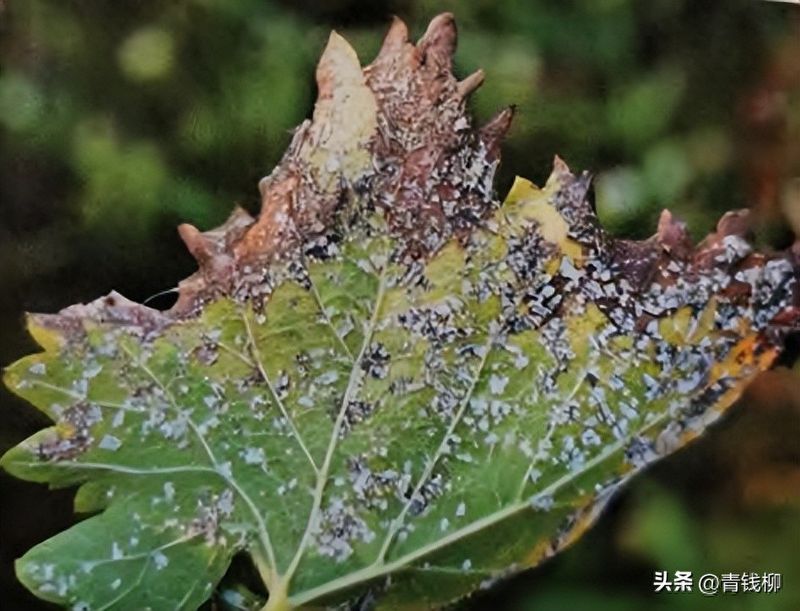
Figure 1
(2) grape powder. The main attacks are on the leaves, fresh swigs, fruit ears, high temperature and humidity, and diseases when space is closed. When the disease is severe, the whole leaf is covered with white powder, the face of the leaf is brown and even the whole leaf is dried up; the effects of the injury to the fruit are covered with white powder (see figure 2) and result in the death of the skin cell, the cessation of growth of the fruit, or deformation, acid, cracking and decaying of the disease。
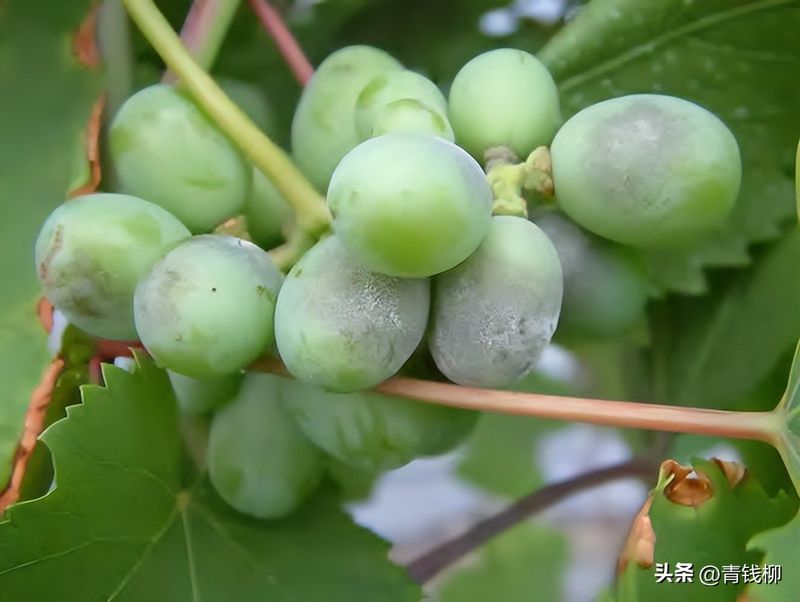
Figure 2 grape powder disease
Control measures: during winter and summer trims, care is taken to collect disease branches, leaves, fruit, and concentrate on burning or deep burial; during the rainy season, attention is paid to drainage and flooding, to increasing potassium fertilizer, to increasing the strength of the tree and to increasing the resilience; during growth, toxories, chickens, by removing bystanders, to improve ventilation and to reduce the occurrence of diseases; in the early stages of the disease, 0. 2° ~ 0. 3° be sulfide, 70% metobuzin humid powder is sprayed with 1,000 times fluid, used alternately, and sprayed once every 10d, two to three times。
(3) red spider. Red spiders have a strong breeding capacity of 10 to 20 generations a year, and larvae and insects tend to be ferocious, leafy, ointments, ears and bystanders. After the fall of the young, there was a flash of black and brown spots on the surface; after the fall of the leaves, the leaves were lost green and yellowed so that they fell; after the fall of the fruit, the oaks and axes were easily broken; after the fall of the fruit, the face was rusty and the skin was rough (see figure 3). The occurrence of red spiders is closely related to the temperature and humidity, and the high temperature and humidity are vulnerable to red spiders, so july-august is the peak。
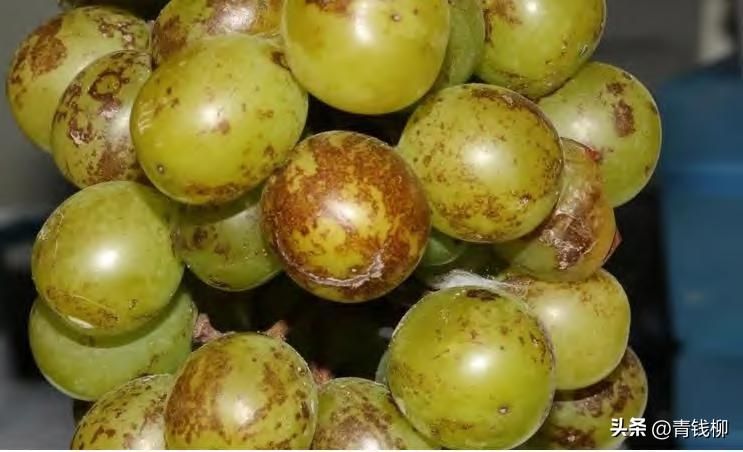
Figure 3
Prevention and control measures: strengthening of park management, timely removal of sick strains and leaves and centralized destruction; removal of old tree skins during winter and elimination of winter insects; spraying of 3° be thiomers during raisins, which can effectively prevent the emergence of red grape spiders; and the spraying of 1. 8% of ave cream in july-august, 2000 times or 15% of mites emulsions, 2000 times fluid for prevention。
(4) the horse. It is widely distributed in the country's grape-producing areas, and in recent years there has been a growing trend towards `big peaks' of grapes. It is mainly if the insects and the adult insects use sorbent mouths, sorbents of larvae, leaves and fresh skin cells, loss of water in the affected areas, drying up, creating black spots, affecting the appearance of the fruit grains (see figure 4) and causing fissures in severe cases, which reduce the value of the fruit commodity. The sarcophagus breeds in warm, dry and poorly ventilated environments and is more adaptable to high temperature and low humidity。
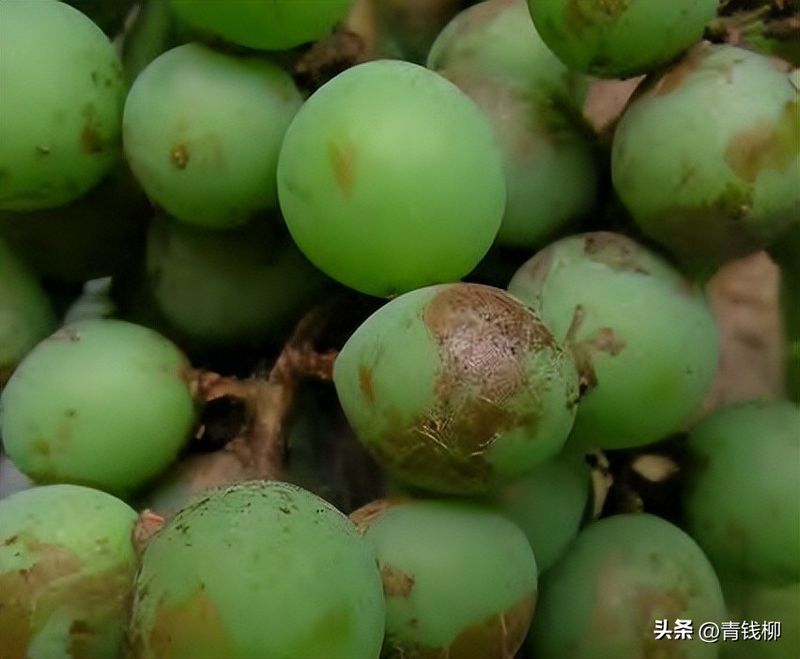
Figure four
Prevention and control measures: rationalization of planting density, improvement of air circulation and light conditions in the sheds and enhancement of plant growth; removal of weeds and fallows in winter and spring to reduce the breeding and reproduction of the sorghums; sorghum's preference to live on red objects, which can be lured to insects with red stickers, which are good and ecologically and environmentally friendly and warrant intensive application; adequate release of natural enemies such as aphids and bees, which can effectively reduce the base number of insects; pests that can be sprayed with 2500 times more vermin and 40 per cent more vermin。
2. 5 timely collection
In general, `big peak' grapes mature in the autumn and may vary in timing depending on the planting environment. When grapes are purple and black and the fruit is full, the timing shall be chosen in the morning and evening hours。









