


Analysis of technical management measures for major production periods of large-scale grapes
Yeung wenli waits
Grapes, with their sour and sweet tastes and rich nutritional values, are popular and growing in scale. In contrast to field cultivation, the production of large-scale grapes has been effective in avoiding adverse weather and adverse weather effects, with many advantages such as low incidence of pests, safety and quality, excellent tastes, higher commerciality, anti-season production, earlier listing, high yield, higher prices and better efficiency, and has become a new option for the development of large numbers of fruit-farmers, which have grown rapidly in recent years, with large numbers of growers urgently needing technical measures to manage the production of large-scale grapes。
1 rest period
1. 1 winter cut
Usually after leaves fall, 15 days before the shack ends. When triming, care is taken that the tree is light, the thick branch is long, the tree is weak, the thin branch is short and the side branch is only partially short. Mainly in the middle, it combines long and short, with a mix of trimmed and a reasonable mix. The horizontal chicken leaves 10-20 centimetres on a side branch with short cuts of 3-4 buds. After cutting, 8 ~10 / strains are retained, with the result being 0. 7 ~ 0. 9 cm thick for the parent branch and 8 ~10 / strains for the branch and 3 ~6 / branch。
1. 2 frozen-freezing of clean gardens
Before the shacks are lifted, the dead nuts, falling leaves, weeds and old barks and other residues from the gardens are centrally cleaned and taken out for deep burial or destruction outside the garden; the anti-frozen measures should be accompanied by the spraying of thiomers (figure 1) throughout the park, the spraying of potassium phosphate on the leaves, and the covering of plastic sheeting and grasshoppers in front of the huts, with the minimum temperature of the horticultural cover at 7-8°c。
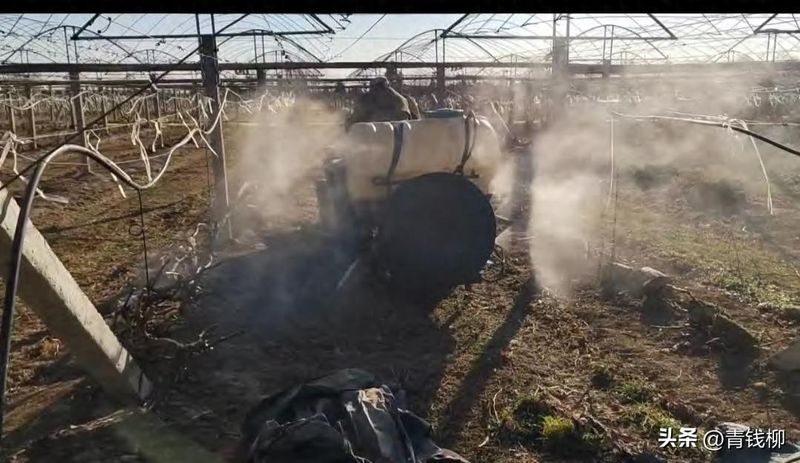
Figure 1
1. 3 fertilizing water
Fertilizers are performed mainly on nitrogen fertilizers such as urea or compound fertilizers, in amounts ranging from 15 to 20 kg/acre, with a period of approximately 15 days before the onset of the fertilization followed by a small amount of phosphorus fertilizer, which is applied primarily on a quick-effect basis. Before the membrane, the membrane water is poured in a timely manner, including through micro-jet and drip irrigation, with enough sprouts in the first 7 to 10 days, during which time the humidity of the shed requires control of 60 to 70 per cent。
1. 4 duplicate breakdown
The membrane cover is filled with sufficient water, depending on weather conditions. As a rule, the period of covering the membrane and shantytown is between the end of january and the beginning of february, with the single layer covering the second half of january and the double layer covering the second half of december to the first half of the following year. Special attention is given to 10-15 days after the end of the truncation of the inner membrane, which is relatively better permeable and warmer and more conducive to the growth of buds and branches. In addition, 20 per cent of lime nitrogen can be used for sprung-out sleep, with tangible results。
1. 5 temperature sprouts
During the natural hibernation period between late january and mid-february, the temperature should increase slowly, seven days after the semen, 13-20 °c during the day and 5-12 °c during the night; 8-14 ~20 °c during the day, 7-10 °c during the night; and 15-21 ~28 °c during the day and 10 °c at night。
2 premature
2. 1 disease control
Cut the dry branches and remove the leaves, and spray the aphids to fight the horse. In mid-march or at the time of the greening of the velvet ball, the garden was evenly sprayed with a single 3 to 5-peripherous thiomer to combat white powder and fur disease. In the case of black pox, green blind, etc., the treatment can be administered in the 2-3 leaf range, e. G., e. G., e. G., e. G., e. G., e. G., e. G., e. G., e. G., e. G., e. G., e. G., e. G., e. G., e. G., e., e. G., e., e. G., e. G., e. G., e., e. G., e. G., e. G., e., e. G., e., e. G., e., e., e., e. G., e., e., e., e., e. G., e., e., e., e., e., e. G., e., e., e., e., e., e., e. G., e., e., e., e., e., e., e.。
2. 2 control temperature
In february, the raisins of the sheds were generally sprouted, and it was confirmed that during this period the raisins were at 15-25°c during the daytime, that it was more appropriate to stay at 10-13°c at night, that the raisins were cooled at 30°c in a timely manner, that measures were taken to lift the top of the cape, and that, if necessary, the surrounding raisins were ventilated, and that the raisins were warmed at 3 p. M. In general, it's 12 °c, 15 ~ 20 days of new germination。
2. 3 following manure and wetting
Increased urea of 1-2 times with application of 25 ~ 50 g/bar, or choice of 0. 2% urea solution for leaf spray. Combining fertilisation with a garden full of one budding water, after which the water should be draught in accordance with the soil, with a humidity of 70 ~ 80 %。
2. 4 buffering fixed
It's a sprouts that are born on the top of the parent branch of the result, an inoperable sprouts, and a sprouts and a weak sprouts. Except; first sprout with an eye of 2 ~ 3 cm long, second sprout with a bud of 10 ~ 15 cm long, with only one sprout selected. A parent branch leaves a distance of 25 to 5 sprouts, with a distance of 15 to 20 centimetres。
3 newborn long term
3. 1 upholstery
When the grape sprouts grow to 20 to 40 centimetres, it begins to be tied to chickens in batches, which cannot be too tight, leaving room for thickness, removing the sprouts and removing the new sprouts from the fig. For the new results with the ears, in a longer and better condition, the five to eight leaves are taken to the heart, which is 70% of the main ten。
3. 2 subtraction
With the exception of the two extensions sent after the top heart is retained, all the sub-stalks below the fruit ears are removed and the three to four leaves are left to extend the two tops to repeat the bystands. 1 only 1 leaf, with no ear on the weak, 8-10 leaf on each ear, 8-10 leaf on the shelf at 8-10 feet/m2 and 8-10 leaf on the pretense。
3. 3 leather control
When new steps appear in clear sequence, they are cut off from branches, small branches and overt branches. Or spray 20% of the booster before the flower, with a reasonable distance of 20 cm, i. E. A new amount of 2000~2,500 acres, and keep production within 1,500~2000 kg/acres。
3. 4 control temperature
The horticultural membrane cover is completed when new growth reaches 2 cm. An extreme weather or a large shed with poor heating capacity can maintain suitable night temperature by covering the multi-layered membranes, at 22 ~ 28 °c during the day and at 15 ~ 18 °c at night。
3. 5 fertilizing water
Upon new growth, soil moisture is maintained at 60% ~ 65% and air moisture at 60% ~ 70%. (c) exogenous fat pursuits based on longness, followed by a combination of 15-20 kg/acre of potassium nitrogen phosphorus when underweight and growing poor。
4 flower period
4. 1 fertilizer control of water
In the first 10 days or so, in order to increase the seating rate, the leaf is sprayed with 0. 2% boron solution, with appropriate increase in phosphorus fertilization. In general, flowering periods do not water and control relative humidity is 50 ~ 60%, so as not to cause flowering and other stunting。
4. 2 controlling temperature
Note that during the flowering season the temperature of the shed is controlled at 25-30°c and at 17-20°c at night, and if the temperature of the shed is too high, it must be cooled in time. In case of low-temperature attacks, heat-enhancement measures such as closed huts, extra-trucking cotton, smoke smoke in the sheds can be used to ensure that the normal growth of the chickens and flowering fruit are not affected。
4. 3 plumbing
Over-shoring, as well as dichotomy and stunting, tends to grow to 7-10 cm. Five to seven days before and after the flowering, the shoulder is removed and the first and second bee is cut, only 2/3 to 3/4 ears are preserved (figure 2), with 10 to 12 small ears per ear, ensuring that the sacrosanct length is 4. 5 to 5. 5 centimetres, the symmetry and the same size。
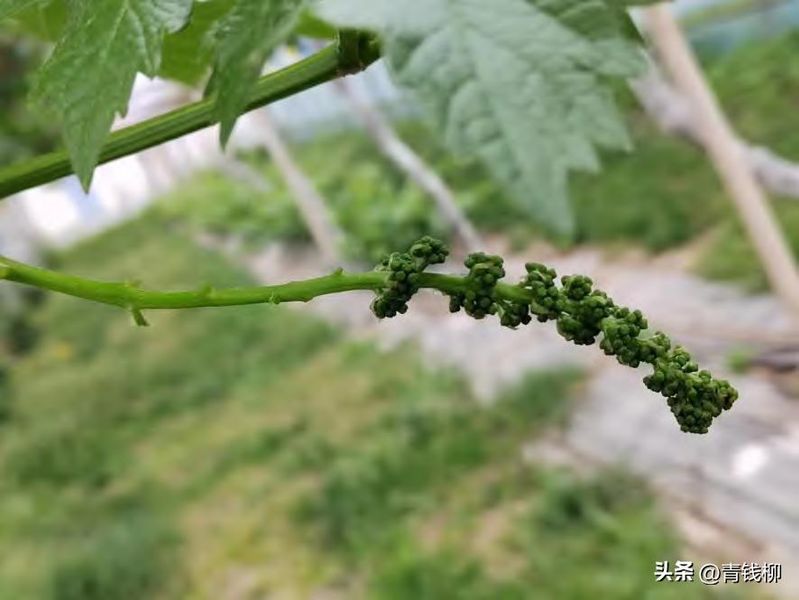
Figure 2
4. 4 plumbing fruit
After the flowering day 1-3, it is chosen to be a porcelain or phenol, or a porcupine by soaking or evening the oak. When flowers are not properly flowered, batch processing。
4. 5 disease control
Pre-flower spraying of manganese zinc, high-efficiency chlorocypermethrin, bacterial cleanup, etc., to combat pests such as axle brownness, black pox disease, parrot and red spider。
5 early childhood
5. 1 zorie control
The twigs are performed in two stages as early as possible, five to seven days after the flowering has ended, and the first twig begins after stable sitting fruit, before the end of the hard core period, and the second twig takes place after the expansion. The focus is on the oscillation of small and sick fruit, resulting in low-level and poorly developed ears. In production, large grain varieties leave 35 ~ 45 pecks, medium varieties leave 55 ~ 65 nicks, small varieties leave 65 ~ 85 pecks, ensuring good quality of production (figure 3)。
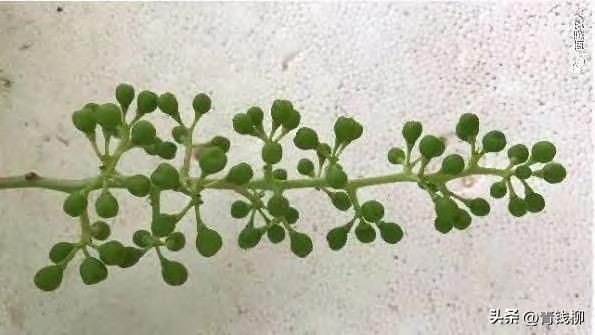
Figure 3
5. 2 fertilizing water
After the fruit, follow up on the potassium fertilizer of nitrous phosphorus 30-40 kg/acre, and after the fruit, pour one large water in time。
5. 3 disease control
Aluminium ethyl phosphorus, methyl tobuzin, etc. Were sprayed 1 to 2 times, with an interval of 15 to 30 days, to combat dust and frost, etc。
6 period of berries expansion
6. 1 detachment control
The temperature outside the shed is stable at 18°c to remove the four surrounding membranes, the external temperature rises to 25~26°c to evacuate the sheds, and the temperature remains at 28~30°c during the day and at 18~22°c during the night, keeping the top membrane to prepare for rain-shield cultivation。
6. 2 fertilizing water
In order to improve the resistance of the plant, increase sugar content, promote better colouring of the fruit, and improve the maturity of the branches, the application of 0. 3% potassium dihydrogen phosphate, usually 3-5 times at intervals of 10-15 days, is often used in production. Combining fertilisation with water swelling by 3-5 times at intervals of 10-15 days and maintaining soil humidity of about 60%, with care to prevent fibrosis due to water scarcity。
6. 3 equation processing
After 10-12 days of the porridge, an expansionary process was chosen using cromic acid or phenol。
6. 4 disease control
When frostic and powdery diseases occur or are likely to occur, they can be treated with methyl tobzines, dyson manganese zinc, alkyl。
7 fruit maturity
7. 1 fragmentation precipitating
In actual production, it can be triggered by e. G. Ethylene application and potassium phosphate solutions, with attention to strict control of the frequency, concentration and use of spraying. If the soil is overwatered during the berries ' growth, or is subject to nitrogen fertilisation, or the adrenaline is too often responsible for the occurrence of fracking fruit, care must be taken to increase control in production。
7. 2 temperature moisture reconciliation
In order to improve colour and soluble solid matter content, the fruits are of better quality, with appropriate temperatures of 28 ~ 32 °c during the day, at 16 ~ 18 °c during the night, with a humidity control of 50 ~ 60 per cent, water for berries at the beginning of their colours 1-2 times, and no water 10 ~ 15 days before harvest。
7. 3 increased application of fertilizers
Potassium nitrous phosphorus combined fertilizers of 20-30 kg/acre were followed up before coloring and fertilized 1-2 times before harvesting, dominated by potassium phosphate。
7. 4 timely collection
When the whole sap reaches the colour and aroma of the species, the meat becomes softer, sweet and juicy, the soluble solids contain 17% thorium, and wood is formed and turned into yellow and tan at the end of the sap。
8 nutrition storage period
8. 1 application of base fat
Focus on balanced fertilization. The application of urea is controlled at 25 ~ 50 g/barrell, with 1 ~ 2 kg/acre。
8. 2 freeze prevention
The berries will be harvested and water will be pumped once. Before the leaves are frozen, enough water is poured through the winter and frozen, pending underwater seepage。
8. 3 disease control
Choosing bordeaux or boll methrin wettable powders to combat froste disease; polybacterium and enzyme to prevent lignoma disease; peptoxol and americium to prevent anthrax and albinosis; tricetone and peptoxol to prevent rust disease; dictide or ester to treat red spiders; and pyrophophos and toxachloride to prevent shellworms。









