


The fragrance of earth is also called white wood and daughter's fragrance. It is an endangered plant that my country has focused on. It has high medicinal value and is widely used in the manufacture of perfume, perfume and soap. Landy wood can also be used in the construction industry and can beams, furniture and carvings. The amount of earth-dwelling aroma has been significantly reduced due to such factors as low natural breeding rates, the susceptibility of seeds to death, pest hazards and overcutting. Currently, the state has made it a secondary priority for plant protection. Let's see, in particular, the technique of artificial planting of saffron seeds, the technique of earth-sample seed transfer。
Seed collection select a strong, strong earth-growing fragrance tree of 10-15 years of age and maturity of fruit, to produce fruit in june-july when the shell breaks automatically. Soiled fragrance seeds should not be stored, the fruits to be harvested should not be piled or tanned, and they should be planted in the cold air. High-quality seeds, full of seed grains and disease-free, are selected and immersed in a mixture of 0. 3 g/kg potassium per manganeseate and 1,000 times dichlorvos for three to five hours, and are dryed with cerium when the seeds swell。
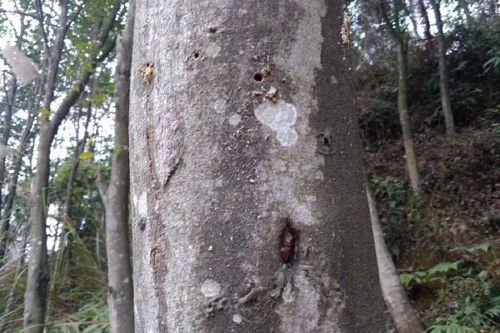
The seeding seed shall be sterilized with 0. 5 g/kg potassium per manganeseate and then made into a 20 cm-high, 1 m wide sandbed with a 75% luminous sunnet. The seed is spread evenly on the sandbed, avoiding overlap, with 500 to 600 grains per square metre and with thin river sand lasting 1 to 1. 5 centimetres. Water is sprayed with thin flowers, 60 per cent of the seed sprouts after 2 to 3 days, and the seeding period is around 30 days。
1. The nursery is ready to select a flat and fertile nursery with two to three days before the seeding, clearing of weeds and spreading of lime. It is made of 15 cm high and 1 m wide, with 80% sunshields built above it. 2. Base-formulation. The seedling matrix is 60 per cent yellow heart soil, 38 per cent burning soil and 2 per cent past calcium phosphate, and the matrix is mixed and filled with nutritional bags and high pockets. Two days before the seeding, the nutrition bag went into the water and was disinfected with 0. 1 g/kg potassium per kilogram potassium per day。
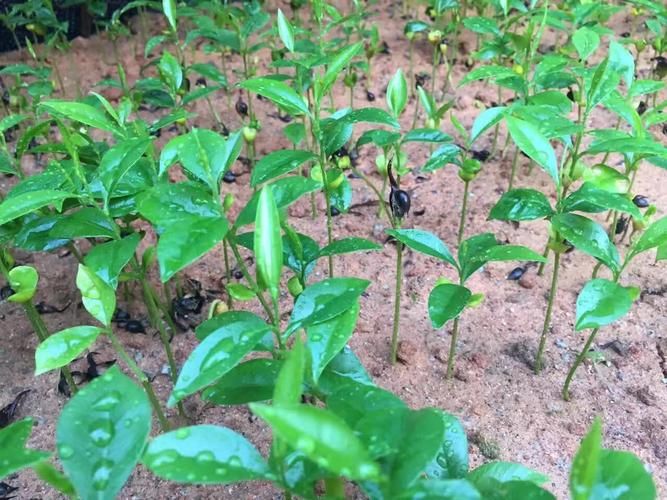
3. A seedling transplant is transposed into a nutrition bag when the leaves of the seedlings become green and grow between 4 and 5 centimetres long and have one to two pairs of real leaves. It is not appropriate to plant too deep, and seed shells should be exposed to the ground and the matrix around the seeds should be compacted with bamboo. Following the transplant, the water is poured into the water and, depending on weather conditions, the water is poured out once in the morning and once in the evening。
4. Post-plant management. Observes daily the dry wetness of the matrix once a day, before 9 a. M. And after 3 p. M. In the case of young children, who are half-crazy and intolerant of the sun, 50 to 60 per cent coverage should be maintained. Weeds in nurseries are removed and pests and diseases are treated in a timely manner. The fragrance of soil should be fertilized in appropriate quantities over the life cycle, in the principles of high nitrogen, low phosphorus and low potassium fat. Reduce nitrogen fertilizer, increase phosphorus and beryllium fertilizer during the period of reprieve, appropriately reduce water irrigation and give priority to pest and disease control; stop fertilization of seedlings in the later stages of their growth, and also control the amount of water going in the shower to promote woody fertilization. After five months of planting, seedlings are available for sale. 5. Pest and pest control: withdrawal of the strain as early as possible at the onset of the disease, rooting with 100-1500 times the dose of 70 per cent digsone and 800 times the dose of more than 50 per cent fungus. Every seven days, two or three times. Anthrax: 80 per cent of all amphibians 600-700 times the dose, or 75 per cent of all amphibians 400-600 times the dose, every 7-10 days, 2-3 times. Yellowfield: winter pine soil, clean-up of dead leaves and weeds, and eradication of winter beaks. During the peaks and larvae of the horde, the larvae were struck with bamboo poles, and the larvae were shaken and destroyed in time. Chemical control is based on 50 per cent dichlorvos cream, or 90 per cent crystal trichlorfon, or 50 per cent of malathion, 1,000 times the liquid canopy and plate, with a mortality rate of 95 per cent for larvae。
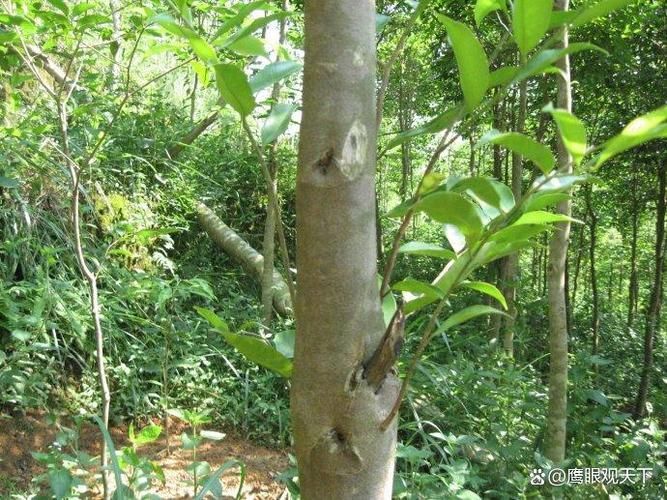
1. The harvesting of seeds during earth-damn cultivation is a very important component, preferably on top of a good aroma tree of more than 10 years, usually at a time when the fruit is most mature in july, and ensures that each seed is of the highest quality of 110 g. During the planting process, the branches are extracted together and then put in a ventilated place for wind drying, so that the sun can be tanned and the consequences break apart and the seeds that fall off are planted in a timely manner, thus increasing the germinate rate of the seeds, generally exceeding 85 per cent. Where exceptional circumstances prevent timely seeding, seeds need to be placed in low ventilation wets for sand storage. Moreover, in order to ensure a gestation rate, seed storage should not exceed one week。
It is advisable to choose between 1,500 and 2,300 mm of annual precipitation and an average temperature of 20 to 24 years, with sandy soil that is flat, fertile, well-drained and decorated. The planting bed is between 15 and 24 cm, the face is between 100 and 110 cm, and the walkway is about 35 cm. Preplanting requires disinfection through a water solution of 500 times potassium permanganate. Seeding is selected by sowing or by radio, and the amount sowed is about 7-9 g/m2. After seed is sowed, seed beds can be covered with straw and some water can then be wetted. A seedling can be transplanted into a container for cultivation when it has already sent two pairs or three pairs of real leaves. To the extent possible, the seedlings are transplanted using tools such as bamboo tags or grafts, and during the transplants, a wooden rod is selected to lead to a den and the seedlings are then planted into a nutrition bag, while the soil is compacted with bamboo tags and water is sufficient. The soil must remain humid after the transplantation of seedlings, with timely drainage and waterproofing and regular weeding. When the growth of the seedlings is relatively stable, timely fertilization is required, preferably with a urea solution at a rate of 1,500, which is guaranteed once a month, and care not to be applied in a high temperature environment. Finally, when the height reaches 30 cm, it can be moved out of the nursery for planting。









