


A variety of vegetable farmers have a deep-rooted breeding fault zone: they grow garlic from year to year, and feel less and less。
The reality, however, is that the age-old garlic can only degrade the species year by year. The smaller the garlic is, the more the garlic is, the more the garlic is, the more empty petals are, the more the resistance to pests and diseases is, the more the year is running, the less the year produced。
At this critical stage in the preparation of garlic for the fall and winter, many farmers are crouching in their gardenes to pick their own garlic, repeating their old routines and experiencing a decline in production. To tell the truth, 90 per cent of the bulky vegetables are planted in the old tradition of “year-old garlic petals” and become more degraded and less productive。
An old farmer who really knows how to grow without a common garlic petal, who has been replanted with three years of growth, who spends no year on new garlic and who can reverse the degradation of the varieties, who have grown large, porcelain, resistant to the cold, and have doubled their productivity。
Old guo (alias) is an old farmer with three or five acres of open garlic in his family, and has followed the old method of harvesting and re-planting herbs after harvest。
For four or five consecutive years, the problem has become more serious: there is a shortage of garlic, a high incidence of disease, a high incidence of dry yellow leaves, a particularly high percentage of garlic at harvest, a single-headed garlic, and a much lower total acre production each year。
At first, guo thought it was a problem of fertilization, water and soil, and repeated changes in management of water fertilizers and the replacement of plantations, which cost a lot of agricultural resources, have not improved。
Looks at the mixed, weak, deformed garlic in the field, guo's heart is full, he's been busy for a year, and he's lost his harvest。
Then i learned from local garlic masters, and i realized that. Where are the roots: the carp is year by year, it is non-sexual, it accumulates every year, and the varieties will only continue to deteriorate, and the better。
Since the beginning of last year, guo has completely abandoned garlic petals and replaced it with a three-year recycled breeding system. In just one year, garlic has become more visible and more resistant to disease and has completely overcome the challenges of the degradation of varieties。
To be honest, the biggest waste of vegetable farmers is not so much fertilizer and water, but sowing over and over again every year with degraded garlic, consuming energy and delaying production。
Most of the diasporas in the network know nothing more than simple availability of garlic petals, but do not know that this is the core cause of reduced garlic production and poor quality. The common garlic petals carry mother-to-child residual bacteria, viruses that are kept for years, pests and pests are added to each generation, and the variety activity continues to decrease, resulting in a chain of weakness, small fruit, reduced production and poor quality。
The old saying is that, in rural areas, food is grown in the first place, in the second half, and in the second half of the year。
Garlic's desire for steady annual production and high annual production is not at all due to the fineness of late-stage management of water fertilizers, but to its core is to be pure and healthy. For example, in rural areas, free, efficient and best-suited garlic varieties are used to regenerate。
Compared to the four-season differences in care, one can see: the early and early decline in the availability of garlic for planting in the spring, the insatiable heat of the summer, the extremely poor response to the cold in the winter, and only the replanting of the seeds by the air in the autumn, which is the most active, adaptable and suitable for four seasons of the year。
A lot of new farmers have been wondering: what's an aura? Why does it reverse garlic degradation
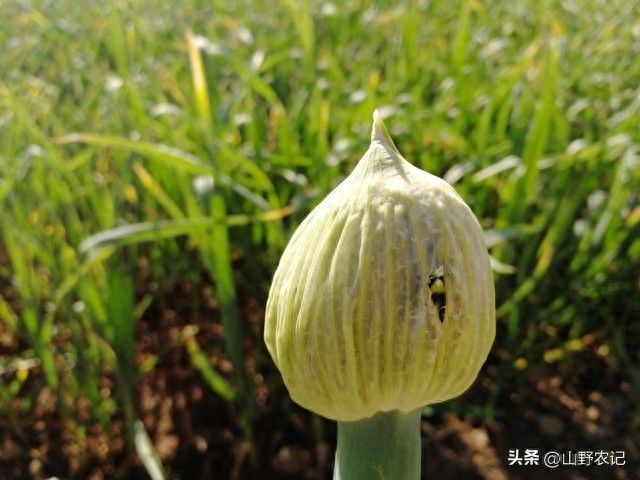
And when it matures, the small particles of garlic from the flowers at the top of the garlic are the plumes of air, called garlic and garlic. Unlike the underground garlic petals, the aerobic rods are a source of sexual reproduction of garlic, their own detoxification and rejuvenation properties, the absence of mother-to-child accumulation viruses, their highly active and resistant nature and their natural quality garlic。
The common underground garlic can only be degraded for years, and the three-year rotation of the acreage can keep the garlic species in good shape and produce more and more。
I. Four major degraded pits (high-frequency vegetation of vegetable gardens) from which the garlic is grown every year
1. The accumulation of viruses is severe: underground garlic petals absorb soil, mother disease virus, seeded from year to year, and intergenerational strains of the fungus lead to weak, weak resistance and a high susceptibility to flate and root diseases。
2. The amount of garlic is decreasing from year to year: there is a steady decline in the activity of varieties, a lack of nutrients, dry garlic harvests, small petals, deformities and extremely poor commodities。
3. Uneven seedlings: the rate of seeding of degraded garlic is unstable, the field is growing at a high and low level, the number of weak and small, and the decline in production is severe。
4. Distressed resilience: indulging in cold winters and winters in the autumn and winters, and drought in the spring, with a slight exposure to extreme weather conditions, widespread yellow leaf death。
This is why many farmers, the same plots, the same water fattening, others, with their garlic acres full of jacks, small and messy, grow their own garlic, and the core gap is whether or not it is growing again。
Ii. Core exercise in autumn and winter preparation: 3 years of complete recovery process
The complete technology, with zero cost and zero base, could be replicated without the need to purchase new garlic varieties, with a three-year cycle that would permanently address the degradation of garlic and would be suitable for all open fields and vegetable gardens in the autumn。
First year: autumn seeding, sowing sole garlic
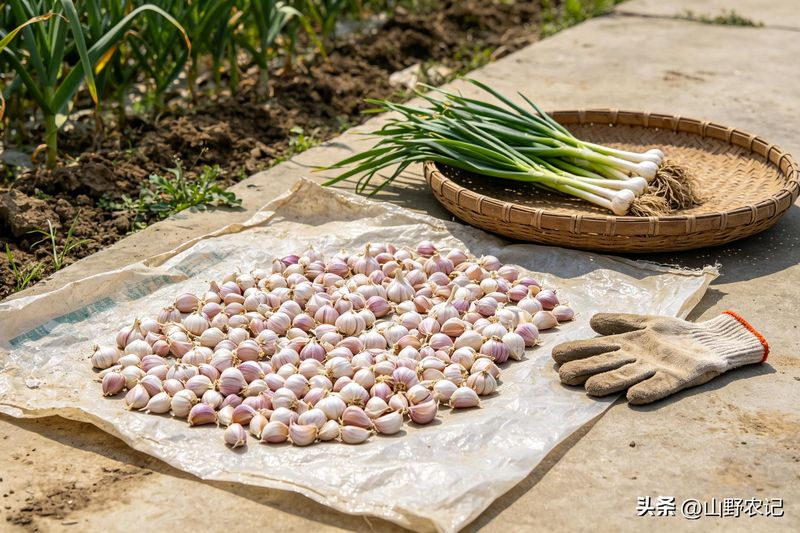
Every summer, when the garlic matures and the garlic ages, it picks strong, disease-free and high-powered garlic, and squirts down the top full of aerobic rods。
The small particles of dryness, mold and decay are removed, the sized and full of round garlic is selected, and naturally dry in the cold of the ventilation, and the sun and humid piles are strictly prohibited to avoid the decay of garlic。
In the autumn, the land is ready for planting, with the choice of fertile, lax and well-drained seedlings, sowing the dry air plumes evenly, covering the land about 1. 5 centimetres and maintaining the soil wetting out。
The first round of complete detoxification and full recovery of seed activity, all of which had been cultivated in that year, appeared to have no petals, was a quality seed for the second year of breeding。
The second year: autumn will plant a monolithic garlic and grow it back together
The first year of harvesting is a healthy monolithic, properly ventilated storage, freezing against tides and normal planting in the autumn。
When planted, the control is reasonably distanced from the line, normally watered for fattening, insecticide-proofing, growing over the course of a year, the monolithic grafts are naturally split, and the four-polved cortex is grown。
This batch of garlic, which has been re-established twice, is completely detoxified, has a stable variety of species, is full and robust and has no degenerative malformations and can be retained as a source of quality。
The third year: the production of re-emergenced garlic fields, with four seasons of cycling
The next year's harvest is a high-yield, high-quality field garlic。
The fall was directly used to sow large areas of garlic, with large amounts of garlic, flat petals, anti-cool resistance, stable yields, and much more commercial than the degraded garlic that was left for years。
Three years of complete cycle, with field production in volume, continued to retain the aerobic saps of a robust plant, re-emerging year after year, without paying for garlic and permanently eliminating the degradation of varieties。
Iii. High frequency error zones in agricultural households (distorted effects)
1. Garlic harvesting is premature: garlic is harvested before it is fully aging, it is premature, has low activity, has poor seed rate, and directly reduces its recovery。
2. New and old hybrids: hybrids of regenerative and degenerated garlic, susceptible to cross-infection, directly offset by a rejuvenation advantage。
3. Non-replacement over the years: there will still be minor degradation of the aerobic rods, which will have to rotate over three years and grow over a long period without new garlic。
4. Inadequate storage patterns: autumn fluency, freezing, suffocation, resulting in lower gerontology and poor resistance of seedlings。
Iv. Key points for the rehabilitation of farming in autumn and winter
The current preparation period for the planting of garlic in the autumn and winter is the best time to update the sources and improve varieties。
It is not necessary to buy garlic on the market at high prices, but rather to choose a strong plant in their own fields, to take gas and squirts and grow themselves, to make them more suitable for the local soil climate, and to live and produce well above the foreign garlic。
The rejuvenated garlic, not only is well-bred and strong, but its resilience to winter and spring has increased dramatically, and its subsequent growth has been rapid and even, whether for food or for sale。
Many farmers do not know the way through it, and they are replanting degraded garlic every year, feeding fertilizer, labour and pesticides, with no final production, low quality, and a year's lost earnings。
In fact, growing vegetables is never the technique of fertilizing, working with drugs, choosing to grow and being strong, which is the lowest cost and the highest return。
The three-year re-emergence process, which looks at the length of the cycle, benefits from a single breeding and year-to-year gain. The problem of the degradation of garlic varieties and the annual decline in production is a recipe-based technique that is transmitted to the generations of old farmers。
Many young vegetable farmers are now trying to save themselves from old-age practices, with the last year of the pit being cut off. Those who really grow vegetables are three years ahead of schedule and re-emerging, making it easy for garlic to produce more productive years。
Autumn and winter garlic preparation has begun. Do you still keep garlic in your family? Has there been any degradation of garlic growing smaller and deformed









