


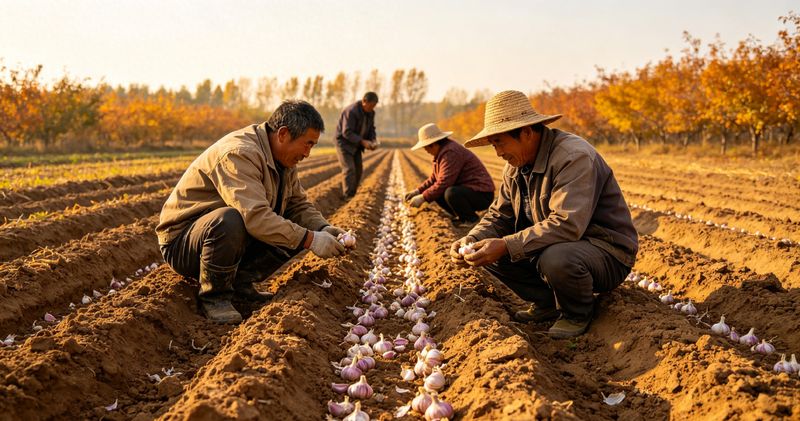
In the fall of the year, our garlic farmers are so busy with the ground, picking the garlic and planting it down, but many people are growing the garlic, either out of thin, out of rotten roots, or out of small late years of garlic production, working hard for half a year, and making the harvest less than desirable. Many blame the problem for bad garlic and insufficient fertilizer, while neglecting one of the most basic and neglected key points — planting time。
Many old farmers are used to growing garlic when the afternoon is cold and other work is done, feeling low temperatures and not sunburning and working comfortably. In practice, however, the timing of the planting of garlic in the autumn is directly related to the yield and quality of seedlings, rooting patterns and even garlic in the coming year. I've been growing garlic for many years, and i've been telling people that it's all real-eating experience, and i've been doing it like this。
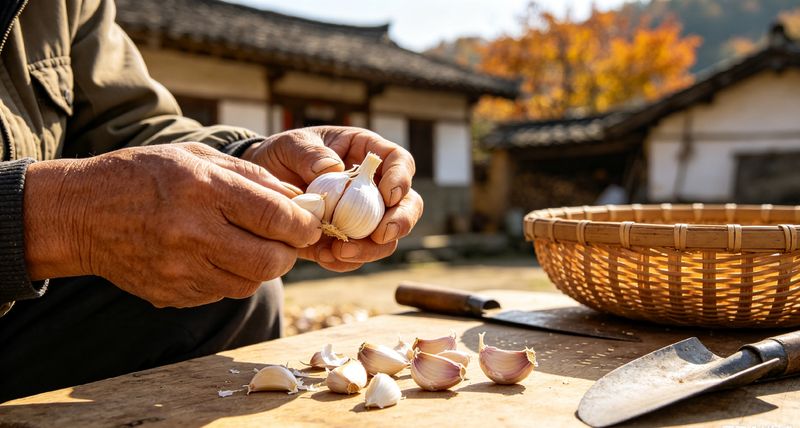
I. Why don't you suggest we grow garlic in the afternoon? Most farmers stepped on the wrong spot
Many think of course that the afternoon temperatures are back, the soil is low, garlic is not easily tanned and garlic is not easily lost. In the field, however, the disadvantages of planting in the afternoon are far greater than the benefits, and this is a core issue that 90 per cent of farmers do not know。
First, after planting in the afternoon, the soil is tanned during the day, deep temperatures are high, temperatures are rapidly declining in the evening, the soil is cold and hot, garlic is just buried in the soil, and the internal temperature of the skin and garlic is too different, and is prone to garlic sprouts and rotting petals. In particular, clear, dry surface soils, rapid water evaporation after the afternoon water, and the root lines are not stabilized, leaving the garlic petals vulnerable to water dryness and growth。
Second, garlic is sowed in the afternoon; it is cold in the soil overnight; it is very wet at night; it is poorly ventilated in the field; it is easily infested by the soil's harmful pathogens; and it has a pre-stage risk of decay and decay. The proportion of seedlings and yellow seedlings rose significantly after the seedlings were produced, and additional drugs were needed to prevent the disease later, both labour-intensive and growing costs。
There is also a real problem, with farmers working in the afternoons, mostly in a hurry to close down, opening up deep and shallow, with the garlic plating and twisting and the thickness of the earth. It is too thick for garlic to come out of the ground, too shallow for garlic out there, and dry in the sun, which leads directly to mixed seedlings, more difficult to manage in the later field, less access to nutrients for small seedlings, excessive growth and lower overall production。
Two, the best planting time for garlic in the autumn. Just remember this time
Taking into account the climatic characteristics of most of our northern regions, the most prudent planting time for garlic in the autumn is by 9 a. M. To 2 p. M., giving preference to the morning planting of the sun, a golden period that has been validated in the fields for many years。
In the morning, the temperature rises flat, the surface soil is warmed by one night of dehydration, the temperature rises slowly and the temperature is gradual and does not give rise to sharp heat. Garlic is able to adapt quickly to the soil environment, break hibernation, have roots that are pre-emergenced, sprout and then break the soil, and produce seedlings that increase significantly。
The morning seeding takes place in the middle of the day, the soil is stable after planting, the garlic is even and the local stifling does not occur. Moreover, when planting is completed in the morning, garlic petals have half a day to adapt to the soil temperature, and the roots have been pre-stamped at night and are more resistant to cold and disease, significantly reducing the probability of rotting petals and roots。
Here, it is particularly important to remind that seeding is available all day long, that the sun is not tan and the soil temperature is flat and does not affect the rise of garlic in the morning and afternoon; but if it is clear that it is raining after 3 p. M., the heat is still high and the temperature is cool at night, the risk is doubled。
Iii. Full-scale exercise of garlic in the autumn
Garlic wants to be productive, so the seeding chain is the basis, except for the timing of the seeding, from the selection of seeds, the mixing of seeds, the ground to sowing, the watering of the ground, and the following is the full set of practical processes, which can also be seen by new farmers。
1. Garlic selection: the removal of the weak, leaving only the strong
Garlic is the first to grow, and the good and bad of garlic directly determine the strength and weakness. The first thing we do is leave the garlic farmers with is to split the garlic paste and remove the dried, yellow, soft, insect-eyed, moldy garlic, which is very weak in itself, which is hard to grow, and is prone to contagious diseases。
Priority is given to medium-sized garlic, not to large monoliths, nor to small shredded petals. Medium garlic is well-subsidized, resistant, well-bred, and late-stage garlic is strong. The selected garlic petals are laid in a cool ventilator for one or two days, without tanning. The purpose of the drying is to water the face of the garlic petals, to reduce the carrying of the disease, and to awaken the garlic petals to hibernate and to speed up their growth。
2. Garlic blends: low-cost pest prevention, less drugs
The greatest threat to the nursery period is the presence of a large number of vermin, maggots, maggots and endemic diseases. Combination is the simplest and most cost-effective means of protection and can be operated without the use of a complex drug that is common to farmers。
Regular blend formulations: multibacterium pixie, water transfer at a specified rate, immersion of garlic for 10 minutes in the pharmacies and extraction of dry surface water for replanting. It can kill fungi bacteria on the face of garlic petals, prevent root rotor disease, leaf infestation, and drive off underground pests, with no extra insecticidal and labour cost savings throughout the nursery period。
Farmers who do not have medicines in their homes can also grow with grass-wood ash. The garlic petals cover a layer of grass-wood ash that is both fungi and potassium fertilizer, increases the capacity of garlic to withstand cold, is green and is not harmful and is suitable for small areas to grow。
3. Land parceling: deep tilling, heavy stress
Garlic is the most taboo, with a two-year series of garlic plots, soil disease and nutrient imbalances, and a high risk of dying seedlings and garlic malformations. A field of corn, soybeans, peanuts is the best place to grow garlic。
In the field as a whole, 25-30 centimetres are cultivated to clean up the straws and debris in the soil, to break the pieces of soil and to ensure that the soil is abated. Garlic roots are shallow and the slabs of the soil are a serious impediment to their growth, so the ground must be fine。
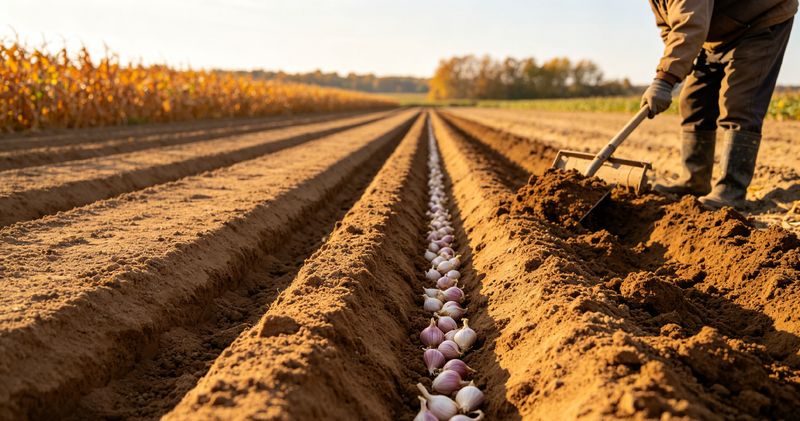
In daejeon, planting is recommended, 15 cm tall, 60 cm wide and 20 cm wide. The water is well drained after the rise, the wet season does not soak the roots, it is easy to water later and catch fat, the soil is better ventilated and the garlic is larger。
The manure is dominated by the fatty of decomposed farmers, with 3,000 kilograms of decomposed goat and cow dung per acre, mixed with 50 kilograms of three dollars of compound fat, and the fertilizer is distributed evenly, so that the fertilizer is not exposed to garlic and the roots are avoided。
4. Scrolling specifications: control the distance of the plant, which is very shallow
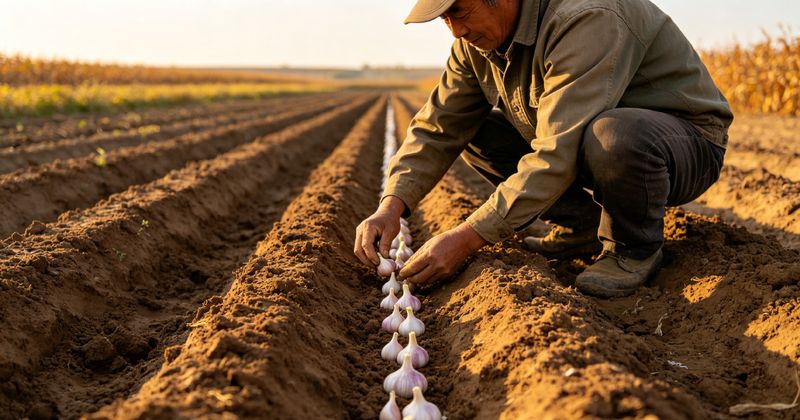
Many farmers sow their seeds and sow them at random, and later fields are too dense, with plants competing for light nutrients and garlic growing small. Standardized seeding, 20 cm in length, 10 cm in length, and around 35,000 plants per acre are most suitable, a density that is neither too dense nor wasteful of land, with the most balanced yield。
The gutter is contained at a depth of 5 centimetres, and when the garlic petals are set up, it must be on the tip of the garlic petal, with the base facing down, with many people moving around, lying flat or upside down, sprouts of the garlic petals, slows out of the ground, and tends to form deformed garlic. When the garlic is put in place, it is three centimetres thick, it can't be thick, it can't sprout, it can't see water。
When the seeding is completed, the soil is suppressed lightly and the garlic petals and the soil are in close contact with the water intake. (c) land that is not well-intentioned, sows it once, sows it slowly, soaks it, does not flood it, so that the garlic is washed away。
5. Post-relay management: water control during seed seasons, cold and cold
The planting of garlic takes 7 to 10 days to grow, so that before seeding, as little water as possible, soil moisture can easily rot. Following seedlings, if the soil is dry, small water is irrigated and the soil is kept dry and wet, large water flooding during the seeding period results in oxygen deficiency and yellow seedlings。
Before the fall-spring of garlic into winter, a freezing water is to be poured at a time chosen for the day and morning, and when the soil is frozen at night, the ground is dried up a little bit, so that a piece of straw or grass ash can be spilled to keep the cold warm, to protect the garlic seedlings from winter and to prevent the winter frost from causing death。
Iv. Four sown pits that farmers often stomp on must be avoided
Pit 1: garlic doesn't handle direct planting
A number of farmers have managed to save their lives, leaving the garlic petals in the ground, bringing directly into the soil the bacteria and eggs they carry on their surfaces, with a high incidence of disease during the seed season, a weak root system, and a severe reduction in the yield of garlic. The blending is a step that must not be lost。
Pit 2: scroll deep and light
Over 5 centimetres of land are covered, garlic petals are hard to germinate, they are produced late and they are thin; less than 2 centimetres of land, the garlic petals are naked, they are prone to freezing in winter, the spring is dry and water is lost, and the garlic is stunted. Strict control of 3 centimetres of ground is key to proper seedling。
Pipe 3: bottom fertilizers only, not farmers
Fertilizers are used only for long periods of time, soil plates are acidized, garlic roots are not deep and nutrient absorption capacity is low. Fertilized farmers can improve the soil, improve soil organicity and soak the soil into gas, while garlic roots are developed so that garlic can grow full。
Pit 4: the planting time is premature or too late
The best time to sow garlic in the northern region in the autumn is between mid-september and early october, with too early seeding, too high temperatures, long garlic seedlings and prone to freezing in winter; too late seeding, low growth of garlic seedlings, poor winter capacity, slow recovery from youth to youth, shorter garlic inflation and much lower yields。
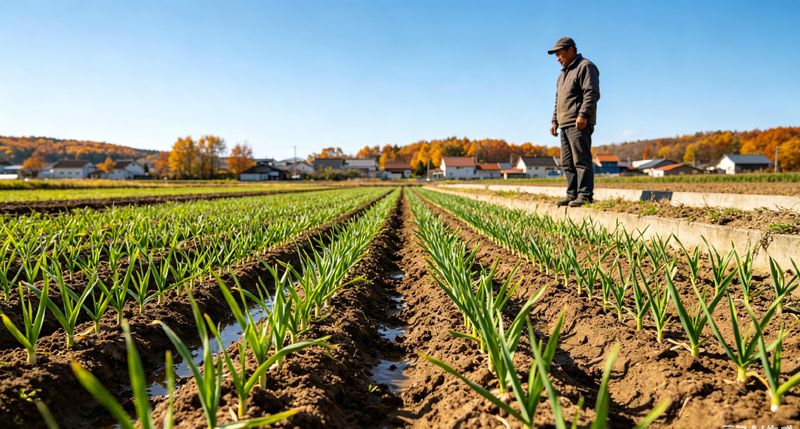
V. High-yield summary to facilitate farm memory
Autumn garlic is the trick, and morning is the most economical
The selection of the strong to remove the weak and the mixing of the disease with less care
(b) deep tillage of the soil and estrangement of the fat farmers
(b) the length of the line is controlled and the tip of the line is buried deep down
(b) the prefecture of water protection and the freezing of water for root systems
Avoiding planting pits in the evening, the garlic will be heavy and heavy。
Garlic is not much of a complicated doorway, and most of it is detailed, and many people do not go through the year-to-year production of garlic, ignoring the basics of sowing times and the depth of the earth. What we grow is solid experience, and each small detail will be put in place, and we will be able to steadily increase production without spending too much extra money。









