


This year, sichuan will have completed a 3. 1 million-acre demonstration roll-out of soybean corn belts. How is it actually grown? What suitable soybeans and maize varieties should be chosen? What are the technical elements
On 25 february, journalists were informed by the agricultural rural department that, in order to carry out a technology demonstration exercise, the sichuan agricultural technology promotion centre had recently prepared and published the soybean-technology complex plan for 2022 in sichuan province, which provided technical programmes for local communities。
The following is a technical guide for the complex cultivation of soybeans in sichuan:
I. Cultivation patterns
In principle, the cultivation model calls for the complex cultivation of soybean corn bands, including soybean corn bands and soybean bands. New models that do not compete with staple foods, such as soybean sorghum belts and soybean bean intercropping, are encouraged to be adapted to local conditions。
(i) soybeans corn banding pattern. It is recommended that the two-line corn bands and the three-line soybean bands be planted. (c) a narrow behavioral maize band with a width of 0. 4 m, wide behavioral soybean bands with a width of 0. 6 m (0. 3 m range for soybeans), maize bands with soybean bands with a distance of 0. 6 - 0. 7 m range (0. 7 m range for machine corn) and maize, soybean single grains with a maize range of 14-16 cm and a density of 3,500 - 4,000 acres/acres; soybeans with a range of 8 - 10 cm and a density of 8,300 - 9,300/accres; and, for artificial seeding, double the range of caves with a density of double the range of each. Corn is 4-5 cm deep and soybeans 3-4 cm deep. This model is suitable for our provinces of flat dams, hills and low mountain areas where spring maize is grown。
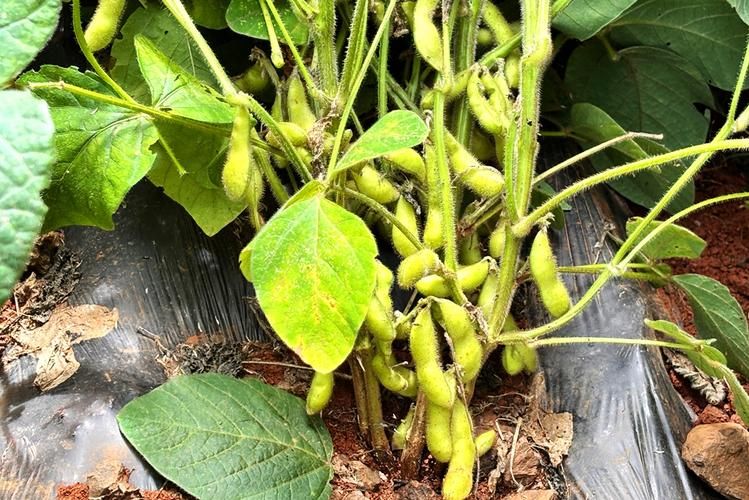
(ii) the soybeans corn belt pattern. Two rows of maize bands and four rows of soybeans band are recommended for cultivation. The carriage is opened at 2. 6-2. 8 metres, with narrow behavioral maize bands, bandwidth of 0. 4 metres, wide behavioral soybean bands, bandwidth of 0. 9-1 metres (average line distance of 0. 3-0. 4 metres) and maize bands and soybean bands of 0. 6-0. 7 metres (0. 7 metres in case of machine corn harvest). Maize, soybeans, single-particle denss, maize, at a distance of 0. 13 - 0. 14 m, density of 3,400 - 3700 acres; soybeans, at a distance of 0. 09 - 0. 11 m, density of 8,600 - 9500 hectares/acre; if planted by hand, two dens, with a distance of double the distance of the pillar. Corn is 4-5 cm deep and soybeans 3-4 cm deep. This model is suitable for my post-harvest summer corn and soybeans in flat dams, hills and low mountains。
(iii) soybeans sorghum-style fusion pattern. The sorghum belt is 0. 6-0. 7 metres apart from the soybean band, the sorghum line is 0. 4 metres apart, the density is comparable to net production, and soybean density is 70-100 per cent single. This model is suitable for my province of takashi。
(iv) the soybean model between the nursery forests. The first is the larvae, which is made between fresh beans and soybeans, with a distance of 0. 4 metres from the soybeans line and 0. 25 metres from the den, with two to three dens. The second is between the larvae and the summer soybeans, which are 0. 6 metres apart and 0. 4 metres apart, with two seedlings per nest. Third, spring and summer soy beans are grown with a range of 0. 4 m and a range of 0. 25 m, with 2-3 seedlings per nest, 0. 5 m and 0. 4 m and 2 seedlings per nest. This model is suitable for the region where i have developed a mature and large-scale fruit-forest industry。
Ii. Selection of varieties
Soybeans and maize varieties should be selected in a catalogue of validated varieties of major crops suitable for sichuan。
(i) soybeans. High-yielding products that are resistant to shades and inverts should be selected. Seed-producing soybean varieties are currently in place: ngong shape 13, nan xia soya 27, kawasun xia soya 3, kam autumu 5, goon shape 12, south xia soya 38, south xia soya 30, south xia soya 45, south xia soya 35, gun shaya 15, south xia soya 25, nanha soya 12, south xia soya 40, ngong shayab 14, south xia soya 32 and choon 1; soybean varieties are in place in the field of seed production in spring soya 36, sing bean 18, medium yellow 39, qingye 34, river bean 155, river bean 16, cheng bean 13, cheng bean 14, cheng bean 15, south bean 24, goon beans 23, gundu 25, south bean 22, south bean 23, cheng beans 17, seng beans 16, kagawa beans 1, river sou bean 2 and sasa beans 3. Some of the soybean varieties broadcast in the spring could be used for actual summer planting, but not later than mid-may。
(ii) corn varieties. High-yielding high-yielding, mechanized harvests should be selected. The options are as follows: satsama 3, tamayu 9, singa 3601, singhong 733, sing yu 1210, sing yu, sing yu, sing yu, sing yu, sing yu, sing yu, sing yu 1, kawakawa, singhong 505, sing yu, sing yu, and others。
Technical elements
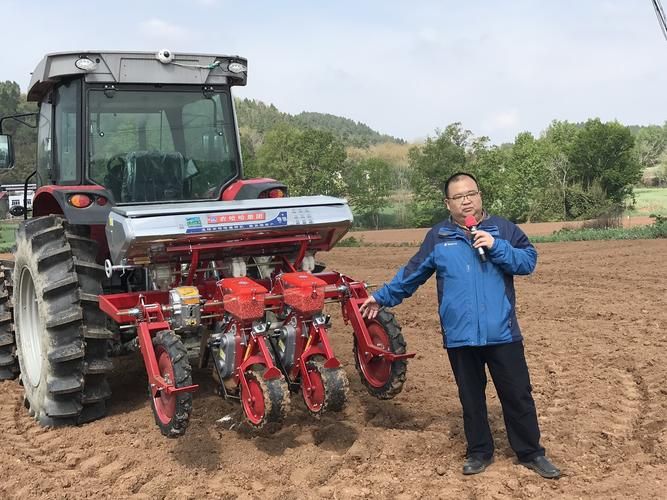
(i) prior period. The maize belt needs to be fined, either before winter or before sowing, and is generally suitable at depths of 20-25 cm, with a tiller's tillage depth of 10-12 cm. The soybean belt is soaked (or extinguished) from the soybeans, which are not soaked with wheat and above 15 cm high, and before soybeans are soaked, the stifling of strips with a width of 1. 2 to 1. 5 m is selected. Crops such as oilseeds, potatoes, vegetables, etc., need only be cleaned up with straw, weed, etc., without earthwork。
(ii) seed treatment. Before soybean soybean soybean seeding, the choice of soybean-specific clothing for wrapping, e. G. 6. 25 per cent chromium-precipitine suspended clothing (sing), or vaccination with root tumors, use of plastering partners, etc。
(iii) to sow in due time. The belt was planted as maize in late march/early april, soybean in mid-june, maize in mid-may and soybean in mid-mid-may (individual pre-cooked varieties may choose to sow with maize in mid-may) at depths of 3-5 cm. The soybean soybean soybean soybean seeding is recommended for a 2byfsf-3(4) dense seeding machine, the corn seeding is recommended for two lines of 2byfsf-2, and soybean soybean soybean soybean soybean soybean seeding is also recommended for dual use by replacing the soybean seeding disk and removing a seeding monomer。
(iv) scientific fertilizer. Belts are fertilized to a net maize fertilisation standard, with 40-50 kg of maize-specific compound fertilizer per acre (e. G. N-p205-k2o = 15-15) being administered during seeding, with large bean periods combined with soybeans, and 40-50 kg of compound fertilizer per acre from 20-25 cm in the corn belt (e. G. N-p205-k2o = 14-15-14). 50-60 kg per acre of high nitrogen temperature (equivalent to 14-16 kg/acre of pure nitrogen, e. G. N-p2o5-k2o = 28-8-6) and 15-20 kg of low nitrogen temperature per acre of soybean seeding (equivalent to 2. 0-3. 0 kg/acre of pure nitrogen, e. G. N-p2o5-k2o = 14-15-14)。
(v) control and control. Control strains such as hysteria, mesmeric acid, vinyl, etc. Were sprayed in long fields of corn 7-10 leaf. The soybeans used 25-50 g wettable powder/accre with 5% americ acid (as low as 20) in the v5 (segment period) and r1 (first flower period) periods, while 40-50 kg of staggered leaves were controlled in water, and the more heavy block of soybean sap was sprayed once in v2-v3 (three sap) at 20 g/acre。
(vi) weed protection. A small number of weeds are weeded by manual or mechanical means, and more weeds are combined with pre-breed closure and post-sap orientation weeding. Before sprouts, closed weeding was carried out with 96 per cent of the refined acetamine emulsion (kindur) 100 ml/acre, which, for example, may be mixed with alachlor (80-120 g/acre) in large amounts of broad foliage; after-sapling was directed to weeding twice (maine 4 foliage periods and extraction periods) and maize with 4 per cent of the sulphate sulfur suspension 75 to 100 ml/acre + 20 per cent of the fluorine acetate 100 to 150 ml/acre; soybeans were sprayed with 25 per cent of the sulfan herbal ether aquatic agent 80-100 g/cm or 10 per cent of the ellipene emeraze + 25 per cent (20 ml+20 g) 1 set/accaus; and with a physio-bolic lacerusion application to prevent the diversion of maize, large-beans from drugs, or with a high-colated gy spray machine of gy3wp-600。
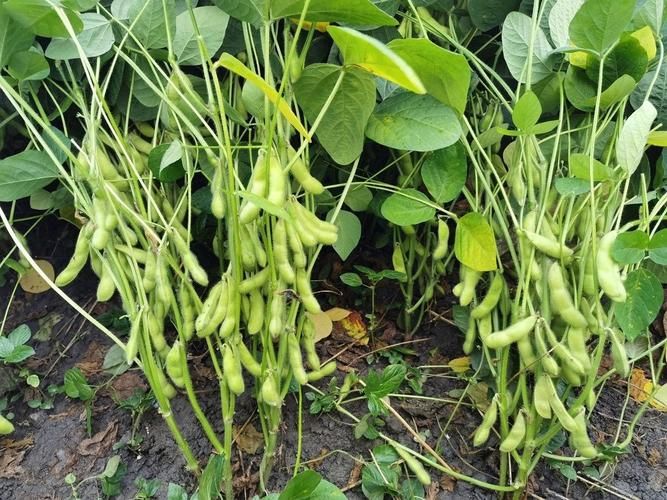
(vii) disease control. Using smart led integrated band headlights and sexual baits to lure insects, a combination of drones was used to protect against three pests and pests, with a preventive time of 3-4 leafs, corn horns - smoking male, soybean curd - drum pellets and a combination of “bicides, insecticides, multipliers, regulators, microfertilizers”. High-efficiency chlorocythrin 25 ml + 12% ml of methiophthalmethrin + 40 ml of methiophagel and 30 kg of water to combat slashed moths, soybeans alpines, etc。
(viii) mechanical harvesting. Where mechanical harvesting is appropriate, soybean harvests are recommended for extraction and soybean soybean recovery by combined harvesters such as gy4d-2, 4lz-3. 0z and 4lz-0. 8. The maize harvest recommends the choice of machines such as the 4yzp-2c self-propelled corn harvester in kindawai, the 4yzp-2x track tracker in yuen, the 4yzp-2a corn harvester in wahsha, the 4yzp-2c self-propelled corn harvester in kim dafung, the 4yzp-268 self-propelled maize harvester in inda 4yzx-2c self-propelled maize harvester and the ward 4yz-2b corn harvester。
Priorities
(i) widening of the technology model to highlight the "scaling". Increased cooperation and information-sharing with icsus, based on the demonstration and promotion of soybeans-based maize complex cultivation, should be able to continuously innovate and refine technological models, including through stock matching and improved agricultural machinery, and actively explore new and viable models that do not compete with staple foods, with the sustainable release of soybean expansion potential。
(ii) strengthened guidance services to highlight “product growth”. I stand by to make initial arrangements for expert mentoring of municipal (state) subgroups and to encourage the experts concerned to strengthen their working contacts, to take full advantage of their professional expertise and to conduct mentoring services across groups and regions. Technical service teams are to be set up in the relevant project districts to effectively carry out their mentoring responsibilities. Through radio, television and on-site observation, training is regularly conducted at all levels and at all levels for grass-roots cadres, agricultural technicians, farmers and new business players, with a view to improving the availability of technology and ensuring that growers who undertake demonstration outreach tasks are able to grow, meet and grow soybean。
(iii) scientific fertilization, highlighting “green”. (c) proactive implementation of the “two-decree” efficient technology model integration demonstration and training in the scientific use of pesticide fertilizers. The use of fertilizers is reduced by nitrogen, phosphorus, potassium, increased organic fertilizer and new, efficient, low-toxic and low-residual pesticides. High-impact production techniques such as soybean partners, soybean blending, organic fertilizer substitution and bioconservation, chemical induction, eco-regulation and soybean industry should be promoted where possible。









