


It's the same feeling in the natives that grow the chili, which is famous for being a “slipper”, and looks good and has a high rate of survival, but it's really hard to think about high productivity. Many farmers grow hot peppers, which are long, green and green, and the first one is big and thick, and they look happy。
After two or three picks, the chili tree collapses in an instant, leaves are yellow, leaves are falling, new leaves are not long, or they are small and deformed, and they are prone to spoils and figs. For half a year, there was little production at the end, and many people had to pull out their seedlings and waste their lives
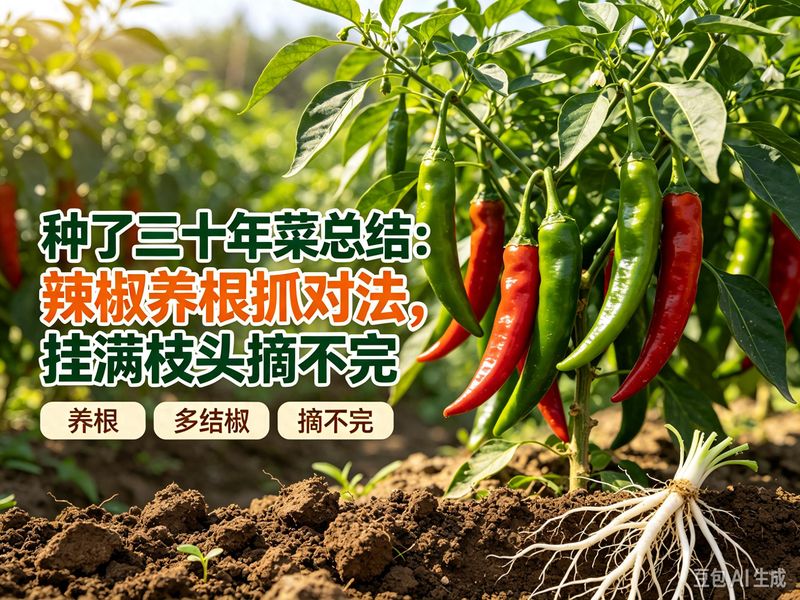
I've been growing vegetables for 30 years, and i've felt the growth habits of chili. The vast majority of people grow peppers with reduced production and premature failure, not enough fertilizer, not good pesticides, but bad roots. Paprika is a shallow root crop with fragile and delicate roots, and if the roots are damaged, aging, oxygen-depleted, cannot absorb water fat, and if the seedling thrives, it is also fat. As long as the roots are strong and well developed, the peppers can continue to grow and grow, pick and pick until the frost falls and produce doubles。
One, remove the pit. 90% of the paprika rotting roots and the weak roots are all misplanted
Many farmers grow chili in the same manner as usual, digging pits and pouring water. Looks like a simple operation, but it's the biggest error, and it's the primary reason for the late-stage roots and the early death of pepper. The paprika roots are poorly regenerative, misplanted and can't be replaced by any later fertilization management。
One: unswervingly eliminating deep-seated plants
There is a saying in the old saying: paprika and eggplant, which is a gold lesson learned by the old generation, but many people do not。
Many people deliberately buried the seedlings in order to fix the seedlings, fearing that the peppers would fall down. Following the burial of the paprika root, the soil is in poor aerobic and the trachea is prone to suffocation and causes a root disease. More crucially, deep burial can lead to a lack of breathing in the roots, a failure to grow new roots, a gradual ageing and death of the roots and a weakening of the seedlings。
The correct practice is to plant the peppers in the ground, where the seedlings are found in the seedlings, and where they are planted, just to cover the roots of the earth, so that they remain shallow. Light-planted peppers, with excellent soil aerobics, can grow in large amounts of white root in three to five days。
2. Ending water flooding and rooting
A lot of people are running out of peppers and pouring water directly into the water. On the contrary, massive flooding can lead directly to soil sheeting and rooting。
The newly planted paprika root system is damaged, the capacity to absorb water is extremely poor, the roots are oxygen-depleted and prone to rotting roots and rigid seedlings. Many of the days that have passed since the planting of the peppers have not returned to green, grown, or even died, have been bludgeoned。
Good practice: after planting, water is slowly poured with thin water, and water is not poured out. The soil is micro-humid enough to keep the soil soaked and ventilated, leaving enough breathing space for the roots to produce new roots quickly。
3. Ban the soil
When many farmers planted seedlings to fill the soil, they used to press the soil with their hands and feel that the soil had been laid down and had grown。
The hard-pressed soil, the earth's hard-walled structure, the roots are not deep enough to expand, the later roots are condensed into clusters, the absorption of water fattening ranges are extremely small, a little dry, and the growth is completely limited。
Pipe avoidance techniques: land filling can be easily smoothed without pressure, the soil naturally collides with the root system after watering, and the estranged soil is most conducive to its extension。
Ii. The root core of seedlings: managing the root roots of water and producing strong roots
After the chili had been planted, it was managed during the nursery season. The biggest error in many people's cultivation of peppers is that the water is so fat that they only grow fast and flourish。
Such seedlings, which are “floated,” look at the greenness of the leaves, and are small and fragile, all concentrated in the surface soil. Once high-temperature weather and the peak of nuts is reached, water fertilizers are not available, leaves fall early and flowers fall。
A true old vegetable farmer, who never grows a seedling, specializes in rooting。
1. Water control is not water-driven
Around 20 days after the birth of the pepper, water is not necessary as long as the soil is not dry or dry。
A moderate drought can force the chili root system to take root down. In search of moisture, the roots are deep, the sides are growing, the roots are full, the roots are deep, drought- and flood-resistant and resistant。
2 - the shrunk season does not add up
Large-scale application of nitrogen fertilizer is strictly prohibited during the nursery period, and urea and high nitrogen fertilizers are not used。
Nitrous fats only drive long leaves to grow the seedlings, resulting in strong leaves and weak “head-heavy feet”. Shrimp periods rely only on bottom fertility and do not require extra fatting to avoid premature decay of the roots。
Three, shallow pine soil, root protection
The most practical and free rooting technique for the seeding season is lax and shallow twirl。
After the rains and watering, the soil is compact, the surface is hardened and the roots are unable to breathe. In a timely manner, shallow floors, without deep tillage, can break the slabs, protect the water, and increase the air permeability of the soil and promote the growth of new roots, which grow stronger。
Iii. Long-term care: avoiding the three major faults and not aging the roots
Paprika enters a rapid and long-lived life, with fast-growing leaves, and many farm-household management begins to be fragmented, with frequent watering, fertilizing, drugs and unwitting damage to root systems, leading to early aging of pepper. It is of the utmost importance to have long-term protection for peppers。
1, frequent watering, dry and wet imbalances
The paprika roots are afraid of flooding and drought, and the soil is the least wet。
Frequent watering, chronic wetness of the soil and lack of oxygen, and the inability of the roots to breathe can slowly decomposed and aging, with a sudden decline in absorptive capacity. At a later stage, when the amount of hanging fruit is high, the water fertilizer supply is disconnected and a large number of flowers fall。
The principle of proper watering: wet, dry and then watering, so that small water is not strained and soaked。
2. Focus on fertilizing and burning roots
Many farmers want hot peppers to be high, and one-time large-scale fertilizer is being distributed, and they feel that the more they produce, the higher they produce。
High concentrations of fertilizers directly burn the paprika roots, which are the core of absorbing water fat, and if burned, the roots die and the seedlings stop growing. It is also concentrated in fertilization, with increased soil salinization and the root causes growing worse。
(b) practical exercise skills: long-term pursuit of fatty insists on hard fat and hard work, few times away from root so as to avoid burning roots。
Three. Water in the fields. No drainage after the rain
The summer rainy season was heavy, many gardens were low and water was not released in time, and was the number one killer of pepper rotting roots。
Water immersion occurs for more than 24 hours, and the paprika root system is likely to suffer from extensive oxygen deficiency, while leaves fall, stop, and the whole strain dies。
The main focus of pit avoidance is to open drains ahead of schedule, drain the water first after the rain, defusing the soil and restoring the roots of breathing。
Iv. Cultivating root: double rooting to achieve multiple peppers
After the first and second pickles of pepper, the root system consumes large amounts of nutrients and begins to slow down. This is also the central reason why many peppers die early after a few picks。
Ordinary farmers only know how to catch fat and bright old farmers tend to take root and grow new roots in the mid-term. The new roots are so numerous and dynamic that they will be able to provide a sustainable supply of fruit nutrients and achieve one by one。
1. Timely loss of fruit and protection of root systems
A lot of people can't afford to lose fruit. The peppers just sit on the fruit and keep them all。
They are too large to keep up with the nutrient supply, overloading and rapidly ageing. The fruits are numerous but small and deformed, and they will bring down the whole seedling, with no later harvest。
(c) manual methods: weak, deformed, diseased, incisive and timely removal, reduction of the burden on the root and concentration of nutrients in the supply of quality fruit, while preserving the vitality of the root。
2. Supplementation of root nutrients and promotion of white roots
No single application of nitrogen fertilizers is required for the duration of the brood, with emphasis on the preservation of the root system and the supplementing of trace elements。
The roots are sufficiently dynamic to sustain branching, flowering and fruiting. The roots of the nutrient balance, which is resistant to heat and disease, remain intact。
3. Elimination of old leaves and reduction of nutrient consumption
The old leaves, yellow leaves and sick leaves in the lower part of the pepper are no longer co-operative and consume only root nutrients and also cover ventilation and disease。
Timely clean-up of non-functional leaves on the ground floor, increased ventilation in the fields, reduced waste of nutrients, and assisted root systems to maintain robustness and sustained productivity。
V. Pest and pest protection root: not bad, not bad, not bad, not bad
The paprika roots are damaged and, in addition to being poorly managed, pests and diseases are the main contributing factors. The root causes of the disease are the first to show yellow leaves, flowers and figs on the ground, with many treating only the diseases of the leaves, neglecting the protection of the roots and making them worse。
1. Common root diseases
Roots and tubers are the root causes of hot peppers, mostly due to water accumulation, slabs and ventilation. Prevention is greater than cure and can significantly reduce the incidence of disease if soil is kept lax, free from water and heavy fat。
2. Underground pest control
Tigers, gills and nematodes eat chili root systems, which lead to broken roots, inhibition of absorption, and low atrophy of seedlings. Daily cleaning of the fields, no weeds, early pest prevention and protection of the roots
As long as the roots are healthy, the resistance of peppers to disease, heat and premature decay will increase dramatically, and the duration of the journey will be stable and the nuts will not stop。
Vi. Summary of full-text cultivation + practicality
In general, the core of the high production of chili is not fertilization, medicine, but root care. The roots of the paprika are well developed, the roots of the seed season are well established, the roots are well protected for long periods of time, the roots of the brocade are re-emerged, and all the faults are avoided。
Remember this old farmer's roots, simple, old and productive:
(b) the high production of peppers for rooting and the most critical for shallow planting of pine soil
(a) shrimp season controls water to grow, and not to accumulate or flood
(a) affording flaming roots to prevent obscenity and loss of negative seedlings
The roots are alive and alive and the peppers are rich
It's a 30-year-old dishworker, practical, zero-cost gain, and it's helping you
Disclaimer
All of the paprika root farming techniques and field management techniques in this paper are the results of many years of practical exercise in rural fields and gardens, without any delivery, marketing or promotion. There are differences between the north and south of the country in terms of weather, soil and soil quality, and the timing of cultivation, with slight variations in the size of the peppers and the cycles of the fruit. The content of this paper is only a reference study for farmers on a daily basis and does not constitute a basis for professional farming guidance and investment。









