


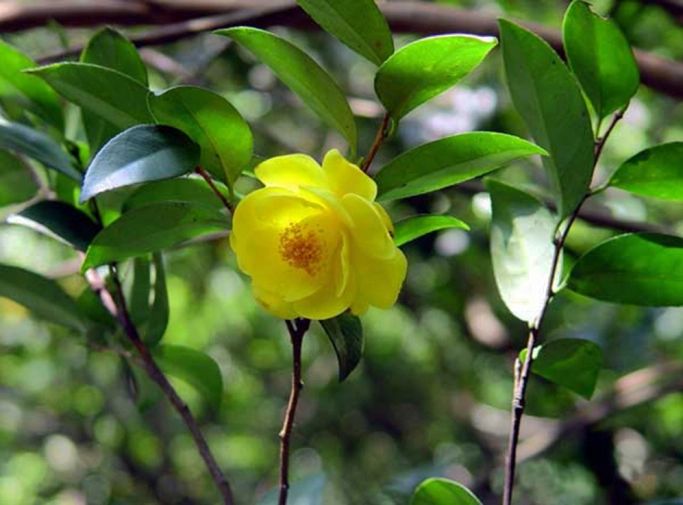
The city's golden tea
The great pharmacist lee xio-jin, “mountain tea leaves are ripe, water is available, water is available, and the sun is dry for drinking”, was long documented. In nature, tea is growing slowly, seeds are growing at a very low rate, and artificial seeding is extremely difficult to cultivate, taking more than six years from seedling to flowering, with natural branches thin and few flowers. Owing to natural constraints and man-made ecological damage, this rare plant, golden tea, is threatened with extinction and is therefore extremely valuable. Until 1900, yellow mountain tea flowers appeared only in folk legends. Lee zhou-jin, in his “book of the sage”, says: “most tea comes from the south. And the tree, and the tall thereof, hath the name of red, and the red, and the white of the loins, invincible, and the leaves of every kind. Or the clouds are yellow." it is clear from this that even tsai jin himself did not see the tea of a yellow flower, which is nothing but a legend. In 1930-1949, the famous japanese botanist zinshan spent his whole life trying to find the legendary yellow tea flower, looking for it all over the indo peninsula, returning empty-handed, leaving behind his disappointment with the publication of " the adventure of the fantasy yellow mountain tea flowers " in the japanese magazine shaft. The late japanese tea expert, mr. Hitoshi ikeda, also referred to the failure to see the face of yellow mountain tea as the first tragedy of his life. In 1960-1969, chinese scientists finally found yellow tea flowers in guangxi! This news has shocked the world, with foreign and foreign scholars visiting china, and japanese friends having offered $25,000 a piece of gold tea. In 1965, chinese plant authorities, professor hu cheon, named this rare plant “goldflower tea” in his own name, because of its ability to open golden flowers。









