


Title: innovative planting techniques in the town of latungli to promote the harvest of soybeans
The bean becomes the gold bean, the farmer is the money
"give me 4,000 pounds today, okay? Prices are good."
“i'm sorry, the price is higher, but today we can only give you 3,000 pounds, and we can trust and meet the needs of other old clients.”
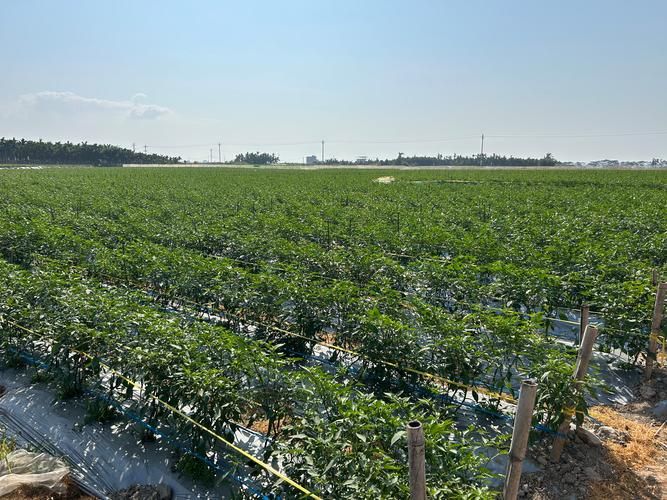
On 31 january, at 10 a. M., a new land was built on the outskirts of the town of li, an autonomous district of le dong li, where the secretary of the party of the three villages of léon continued to “take” beans。
The new fields, covering 10,000 acres, had grown full of beans, which farmers had been afraid to grow for many years because of the incipient nature of disease and pests. In winter, innovative thinking, using tools such as “pest prevention net + yellow blue board + biotechnology”, has led to the formation of cooperatives, the introduction of investors and the planting of 300 acres of beans。
“we started harvest on 10 december last year, the first of which was just finished, with more than 3,000 pounds of acre production, and now the second batch is back on”. According to yongwei, traditional methods are used to grow beans, with an average harvest period of 30 days and an acre production of over 2,000 pounds, and they use new technologies to grow beans, which are expected to produce more than 100 days。
In the field, a young man ran around, carrying a pile of beans onto a tricycle. “i'm sichuan, i'm here on the third of the month, and i can earn 200 jobs a day for months.” the young man said, while sweating。
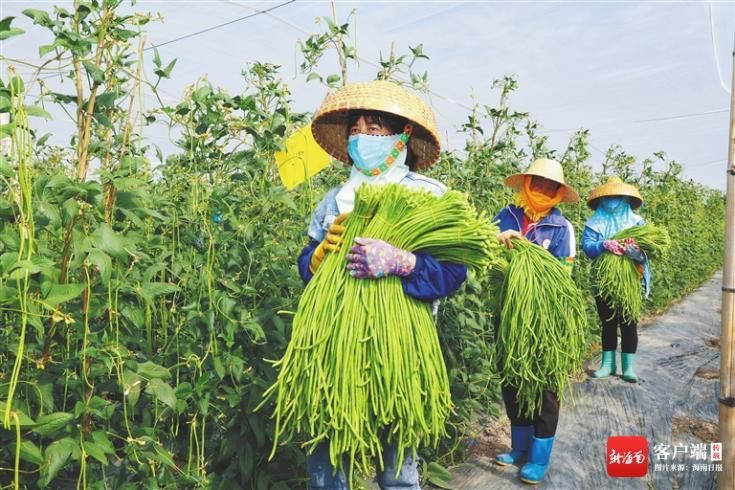
Yung wei opened the bug-proofing network and hainan daily journalist and he walked into the field. The beans are grown in rows, with a black membrane and water piping on the ground, with yellow and blue stickers on the racks, some of which are yellow, but with new leaves growing next to them and flowering。
"you see, it's the second batch, and the quality is no different from the first batch. Pygmy nets can disrupt pest transmission, yellow and blue viscos can bind pests, biotechnology can improve plant resistance to pests, new technologies can be used to grow bean beans, pesticide use has been reduced by more than 30 per cent and production has increased significantly.” in the recent past, the department of plantation management of the ministry of agriculture and rural development, together with the chinese agricultural institute, the national agrotechnical centre and the pesticide inspection institute of the ministry of agriculture and rural development, organized a training course on green control and safe medicine for bean pests in guangdong, guangxi, fujian and yunnan provinces, which was specially designed for study visits to their village bases。
There is also an unintended benefit of the insecticide-treated web to grow bean beans: cold keeping, steady production. Bean growth is sensitive to the temperature, which is about 2°c higher in the nets than outside the nets, so that several cold waves since the end of last year have had little impact on the soybeans of the tri-worm nets。
“recently low temperatures, but we produce more than 10,000 pounds a day.” according to yongwei, the use of traditional methods to plant beans has led to a significant reduction in production due to cold tides, which has also contributed to the recent increase in soybeans。
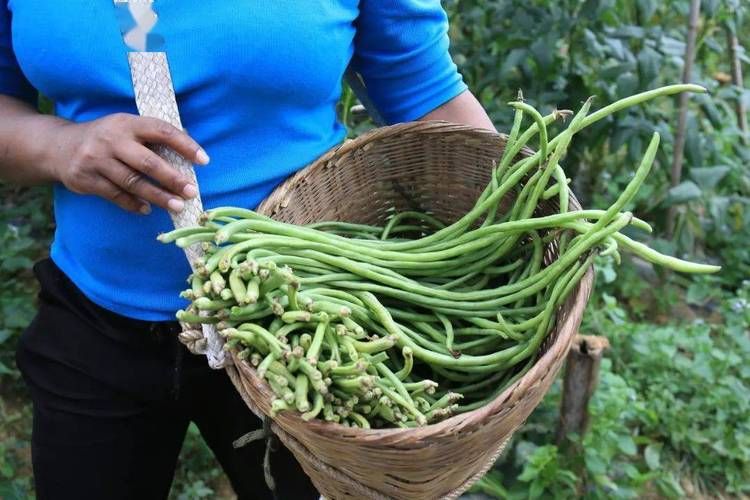
Since last winter, i've saved more than in previous years, and the purchase price is over $4 per pound, not only from the planting grounds, but also from nearby farmers。
Chen shuxi, a farmer in lai san village, has been working as a soybeans base worker since november last year in the village's pest control network。
“i don't have any rest for the rest of the year and i'm working at the base on the first and second night of the month.” according to chen, 150 people work at the base, mostly from lai san village, and also workers from the provinces of sichuan, hubei and yunnan。
“village rehabilitation cannot be done without major industries, and village cadres must be shown to farmers before they can carry them with them.” yongwei said. (reporter zhou moonlight)









