


1. Selection of good bacillus: at present, there are many strains of tea for mushrooms, such as the tea mushroom-1, tea mushroom-3, tea mushroom-5, as78. As982 in jiangxi. The main promotions in our region are tea mushroom-3 and tea mushroom-5 which are marketable and dry. But whatever strain is chosen, the strain requires the thickness and whiteness of the fungus. It is normal for a child to grow an entity, but it is inappropriate to use it if it is thin and thin, if the food is incomplete, if there are chromosomal spots or if there is yellow water。

2. Cultivation season: in order to achieve high productivity and efficiency, tea mushrooms must choose a suitable planting period. According to local planting experiments, spring planting or autumn plantings are suitable, especially with high production. In production, the temperature is generally set at 20°c in the spring and 25°c in the autumn. As a result, the spring season for cultivation in our region is month-february, april-may or september-october and november-december。
3, 36. 5 per cent wood crumbs for culture 1 formulation, 36. 5 per cent cotton crust, 25 per cent wheat skin or rice thallium, 1 per cent calcium carbonate light and 1 per cent sugar cane. 2 78 per cent of cotton seed shells, 20 per cent of wheat skin or rice beak, 1 per cent of plaster, 0. 5 per cent of sugar and 0. 5 per cent of lime。
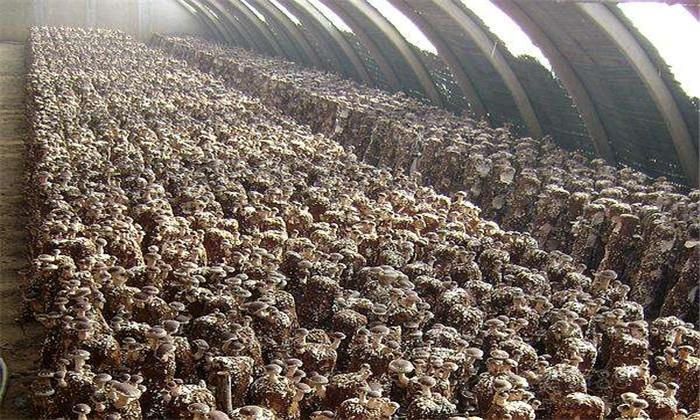
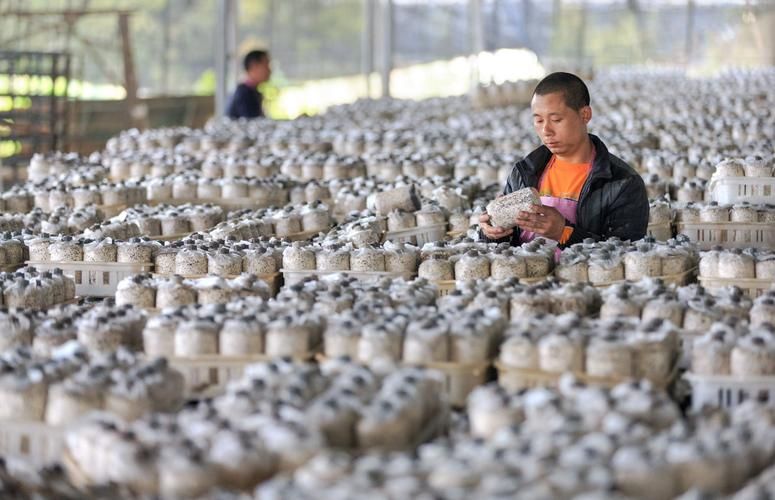
4. Baccalaureate 1 is formulated according to the quantity required for production. The raw materials are fresh, non-stereogenic, non-pest-free, evenly balanced, with pre-wetting of cotton shells, and nutrients containing about 65 per cent of water. Select a specific 17 cm x 35 cm x 0. 05 cm low pressure polyethylene plastic bag, each containing about 0. 35 kg dryer, at an altitude of 14-15 cm, which is loose and moderate, with an inoculation hole with a distance of 2 to 2. 5 cm and depth of 8 to 10 cm, a flat surface, a timely collar and a coating of cotton (which can also be tightened with lined and woven wires), followed by a constant strangulation. The temperature is normally increased to 100°c within four hours and is maintained at 10-14 hours. Tea mushrooms are less resistant to fungi, so they must be eradicated thoroughly, and the process must be made in such a way as to guard against stings and piercings to prevent contamination of the fungus. For the prevention of stabbing, “twig bags” (two plastic bags together) can also be used to produce culture bags. 2 the temperature to be measured can be reduced to less than 30°c after the nutrients have been sterilized. Vaccination kits or inoculation rooms should be complete, with vaccinations ranging from 30 to 40 bags per bottle (pack), during which a portion of the bacterial species should be fed into the holes reserved for the bag, and a portion should remain on the material surface to accelerate the fungus and silk cover. After vaccination, you need to avoid light training. The slow recovery of the fungus of tea mushrooms and their susceptibility to fungic pests requires attention to the cleaning, drying and ventilating of culture rooms to prevent the effects of high and low temperatures and to promote even production of mybs. It is also regularly checked and, in the case of fungi-contaminated bags found, is carried out in a timely manner to prevent proliferation. The general inoculation is followed by 30 to 40 days of mycelium silk, which can be filled with a bag。
Under normal conditions, mushrooms are given 50 to 60 days after vaccination. Before mushrooms come out, they are managed by an accelerator, which can be directly discharged from the fungus bag or stacked in walls. The cotton is then pulled out or cut off the zipline, and a straight bag bag is pulled to pump about 80 bags per square metre. Let mycelium shift from nutritional to reproductive growth. The colour of the fabric was transformed into yellow water at first, then brown, with the appearance of little mushrooms. To increase the relative humidity of the air and maintain it at 95-98 per cent, water should be sprayed to keep it wet. The 3-ray strength is controlled at 500-1,000 leks, and the temperature is in the range of 18-24°c, which allows for a high incidence of 10-15 octopus. Following the release of mushrooms, appropriate low spatial humidity and reduced ventilation are required, at which time the relative humidity of the planting space is reduced to 90-95 per cent, and the frequency and duration of ventilation is reduced in order to prevent excess oxygen from leading to the early opening of umbrellas, short and thin. If the mushrooms are too dense, they can also be trimmed with six to eight per bag, medium, full-size, good-sized and thick, or otherwise affect the quality and production of the mushrooms. 5 when the real fungus cap of the tea bush and mushroom begins flattening, the rings are collected when they are not released. Since the tea mushroom screech is thinner and can easily be broken, it should be collected by scratching the base, while preventing injury to young mushrooms. After harvest, the bag face needs to be cleaned, the bag is squeezed, the silk is restored for two to three days, then the bag is pulled open, heavy water is taken once, and the above management is repeated, and in 5 to 7 days, a mushroom can be grown and 4 to 6 mushrooms collected。
Audit expert: associate researcher, vegetables institute, shanxi agricultural academy of sciences









