


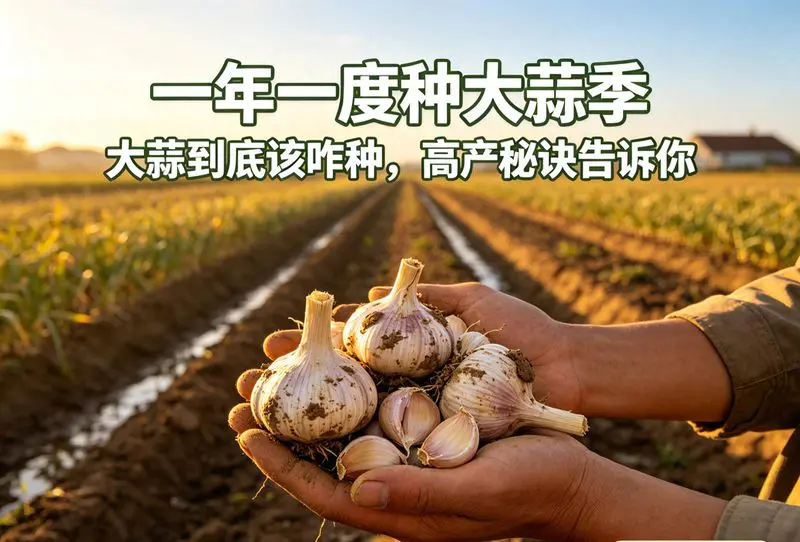
At the moment, the main garlic-producing areas, such as the hwang huai sea, north west and north china, will be covered with a golden window during the autumn. At this time of year, many growers start preparing garlic, clearing plots and planning fertilization programmes. Garlic, a major cash vegetable crop growing over 12 million acres in the country, has been a source of wealth for millions of farmers, and the dual proceeds of garlic and garlic have been among the preferred categories in daejeon and garden gardens。
However, according to data from the field surveys of the local agro-technology sector in recent years, a significant proportion of land parcel production per year falls short of expectations. Frequent problems such as low levels of garlic, high levels of garlic consumption, early foliage, mackerel hazards and winter frost injury, most of which are traced not by late weather, but rather by the inappropriate operation of basic elements such as pre-plant preparation, seed control and management of water fertilizers. In 2026, the regional agricultural technology extension departments updated the programme for the management of high-quality, high-quality garlic cultivation in the autumn, taking into account the new conditions in recent years, such as warm winters, high temperature fluctuations in the autumn and rising winter base. This paper, in conjunction with the latest agricultural guidelines, provides a complete description of a ground-based, ready-to-earth garlic high-yielding exercise programme。
I. Selecting the right plots, avoiding heavy pits and building a high productive base
The garlic root system is a shallow chord root, most of which is concentrated within 25 centimetres of the ground, has weak capacity to absorb fattening water, and is buried in underground growth, with relatively high requirements for the soil environment, poor selection of plots and difficulties in growing full garlic in the later period。
Priority is given to the selection of sandy or light-fronted soil that is fertilized, drained, organically high. Grounds that are low-lying and prone to water accumulation are strongly discouraged from growing, while garlic roots are the most afraid of flooding, and after two or three days of water, they are easily induced to rot and rot and die of garlic. Soil acid alkalinity control is most appropriate at ph6. 0 (1)(7. 5) plots of peracid or peralkali, with the growth of the garlic root system being inhibited, and the high rate of garlic expansion slowing down and the quality declining。
Many growers are vulnerable to severe hazards. Garlic and onions, onions and pickles are lycées, and long-term intermingling causes the accumulation of pathogenic insect eggs in the soil, with a marked increase in the incidence of maggots, leaf deadness, rusty diseases and purple spots, as well as the continuous consumption of the favourable nutrients of garlic in the soil, with a shortage of seedlings and a lower production each year. According to the green planting technique, garlic is best rotated at intervals of two to three years, with crops such as maize, soybeans, cabbage and radish preferred。
Upon completion of the clearing of the plots, the fields will be ploughed. At the end of the previous crop harvest, no direct planting, early tillage of land, deep tillage at depths of 25 to 30 centimetres, upsliding of deep soils, with sunlight, can effectively kill a part of the soil with bacterial insects, soothing the soil, and stretching downwards in the garlic system. The tillage was followed by the cleaning of the roots and weeds left over from the ground, the grinding of large pieces of earth, the flatting of the earth and the fragmentation of the earth. The regions with heavy rainfall have been recommended for planting, which is 1. 2 m-1. 5 m wide, and for digging drains between them to ensure rapid discharge of water from the rain, which stops drying and eliminates the risk of flooding。
Ii. Science-based fertilisation ratio, organic fertilisation mix, rejection of raw septic sap
Fertilization is the most critical link in the high production of garlic, and the principle of “baby-based and complementary” fertilization has been circulated throughout the industry. In 2026, the technological orientation of efficiency gains in fertilizer reduction continued to promote a combination of organic inorganic processes, the stabilization of nitrogen, potassium enrichment, the re-application of moderate trace elements, and the avoidance of problems such as the application of nitrogen fertilizer that results in long garlic seedlings, late early decay, and the intolerant storage of garlic。
A large number of farmers are used to pour fresh chicken and goat dung directly, which is a very large area of error in cultivation. Without a completely decomposed farmer fatting into the soil, late fermentation increases the larvae of garlic, while the odour of fertilizers attracts flies to lay eggs, greatly increases the probability of mackerel pests occurring, and the cost of post-climate management is extremely high. All farmers ' manure must be sufficiently hot and decomposition before it can be used。
The scale of field-planted plant-based fertilizer reference amount is 3000 - 4,000 kg of curing organic fertilizer per acre, 40 - 50 kg of composite potassium sulphate combined, 50 kg of calcium perphosphate and 15 - 20 kg of potassium sulphate, supplemented by a small quantity of boron sand of 0. 5 kg per acre. An important detail here is that garlic is a chlorine-free crop, that the use of potassium chloride fertilizer is strictly prohibited by fertilization, that chlorine ion inhibits the expansion of garlic, that post-harvest garlic skin is loose, that resistance to storage is reduced, and that there is a greater risk of gertilization in the storage process and that potassium sulphate fertilizer must be recognized。
Regular family gardening can be organized at a rate of 200 pounds of decomposed organic fat, combined with 6-8 pounds of potassium sulphate compound fat, with conditions for a small amount of grass-wood ash, which can supplement potassium fat and contain endemic diseases to a certain extent. All the base fats are spread evenly on the surface of the land, and as deep tillage is deposited into the soil, the fertilizer and soil are fully evenly mixed, avoiding the accumulation of concentrated fertilizer and the burning of petals。
Soil pre-treatment can be carried out prior to the planting of heavy plots with high levels of maggots and decomposition in previous years. Each acre was selected to use 5% of the octanophos-methyl particles of 3-5 kg, with 3% of the manic acid particles of 2-3 kg, and the composts were distributed into the sowing ditch and then the soil was covered. The octhion agent is easily decomposed, the soil must be covered as soon as the application is complete, and lime cannot be applied together with octhion, and both will be ineffective and will have adverse effects。
Iii. Grind screening rating, pre-show processing, and robust seed production
High-yield garlic, the first step is to grow a seedling, which is directly determined by its quality. There is a large variety of garlic on the market, which cannot be chosen blindly. Priority is given to the selection of varieties suitable for the local climate and resistant to disease. The cold areas of the north give preference to vermin, which is more resistant to the cold, like pyrotechnics, gold-grained garlic, large garlic and stable productivity. In warm and humid areas south of the yangtze river, priority is given to wet-resistant, pre-cooked garlic varieties, such as those of the seven stars in the win river。
The processing of garlic began about 10 days before the official planting. First, the whole garlic is torn apart, the garlic is torn off, and the garlic is to be removed from rotting hair, worm damage, freezing dryness, and deformity. The leftover garlic requires that the garlic petals be full, that the petals be in shape and that the single petal weight be 5-7 grams。
The screening is followed by a grade of garlic, which is stored separately, medium and low, and planted separately. Garlic petals combine to grow fast, to cover up the sunlight of the pail, to compete for soil fattening resources, to perpetuate the vulnerability of small seedlings, to grow to become full of garlic at a later stage, to diversify the field and to increase management difficulties. Scaled seeding, equal size of the same plot of garlic petals, same speed of seeding, full growth of garlic seedlings, and convergence of late garlic expansion。
Two to three days before seeding, the selected graded garlic petals can be spread open to dry in the sun. The drying of garlic petals can break the hibernation and accelerate the seeding of seedlings, while sunlight can kill parts of the disease carried by the skin of garlic. Rush the garlic petals in the drying process at regular intervals to ensure that the sun is even and that it is not tanned on the concrete floor to avoid high temperature burns。
Combination treatment is promoted for garlic maggots and high-prevalence plots. The choice is to spray the garlic petals with a standard blending agent, which is repeated, ensuring that every garlic petal surface is evenly covered with a liquid, and that the blend ends with dry water and then sows. Combination can significantly reduce the incidence of root disease and pests in the nursery, reduce the number of subsequent pesticide uses and achieve green production。
Iv. Control of the optimal seeding window period, rational planting, and specification of the depth of planting
The planting time is a central factor in determining whether garlic can grow good-quality garlic. The ministry of agriculture and rural development's technical guidance on vegetable production clearly indicates that the temperature criterion for the appropriate planting of garlic in autumn is a steady reduction in the local average daily temperature to about 16°c. The planting time is too early, the temperature is high in the autumn, the growth rate of garlic pre-winter is too high, the length of the leaf consumes a great deal of nutrients, the growing strength of garlic is prone to early failure after winter, the availability of a large amount of garlic is insufficient and the head is small; the planting time is too late, the growth cycle of garlic pre-winter is insufficient, the young are weak in winter, the resistance to cold is weak, the roots are low, the onset of the spring is slow, and in severe cases there is a large amount of monolithic, which directly reduces annual production。
In the light of the climatic characteristics of the different regions of the country, the reference periods for the planting of garlic in the autumn of 2026 were clearly divided. The yellow cay sea basin, which is a core of national garlic production such as shandong, henan and the south of hebei, is suitable for planting in late september - mid-october. In the north-west, gansu, north-west, etc., temperatures have fallen earlier, the planting window has moved ahead and the planting has been recommended for mid-september - early october. In the area of jiangsu, anhui and hubei in the middle and lower part of the yangtze river, the fall was delayed until early october — early november. The south-west sichuan and yunnan regions can either sow in the autumn or in the early spring, with the fall broadcasts choosing to take place in late september. Local growers are unable to keep track of fixed dates, with annual fall temperature fluctuations, and the most prudent way to do so is to keep an eye on local weather forecasts and wait for the average daily temperature to fall to meet the target, or to visit rural farm stations in order to consult with local farmers on the latest seeding guidelines。
The three principles of "substantial, secret, and orientation" are used in planting. There is no need to flatten or reverse the plume of garlic, and the seeding of garlic is more resistant and delayed. Garlic abdomen and seeding lines are vertically linked, and this is a way of stretching lateral leaves in the direction of the row, providing better ventilation between plants, increasing efficiency in light co-operation, increasing nutrient accumulation, and making garlic more effective。
Land thickness is controlled at 3-5 cm and 2-3 cm. Depth control is critical, with over-deep soil, heavy seeding from the top of the garlic, delayed seed production and weak post-spill; the ground is too thin, garlic roots are bare, winter temperatures are prone to freezing garlic roots and rising security risks in winter. When the garlic is put in place, the ground is covered with light and light pressure, so that the garlic and the soil fit together and there are no gaps。
Cultivation density should be reasonable, and high-density production cannot be sought at all. A line distance of 18-20 cm and a capacity of 8-10 cm is the most appropriate place to plant 35,000 - 45,000 units per acre. Over-intensity of planting, crowded and constricted garlic in the field, poor ventilation, increased humidity in the field, increased probability of outbreaks of diseases such as folate and rusty disease, limited range of garlic growth space and small size. Cultivation is too low, land resources are wasted and total production per unit area is not maintained. Scaled cultivation can be based on the appropriate easing of distance between the long, weak and slightly dense range of garlic varieties。
After the seeding has been completed, the water is poured in once, so that the garlic can quickly absorb its hair. Most major production areas now use membrane-covered cultivation, sowing water, covering the polyethylene membrane, where the membranes are attached to the ground and compacted with soil. Covering the membrane can have multiple effects in terms of preservation, weeding and raising the temperature of the ground, prolonging the pre-winter years of garlic seedlings and helping them to survive the winter, which has been the most widespread technology in recent years。
V. Pre-winter refinement of tube protection to nurture a strong seedling for a safe winter and to build a high-yielding chassis
After planting, 7 to 12 days, the garlic seeded the soil. In membrane plots, three to five days of care is given to membrane seedlings. The best seedlings are selected in the early morning, when the temperature is low and the membrane is less resilient, and when the seedlings are released, they are not easy to tear down. It can be used to roll slowly on the surface of the membrane with a specially designed roller or to lighten the membrane with a broom, using external force to enable garlic seedlings to break the membrane themselves. A small number of seedlings that cannot be drilled by the membrane are crushed by the membrane, with little wire hooks, slightly opening the small mouth of the membrane just above the membranes, leaving the seedlings out of the membrane, bearing in mind that the opening is not too large to avoid a decrease in the temperature protection of the membrane. If garlic is covered in the membranes for a long time, high temperatures burn the seedlings, resulting in a shortage of dead seedlings and a loss of production in the fields。
After seedlings are released and until winter passes, the management of water fertilizers adheres to the principle of moderate water control, soil is kept dry and wet, and no frequent flooding is allowed, and large-water seedlings can easily cause garlic seedlings to grow. The core objective of pre-winter management is to produce four to five functional leaves before the winter of garlic seedlings, with a strong and well-developed root and strong seedling standard, which is the most resistant to cold and able to smooth the cold of winter, return to youth after spring and have sufficient nutrient reserves。
Winterwater is a key operation in the winter tube. The winter water was poured out before the onset of the local cold and the soil was frozen, with the general area concentrated in late november. The winter water balances the temperature of the soil and reduces the thawing of the earth floor to damage the garlic root system, while the soil is stored in sufficient moisture and the garlic seedling system does not lack water during the winter drought. Water should not be watered too late, and temperatures should be reduced to below zero degrees, and then the soil freezes, causing freezing of garlic seedlings. Garlic seedlings are weak and leaves are yellow and can be used in small quantities with urea but must be strictly controlled. Overweight nitrogen fertilizer makes garlic pre-winter crazy and has significantly reduced anti-frozen capacity。
The low-temperature northern surface of winter, after watering the winter, can be protected against freezing and grass by placing a layer of wheat graft, crumbs or ground on the surface of garlic. Garlic seedlings have largely ceased to grow throughout the winter, without the need for extra fattening, and farmers need only make regular inspections of plots, clean up the membranes that have been lifted by the wind, and prevent the exposure of the garlic seed。
Vi. Resting the summit to glamming, piece-set-making, strengthening
By the second year of spring, when the temperature rises, the soil is unfrozen, the garlic enters the stage of its return to green growth, followed by long garlic seedlings, garlic extraction, garlic swelling, which are periods during which the final output is determined to be high and low, with different pacings in the management of water fertilizers requiring precise and phased control。
After the shock, the temperature recovered steadily and the ground surface was cleared of the debris covered in winter. Temperature stability at more than 15°c allows water to be poured back into the water, while urea is applied in 15°25 kg per acre, helping garlic seedlings to recover rapidly, and leaves to green, and to thrive for the long term. The return water is not too early to be irrigated if the soil temperature is low, the temperature is reduced, the garlic root system is less active and the garlic seed is slow to grow, and the yellow leaf is more likely to sprout。
Garlic enters a long stretch of garlic, which is about to take its toll, and the demand for water fattening on garlic is reaching its first peak. During this period, there is no shortage of fertilizers, preference is given to potassium nitrogen for combined fattening of 1 to 1. 2, with 15 to 20 kg per acre, and soil moisture in the field is maintained at 70 to 80 per cent, using small water-intensive water. A sufficient supply of potassium fertilizer can promote the growth of garlic and guarantee the production of garlic, as well as increase the availability of early stocks of nutrients for underground garlic。
When the garlic harvest is over, the gravity of garlic growth is shifted completely to underground garlic expansion, which is the most critical period for determining the size of garlic. After 15-25 days of extraction, the garlic swells rapidly, mainly with potassium fat, 10-15 kg per acre of potassium sulphate, and only a small amount of nitrogen fat supplements to avoid excessive nitrogen fattening, the head of the garlic leaf, the rest of the nutrients remaining on the ground, and the lack of sufficient supplies of garlic to expand the nutrients. Water is still wet in the soil, but the fields cannot accumulate water to prevent decay。
Seven to ten days before the garlic harvest, stop all watering. Soil moisture decreases after the water stoppage, while the garlic skin accelerates the acreage, the garlic is tightened up, and the garlic is stored after harvesting and does not easily rot and germinate. Many farmers have been watering before harvesting, harvesting of high levels of garlic water, slitting of their skins and high levels of storage losses。
In the spring, it is important to protect the green leaves in the middle of garlic. The green leaf is a nutrient manufacturing plant, with early yellowing of the leaves and a lack of nutrient sources when the garlic swells. In the spring, do not blindly shoot down the leaves on the bottom of the garlic seedling, while at the same time providing protection against the presence of the horse, the red spider, the dead leaf, the rusty disease and the purple plaster, thereby reducing the loss of the leaves. Fertilizers should not be applied to high nitrogen fertilizers such as urea, which are too fat for leaves and are more susceptible to all types of leaf disease。
Green against pests and diseases, priority physical control and scientific management of risk reduction
During the garlic growth cycle, common pests are mainly garlic mackerel, mackerel, red spiders; high-frequency diseases include leaf deadness, rusty disease, purple spots, root decay. The winter winter and winter climate of 2025-2026 was marked by an increase in the base number of insects, an increase in the risk of a spring outbreak of pests and diseases, and the promotion of prevention as a priority by local agro-technical departments, the green priority approach to prevention and control, and the reduction of post-infestation losses。
Garlic maggots are the most dangerous underground pest in garlic cultivation. The most cost-effective means of preventing garlic mackerel is pre-planting, soil pre-treatment, and the eradication of manure. Garlic seedlings are long-lived and fly-flying insects are seen in the field and can be lured to insects with yellow cedars and sweet vinegar, reducing the number of eggs laid from the source. It was found that the garlic seed had abated for no reason, that the soil system had been removed to check the root system and that, after identifying the harm caused by the garlic maggots, it had been chosen to flush the root with a potion registered on the garlic。
Leather and red spiders, which prefer to eat garlic leaves, produce grey and white spots in the leaves and decrease in light cooperation. Day-to-day patrols of plots were conducted, early detection of early management and the choice of low-drug-compliant foliage formulations was applied to both the opposite and the opposite sides。
Leaf dead, rusty, purple spots mostly occur in high-temperature and wet spring environments. In order to prevent the disease, the first task is to control the humidity of the fields, to prepare drains and drain them in time for the rains and not to allow the plots to accumulate water. (c) rationally control planting density, guarantee ventilating between the lines, reduce the humidity of the small field environment and reduce the conditions in which disease breeds. In the early stages of the disease, the disease was treated with a registered agent spray, which rotated between 7 and 10 days to slow the emergence of resistance. All pesticides are used at dose levels strictly in accordance with instructions, and safety intervals are strictly observed to ensure the quality of garlic products。
Viii. Receiving in time, scientific lighting, problem mass
Garlic harvest time is used as a reference period for 40 to 45 days after the garlic has surfaced. Garlic harvesting should not be premature or too late, with low production of garlic, late fibrosis of garlic, bad taste, and a consumption of large amounts of nutrients and a drag on garlic growing。
The garlic harvest usually rises to about 26°c after 15-20 days of garlic extraction, and leaves on the bottom of the garlic plant turn yellow, with a softer mantle, means that the garlic is ripe for harvest. The harvest was conducted in such a way as to avoid the use of garlic, such as shovels, which, in the event of injury to the skin of the garlic, are extremely perishable when left behind. Garlic is followed by garlic on the fields, so be careful not to allow strong light to tan for long periods of time, and the skin of the garlic to burn and change, and to reduce the value of the goods, so that only garlic leaves can be tanned and garlic placed under the shadow of garlic. The drying is complete, the dry leaves and stubbles are cut, the staged bags are stored, and the cold vents are stored。
Garlic cultivation is a coherent management system, with high yields not achieved by a single step of operation, ranging from field selection, base fertilizer, garlic treatment, seeding at the right time, to pre-winter seedlings, spring water fertilizer management, pest control, and pest control, each closely linked. The pace of climate change has accelerated in recent years, with an increase in the frequency of unusual weather events such as warm winters and autumn tigers, the inability of growers to replicate the old experiences of many years ago, the constant attention paid to field management tips issued by the local agricultural sector, the flexible adjustment of field care programmes to take account of changes in temperature and precipitation during that year, and the steady improvement of garlic production and economic efficiency。
Growers, what varieties are you going to choose this fall, and what problems have you encountered in the past years that have affected yields? The exchange of experiences on planting in the comment area would be welcome. For continuous access to the most up-to-date high-yield plumbing technology for all types of vegetables in the daejeon, click on the watch account, which will be followed by continuous delivery of up-to-date agrotechnologies。









