


Unlock the high-yielding cherries password: 4 completely new cultivation models and results
Wang xiaonyi waits
As the typical fallow tree of the temperate zone, large cherries occupy an important place in the modern agricultural economy. The big cherries are the first to mature among the leaves and are the “precious fruit before” and are well known as the “first part of the spring fruit”. Its fruit is colourful, its meat is thin, its juice is rich, its sweet acid ratio is coordinated, its appearance and its inner qualities are of good quality, and it is known as “the fruit treasure”, with a clear advantage over china's previously developed cherries (the small cherries), which are small and of low taste, with a single fruit mass of 2 to 6 times its mass and a significant increase in soluble solids. The cherries have gradually replaced the small cherries and are showing great prospects for development and are forming a new industrial system of fruit trees。
"big cherry, big industries." for more than 20 consecutive years, the cherry industry, which, in terms of output efficiency, is the highest in fruit and has the highest rate of contribution per unit, has become the leading industry and niche industry for farmers in the regions of shandong, liaoning dalian, shaanxi, henan, etc. Sweet cherries, commonly known as large cherries, and trade names such as “car picks”, are the first trees in the country's north to have matured their fruits, which are at the beginning of spring and summer, with particular significance for filling the gaps in the market for early spring fruits. China is the world's largest importer of cherries, and big cherries have great market development potential in our country. But our country's big cherry cultivation models, tree shapes, etc. Are relatively poor, and there are problems with mechanization operations that are difficult and not cost-effective, as well as difficulties with the choice of cultivation models for new cherry plantations。
In 2017, professor cai woo-lyan, chief specialist of the cherry industry technology system, hongwei and shaanxi province, was the head of the cherry project at the fruit tree research institute of the loyang city academy of agroforestry, and undertook a study tour to australia, focusing on the great cherry cultivation industry model areas in victoria and tasmania. The new cherries cultivation model in foreign countries has been tested for long hammering, ufo tree shape, v type tree shape and kgb tree shape. The cherries tree comparison experiment was officially launched in late march 2018 at the fruit tree reserve of the academy of agroforestry of the city of lauyang, a temperate, continental monsoon climate with an average annual temperature of 14. 2°c and an average annual precipitation of 620 mm, 70 per cent of which was concentrated in july-september, with a frost-free period of around 220d (early frost starting in late october and ending in late march). The experiment was in the eastern part of zhao village, lolong district, loyang city, with a thicker soil layer, micro-alkalinity, soil organic content of 1. 1 per cent, and medium fertility, with good water-watering facilities. A total of 1. 33 hm2 of the test site was set up in four sub-regions to enhance management of hydro-fertilizers, which resulted in the production of early fruit. Four cultivation models are described below。
1 long hammer cultivation mode
1. 1 tree structure
Non-drying, using the technique of “sprinkle first and then sprouts”, fosters the main branch, with a 20-25 angle-opening helix, with a 20 cm gap between the main branch, a long trim and a high control of the tree at 3. 5 to 4. 0 m, with precision management techniques, such as graft (110°) and double-sprouts。
1. 2 integrative elements
(1) 66-98 plants per 667 m2 plant at range (1. 5~2. 0) mx (4. 5~5. 0) m. (2) year 1: autumn winter, but not necessarily dry. (3) second year of planting: implementation of the sprout and sprout combination technology in the spring, starting with the sprout of the main stem, leaving the sprouts with one sprout and one sprout and one sprout with one sprout and one sprout with one sprout and one sprout with one sprout in descending order until 50 cm, 50 cm and the following sprouts are removed from the ground; and adoption of the sprout technique, with no repetition of three sprouts in the north-south direction of the east-west, with a spiral-up layout for each sprouts left in the sprouts (or two steel saws). In september, an angle of 90° ~ 110° (figure 1) was pulled from the outlet. (4) the third and fourth years of planting: 20-25 branches, 10-20 cm apart, continue to be bred in the form of sprouts and sprouts (which can be combined with two small steel saws). 65-70 cm for one year of primary branches, short for double sprouts. Cutting, double sprouts in early spring, summer and fall cherry. Peach has been fresh for a long time, with long cutting techniques being applied to the branches. In late september, high temperatures (e. G., luoyang) left 10 cm short-stamped stakes on branches of the main branch in order to ensure that the sprouts of the post-cuts do not start to appear, and that the sprouts of the back (e. G. 2 sprouts under the cut) leave 65 - 70 cm double-cut before the sprouts of the following march. (5) tree canopy height: controlled at 3. 5 ~ 4. 0 m. The tree canopy ends three years after the big cherry tree enters the fig。
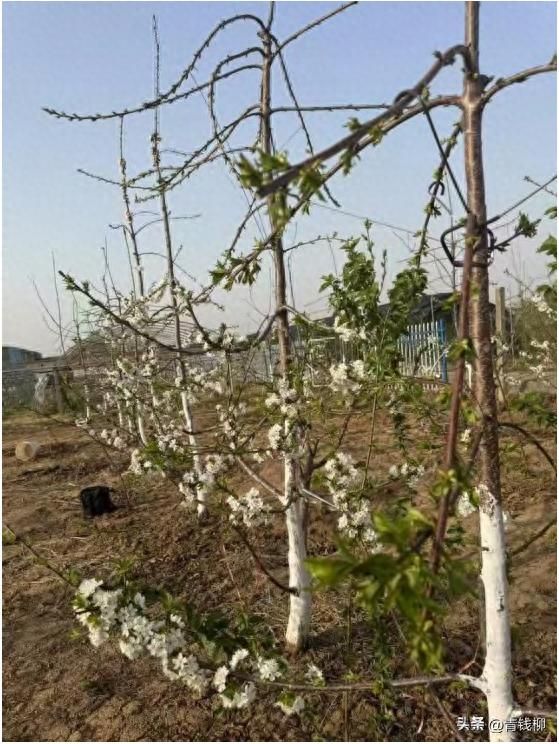
Figure 1 2-year-old cherry long hammer shape
2 v font cultivation mode
2. 1 tree structure
V-shaped integers are planted with a high density, with a wide and narrow range, with a distance of 1. 8 ~ 2. 5 m and a long range
(0. 8~1. 5) + (4~5. 5)
M a two-line v font with 120-138 plants per 667 m2 and a large cherry orchard. A very short log range of 1. 0 ~ 2. 0 m. Using a v-shaped planting model, cherries produced 1,500 ~ 1800 kg per 667 m2 during the fertilisation period. V intracting the font is suitable for the production of large cherry field and facilities for petrified cultivation (figure 2)。
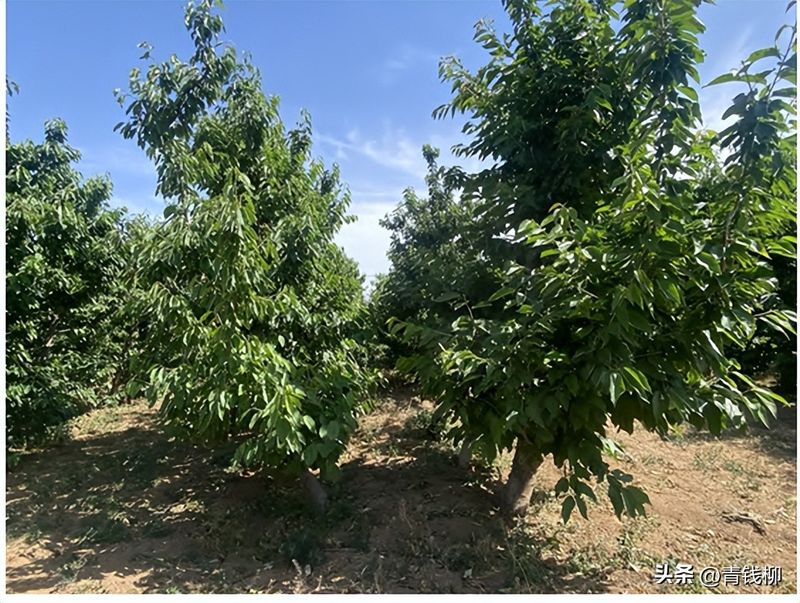
Figure 2. Three-year-old cherry tree v form
Year 1, planting. In the second year, the main branches were placed in an orderly manner at 90° with the main drying on the wire, of which the first branch was placed at a height of 50 cm above the ground; in the third year, the new main branches continued to be chained to the barbed wire at 90° in order, so that the side branches occupied all the space, were smaller in length than a half of the base main stem's grossness, and the fruit was cultivated and combined with the summer trimmed, and the thick branches had been removed, with a number of 8-10 branches on each side, without permanent branches, and the tree height was controlled by 2. 0 ~2. 5 m, and the rear of the whole tree had a v type。
2. 2 cultivation of a v-shaped frame
(1) as required by the cultivation model, a fixed line is normally planted with two concrete or pine slabs at 10 m each, with 45° ~ 60° horizontal angles, giving a v font between the two slabs. (2) the length of each shelf is 3 m, 50 cm and 150 mm in diameter. (3) pull the first layer of wire or wire at a distance of 50 ~ 60 cm from the ground, every 50 ~ 60 cm and 1 floor at a distance of 4 ~ 5 floors。
2. 3 integrative cut points
(1) two cement stakes are planted every 10 m inclined 60°, in v font form. (2) placing 4-5 layers of wire evenly above 60 cm above the ground. (3) two cherry trees, with a v font with a distance of 0. 8 ~ 1. 5 m and approximately 50 cm above the surface of the main branch of the 1st layer, are planted 60°. (4) the main branch and the main branch were bound to the wire at 90° in year 2. (5) the number of branches on each side is 8-10 without permanent branches. (6) the tree canopy is v-shaped. (7) tree crown height 2. 0~2. 5 m。
3 multi-strength fence (improved ufo) cultivation model
3. 1 tree structure
North-south to two backbone systems with 7-9 vertical branches per backbone, with a vertical space of 12-15 cm. For the main branch, the main branch is grown north-southly by 45° south of the tree, with a planting density of 2 ~ 3 m, with a range of 3. 0 ~ 4. 0 m, and north-south. The main branch criterion is a very short cut at 1/2 in the thickness > main dry diameter, with the side branch treating the branch with a length of > 50 cm retort or oblivion, giving priority to the short branch result and target production of 1,500 kg/667 m2。
3. 2 architectural planting
(1) targeting in accordance with planning design requirements. Generally along the north-south route, one 2. 5 ~ 3. 0 m long pole is planted every 10-15 m, and it is planted directly. 7-9 vertical branches on the back, 12-15 cm between the branches. (2) buried 50 cm deep. (3) the pull of 3 wires or wires, with the 1st floor 50 ~ 60 cm above the ground bound the main branch evenly and vertically to the wire or wire (figure 3)。
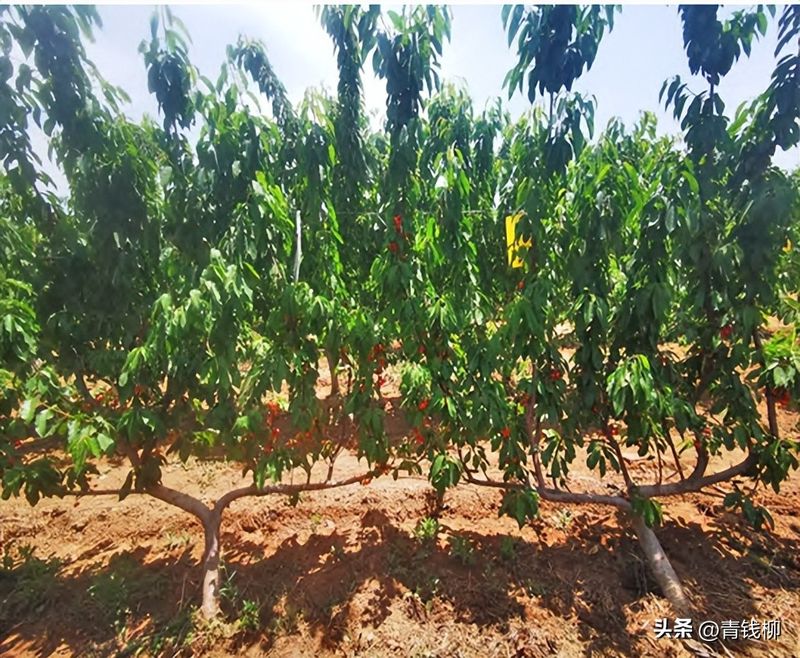
Figure 3 four-year-old tree form ufo
3. 3 integrative cut points
(1) line spacing: distance of 2~3 m. Line distance 3. 0~4. 0 m. 56-110 plants per 667 m2. (2) cultivation and initial plasticization, with a north-south configuration, tree treatment, 45° south of the big cherry seedlings, followed by engraving and plastering techniques, with the numerical standard of the main branch growing eight or so vertical branches on the back, with a spatial distribution of 12-15 cm vertically and a spiral-up. (3) in the second year of tree retrofitting, the backbone conversion, in the opposite direction, pulls branch 1 of the foundation into branch 45° in the opposite direction, continuing to develop around eight new vertical branches on the back of the branch, which are 12-15 cm apart, and maintaining a spiral distribution pattern. (4) elements of a cutting technique, which should be extremely short for the main branch with a thickness greater than 1/2 the base stem interrupting and delaying the age of branches in order to extend the grade; the side branches of more than 50 cm should be removed and priority should be given to the main or short branch results。
4 kgb tree cultivation model
4. 1 tree structure
Plantation densities management, which can be smaller for plots of soil grains with good structure and better fertility, with a length of 4 m x 5 m and density control of 34 667 m2; plots of medium soil fertility, with a length of 3 m x 4 m and density control of 56 667 m2; applied to the cultivation of terraces, with a range of 3 m. The training cycle is three years, during which 20-25 vertical branches are selected to form the “luspendant tree” and thus to produce fruits and fruits. The advantage of the kgb tree is that it is fast-forming, evenly stymied, free of pull operations, and has a small shearing volume, resulting in a reasonable distribution and good productivity (figure 4)。
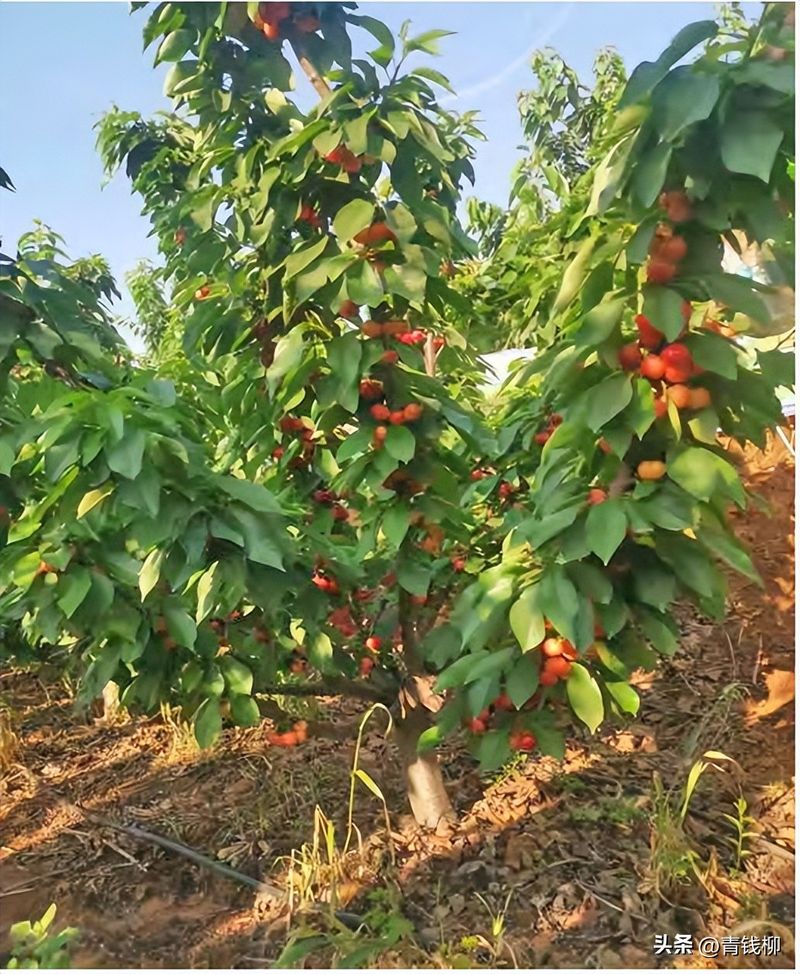
Figure 4 four-year-old brooks kgb tree result
4. 2 points for integration
In the first year, 40 cm dry, 3-4 branches were created, and when the branch grew around 40 cm in the summer, it was cut 30 cm from the base, generating 6-7 branches. Keep an eye on the sprouting so it can grow outward。
Before the spring of the second year, it was cut at 20 cm of the base of 6-7 branches, making it 12-14 branches of results。
Comparison of 5 and 4 tree types
The results of a six-year planting experiment show that out of the four tree types, the long hammer shape and the kgb tree main branch numbers more than v and ufo; the 667m2 plant stands with the largest v font, followed by long hammer and ufo, with the lowest kgb tree size; the long hammer tree height is the highest in the four tree formations, with good use of the stereospace and the remaining three tree heights almost identical; the long hammer and v fonts are higher in the 667m2 production, followed by the ufo tree and finally by the kgb tree shape; and the long hammer and v shape enter the result years earlier than the ufo and kgb tree formations, allowing for an earlier one year。
Table 1 statistics on 4 cultivation patterns

As can be seen from table 2, the length and dry week of the thinly long hammers are larger than the other trees, and the yield of single plants is slightly higher than that of the other three trees; the amount of single branches and buds of the kgb tree is higher than that of other trees; the number of single branches of the ufo tree and the v font is smaller, and the number of buds and single yields is slightly lower than that of the finest hammers and kgb trees。
As can be seen from table 3, the v-shaped star value is higher than the other three tree types, with significant differences with the other three tree-shaped star values, followed by the ufo and kgb tree formations and, lastly, a long hammer。
Discussion
Through planting tests and data survey analysis of four cultivation models, four cultivation models are superior to the traditional cultivation model, are highly mechanized, are less labour-intensive, especially the kgb model, are more labour-intensive, are lazy, have smaller trees and are easy to pick, but the kgb tree shape is suitable for condensed beryllium, such as gisela series, is poorly controlled on the great green leaves and mahali wood, enters late in the outcome period, is taller and is not easily updated later. The long hammer-shaped cultivation model, which is more labour-intensive, has to open 110 degrees of branches in the summer with a steady increase in the heart of the flowers, which requires the control of the crown in combination with double sprouts and the cutting technology, but the tree body is growing rapidly and early fruit is good (three-year results), making use of the results of the branches, the branches are easily updated, the fruits are large, the fruits are of high quality, the results are high, 667 m2 yields 1,200 ~ 1800 kg, and the early results are good. The v-word cultivation model requires a back branch, a well-ventilated tree, highly luminous, efficient, suitable for facilities to grow, and results, which, like the ufo tree form, has a pole to pull wire, but with care to guard against the sunburning of summer trunks。
The reverse tree formation of the ufo fence is more efficient in light interception, the area of leaves is positively related to production, and the production of 667 m2 has stabilized at 1,500 kg, which is consistent with the findings of the predecessor. The tree would need to be fitted with a frame system, with higher upfront investment costs, but a larger number per 667 m2 could be planted, with simple cutting techniques, suitable for condensed and facility planting. However, it needs to be noted that: (1) the distance of the line cannot be too small, usually greater than 4 m; (2) the production in the prior period should be controlled, without which the main branch and tree cannot grow; (3) the number of main branches is about 15 and the length of the main branch does not normally exceed 1/2 the length of the main stem。
As can be seen from table 2, it is easier to update a long hammer, mainly with the result branches, short and flower-like branches. The form of the kgb tree is dominated by the result of the flower beads, which need to be accompanied by a condensed log such as gisela, with a high yield of the previous period, which is consistent with the results of the study by seo young, etc., but is updated year by year, otherwise the result will move outward. The direction of the leaves makes the luminescence of the leaves most efficient. The ufo tree shape is dominated by small and medium-sized branches and flower-like branches。
Table 2 basic information on 4 tree types
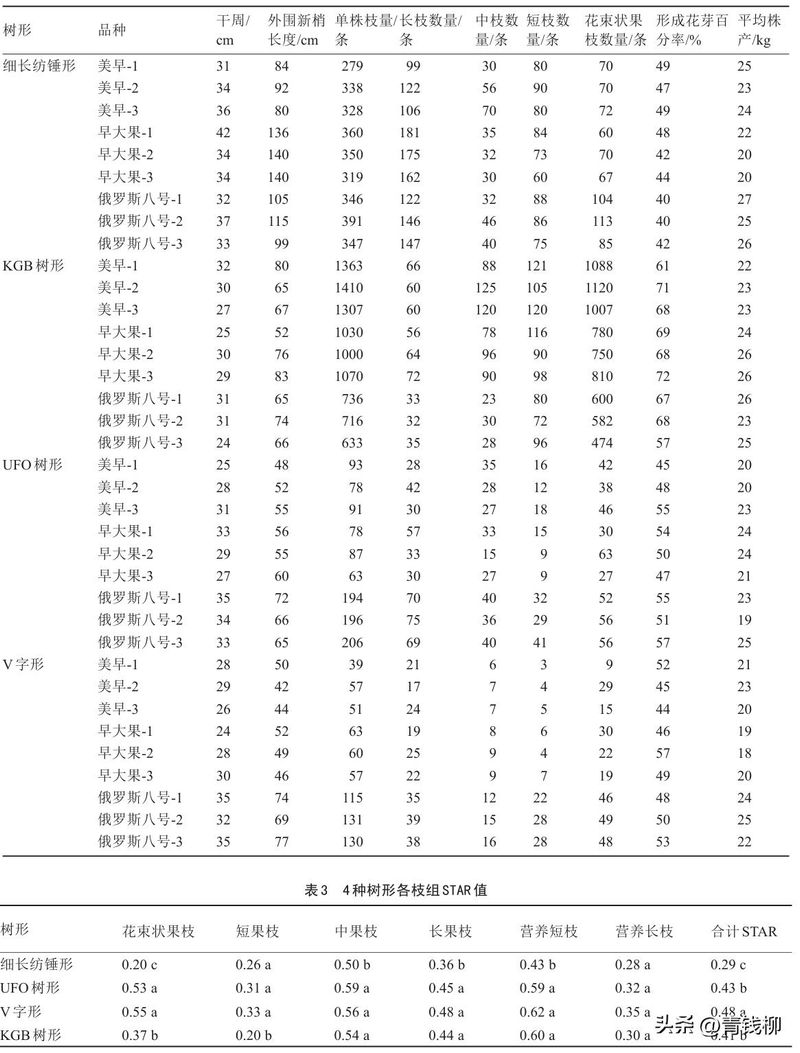
Note: the star values are calculated by vcgestar 4. 0 based on the solar trajectory as at 1 june 2021; different lowercase letters between trees indicate significant differences at 0. 05 levels。
Conclusion
The comparative test found that the fine long hammer was the best combined performance and recommended that the shuxi region should be given priority, with higher single yields and greater photosynthesis, but that per 667 m2 plant plants, yields and tree crown collages were less effective than the fence. The tree is under-invested, flat and sloped, but requires more integrative cutting. If the water is fertilized in better conditions, it is a dwarfed aluminum of the gisella root line that can be chosen to save labour. The v font is suitable for plant cultivation and requires enhanced summer protection. Ufo tree-shaped light energy utilization is high, but upfront investments are high. Appropriate cultivation models should be selected taking into account such factors as local climatic conditions, log types, management levels and investment budgets。









