


A lot of rural friends like to grow a couple of plumb grapes in their own yard or garden, and the fruit is big, sweet, home-grown or home-grown. But many of them are in trouble, some of them are still growing, some of the vines are growing thick, and some of them are not flowering, and others are falling in large numbers, and they do not have much for a year。
I've been growing pompous grapes for years, and i've stepped on a lot of pits and slowly felt its temper. It's not really hard to feed a grape. The key is to figure out how it grows and how it works. Today, in the light of its many years of experience in the field, we can talk to you from beginning to end about the whole system of family-planting giant grapes, which can be done by new hands and friends。
First, we'll go through it, we'll plant it locally, we'll plant it
If you want to grow a giant grape, you can't plant it in such a hurry. You have to know what it likes to grow, what it chooses, and how it is managed。
And the raisins of the high peaks are bright, warm, intolerant of cold and humid, and afraid of the rooting of the water. In the daytime, the vines will be strong, the buds will be divided and the fruit will be high in sweetness. It is less stringent in terms of soil requirements, and ordinary lands and sandy soils can grow, with only sticky low-lying plots that are easy to accumulate water not suitable for planting。
1. Location and location
Household cultivation gives priority to the location of the sun in the courtyard, the best day-to-day sun, and at least half-day light. Far from the back of the house, under the trees, where the light is insufficient, the vines grow only。
In the case of flat planting, the soil is re-ploughed ahead of time, at a depth of about 30 centimetres, and the earth is crushed and the rocks and weeds inside are removed. If the soil is adhesive, some sand can be mixed to improve the permeability. Plantation plots must be well drained and no water should accumulate after rain。
Sapling and planting
The family grower proposes a year of healthy seedlings, which are dry, full of budding, full of roots and higher survival rates. The planting time is selected for the spring and autumn seasons, when the soil is unfrozen in the spring and pre-emergence is most appropriate, and after the fall leaves can be planted。
The size of the pit is determined by the root line and the width and depth of the pit is about 40 centimetres. On the ground floor, a layer of lax soil is laid, the seedlings are put in, the roots are smoothed, then the soil is slowly filled, so that the tree seedlings are gently raised during the process, so that the roots and the soil fit closely. When planted, the soil was laid down, and the water poured out。
It reminds you of a small error: planting is not too deep, and the soil of the original tree is flat, it's too deep, the roots are not breathing well, and it's easy to form a dead seed。
Ii. Fertilizer management, supply on demand, control of strength and sit-ins
Fertilizer is the key to the growth of grapes, and many fruit-farmers either fertilize or water their feelings, resulting in an imbalance in tree positions. Grapes grow at different stages, with different demands for water and fat. Let's talk in stages。
1. Water irrigation techniques
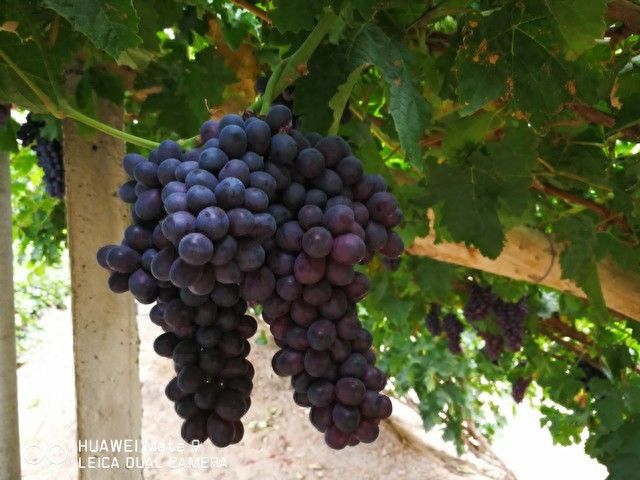
The principle of “dry-and-wet” is generally followed, with the surface of the soil drying and watering at once, rather than daily watering。
In the early spring period, the soil will be moist, and sufficient moisture will allow the new bud to grow. By the flowering season, water is properly managed, the soil is dryer, and there is too much moisture to experience flowering。
After the fruit sits, the fruit starts to expand rapidly, at a time when the amount of water needs to increase, and the water needs to be filled in time to avoid the effects of the drought on the growth of the fruit. The near-maturity of the fruit, the reduction of water again, and excessive moisture can reduce the sweetness and abdomen of the grapes。
During the rainy season, it is essential that the drains, whether planted on the ground or in the basin, be filled with water for more than two days, so that the root system is vulnerable。
2. Reasonable use of fertilizers
We only use conventional farm fats, general compound fats, simple, well-functioning, and suitable for family farming。
Before the bud, a quick-acting fertilizer was pursued to help freshly sprouts, fresh growth, low-volume, shallow burial along the edges of the tree canopy and subsequent water melting。
No large-scale fertilization is required before flowers are bloomed to avoid new madness taking nutrients and causing falling flowers. And when the fruit starts to swell, the focus is on fatting and helping the fruit grow。
This fertilization is particularly important when the fall grape harvest ends and is a golden period for bottom supplementation. It can be used to refill the nutrients consumed by the tree body over a year with decomposed farm fats and shallow ditches outside the root of the plant, laying the foundation for the gestation of the next year。
The pit avoidance reminds that raw manure can never be used directly and that no decomposition fertilizer can ferment and burn the root of grapes in the soil, which is the easiest mistake for new hands. In addition, fertilization is carried out as far as possible from the backbone, and fertilization with the root is easy to burn。
Iii. Cutting the racks, smoothing the branches, ventilating the light
Peak grapes belong to the vines, which grow fast, do not build, do not trim, doth crawl, doves fold, do not see the wind, do not see light, and not only have few results, but are prone to problems. Cutting and scaffolding are essential components of day-to-day management。
1. Roast chickens
The tree seedlings grow more than 30 centimeters and they're ready to go. Rural households often build slabs and fences with poles, wires and fences, which are determined on the basis of their own premises, and are generally suitable for 8 to 2 metres。
Tie the brocade along the shelf, and let the branches be distributed in an orderly manner, so that they are not entangled. When the shelf is set, the whole vine stretches, and light and ventilation improve。
2. Four seasons of simple trimmed
Without a complex professional approach, the basic cutting method is sufficient for family farming。
Spring sprouts: when the new sprouts grow, the trunks, the redundant sprouts on the old branches, the sprouts of inward growth are wiped out, the sprouts of strength are preserved and nutrient waste is reduced。
The summer crumbs hit the top: the result was a few leaves left on top of the plough, and the twigs continued to grow and concentrated their nutrients on flowers and fruits. They cut off long branches, cross branches and thin branches。
Autumn twigs: after grape harvesting, dry and sick branches are removed, too dense branches are removed, trees are made accessible and winter is safe。
Winter shearing: once the leaves fall into hibernation, make a whole cut, cut short the long branches, keep the strong-out branches, fix the branches after they have been trimmed, and make it easier to draw the chickens up in the coming year。
Iv. Plumbing care, reduction of fallout and upgrading of fruit mass
It is also the problem that is most frequently reflected in the magnitude of the grapes, which are not small but poorly managed. I'm sure you'll be able to keep your production clearly。
During flowering, in addition to the water control referred to above, every effort is made not to flip the soil under the tree or to shake the branches. The weather must also be properly protected and the strong wind will blow down the flowers。
When the little fruit grows up, it's simple fruit. In a string of grapes, a small, deformed and crowded larvae is cut off, leaving enough room for the rest to grow. The grapes that follow the fruit are even and better-looking and avoid problems caused by the crowded fruit。
During daily patrols, the ears close to the ground are removed in a timely manner and the ground is wet and prone to the growth of fruit. At the same time, appropriate leaves are removed from the ear of the fruit, so that the fruit can reach the sun, evenly coloured and taste better。
V. Daily patrols and winter protection, all year round
Usually there is nothing to look at next to the grapes and yellow leaves and dried branches are found to be cleaned up in time. Keep the trees clean, weeds are pulled out in time, and weeds compete with grapes for fattening。
In the north, winter temperatures are low and freezing is required. After winter cut, a layer of soil can be built around the roots to protect the roots. They are less resistant to the cold and can also contain the mains with straw and fabric in order to resist the cold. Temperatures in the south, usually simple clean-up of gardens, can naturally increase winter。
This is the whole set of management methods that i've been planting for many years, ranging from field planting, water fertilizer management, to tailoring racks, fruit management, winter protection. To sum up, it's not a problem to grow giant plumb grapes, to follow their habits, then to decorate, to trim them, and to make sure the trees are stable。
And if you've grown a giant grape in your family, or if you're planning to plant it, you might want to try to follow these methods. You can share your comments in the comment area and learn from each other。
Carnation: cultivation is gradual and not in a hurry. The first two years of new seedlings are dominated by trees and do not force them to bear fruit。









