


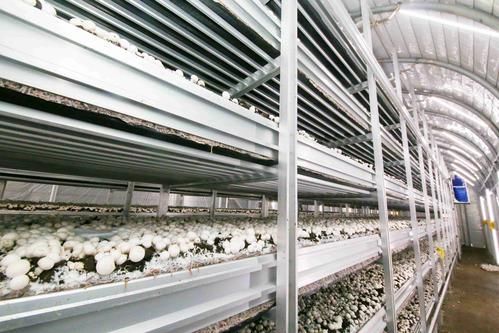
Elements of a simple multi-storey bed frame, double mushroom house construction and cultivation technique
Source:
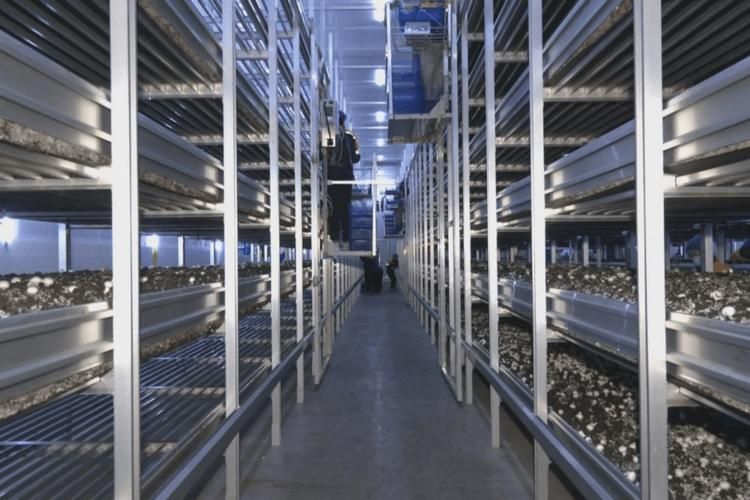
Two mushrooms are also known as mushrooms, white mushrooms and mushrooms. It is white and fine and tasteful, and it can be cooked, souped, roasted, etc., which is best sold in my country and elsewhere. In the north, there are generally double mushroom cultivation sites, which make use of underground bomb shelters, permanent mushroom factories, and a ramped simple vegetable greenhouse. These cultivation sites, after several consecutive periods of cultivation, often require the use of medicinal agents for the eradication of insects, to the detriment of the production of non-publicly harmful edible bacteria. This paper describes a mushroom shed suitable for the cultivation of double mushrooms in the spring and autumn, with low investment, high replant index, easy access, easy to break, mobile and acceptable to a wide range of producers. I. Places and sizes may be chosen where agricultural land or village boundaries are not easily dispersed and water sources are easily accessible. If a mushroom shed with only one door is built, it would be appropriate to have an area of about 250 m2. It is best to go east-west, a small-scale mushroom house management facility that facilitates the delivery of planting and harvesting. Ii. The structure of the mushroom sheds and the construction of the mushroom sheds consist of three parts of the earth wall, the planting bed and the roof of the sheds, with the mushroom sheds specifying an east-westerly direction of 30 m long, 7. 5 m wide and a ceiling of 2. 7 m. 1. The construction of the earth's walls began with the construction of the construction line on a design scale, the drying of the earth's walls around the mushroom shed, the use of which was excavated by the floor (30 cm) inside the shed, the height of the wall was 0. 6 m above the outer surface of the shed, 0. 9 m above the ground inside the shed, 0. 4 m below the wall and 0. 3 m above the mouth. A 1. 6m wide walkway was drawn on the inside of the northern wall, leaving a small door on its east side. In the shed, a north-south-to-south planting bed is constructed from the north walk southward, with a length of 5. 7 m, a wide mel (0. 6 m wide east-west) and a range of 0. 55 m between the left and the left, with four floors up and down, with approximately 19 planting beds per floor. The bed frame is usually made of bamboo poles, which are both resilient and clean-up, and is generally used for 10 years, with a total of 228 pillars set at the same distance (about 1 m) on each side of each planting bed. The mid-post height is 2. 7 m and the altitude on both sides is 2. 5 m, followed by a layered bed frame. A thick piece of bamboo rod is used as a frame on both sides of the bed frame, and a thin piece is fixed with wire, and a thin piece of straw is laid vertically on the pole and vertically in order to prevent leakage of the planting material. The lower spacing per layer of planting bed, based on the principle of user-friendliness, typically requires a distance of 0. 87 m between the first (i. E. Ground) and second floors, 0. 54 m between second and third floors and 0. 49 m between third and fourth floors. 3. To build roofs and use bed-mounted columns as sheds to form an integrated structure of bed-beds and sheds. This is done by placing bamboo poles at the top of the bed frame, in the north-south and east-west direction, at a distance of 0. 5 m per pole, by tying them with wires at the crossroads, by building a plain-shaped roof, and by connecting them with the earth wall on the edge of the roof. Plastic film is bandaged on the top of the shed and around it (above the earth wall) in order to preserve the temperature and humidity (with the use of old film removed from the vegetable shed), followed by a curtain. Warming equipment. Three underground fireplaces built on the northern side of the wall of the shed are separated by the word “one”. To be used when natural temperatures are insufficient. Plantation stacks may be made using straw or straw and wet animal dung. In the case of straw, for example, the ratio is 1,000 kg of dry straw, approximately 5 m3 of wet animal dung (which should increase the amount of animal dung during the lower-temperature season), plus 1 per cent of plaster and l% of lime, which, if the dung is added less, can be added to approximately 5 kg of ammonium. In the winter, backwinds should be chosen to set up in the sun. The amount of time spent on stacking is reduced by higher external temperatures. The stacking is made with about 20 cm of straw and 2-3 cm of dung and then watered and wet, so that it accumulates up to about 1. 5 m. The amount of water to be poured is based on less than substantial seepage from the bottom. The surface of the winter pile is covered by a sheet of shrubs and a layer of grass curtains outside the shrubs, which, after approximately two weeks, when the core temperature of the planting material rises to 70°c, then the first piles are flipped and the edges fall into the middle, with the fertilizer, plaster and lime being spread evenly across the population. If the moisture is insufficient, it should be replaced with a stack of water to reach 60 per cent. The 2nd and 1st dumps are approximately 10 days apart, with a temperature of 65-67 c allowing them to go up, and the next 8 days, one and four times. When straw becomes brown and easily snapped with white silk on the surface (around 46 days in winter stacking and about 30 days in other seasons), it is proven to have been stacked and ready for use. The use of dung can be reduced by about 20 per cent if heaps of wheat are made, and the stacking time can be reduced by two to three days. Iv. Feed seeding shall evenly pile the planted material on the planting bed, with a thickness of about 20 cm. When the planter is flattened, the strain is made into blocks, spread over each m22 bottle (using a bottle of 50 oml) and then covered with a layer of planting material, which will be just as tight and then covered with a tablet. V. Mystic culture is controlled from 20 to 24°c, 75 to 80% humidity, with proper ventilation of 10 to 20% per day, and is regularly checked for fungs and pests, as well as for the growth of mycelitis, which is shown to be impregnated, uneating and slow in the growth of the fungus, and when the fungus is low, the causes are identified in a timely manner and remedial measures are taken. The fungus were found to be excavated in a timely manner, and a small number of pests were found to be capable of early manual capture, such as slow growth of mybs, which may be due to insufficient humidity in the shed and a timely increase. Under normal conditions, approximately 20 days after seeding, the mycelium is full of planting material, and it shall be covered in time. Land cover is generally 18-20 per cent water-bearing, with the type of land having a direct impact on the growth rate of the post-pastoral fungus and on the output of the sub-entity. Through pens, five different types of land-covered materials (1/2 for the north-east, 1/2 for the region, 1/2 for the region, 1/2 for the region, and 1/2 for the region, the region's grass-breeding and finer granulates, the region's grass-breeding particles, and the landscape soil) have been shown to be better prepared than the pure particles. Vii. The temperature range of the fungus-out management period is 10 to 22°c and the maximum temperature is 15 to 16°c. The temperature is too high and the density is high, but it is smaller, the mushrooms are soft, the weight is light and the product level is down. If the temperature is too low, the sub-entity slows or stops. The relative humidity of the mushroom room is 80 to 90 per cent appropriate, with high susceptibility to disease, low fungus cover tortoise fissures and death from aging mushroom buds. According to the information, the appropriate light intensity is a good irritant for the sub-entity and is now certified by the author (ranges “2796” and “176”): the suitable light strength of 15-600 lx for the mushrooming period is the most suitable range of 20-80 lx (the test instrument is the “st180c digital photometer”, produced by the beijing teacher training university photo-electromechanical plant), which is too strong for light, is dry for fungus, does not form mushroom buds, has a hard torn tortoises, and decreases in mushrooms when light is weak, but does not affect the quality of mushrooms. Care should be taken to ventilate the mushrooms, constantly refill the fresh air and remove harmful gases. During the mushrooming period, especially during the formation of the fungus buds, the winds above 3 to 4 classes outside the shed are not allowed to go straight to the point where the sub-entity is dry. Every time a mushroom is taken, it is removed in a timely manner, and the dents on the surface of the mushroom are emptied in a timely manner. It is also watered with fog currents that keep the plant content at around 60 per cent. In order to meet the ministry of agriculture green aa level criteria, pest control should avoid the application of insecticidal agents during mushrooming and should be preventive and integrated. The main method is to seal the shed before the planting material enters the shed, spray or fumigate with insecticidal agents and spray lime powder on the surface. The best way to induce mosquitoes during planting is to use physical booby traps, preferably early detection of pests, manual capture and, most importantly, improved management based on the technical aspects of planting. The cultivation of mushroom sheds, which are more than two years old and more infested with disease, can be broken down and built, thus reducing the incidence of pests and diseases. After-treatment and the sale of mushrooms should be lightened so as not to create a noodle, cause brown transformation and reduce product grade. Double mushrooms removed from their roots and were sold in a package of 250 to 500 g, which reduced the damage during the sale process in order to extend the marketing time. If it is not sold on the same day, it can be stored at 4 °c for approximately 3 days, and if it is taken at 0. 01 % sodium sodium sulphate that can be stored at 4 °c for about 6 days。









