


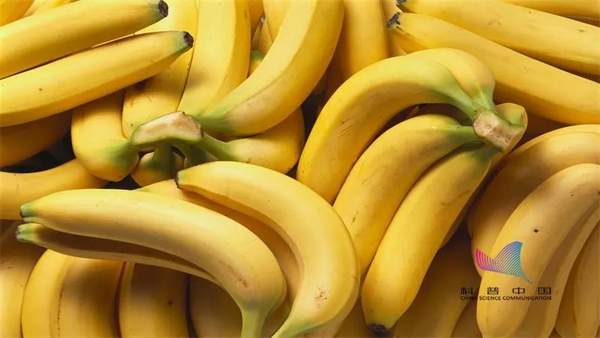
It's sweet in your handBananaIt's probably being hidden in dnaVirusKeep an eye on it. The latest reports from external sources that the banana stripe virus is bringing the global planting industry to countdown are not title parties, but are a real concern for the food security of nearly 600 million people。
Why is bananas born sick
Today, the world eats almost three times as many bananas. Their wild ancestors come from two small, unsuspecting, wild and wild beaks in south-east asia. After millennia of human domestication, there are already no hard seeds in the meat, and their mouths are smooth and sweet. But the cost is cruel: three times infertility, no seeds at all, and only artificial non-sexual reproduction to sustain future generations。
This means that all commercial bananas are essentially clones of the same plant. There is no genetic mutation of diversity, and there is no naturally screened stock of resistant genes. Once a virus or fungus has found a breakthrough, the whole system has little resilience. Bananas look at the skin and lose at the genetic level on the starting line。
From the great michelle to the valet, it was twice destroyed
In the middle of the last century, banana panama's disease, the deadness disease, swept the world, and wiped out michelle, the dominant species that at the time had the best food and the absolute advantage of the market. Humans have all the hope of fighting the disease on cavendish bananas, which are the most popular in the mouths of fruit farmers。
The story of hua peng dates back to 1830 in england. A banana was introduced from mauritius at the chatsworth estate, where the horticulturalist joseph paxton grew and named himself. The vast majority of the bananas that we have bought today in china's supermarkets over the centuries are the sexless offspring of that platinum, which accounts for nearly half of the global market。
How bad is the stripe virus
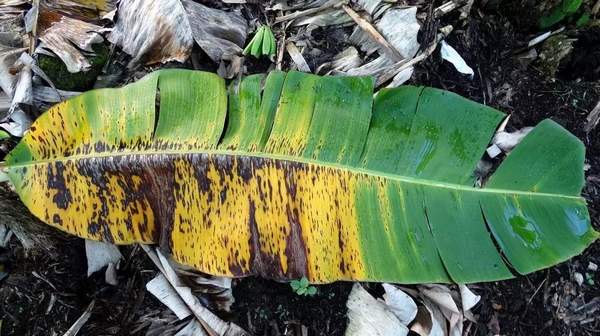
This focused banana strip virus (bsv) is particularly difficult for the media. It is not a common disease hanging on the face of a leaf, but a direct intrusion into and embedding in the dna sequence of a banana, like a biological bomb lurking in a cell core. As usual, there are no symptoms and the entire plantation will begin to die in large areas once the incubation period ends as a result of persistent drought, cold temperatures or extreme temperatures。
What's more hidden is the transmission chain. Bsv can spread quietly through a group of non-sexual breeders, with toxic seedlings no different from healthy seedlings, and is transported to new plantations in trade flows. By the time the leaves appear in typical stripes, the plant starts blackening, the virus is already firmly entrenched in the roots and soil, and the cost of its eradication is extremely high, and it tends to end up in the garden。
Single varieties bet the whole industry
There are 120 countries and territories worldwide that are growing bananas, and it is the fourth largest food crop in the world, with nearly 600 million people relying on it for food. However, only a few of the main commercial efforts have been to open up the list of crops in the main production areas. The chinese family owns nearly half of the river, leaving behind mostly small local varieties. The more monolithic, the more a virus lifts the entire table, without a replacement。
In addition to the bsv, banana plantations deal simultaneously with blackleaf diseases, beam-top viruses, leaf viruses, fungi types and pests. Among them, black leaf spots caused a 50 per cent reduction in global banana production and the spread of toxic seedlings in cross-border trade accelerated. Multiple sources of disease are resonated, and field management pressures and control costs for fruit farmers are far beyond the imagination of ordinary people。
What are the farmers and scientists fighting for
The immediate response is two lines. One is to protect against death, to conduct quarantine tests at the port and to intercept the flow of toxic seedlings into the main area. The other is the genetic editor, who tries to write specific anti-pathological genes into banana dna so that it can identify itself against deadly viruses such as bsv. Both lines are advancing simultaneously, but none of them have yet produced an effective panacea。
The biggest variable is that viruses and fungi are also evolving. You spent three or five years using genetic editing to develop a species against a certain type of atrophy, and the pathogen could mutate into a new strain in months. The life cycle of human laboratories, from design, validation to field cultivation, takes several years, and the virus is changing at a much faster rate. It's essentially a race for time difference, and who runs fast and who lives。
How long can you eat your next banana
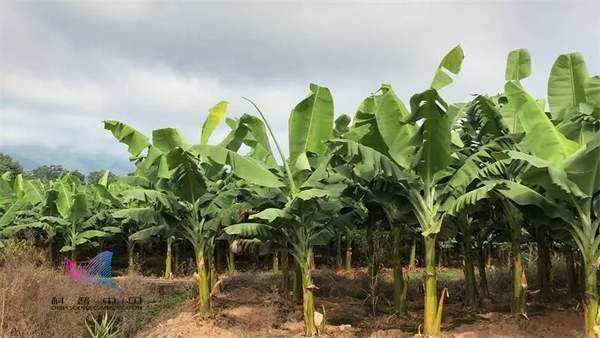
The global banana-growing system, based on a clone in the chartsworth estate of the united kingdom more than 200 years ago, covered tropical areas on both sides of the equator with no sexual reproduction. The entire system has no stock of genetic diversity, no natural retreat, all eggs placed in the same basket, all damaged and without backup options。
But after all, bananas have a history of cultivation for 2,000 years, and humans have fought the disease for 2,000 years without killing them. Genetic editing, detoxification and anti-generative variety selection are some times more powerful than ancients. There's only one real winner: the speed at which human science advances, the speed at which the virus evolves, and the next 2,000 years for bananas。
Where do you usually eat bananas? If tomorrow's news tells you that the birthplace has diagnosed the stripe virus, will you continue eating or will you quit? The comment area is welcome to talk and feel useful。









