


Potatoes are grown in the north plains of china, the winter season is off limits and the harvest is directly half the harvest. In the 20 days between late october and early november, how to plant, choose what land, how much potassium fertilizer will be applied, how to protect the seeding season from freezing, the next time we speak, it takes two minutes to see how much pits can be stepped on。
The winter air is stuck in late october and early november
The best seeding window for the winter potatoes in the north plain is from late october to early november. In the south-central part of the river and in shandong texas, for example, temperatures have stabilized at above 12°c during the daytime period, with the cultivation of potatoes growing safely into the earth. Once dragged to mid-november, night temperatures fell at 5°c, with a marked decline in the survival rate of young seedlings and a contraction of production throughout the season。
If the area belongs to the northward region, such as hebei zhang's family, shanxi's community, and hebei's south side, the planting can be pushed back, not later than early november. Temperature remains above the safety line during this period, and the gestation period will not be too long. Tow it to mid-november and plant the potatoes in cold soil so that they do not sprout, until the temperature rises back and the tuber is less developed and the acre production is at least 80% off。
It depends on the thickness of the layer and the acidity
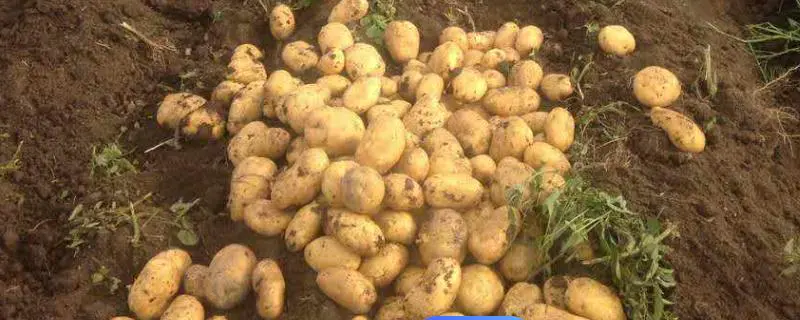
In winter, potatoes are used to pick up the soil, the top of which is deep, micro-acid sandy soil above 60 centimetres in the tillage, with ph values between 5. 6 and 6. The soil is deflated and is not susceptible to deformation when it expands. The sandy soil on the plains of hebei shih, shandong, henan anyang, etc. Is in better conditions and even small-scale cultivation is easier to manage。
Drainage and irrigation conditions are equally critical. In winter and spring, the northern plains have a series of rainfalls, and low-lying areas with high groundwater tables are prone to water accumulation, and the chips bubbles rot for days. It would have been better to run a drainage test before the crop was filled with water to see if it could be drained within half an hour, which would have directly excluded the planting programme, otherwise the risk of decomposition of the end block would have been as high as a dry season。
Potassium fertilizer is most easily ignored by farmers
Many farmers use bottom fertilizer only for urea and phosphorus, whereas potatoes are the most in demand for potassium. For each 1000 kg of tubers produced, only 1 to 3 kg of phosphorus is absorbed from the soil from potassium 11 to 13 kg, nitrogen 5 to 6 kg. Potassium is twice as high as nitrogen, six times as high as phosphorus. Potassium can't keep up with the tubers, and it's white。
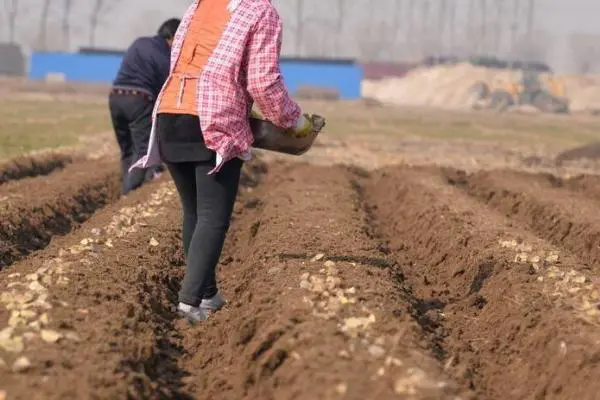
There are lots of plots in the north plain that grow wheat year after year, and there is a serious loss of potassium. Potassium sulphate is recommended for 20 to 25 kg of acre before winter, with 3,000 kg of decomposition organic fertilizers as base fertilizer. It would not be cost-effective to apply all nitrogen fertilizer, to have a long and small leaf, to produce 200 or 300 kg less acre than a balanced fertilized plot, and to earn 4,500 less acre。
For different reproductive periods, different temperature ranges
The temperature requirements for potatoes vary significantly at various stages. The most comfortable period is 13 to 18°c, with long-term masts ranging from 18 to 21°c, with a long-term expansion period of 20°c and a flowering period falling back to 15 to 18°c. The average daily temperature is stable at 17 to 21°c throughout the growing season, and the above-ground leaves and subterranean troughs develop simultaneously, with yield quality reaching high levels。
During the period from november to february of the following year, temperatures fluctuate between 15 and 22°c during the day, just to cover the demand for leaf and tubing. In january, however, the tide of cold could drop to below 0°c at night and the leaves were frozen directly. It is recommended that early attention be paid to weather forecasts, that the tide be preceded by covering the surface with a membranes or straw, and that it be covered during the day and at night, and that it be maintained for the most part。
Sowing and post-show management
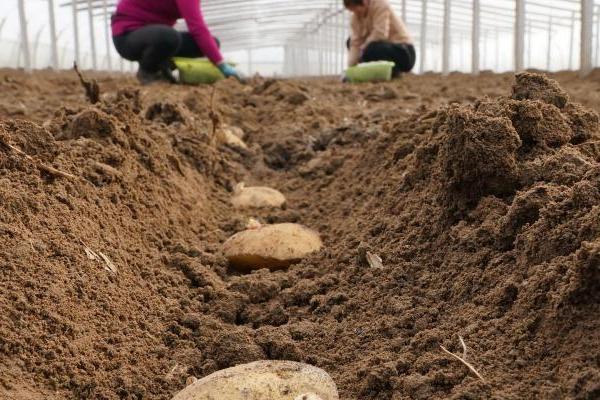
Two rows of planting ditches, 28 centimetres in length, 25 centimetres for each potato plant, luminous eye, 5-8 centimetres for the ground. Once it is finished, the running water stops two inches from the surface and must not pass through the surface. Once the water has reached its peak, the seeding of potatoes lacks oxygen in the closed soil, and it suffocates in two or three days, with its entire heart and heart。
One or two days after the broadcast, a layer of straw was built immediately after the spraying, taking advantage of the fact that the surface was damp and using 2 to 120 pounds of water each in dur and raso. The herbs are soaked that they do not have to go to bed again during the seeding period. When the seedlings come up and grow to about 10 centimetres, the straws will be slowly exposed, the seedlings will come up early and the ventilation will be affected。
Don't pile the potatoes too high in the ditch
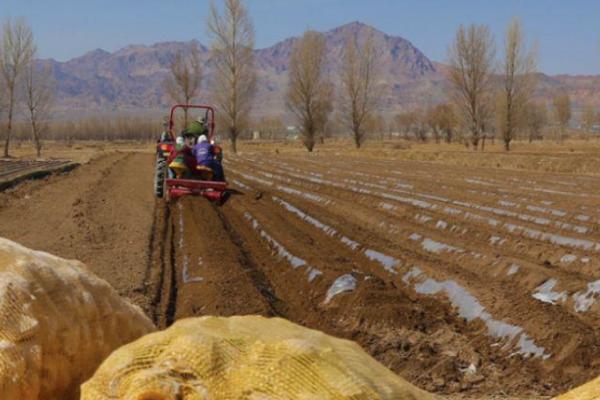
Potatoes that can't be collected or kept for next year's seeding can be hidden through winter. The entry time is not earlier than october, when the trenches are dug from 1 to 1. 2 metres deep and 1 to 1. 5 metres wide, and the levels of the potato pile are controlled by 80 centimetres. The soil is covered with temperatures of 5° c plus one layer of soil, which is spread down to the gutter, without the need to flip the potato pile throughout the winter。
Most afraid of too much potatoes. It piles to more than one metre, spreads slowly in the middle of the ditch, local temperatures are high, and the chips are prone to heat and decay, and a whole pile is piled up. The northern plain fell below 0°c in the night after november, and the exterior of the ditch covered more than 30 cm, the meso-level straw was re-pressed, internal and external temperature was contained, and the success rate of the opening of the spring for potatoes was 90%。
What number of months did you grow potatoes in winter? The comment section talks about your practical experience and thinks it's useful to give it a compliment and forward it to a friend on the side of the field so that more people don't step on it。









