


A lot of friends who like to grow fruit trees in the yard and on the balcony make trouble when they want to buy fruit seedlings. The prices of seedlings sold on the market vary, and some traders sell fake seedlings, struggling to feed them for two or three years, and finally discover that the varieties are wrong and do not produce the desired fruit. The cost is not small if there is a single purchase of more than one seedling。
Indeed, during the autumn period, the temperature was not cold or hot, soil moisture was stable and was the golden period of the ointment tree. They don't pay to buy seedlings, cut branches from their homes or from the healthy fruit trees of their relatives and friends, so that they can grow up. Moreover, the seedlings are non-sexual, growing fruit trees of the same quality as the parent trees and do not vary in species。
But let's be clear, not all fruit trees are suitable for embroidery. Nutrient trees such as peach trees and almond trees are very difficult to plant, have very low survival rates and are usually married to seedlings. There are three kinds of fruit trees, and in the fall, they're fast, they're alive, and they're good for regular recruitsNo figsI don't knowGrapesI don't knowPomegranateI don't know. The following is a one-time presentation of the whole set of gymnasiums and the maintenance elements。
I. Frozen fruit: the highest rate of activity in the year after the year
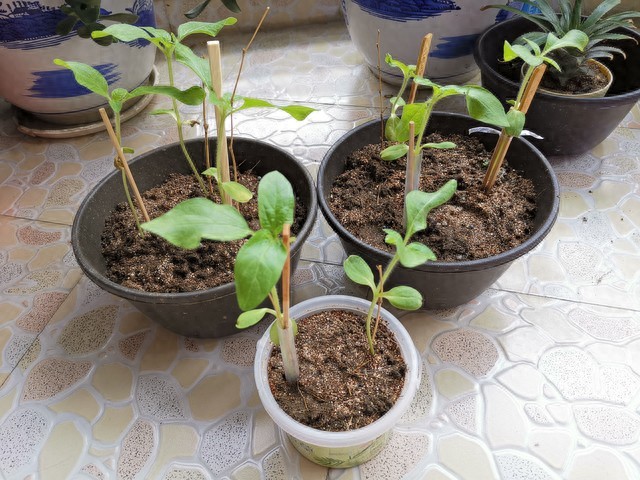
The figs are definitely the fruit trees of the new hands. It has strong roots, no environmental requirements, pellets and floors that can grow, and it's fastFamily cultivationHot breed. Autumn september-october will be ready for cutting。
Selection and processing of branches
Cutting branches is the choice of a half-timberly strong branch. Don't choose the old ones, the young ones have insufficient nutrients, and the old ones are easily blackened and rotting, nor the old ones that are completely old and dry, and the roots are too slow. The length of the branch is 15 to 20 centimetres, and one branch retains two to three buds。
Cuts are done in detail, with 45° sides in the lower end of the branch, which expands the area of the soil and makes it easier to grow roots; the upper end of the branch is cut flatly, and the wound is covered with a multibacterium to prevent infection. Cutted branches can be impregnated with root agent solution, 2 cm in the bottom and 1 to 2 hours; without root agent, they can be omitted, and the figs themselves have strong roots, although they can take a few days。
Plugin matrix and piping operation
The matrix gives priority to clean river sands for garden land at 1:1. River sands breathe through the water. It's not easy to build the roots. Do not just use pure land, which is easily grounded, watered and watered, and the bottom of the branch is easily decayed。
Plug a well-treated branch into the soil at a depth of approximately one half of the total length of the branch, crushing the surrounding soil and pouring water once. It was then placed in a light ventilated area to avoid the noon sun。
Post-care points
Upon completion of the piping, it is sufficient to keep the matrix micro-humid and cannot be heavily watered daily. The long-term accumulation of water in the soil is the most important reason for the failure of the embroidery. When the air is dry, a little mist can be sprayed above the branches, and no heavy water can be poured。
Normal maintenance will grow in about 20 to 30 days. Wait till you see the bud. Don't rush. The growth of the bud is not the same as the growth of the root system, and the pre-breeding period consumed the branches ' own nutrients, which were dug out too early to grow, and could easily die back. When the new branch grows to more than 10 cm, the roots are fully developed, and the pelvis is replanted. Conservation is in place, with a live figs of fruitless seedlings that can be grown in the next year。
Grapes: autumn incubation, small saplings strong enough to climb the vine in the next year
The grapes are divided into spring and autumn, and many know only spring, although the advantage of autumn is clear. In the fall, the vines accumulate sufficient nutrients, the external temperature is mild, small seedlings continue to grow in the soil, and spring springs are springing earlier, and the seedlings grow stronger than spring。
Selection and processing of branches
Grapes, with priority given to strong branches after the results of the year. Picking sprouts is full, no branches of pests. Cut the branches into about 20 centimetres, each with two full buds. Slash the lower end of the branch, flatten the upper end at 1 cm from the budding point。
After cutting, the next leaf is removed, the entire leaf is cut, only a small leaf at the top is preserved, or it is removed directly and the water evaporation is reduced. If the branches are dried up, they can be immersed in water for half a day to recover activity. The conditions can increase the probability of rooting with a little root powder。
Plugin operations
The matrix recommends corrosive corrosive soil with pearl rock, which is lax. When it is inserted, the branches are slashed and inserted into the soil, half of the branches are buried in the soil, the buds are up, the soil is softly pressed and the root water is poured out。
A friend who lays in the ground, chooses a land that is tall and drains well, does not choose a low-lying position, and when it rains, the water will be soaked. The piping is complete and a sunnet can be built to shield the strong light。
Post-care points
Autumn grapes with emphasis on wetting and water protection. The soil is moist and undry. As temperatures are slowly reduced, the northern region is completed with the piping and, in the late autumn, the roots are covered with a layer of straw to keep them warm and to prevent the cold freezing of the new roots。
Autumn grapes, when they grow into roots in the annual year, cease to grow into hibernation after winter. When the temperature rises in the spring of the coming year, it will draw fast. A reasonable set-up, trimmed and preserved after life, with a small number of adjoining fruit in the second year of life, and in the third year of life。
Iii. Pomegranates: the branches are rooty, the cold is good enough to feed, and the garden plants are good
Pomegranates are resilient, cold and drought-resistant, and they are suitable for both courtyard and balcony plants. Pomegranates have been inserted into the pomegranates, which have had a good rooting effect。
Selection and processing of branches
Picked a woody half-breed pomegranate branch with no worm eyes or disease. Interception of about 15 centimetres with 2-3 buds. The lower shear increases the root area and the upper part is flat. Cut off the next leaf, leaving only a small amount of it at the top. Cuts are simply disinfected with polymix, reducing the risk of decay。
Plugin operations
The platinum matrix is mixed with corroded leaves and river sand. The flower pots must have a drainage hole at the bottom to avoid accumulation. The branches are inserted into the soil at a depth of about 1/2. The soil is covered and water is poured. They are placed in a ventilator to keep them from the sun。
Post-care points
The pomegranate itself is drought-resistant, so that the soil remains moderately humid after an embroidery, so that water is not frequent. Small quantities of water are sprayed when the air is dry. About a month or so. Pomegranate seedlings grow at a steady rate and have good cold resistance. In the early stages, the emphasis is on raising the branches, so that they are not too early for the fruit to bloom after two to three years。
The fruit tree plugs into the general core technique to avoid these pits and double the survival rate
A lot of people have failed, not in the wrong choice of species, but in the wrong detail. The following points apply to all three types of fruit tree plugs。
1. The branches must choose a healthy disease-free plant. If the parent tree itself is ill, after cutting the branches, it is probably decomposed and difficult to root。
Clean matrix is key. Do not use mud with weeds and rotting leaves, which contain large amounts of bacterial fungus, which can easily cause a wound to infect the black pole. It's better to have a tan。
3. Light control. Before the root is inserted, all of the light is to be kept and the sun is not to be tanned. The strong light accelerates the evaporation of the branches, which die dry. When the roots grow and stabilize, the light increases slowly。
4. Water-watering principle: do not wet. The most afraid of water accumulation, the soil is damp and heavy, and the bottom wounds of the branches quickly decay. The soil is dried and a small amount of water is replenished。
Temperature control. Autumn pegs at the best temperature at 18°c - 28°c. The temperature is too high and the branches are easily dehydrated; the temperature is too low, the root rate is stagnant, and in areas of the north where the temperature is fast, permutation is carried out as early as possible。
It's a common error zone
Zone 1: branch full of leaves. The leaves consume a lot of moisture, the tumbles have not yet taken root, the branches have run out of water and are dry. Most of the leaves are going to fall off when you plug in。
Mistake 2: the longer the root agent bubble, the better. The root agent only needs to be impregnated for a specified period of time, and long periods of impregnation burns the branch wound and inhibits the root。
Mistake 3: deplant when it's budding. The emergence does not mean that the roots are well grown, that the seedlings tend to die. It is important to wait for the new ones to grow。
Wrong area 4: fertilisation after piping. No fertilizing until root. Without the roots, the fertilizers burn the wounds of the branches, and the gills are impregnated and the new leaves stabilize, with a small amount of thin fat。
Migration and follow-up management
When the seedlings are stabilized, they can be planted or planted. When shifting plants, do not force the branches to pull, and try to bring the original earthworms and reduce the root damage。
The first two years of seedlings were dominated by trees, except figs. Grapes and pomegranate seedlings, with as little or no fruit as possible in the last two years. Premature and large results, excessive nutrient consumption, weakening of tree seedlings, and late production. Daily shearing, rational water fertilization and prevention of common pests such as aphids and red spiders。
The greatest advantage of self-plugging fruit seedlings is low cost and preservation of varieties. Cut a few branches and be patiently maintained for some time, so that many fruit seedlings can be cultivated. Whether it's in a small yard or a balcony plant, it's a strong harvest when it comes to the nuts。
Has anyone ever tried poaching fruit trees? What kind of fruit trees do you have? The comment section is welcome to share your experience. A preference for home-grown and fruit-planting techniques allows for a focus and continuous sharing of practical dry-planting products。









