


Hello, i'm 17. Long-term roots have been established in rural fields, with the continuous sharing of ground-based, degenerative tri-farmer science, using years of field experience to help growers avoid planting faults and secure steady gains。
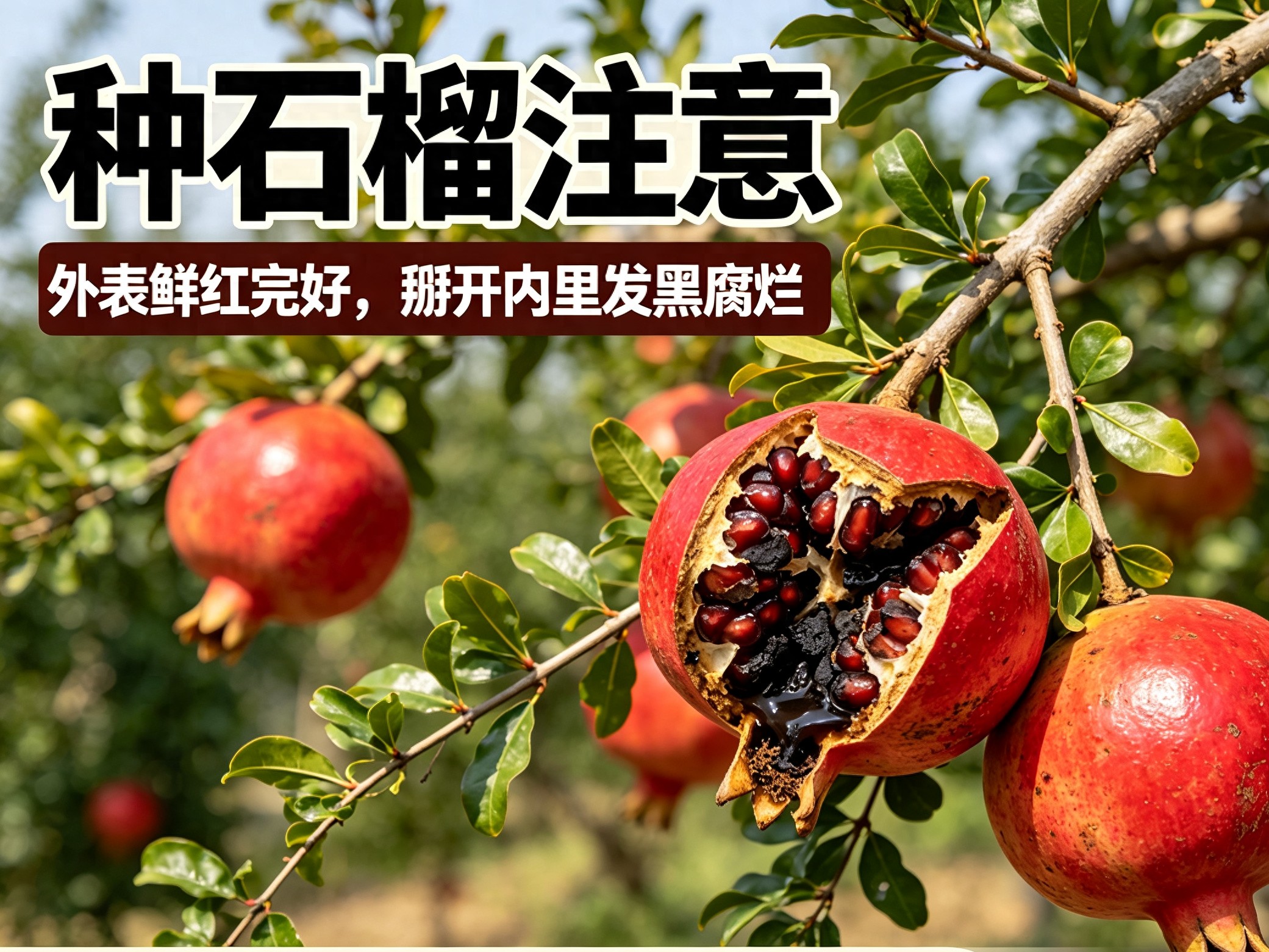
Many old pomegranates have stepped on the same ignoble pit。
When you're in care, you're used to seeing the fruit rot, so you're in a hurry to buy medicine. Many people agreed that the disease would only occur in the late years of fruit expansion, and that the flowers and young children looked well, and there was no need to be careful。
But after several heavy rains in july and august, we went to the orchard to check on the fruit, and we had a little hope, and it went cold。
It's a long way to go. It's full of pomegranates, slenders, guacamole. It's good. Put your hand over the top and squeeze the twigs, and some of the fruits touch the micro-soft。
With a small knife, the skin looks good, and the meat is blackened, water permeable, molded and good fruit loses its value。
At the end of the year, pine soil, fattening, weeding, cutting, like work, fell off, before the harvest, and consumed some of the fruit in plain white. Most people who grow fruit trees experience this sense of weakness。
I've been running around a lot of kibbutzies, and i've been growing pomegranates for over a decade. It slowly turns out that most of these “good internal” fruits are not the result of rain. The danger was buried early in the satin fruit, but it was hidden in the fruit, and the naked eye could not see it。
Today we talk objectively about this. From the perspective of ordinary growers, there is also a gradual approach to care。
I. Transmitting in the field of the translator: the responsibility of the pomegranate
Pomegranates are constantly observed in the ground, and the following are the more common hazards in orchards and the main reason for the high incidence of bad fruit after rain。
1. Infiltration of pre-diseases and the burial of incipients
This is one of the most easily overlooked points by most growers。
A lot of old people look after fruit trees and think of it as a "sick and cure." i didn't see anything wrong, so i didn't feel protected。
After the pomegranate sits on the fruit, the pomegranate wraps up the fruit of the child, and the pomegranate sews deep into the ground, with easy access to dew, rain and dust. By the spring, the fields are highly wet, the morning fog is abundant, and some of the common fruit-tree fungus are slowly ingested into the fruit。
Precious and resistant fruit is not expected to develop for the time being, and the fruit does not show any anomalies。
When the hot and rainy summer comes, the humidity of the field is right, and the incubated fungus gradually reproduces, starting with the rotting inside the fruit. And then there's a perfect skin, broken inside。
The tree branch is dense, and the orchard is humid
There is a general, modest idea of the rural dispersed pomegranate: the more branches, the more hanging fruit, the higher the output。
So some farmers are more conservative when cutting, and can't afford to cut. Over time, the thinner branches, the cross branches, and the longer the overlapping branches grow, the tree canopy is not clear。
The sun is hard to see in the tree canopy, and the water hangs over the leaves and fruit at night, and can't dry for two or three days. This humid environment is more suitable for disease transmission. Even if the orchard disease base is not high, it will spread gradually, with the probability that multiple fruit outbreaks will occur。
The more well-equipped garden of the anti-career, with medium outreach in the form of trees, is suitable for trimming. After a rainstorm, the face of the fruit and the leaves are dry, the fungus are not easily preserved and the fruit is much lighter。
3. Unstable water fertilizer supply and weak resistance to fruit peels
Many farmers manage water fertilizers, mostly following the weather and experience and at an unstable pace。
Part of the plot is less fertilized in the early stages, and tree nutrient accumulation is insufficient. By the time the fruit's swelling, trying to boost the fruit, it'll be fertilizing with nitrogen. Nitrogen is too high to allow new breeds to grow, the bark to be quickly unplugged, the pelvis to fall, and the fruit to become less resistant。
There is also an impact on water and wetting. After a long drought, heavy rains hit the ground, and the meat snorted rapidly. There will be many tiny cracks when the bark grows and does not keep up with the rate of expansion. Some of the cracks are small and difficult to detect in the naked eye, and rain and fungus enter through the cracks, slowly causing the fruit to rot. This is also one of the more widespread hidden causes of bad and bad behaviour。
4 autumn and winter clear gardens, with a slow accumulation of bacteria over the years
After the pomegranate harvest, many farmers slowly eased their gardening。
The dead and dead branches of the trees, the falling fruit of the ground, the leaves and the weeds are left behind, and many will not be able to clear the plots in time. Some of these residues will remain in them, and at low temperatures, sleep in winter. When the spring rises, the fungus rises, and the flowers and the fruit fall again。
A year of simple clean-up will result in a small increase in the disease base; long years of clean-up will be difficult to control. At the end of the day, even if you do it on time, the effect of protection will be compromised。
Ii. Progressive care and steady reduction of pomegranates throughout the year it's a bad one
Pomegranate protection, prevention priority. When the fruit rots inside, it is almost irretrievable and has to be removed and discarded. The following set of care packages is suitable for the spread and gardening, with low input and keeping pace with the pace of our breeders。
1 autumn and winter clearing gardens to gradually reduce the base number of winter diseases
Appropriate time period: after the fall of the pomegranate, to the spring of the following year front
The old story of the countryside, the winter tube, is very caring, and the coming year will be very young。
First, clean the fields. Gradually cut the diseased branch, the thin branch, the dry branch, and remove the dry disease fruit left on the tree. Cleaning of land leaves, weeds, bad fruit and piles of debris in low-lying areas is also required. All the debris is brought out of the orchard for centralization and not stacked near the roots。
Second, adjust the tree. Dismantling overlapping branches, cross branches, down-tight branches, long branches, leaving open and open tree formations to allow for air and light to flow, and spreading the moisture of the land after the rain。
Third, the whole garden is extinct. After the cut has been completed, a horticultural agent is applied to the trunks, branches and surface soils to gradually eliminate the fungus hidden in winter and reduce the probability of disease in the coming year。
Two, start springing and booming
Suitable period: march-april of each year, budding fruit tree, early start of the present reed
The slow recovery of spring temperatures and the gradual recovery of activity from winter disease are the cornerstone of the year。
The orchard soil can be subdued, the surface sheeting broken, the soil permeability improved, the submersible flue accumulation reduced and the potential for the fungi to float and pollute with the moisture。
Temperative protective agents are sprayed throughout the garden, with a focus on poaching flowers, slits of branches, formation of a protective layer on the surface of the flowerer, and reduction of disease attachments。
At this stage, the fruit tree is less resistant, controlling as much as possible the concentration of the agent, and is free to mix a variety of agents and reduce the risk of injury and flowering。
Three, flowering larvae. Steady all year round. Period
Suitable time frame: end of flowering, growth of young fruit to the size of soybeans
According to multi-year field observations, most of the bad fruit in the later years is in the form of flowers and early fruit. Proper protection at this stage can steadily reduce the loss of late fruit。
First, moderate ooze. Gradual deformation of malformations, vulnerable evening flowers, cleaning of weak, small, dense and suspected insect fruit. Priority is given to the preservation of strong branches, the upper part of the canopy, and to the reduction of the amount of leaves attached to the fruit, which is stifling by the tide。
Second, get the drugs to focus. Spraying agents should not be limited to a simple sprayed face, focusing on the top of the fruit, the bouquet, and the cavity of the fruit, to cover areas where the fungus is easily hidden。
Thirdly, it is timely to remediate the rain. Precautions are less humid and rain washes off the face of the fruit and fills the gap in the flowers. The timely application of a protective agent after each heavy rain weather is a stable method that many old farmers have been using。
4-aggregation and wet control, circumventing the high hair of the fracking fruit
Appropriate period: june-july, pomegranate rapid expansion phase
This period is characterized by high temperatures and heavy rainfall, high field humidity and relative vulnerability. Care is focused on water control, branch control, pest prevention and treatment。
Water is distributed in a small and intuitive manner to maintain a dry and wet balance of the soil, avoiding flooding in the wake of prolonged drought and reducing the risk of fissures. During the rainy season, drains are cleared ahead of schedule to prevent the accumulation of plots。
The timely defusing of long, dense and fresh branches ensures that every fruit is luminous and has a rapid drying of the face of the fruit, damaging the breeding environment of the disease。
Small wounds from pest bites are likely to induce bacterial infestation, synchronize pest protection and further reduce the presence of rotten fruit。
Five, mature chromosomes, steady harvest
Appropriate period: august to before harvest
The fruit enters the chromosomal and sweeter phase, with softened meat and increased accumulation of sugar, which reduces the resistance of the fruit to disease and is prone to post-mortem fallout。
This phase gradually reduces the frequency of water irrigation and stops the application of nitrogen fertilizer, which can supplement phosphorus potassium fertilizer in appropriate quantities and enhances the resistance of trees and fruit。
(c) maintaining daily visits to gardens, removing diseased fruit and bad fruit from trees in a timely manner, cleaning the floor fruit, bringing out orchards for treatment and reducing the cross-infestation of pathogens. Rainy weather is protected in advance, pre-rain prevention, post-rain cover, and the results of the year's planting are secured。
Iii. Responsibility and respect to the real situation of rural production
I've grown pomegranates for more than a decade, and i understand that it's not easy for ordinary farmers to grow land, and it's a year's harvest, and it's all in the field。
Taking into account years of experience, a few small issues that most growers can easily ignore, to understand that less curves can be made and that production can be secured steadily。
1. Prevention of disease is pre-emptive. The presence of pomegranates for long periods of incubation does not mean that there is no danger inside them. Try not to wait until the fruit has developed and the pre-care is more stable。
2. Drugs are rotated as far as possible. For the long term, only the same agent is used, and the fungus is expected to gradually produce resistance, and the two different machine agents are used interchangeably, and the protective effects are more stable。
3. Tree penetration is more critical than frequent drug use. A closed, humid orchard environment is a source of recurring disease. Interrupted and ventilated, which reduces environmental stress。
4. Pay attention to the pitfalls of microfracket. Many small cracks, which are not easily discovered by the naked eye, are the main path to rotting later. Stabilize the water fertilization rhythm and preserve the resilience of the fruit pelvis, which reduces losses from source。
Normalization cleans up orchard residues. Low-cost and steady production is achieved through the slow accumulation of dead and dead fruit and the daily and timely clean-up of bacteria。
Concluding remarks
The land is not a good harvest from the sky, and the fruit is bad and hidden in the invisible care of four seasons a year。
The fruit tree grows over time, the care keeps up with the rhythm, and many planting difficulties can be resolved slowly。
The catheter was caught before the fruit formed and the harvest stabilized before the autumn rain。
Many natives of pomegranates have experienced such bad external situations. Have you encountered any problems with the pomegranates after the rain? What do you do with the fruit? You're welcome to talk about your farming experience in the comment section
Disclaimer
All of thisPomegranate cultivationCare techniques, which are the basis of individual experience in the field of rural fields over many years, are suitable for the regular cultivation of pomegranates in most of the country's districts. Depending on the local climate, soil, tree age, and crop management practices, the operations can be fine-tuned to local realities. This paper is shared only among the three agro-technical communities and is not commercially oriented and is not the sole basis for cultivation。









