




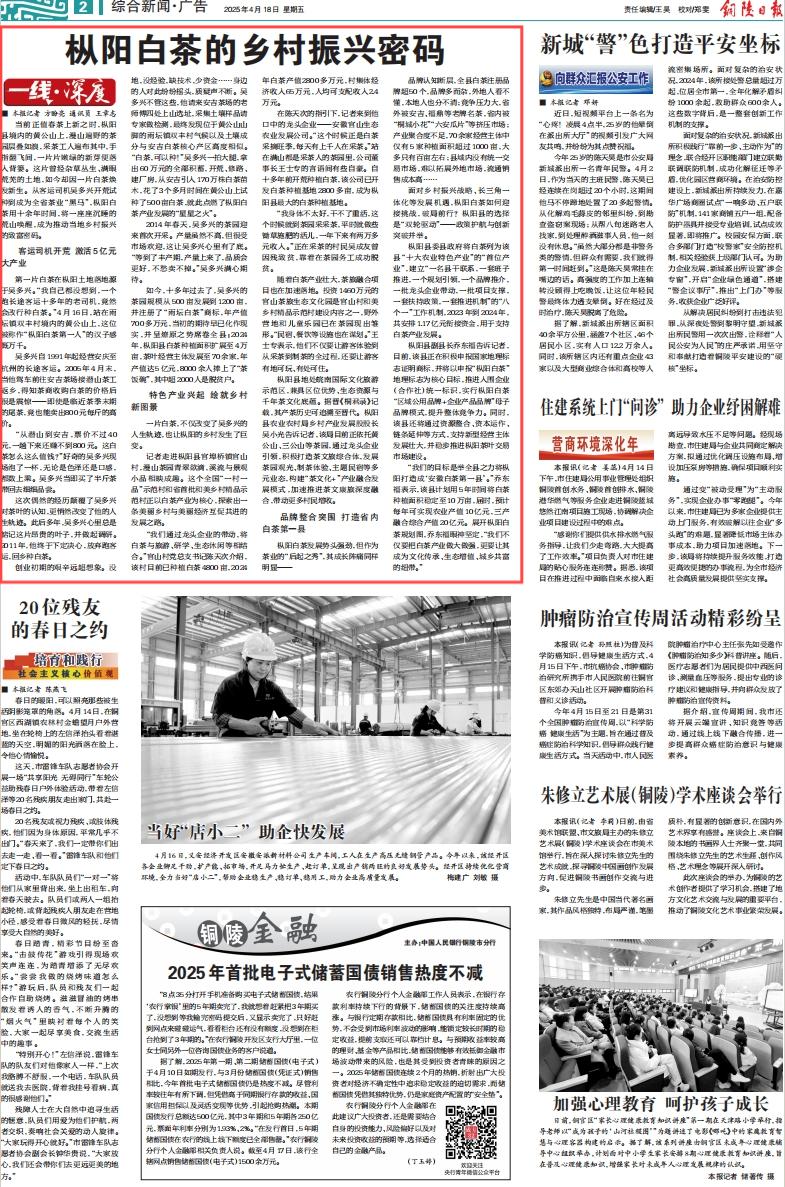
At a time when spring tea is new, the mountains of the yellow hills in yanyang county are covered in waves, with tea-crowders all over them, fingers flipping and a green new bud falling into the back. This land, once weededed and desolate, is now rejuvenated with white tea. From the departure of the passenger driver, wu do-hyung, to becoming the "black horse" in the tea industry throughout the province, it took more than 10 years to wake up a sleeping desert mountain and become a driving forceRural revitalizationThe enrichment code。
Passenger drivers are out of business
Activate 500 million dollars
The first piece of white tea landed on the land of yingyang and originated in wu do xing. “i didn't even think that an old driver who traveled long distances for more than a decade would turn to white tea.” on 16 april, the man, known as “the first man in the white tea of yooyang”, stood on the yellow hill in the twin-fun village of the town of rain quan。
U daoxing has run long-distance passenger traffic from anqing to hangzhou since 1991. At the end of april 2005, when he drove back to the ange teahouse to pick up the mountain tea workers, he was shocked to learn that the price of white tea had been bought by the tea merchant - – even the tea near the end of the season can sell over $800 per pound。
“from a dive to angie, the fare is only $40, and the price of the ticket is not even $800. Why is this white tea so valuable?" the curious wu do-hing had a drink, both color and taste. Go bought half a pound of tea and brought it back for a taste。
This accidental experience subverted wu do-hying's perception of tea and changed his life. For many years thereafter, wu do-hing's heart has been thinking of this expensive leaf and has been doing research. In 2011, he finally decided to give up running and go home and grow white tea。
The early stages of entrepreneurship are far more difficult than can be imagined. No land, no experience, no technology, little money... People around us are shaking their heads and questioning it. In spite of all this, wu do xing invited fu, the teacher who came to anji teahouse, to go around the mountain site to take samples of the soil and ask experts to test it, and eventually found that the weather and soil composition of the two villages in the town of yuhtao, located at the foot of huangshan mountain, were very similar to that of the main area of anji white tea production. “white tea, you can grow!” wu do-hying shoots his thighs, takes out all the savings of $600,000, opens a waste, fixes roads, builds a factory, introduces 1. 7 million white tea saps from angie, and spends more than three months trying to plant 500 acres of white tea on yellow hill, thereby setting the “star fire” for the development of the white tea industry。
In the spring of 2014, wu do-hyung's tea park was first mined. Production, though modest, is very popular in the market, which gives wu do-hing the bottom line. “it will be better and better to sell when production comes up.” oh, he's looking forward to it。
Today, more than a decade later, wu do-hying's tea park has grown from 500 acres to 1,200 acres, and has registered a brand called "big rain tea" with an annual production value of more than $7 million. The original expectations have become a reality and have spread throughout the county: in 2024, the area under white tea cultivation in xianyang county was expanded to 40,000 acres, the tea industry grew to more than 70 households, with an annual production value of 500 million yuan, and more than 8,000 people took up a “tip job”, of which more than 2,000 were out of poverty。
It's a new country picture
A piece of white tea has not only changed the course of wu do-hing's life, but has also dramatically changed the village of xiang。
The journalists walked into the town of tsuiyang county officer hashiyama, where the tea park was so green and the stream was very interesting with the landscape. This national “one village, one product” model village and the first provincial model village of beauty and beauty are at the centre of the white tea industry, exploring a path to development where beautiful villages and beautiful economies mutually advance。
“we combine white tea with tourism, research, eco-recreation, etc., through the lead enterprise.” according to chen tianxian, the general secretary of the party, the village is now growing 4,800 acres of white tea, producing 28 million yuan in 2024 and earning 650,000 yuan in the village's collective economy, with an disposable income of 24,000 yuan。
Under chen zhenji's guidance, the journalist came to the leading company in his mouth, the anhuisan eco-agriculture development corporation. “it is the white tea harvest season, with thousands of people gathering tea every day.” standing in a tea park full of teacupers, the director of the company was somewhat proud of his words. More than 2,800 acres of white tea cultivation have been developed by the company, which has been growing white tea since the waste began more than a decade ago, and has become the largest white tea plantation in xianyang county。
"i'm not well, i can't do heavy work, so i'm going to go to the tea park to get tea, and i'm doing grass-feeding, and i have 20,000 multiple incomes a year." the villager wu sung-goon, who was in the process of gathering tea, had been impoverished by the mutilation and had succeeded in lifting himself out of poverty by working in the tea garden。
With the growth of the white tea industry, the integration project for the tea brigade is accelerating. An eco-cultural park of the daiyama brigade, which invested $14. 6 million, was one of the building elements of a model village for koyama and u. S. Countryside, and field camps and children's parks had been established. “accordingly, facilities such as accommodation and catering are being planned.” according to the queens special rapporteur, they not only allow tourists to experience the whole process from tea production to tea production, but also give tourists a place to play and live。
The district is located in the international cultural tourism demonstration area of minnan, with both geographical advantages, ecological resources and the foundations of the millennium tea culture. The history of tea production can be traced back to shingo, as recorded in jinju's book. U xiaogang, head of the rural and rural rural development unit of yongyang county, told journalists that the department is currently working on the development of a tea hotel complex, led by leading companies, through the huangshan and the three hills, to develop a diversity of business practices such as tea garden tourism, tea-making experience, subject-matter residential accommodation, construction of a model for the integration of the “tea culture +” industry, acceleration of the deep integration of the tea tour and the promotion of more villagers。
Brand integration breach
Construction of white tea first county in the province
As the tea industry's “back-up show”, the pain of growth is equally evident -
Brand faults, with over 50 brands registered in white tea across the county, with many and many brands unknown to the outsiders and unknown to the natives; competitive pressures, with the exception of the province being squeezed by old-named teas such as angie and futeng, and the province being squeezed into the market by the “six-aquares” of kiryu city; insufficient industrial cohesion, with only 5 out of 70 business owners growing more than 1,000 acres, mostly around 100 acres; lack of a single market within the county, difficulties in expanding the market outside, and high marketing costs
How can the tea meet the challenges and move forward in the face of development opportunities such as rural renewal strategies, long triangle integration? The choice is "two-wheel drive" — policy escorts and innovation breakthroughs。
The zhongyang county council government has designated white tea as the “first industry” of the county's “ten agricultural characteristics industry” and has set up “one county dry link, one team push, one planning lead, one brand promotion, one lead firm drive, a group of projects supported, one support policy, one push mechanism” “eight one” working mechanism, with a total of 117 million yuan to support the development of the white tea industry between 2023 and 2024。
The deputy governor of xianyang county, jo dongfou, informed journalists that the county is currently actively declaring the national geographical markers as proof of trademarks, and that the central objective will be to promote the unified branding of enterprises (cooperatives) that enter the border, and to improve overall competitiveness by introducing the parent and child brand model of yingyang tea “regional public brands + enterprise product brands”. At the same time, the district will support the growth of new business owners through resource integration, capital operations, chain extensions and steady progress in building the market for tea and tea。
“our goal is to beat the whole county to the point of creating `the first county of zhongyang'.” according to jodongfou, the county plans to stabilize the area under white tea cultivation to 100,000 acres over a period of five years, by which time the value of agricultural production is expected to be 1 billion yuan per year and the combined production of three products to be 2 billion yuan per year. With the launch of the map, jotung looks firm, “we must not only make the white tea industry strong, but rather make it a link between cultural heritage, ecological value addition and rural and urban wealth”









