




Launched in 2024, central i, advocating for learning from the best practices of the “ten village demonstrations, ten village management” and encouraging local communities to take full advantage of local resources to develop niche industries and promote rural areasFeature brandTo promote the modernization of villages in general。
To accelerate the pushRural revitalizationIn march 2024, as one of the central strategies for the development of the county's agricultural industry, the province of xianyang decided to implement policies in the area of white teaWhite tea industryThe development of “one-sided economies” with a “leaf” to help revitalize villages。
The tsinghua university rural renewal workstation, which is conducting field research on white tea in the shuyang county, visited the basics, characteristics and problems of white tea in the province, and developed research reports on the opening of the white tea industry, which can inform and inform the future development of the white tea industry in the province。
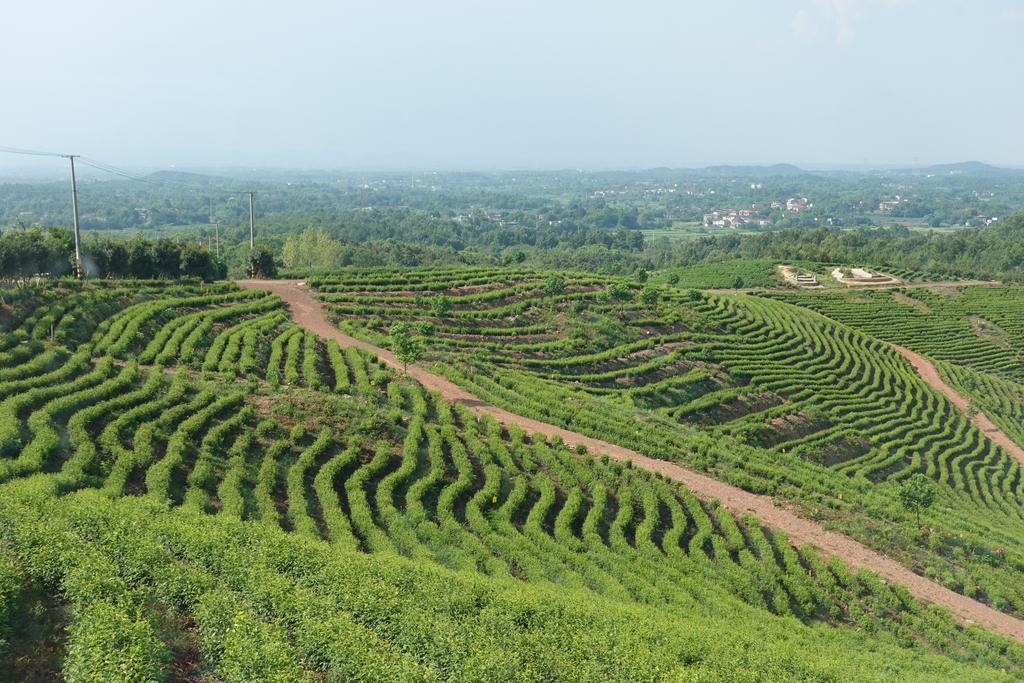
Figure 1
The basic status quo is white tea
Despite the word “white”, the white tea in the rain jar remains in the category of green tea in the six teas. The raw material is the white leaf 1 tea tree and the special albinos。
White tea
Characteristics
In the subtropical monsoon weather zone of the yangyang county, four seasons are clear, the climate is mild, the sun is abundant and the rain is abundant, providing sufficient sunlight, moisture and the right temperature for the growth of the white tea and contributing to its growth and quality. White tea in the rain jar selects a sprouts of a leaf as a raw material, and extracts only the tea before it is clear. After extraction, fine processing is performed immediately after removal. The levels of amino acids and vitamin c in rain jar white tea are higher than in normal tea leaves, with lower caffeine levels。
Market
Operating
There are now more than 800 acres of rain jar white tea under cultivation, with a total investment of over $66. 3 million. The production of over 12,000 pounds of white tea and so on in 2022 resulted in sales revenues exceeding $11 million. The target market is a high-end market, with the main audience being elites. At the age level, older and middle consumers dominate and young people buy less。
Field research on the white tea in the sun
Through a visit to anhui-shin agroforestry development ltd. And an interview with the founder, wu da-hing, we learned about the main problems facing the rain jar white tea:

Figure 2
1 rain jar white tea with low visibility
There is a lack of reminiscing brand names and slogans for rain jars, and a lack of relevant ip and image creation. At the same time, there are limitations to the channel and manner of communication of the rain jar white tea. At present, the rain jar white tea is promoted mainly through traditional shops and a small number of online platforms。
2 core features not prominent
Despite its unique white tea feature, rain-continental white tea does not fully exploit its geographical advantage and indigenous resource potential and lacks competitive advantage, leading to similarity between products and related experience projects。
3 lack of integration between industries
There are significant differences between the white tea industry and the resource characteristics of neighbouring industries, and there is a lack of clear development planning that integrates them organically with tourism, processing industries, commerce, etc. To achieve complementarities。
4. Sales power is low
The rain jar white tea is now largely marketed by offline channels, which lack online outreach and are not sufficiently operational to increase brand visibility。
Optimizing the strategy for designing and implementing a path-based white tea
1. Leveraging local niche resources
Excavating the local rainforests and other human resources, immersion tourism, agro-processing industries and the relevance of white tea provide the basis for the subsequent upgrading of the entire white tea chain。
Commercial planning
The rain jar white tea can be built on local features, with the tourism and agro-processing industries at its core, supported by the development of a business plan and resource utilization model for the theme “rain jar white tea”。
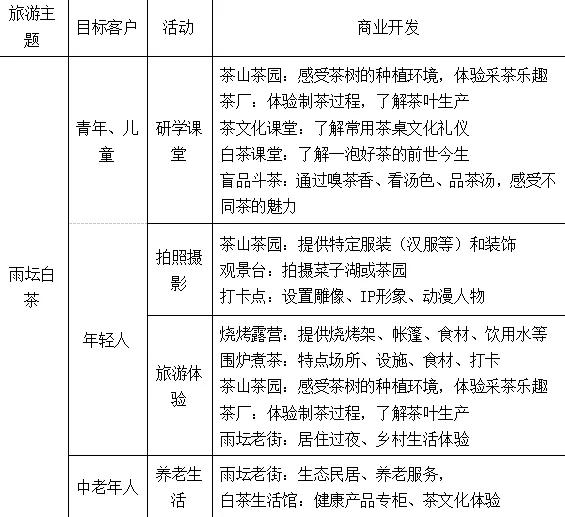
Figure 3 commercial planning figure
3. Infrastructure development
The two core niche areas of rain-bunk town are well suited as the core areas of the next priority development. However, the lack of supporting infrastructure has limited the pace of development in the town, and there is an urgent need to address this critical issue in order to promote its sustainable development。
The old streets of rainland can upgrade its infrastructure in terms of cultural experience in transport, residential accommodation, catering and tea to enhance its commercial value. The tea park can be adapted from roads, events, residential accommodations, etc., to meet the residential needs of tourists, and a variety of activities can be organized to raise visibility。
4. Outreach and tourism ips
In recent years, the market has become increasingly competitive, and the concept of “drinking and smelling” has become obsolete. Despite the high quality and appropriate price of rain-continental white tea, challenges remain in market competition to fully highlight its advantages and maximize its potential value。
Therefore, measures to increase sales through the expansion of online distribution channels; to strengthen social media outreach and enhance users'sense of identity and belonging to the brand; to project the image of tourism by raising the profile of destination, attracting tourists and promoting tourism consumption; and to organize diversified activities to attract people around them and stimulate the interest of domestic investors are essential. It is only in this way that more people will recognize and love this fine tea brand。
Summarizing and summing up the white tea
As a result of this social practice study, we have detailed information on the status of white tea, problems and difficulties encountered in luang county。
On the basis of the information available, the team members carefully analyse the specific content of the problem now encountered in the rain jar white tea and propose strategies for its development, as follows:
1) excavating indigenous resources and exploring their relevance to white tea
2) rational planning of commercial activities and resource utilization, taking full advantage of available resources
3) strengthening of infrastructure and improvement of support facilities, centred on tea and tea gardens and the old rain forum street
4) increase branding and image of tourism and increase the visibility and influence of rain jar white tea。
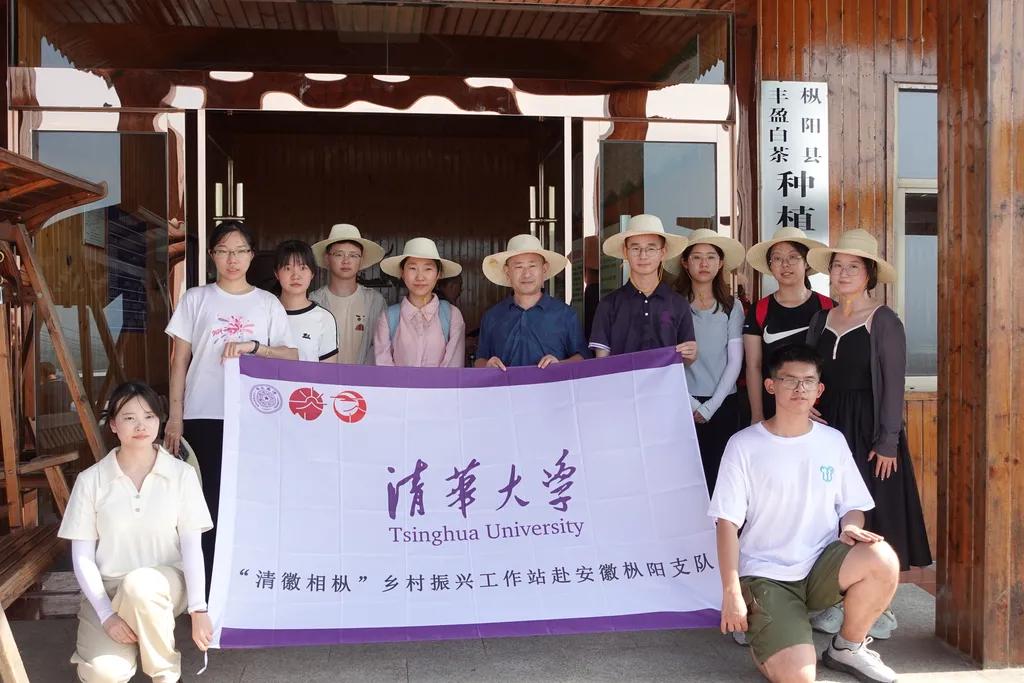
Figure 4
By wei wento, member of the qinghua university team









